Economic Pulse Net | Sources: World Bank World Development Indicators, Government Sources | 2026
Key Takeaways
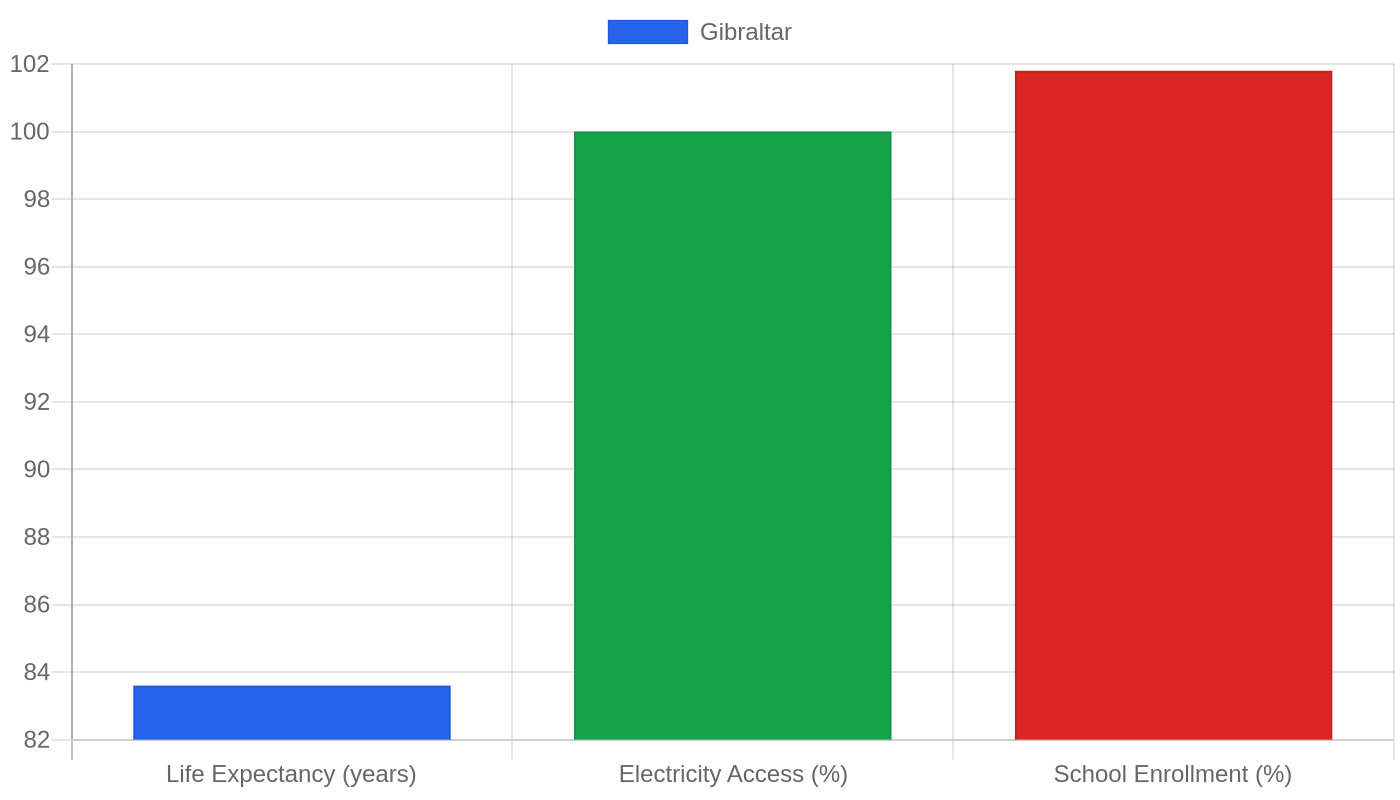
– Gibraltar’s economy remains one of the most uniquely positioned in Europe, operating as a self-governing British Overseas Territory with its own tax regime, legal system, and financial services sector, even as comprehensive macroeconomic data from the World Bank remains limited.
– The territory’s economic model is built on a triad of financial services, online gaming, and tourism — sectors that have proven resilient despite ongoing post-Brexit negotiations with the European Union.
– With no formal inflation, unemployment, or GDP figures available from the World Bank, observers must look to qualitative indicators and sector-specific developments to gauge the health of this small but sophisticated economy.
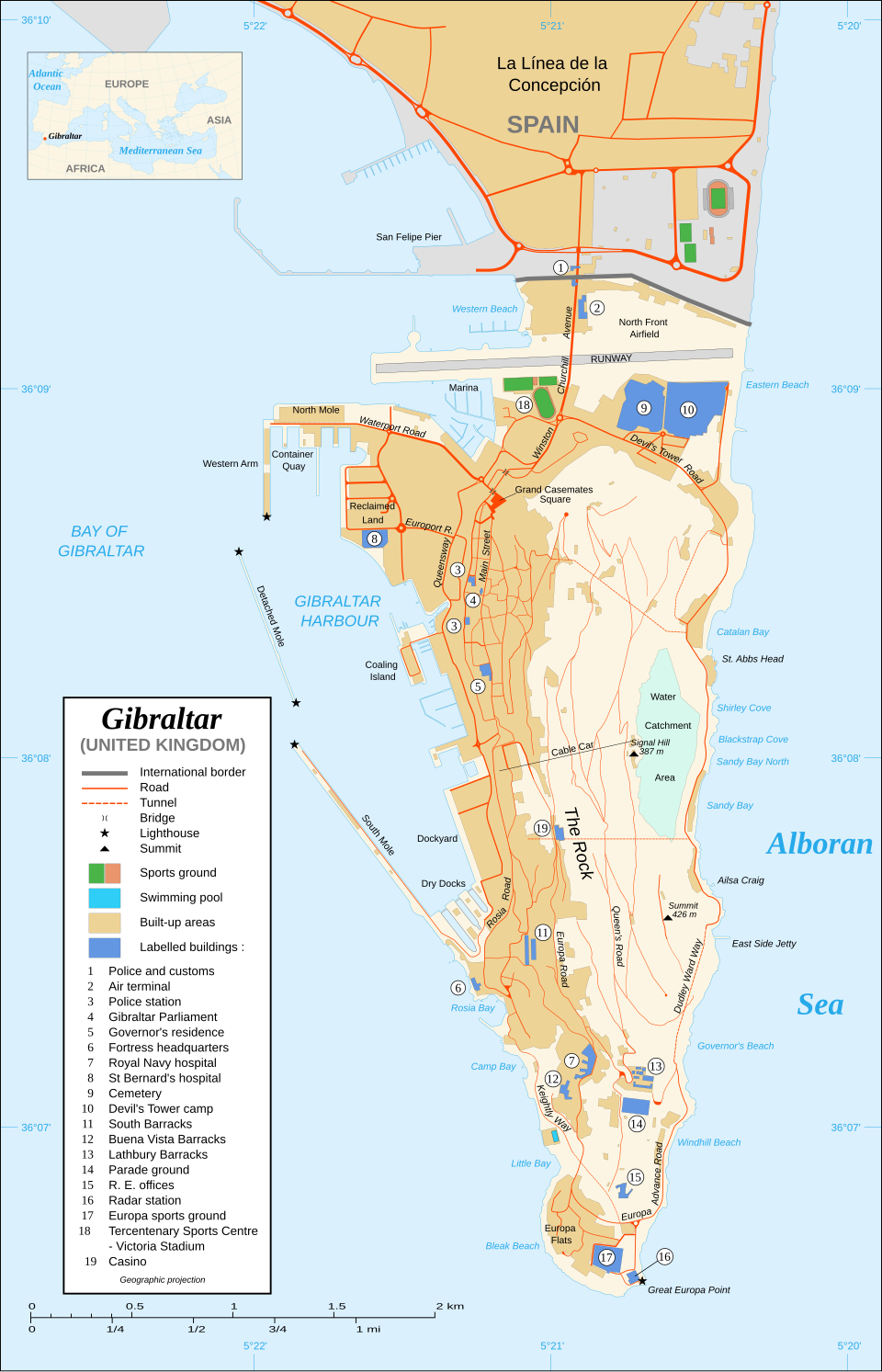
– Gibraltar’s strategic location at the mouth of the Mediterranean continues to make it a vital shipping and bunkering hub, with the Port of Gibraltar serving as a critical refueling stop for global maritime traffic.
– The ongoing treaty negotiations between the UK and the EU regarding Gibraltar’s post-Brexit status remain the single most important variable shaping the territory’s economic future.
The Economic Engine: More Than Just a Rock
The World Bank’s dataset for Gibraltar is conspicuously sparse — no GDP growth figures, no inflation data, no unemployment statistics. But for a territory of roughly 34,000 residents, this absence of macroeconomic data is less a reflection of economic obscurity and more a testament to its unique constitutional status. Gibraltar operates its own fiscal framework, and the absence of standardized reporting to institutions like the World Bank is a bureaucratic reality rather than an economic red flag.
What we do know is that Gibraltar has built one of the most concentrated service economies in the world. The financial services sector is the crown jewel, with the territory hosting a significant cluster of banks, insurance companies, and investment firms drawn by a favorable corporate tax regime and regulatory alignment with UK standards. The online gaming industry has similarly flourished, with many of Europe’s leading operators licensing through Gibraltar’s Gambling Commissioner.
Tourism, too, remains a steady contributor, with the Rock drawing millions of visitors annually — though the sector’s reliance on cruise ship traffic and day-trippers from Spain makes it vulnerable to geopolitical friction.
The port economy deserves special mention. Gibraltar’s bunkering operations — the refueling of commercial vessels — are among the busiest in the Mediterranean, capitalizing on the territory’s position along one of the world’s busiest shipping lanes. This maritime activity generates significant revenue and supports a cluster of logistics and ship-repair businesses.
While the World Bank provides no hard numbers, the qualitative picture is clear: Gibraltar is a high-income, service-intensive economy that has successfully pivoted from its historic military and naval identity to a modern financial hub. The absence of inflation data, for instance, should not be read as an absence of price pressures — rather, it reflects the limitations of data collection for a territory that sits outside standard EU statistical frameworks.
The Cost of Living: A Premium Price for a Mediterranean Perch
Living in Gibraltar comes at a cost, and anyone expecting bargain Mediterranean prices will be disappointed. Housing is the most significant expense, with limited land availability — the territory spans just 6.8 square kilometers — creating a persistent supply-demand imbalance.
Property prices in Gibraltar have historically tracked London trends more closely than Spanish or Portuguese comparators, reflecting the territory’s British legal system and the influx of finance and gaming professionals earning premium salaries. Renting is the norm for many newcomers, but even modest apartments command rents that would be considered high in most of mainland Spain.
Daily expenses for food, utilities, and transportation are broadly comparable to southern UK cities, though the absence of VAT on many goods provides some relief at the checkout. Cross-border shopping into Spain is common for bulk purchases, while Spanish workers commute into Gibraltar daily, creating a unique economic interdependency that is both an opportunity and a vulnerability.
The cost of living is, in essence, the price of admission to a jurisdiction offering political stability, a robust legal framework, and a pleasant Mediterranean climate — but it is not a place for those seeking affordability.
Investment and Business Climate: A Regulatory Haven With a Catch
For investors, Gibraltar offers a compelling proposition: a low-tax jurisdiction with English common law, a sophisticated regulatory environment, and access to a skilled, multilingual workforce. The territory’s corporate tax rate is among the lowest in Europe, and there is no capital gains tax, no wealth tax, and no inheritance tax — features that continue to attract high-net-worth individuals and corporate entities alike.
The financial services sector is the primary beneficiary, with a dense concentration of asset managers, fiduciary firms, and insurance captives.
The online gaming sector remains a key growth area, with Gibraltar licensing some of the industry’s most prominent operators. The sector has matured significantly, moving from a Wild West reputation to a tightly regulated industry that generates substantial licensing fees and employment. Fintech is another emerging opportunity, with the government actively courting blockchain and payments companies seeking a regulated EU-adjacent base.
However, the business climate is not without its challenges. The ongoing post-Brexit treaty negotiations between the UK and the EU create an environment of uncertainty that can dampen long-term investment decisions. The border with Spain — a daily crossing point for tens of thousands of workers — has been a recurring flashpoint, with occasional delays and political posturing creating friction.
For businesses, the calculus is straightforward: Gibraltar offers a superior tax and regulatory environment, but the political backdrop requires careful risk assessment.
Safety, Politics, and Quality of Life: A British Enclave in a Spanish Sea
Gibraltar is, by most qualitative measures, an exceptionally safe place to live. Crime rates are low, the police force is professional, and the territory’s compact size means that community ties are strong. The sense of security extends beyond personal safety to legal certainty — English common law, an independent judiciary, and a stable political system provide a level of institutional predictability that is rare in the region.
Politically, Gibraltar is a self-governing British Overseas Territory with its own parliament, though defense and foreign affairs remain the responsibility of the UK. The political landscape is dominated by the question of sovereignty — the vast majority of Gibraltarians consistently affirm their desire to remain British, a sentiment that has been tested repeatedly by Spanish claims and the complexities of Brexit.
The territory’s Chief Minister and elected government wield significant autonomy over domestic policy, including taxation and economic regulation.
Quality of life is high for those who can afford it. The Mediterranean climate, the absence of urban sprawl, and the proximity to the Spanish mainland offer a lifestyle that blends British sensibility with southern European leisure. The education system follows the UK curriculum, healthcare is provided through a public system, and the territory boasts a low-crime, family-friendly environment. The principal trade-off is space — literally.
Gibraltar is a small place, and the feeling of being on a tiny, densely populated perch can be either charming or claustrophobic, depending on one’s perspective.
What’s Happening Now: The Treaty Talks That Could Define a Decade
The defining issue of the moment in Gibraltar is the ongoing negotiation of a post-Brexit treaty between the UK and the European Union. The discussions, which have been underway for years, aim to establish a formal framework for Gibraltar’s relationship with the EU — covering everything from border fluidity to customs arrangements, worker mobility, and regulatory alignment.
The stakes could not be higher: a favorable treaty would provide the certainty that businesses and investors crave, while a breakdown could lead to a return of hard border controls with Spain, threatening the territory’s economic model.
The current political mood is one of cautious optimism, tempered by the knowledge that negotiations have stalled before. The UK government has repeatedly stated its commitment to securing a deal that protects Gibraltar’s sovereignty and economic interests, while the EU has signaled a willingness to find a pragmatic solution. The Gibraltar government, for its part, has been actively courting investment in sectors like fintech and maritime services, signaling confidence that a deal will eventually be reached.
In the meantime, the territory continues to function as a bustling, self-assured hub of financial and commercial activity. The port remains busy, the gaming companies are hiring, and the cafes along Main Street are full. The sense of living in a place that is perpetually preparing for its next chapter is palpable — and for now, that chapter appears to be one of resilience and adaptation, even as the final shape of Gibraltar’s European future remains unwritten.
The Bottom Line
Gibraltar is a small territory with an outsized economic personality — a place where financial services, gaming, and maritime commerce have created a high-income enclave that punches far above its weight. The absence of comprehensive World Bank data should not obscure the fact that this is a prosperous, stable, and strategically vital jurisdiction.
For investors seeking a low-tax, English-speaking gateway to the Mediterranean, and for businesses that value regulatory sophistication over market size, Gibraltar deserves close attention. The outcome of the post-Brexit treaty talks will be the decisive variable — but even in a worst-case scenario, the Rock has a long history of finding a way to endure.
Sources & Methodology
This article is authored by Economic Pulse Net for informational and research purposes. Economic Pulse Net sources its data from multilateral institutions, national statistics bureaus, and proprietary databases. All data is believed to be current as of the date of publication.
Published: July 31, 2026 | Category: Research — Gibraltar
Use these signals in your own platform
Economic Pulse publishes its live signal feed through a documented, read-only API. Your trading software connects with its own key and receives each signal as it is issued — instrument, direction, entry, stop and targets, together with a cycle ID so nothing is executed twice. The feed is independent of this website and cannot change it.
Signals are informational only and are not financial advice.