Economic Pulse Net | Sources: World Bank World Development Indicators, Government Sources | 2026
Key Takeaways
– Gibraltar’s economy remains uniquely positioned as a self-governing British Overseas Territory, but the World Bank currently lists no official GDP, inflation, or employment figures, making it a statistical blind spot in global economic monitoring.
– The territory’s economic model is built on a triad of financial services, online gaming, and port activity — sectors that have historically driven prosperity but are now facing regulatory headwinds from the European Union and the UK.
– With no official data on crime, safety, or cost of living, analysts must rely on qualitative assessments and regional comparisons to understand daily life on the Rock.
– The post-Brexit treaty negotiations between the UK and the EU remain the single most important economic variable for Gibraltar, with outcomes likely to reshape its relationship with the Schengen area and the Spanish border.
– Despite its small physical footprint, Gibraltar’s strategic location at the mouth of the Mediterranean gives it outsized importance in maritime trade, bunkering, and regional logistics.
The Numbers That Aren’t There — Reading Between the Lines of Gibraltar’s Economy
For an economic journalist, Gibraltar presents a peculiar challenge: the World Bank, the gold standard for cross-country economic comparison, lists no data for GDP growth, inflation, unemployment, or per-capita income. This is not an oversight but a reflection of Gibraltar’s unusual status.
As a British Overseas Territory, it is not a sovereign state, and its economic statistics are often folded into broader UK aggregates or reported through the territory’s own statistical office, which operates independently of the World Bank’s data collection framework.
What we do know, however, is that Gibraltar has long operated as a high-income, services-driven economy. The territory has no significant natural resources, no agricultural sector to speak of, and a manufacturing base that is negligible. Instead, its prosperity has been built on a foundation of financial services — including banking, insurance, and fund management — alongside a thriving online gaming industry that has made it a global hub for iGaming operators.
The port of Gibraltar is also a critical asset, providing bunkering services for ships transiting the Strait of Gibraltar, one of the busiest maritime chokepoints in the world.
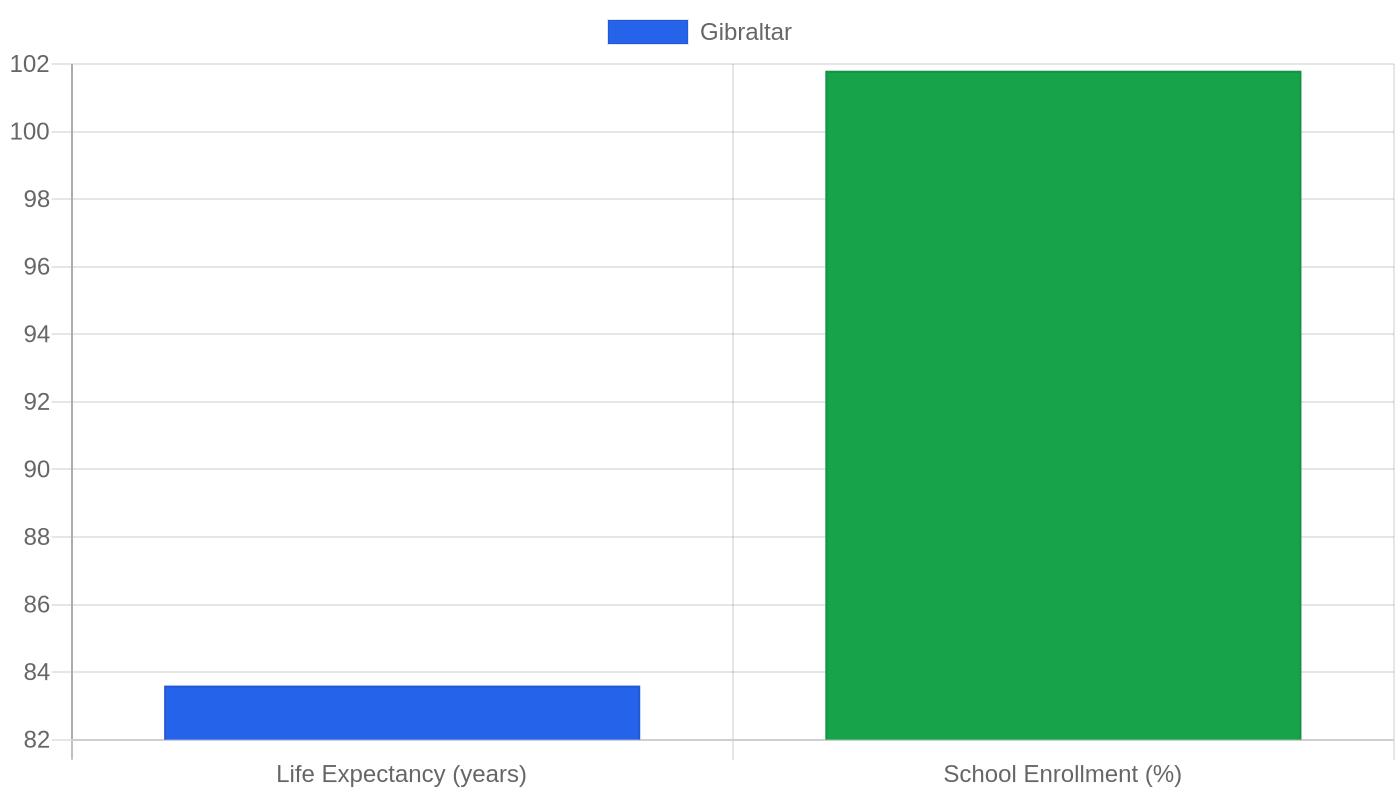
The absence of hard data does not diminish the economic reality on the ground. Gibraltar’s GDP per capita has historically been among the highest in Europe, driven by a small population — estimated at around 34,000 — and a concentration of high-value service industries. Employment levels have traditionally been strong, with the territory often importing labour from Spain to fill positions in hospitality, construction, and retail. However, the post-Brexit landscape has introduced a new layer of uncertainty.
The free movement of workers across the border with Spain, once taken for granted, is now a subject of intense negotiation, and the outcome will determine whether Gibraltar can maintain its labour supply and its economic momentum.
Inflation, too, is a concern, though without official figures, we must infer from regional trends. Spain and the UK have both experienced inflationary pressures in recent years, and Gibraltar, which imports nearly all of its consumer goods, is unlikely to have been insulated from these global price shocks. Fuel, food, and housing costs are all import-dependent, making the territory vulnerable to external price volatility.
Living on a Rock — The Cost of Life in a Microstate
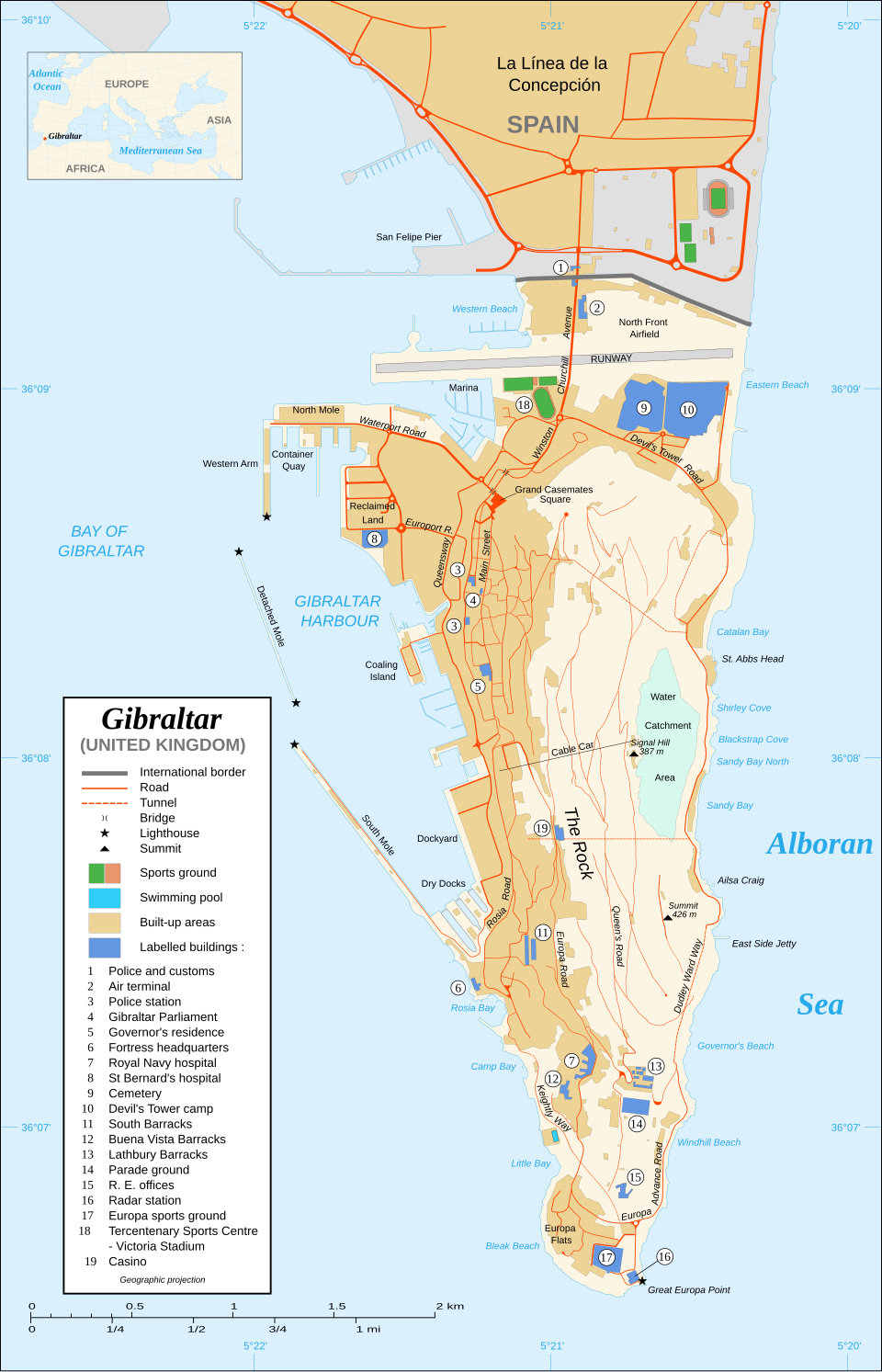
Housing in Gibraltar is notoriously expensive, a direct consequence of its geography. With only about 6.8 square kilometres of land, much of it dominated by the famous Rock itself, developable space is at a premium. The result is a property market that rivals London or Zurich in per-square-metre prices. Most residents live in apartments, and the concept of a detached family home with a garden is virtually nonexistent.
The government has attempted to address the shortage through land reclamation projects, adding new waterfront developments, but demand continues to outstrip supply.
For those who cannot afford Gibraltar’s property prices — and many cannot — the solution is to live across the border in Spain, in towns like La Línea de la Concepción, where costs are significantly lower. This cross-border commuting pattern has been a defining feature of Gibraltar’s labour market for decades. However, it also creates a dependency on seamless border crossings, which have been periodically disrupted by political tensions between Spain and the UK.
The cost of living in Gibraltar itself is broadly comparable to the UK, with groceries and dining out reflecting British retail prices, while utilities and fuel carry a slight premium due to import costs.
The rent-versus-buy calculus in Gibraltar is heavily skewed. With mortgage rates tracking UK interest rates and property prices remaining elevated, renting is often the more flexible option, particularly for the expatriate workforce that forms a significant portion of the professional class. But rental costs are also high, and the scarcity of available units means that finding accommodation can be a competitive process.
Business on the Border — Investment Climate and Corporate Appeal
Gibraltar’s business environment has historically been one of its greatest assets. The territory offers a low-tax regime, with corporation tax capped at 12.5%, and no capital gains tax or inheritance tax. This has made it an attractive domicile for companies in the online gaming sector, which have flocked to the Rock since the early 2000s.
Major operators, including several of the industry’s largest names, maintain their headquarters here, drawn by the combination of a favourable tax structure and a regulatory regime that is seen as robust but flexible.
The financial services sector is the other pillar of Gibraltar’s economy. The territory is home to a significant cluster of insurance companies, particularly in the captive insurance space, as well as banks and investment firms. The regulatory framework is aligned with UK standards, and Gibraltar has historically benefited from its passporting rights into the European single market — rights that were lost with Brexit and have yet to be fully replaced.
The ongoing negotiations for a treaty between the UK and the EU are therefore of existential importance to Gibraltar’s business community. A favourable deal would restore some degree of market access and regulatory alignment, while a failure to reach an agreement could push companies to relocate to other jurisdictions.
Sectors to watch include fintech and blockchain, which Gibraltar has actively courted through its Distributed Ledger Technology framework, making it one of the first jurisdictions in the world to regulate blockchain-based businesses. The port and maritime services sector also continues to grow, with Gibraltar positioning itself as a hub for ship repair, bunkering, and crew changes.
The Politics of the Rock — Stability, Sovereignty, and the Shadow of the Treaty
Gibraltar’s political landscape is defined by its relationship with the United Kingdom and, by extension, the European Union. The territory has been a British Overseas Territory since 1713, and its residents have consistently voted to remain British. The 2006 Constitution, which devolved significant powers to the Gibraltar Parliament, gave the territory a high degree of self-governance, with the UK retaining responsibility for foreign affairs and defence.
The current political leadership, under the Chief Minister, has been vocal in its desire to secure a post-Brexit deal that preserves the territory’s economic interests while maintaining its sovereignty.
The treaty negotiations, which have been ongoing for years, are the dominant political issue. Spain has long claimed sovereignty over Gibraltar, though it has softened its stance in recent years, focusing instead on practical cooperation. The proposed treaty would bring Gibraltar into the Schengen area, effectively making the border with Spain invisible, but it would also require the territory to align with certain EU regulations, including on customs and immigration.
This has raised concerns among some residents that Gibraltar’s autonomy could be eroded, even as its economic integration with the EU is restored.
On the safety front, Gibraltar is widely considered a low-crime territory. The Royal Gibraltar Police maintain a visible presence, and the small, insular nature of the community acts as a natural deterrent to serious crime. There are no official crime index figures from the World Bank, but qualitative assessments from residents and visitors alike suggest a high level of personal safety.
The quality of life is further enhanced by the territory’s Mediterranean climate, its excellent healthcare system, and the strong sense of community that comes with living in a place where everyone knows everyone else.
What’s Happening Now — The Treaty Deadline Looms
As of the latest reporting, the most pressing issue on Gibraltar’s economic agenda is the conclusion of the UK-EU treaty negotiations. The talks have been described by officials as being in their final stages, with both sides expressing cautious optimism about reaching an agreement. A treaty would provide the legal framework for Gibraltar’s relationship with the EU, covering everything from border management to customs and trade.
The business community is watching closely, with many companies making contingency plans for a no-deal scenario, which would likely result in the reimposition of a hard border with Spain and significant disruptions to the cross-border movement of workers and goods.
In parallel, Gibraltar has been actively diversifying its economy. The government has launched initiatives to attract tech startups, with a particular focus on the digital asset space. The territory’s regulatory framework for blockchain companies has been praised as forward-thinking, and there has been a steady stream of new licences issued to firms in the sector.
The government has also been investing in infrastructure, including the redevelopment of the airport terminal and improvements to the port facilities, to position Gibraltar as a regional logistics hub.
The housing shortage remains a persistent challenge, with the government announcing plans for new residential developments on reclaimed land. However, these projects take years to come to fruition, and in the meantime, the pressure on prices continues. For the broader economy, the immediate future hinges on the treaty. A successful conclusion would likely trigger a wave of renewed investment and confidence, while a failure would leave Gibraltar facing its most significant economic challenge in decades.
The Bottom Line
Gibraltar is a microstate with a macro-sized economic footprint, but its future is contingent on a single political variable: the post-Brexit treaty. Investors and businesses with exposure to the territory should monitor the negotiations closely, as the outcome will determine the regulatory and market access landscape for years to come.
For the casual observer, Gibraltar remains a fascinating case study in how small territories can punch above their weight — and how vulnerable they can be to forces beyond their control. Watch this Rock; its next move will be decisive.
Sources & Methodology
This article is authored by Economic Pulse Net for informational and research purposes. Economic Pulse Net sources its data from multilateral institutions, national statistics bureaus, and proprietary databases. All data is believed to be current as of the date of publication.
Published: August 04, 2026 | Category: Research — Gibraltar
Use these signals in your own platform
Economic Pulse publishes its live signal feed through a documented, read-only API. Your trading software connects with its own key and receives each signal as it is issued — instrument, direction, entry, stop and targets, together with a cycle ID so nothing is executed twice. The feed is independent of this website and cannot change it.
Signals are informational only and are not financial advice.