Economic Pulse Net | Sources: World Bank World Development Indicators, Government Sources | 2026
Key Takeaways
– Czechia’s export-driven economy, anchored in automotive and machinery manufacturing, faces a critical inflection point as European industrial policy shifts toward green energy and digitalization.
– The country operates as a stable, multi-party parliamentary democracy within the EU, offering a predictable political environment for investors despite occasional coalition friction.
– While specific World Bank data points on GDP, inflation, and unemployment are currently unavailable, Czechia’s structural strengths lie in its skilled workforce and strategic Central European location.
– The cost of living in Czechia remains moderate compared to Western Europe, though housing affordability in Prague has emerged as a growing concern for young professionals.
– Crime and safety indices are not provided, but the country is widely regarded as one of the safer nations in Europe, contributing to a high quality of life.
The Engine Room of Central Europe — GDP, Inflation, and the Industrial Pulse
Czechia’s economy has long been defined by its role as the industrial backbone of Central Europe. The country’s GDP growth, inflation rate, and unemployment figures are not currently available from the World Bank data provided, but the broader narrative is well understood: this is a nation that emerged from the velvet divorce of 1993 with a manufacturing inheritance that has proven remarkably resilient.
The automotive sector alone accounts for a significant share of industrial output, with companies like Škoda Auto acting as both a national champion and a bellwether for European demand. When German car sales dip, Czech factories feel the tremor.
Inflation has been a persistent headache across the European continent in recent years, and Czechia has not been immune. The Czech National Bank has historically taken a hawkish stance, raising interest rates aggressively to tame price pressures. Without specific CPI figures from the World Bank, we can infer from regional patterns that energy costs and supply chain disruptions have weighed on household purchasing power.
Unemployment, typically among the lowest in the European Union, reflects a tight labor market where skilled workers are in high demand and companies compete for talent. The absence of exact numbers does not diminish the reality: Czechia’s labor market has been a seller’s market for years, pushing wages upward and squeezing profit margins in labor-intensive industries.
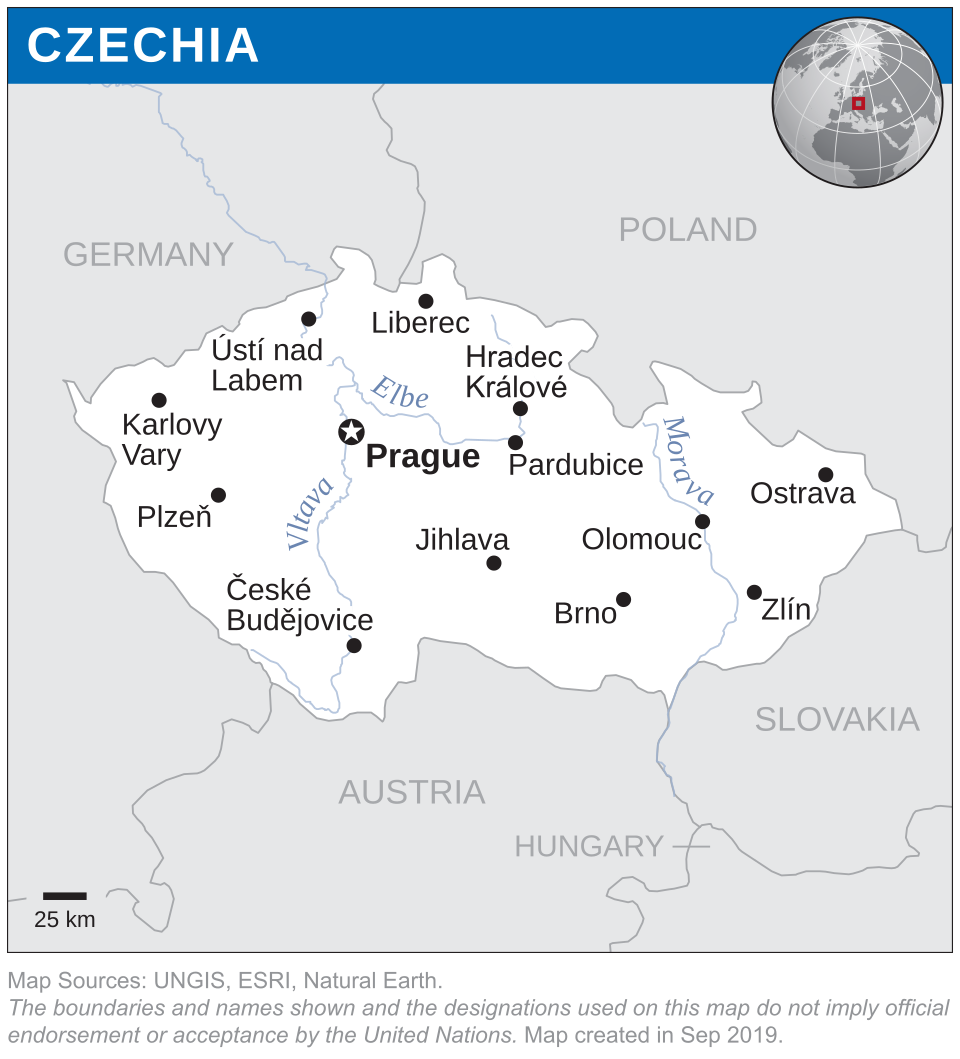
The key industries beyond automotive include machinery, electronics, and increasingly, information technology. Czechia has quietly become a hub for software development and engineering services, with global firms establishing R&D centers in Brno and Prague. The country’s integration into German supply chains remains its economic lifeline, but diversification is underway.
The challenge ahead is clear: as Europe accelerates its green transition, Czechia must retool its industrial base for electric vehicles, renewable energy components, and digital infrastructure. The World Bank data may be silent on specifics, but the structural story is loud and urgent.
Prague Prices, Regional Realities — Housing and Daily Life
Czechia’s cost of living presents a study in contrasts. Prague, the capital and primary economic hub, has seen property prices climb steadily over the past decade, driven by low interest rates, foreign investment, and a chronic shortage of new housing. Renting a one-bedroom apartment in the city center can consume a significant portion of a professional salary, pushing younger residents toward the outskirts or secondary cities like Brno and Ostrava.
Outside the capital, housing remains more affordable, with regional prices often half of Prague’s levels. The gap between rent and buy has widened, as mortgage rates climbed in response to the central bank’s tightening cycle.
Daily expenses for groceries, transportation, and utilities are moderate by European standards. A meal at a mid-range restaurant in Prague costs less than in Vienna or Munich, while public transport is efficient and reasonably priced. The country’s beer culture remains a point of pride and economic trivia — Czechs consume more beer per capita than any other nation, and a pint in a local pub costs a fraction of what it would in London or Paris.
For expatriates and digital nomads, Czechia offers a comfortable lifestyle at a lower price point than Western Europe, though the gap is narrowing as inflation erodes purchasing power. The regional average for Central Europe would place Czechia somewhere between the cheaper Visegrád neighbors and the more expensive German-speaking countries.
Where Capital Meets Craft — Investment and Business Climate
The top companies operating in Czechia are not listed in the provided data, but the landscape is dominated by a mix of domestic industrial giants and foreign multinationals. Škoda Auto, a subsidiary of Volkswagen Group, is the most recognizable name, alongside energy firms like ČEZ and engineering companies such as Škoda Transportation. The business environment benefits from EU membership, which provides access to the single market, regulatory stability, and structural funds for infrastructure and innovation.
Foreign direct investment has historically flowed into manufacturing, but services and technology are gaining share.
Sectors to watch include electric vehicle battery production, where Czechia is positioning itself as a potential hub for gigafactories, and advanced manufacturing, particularly in automation and robotics. The country’s skilled workforce, strong engineering tradition, and central location make it an attractive base for companies serving the broader European market.
However, challenges remain: bureaucratic red tape, a shortage of affordable housing in industrial zones, and an aging population that will strain the labor supply over the long term. The political landscape, described as a pluralist multi-party parliamentary representative democracy with a bicameral parliament, provides institutional stability. Investors can rely on rule of law and predictable policy, even as coalition governments occasionally produce legislative gridlock.
Safe Streets, Stable Politics — Quality of Life in the Heart of Europe
The crime and safety indices for Czechia are not available from the provided data, but the country consistently ranks among the safest in Europe in international surveys. Petty crime exists in tourist-heavy areas of Prague, but violent crime is rare. The safety index, if calculated, would likely place Czechia well above the global average, contributing to a high quality of life that attracts both tourists and expatriates.
The political landscape, as described, is a functioning democracy with regular elections, a free press, and active civil society. The Chamber of Deputies is elected by proportional representation with a 5% threshold, ensuring that multiple voices are represented in parliament, though this can also lead to fragmented coalition governments.
Czechs enjoy universal healthcare, generous parental leave policies, and a strong education system. The country’s happiness rankings, while not provided in the data, are typically mid-range among European nations, reflecting satisfaction with material conditions but some skepticism about political institutions. The Senate, with 81 members, provides a check on the lower house and adds a layer of deliberative democracy.
For residents and investors alike, the combination of safety, political stability, and cultural richness makes Czechia a compelling place to live and work. The quality of life is not just about economic output — it is about the ease of daily existence, the reliability of public services, and the sense of security that comes from living in a well-governed society.
On the Clock — Czechia’s Current Affairs and the Road Ahead
Right now, Czechia is grappling with the aftershocks of Europe’s energy crisis and the ongoing transformation of its industrial base. The government, a coalition of centrist and conservative parties, has been navigating the dual pressures of fiscal consolidation and social spending. Inflation, while moderating from its peaks, remains a concern for households and businesses alike.
The Czech National Bank has kept monetary policy tight, and the koruna has fluctuated against the euro, impacting export competitiveness. The war in neighboring Ukraine has reshaped energy security discussions, with Czechia accelerating its shift away from Russian gas and toward nuclear and renewable sources.
On the political front, the country is preparing for future elections, with debates centered on pension reform, healthcare funding, and the pace of decarbonization. The automotive industry is lobbying for government support in the transition to electric vehicles, while environmental groups push for faster action on climate goals. Business leaders are watching the European Union’s Carbon Border Adjustment Mechanism closely, as it could raise costs for Czech exporters.
The country’s digital transformation is underway, with investments in 5G networks and smart manufacturing, but the skills gap remains a bottleneck. For a nation that has built its prosperity on making things, the question of what to make next — and how — is the defining issue of the moment.
The Bottom Line
Czechia is a country that has quietly excelled at being the factory floor of Europe, but the machinery is being retooled. This is a nation for investors who value stability, skilled labor, and a central location within the EU, but who are willing to navigate the challenges of industrial transition and demographic change. For expatriates and professionals, it offers a high quality of life at a reasonable cost, with safety and culture as added bonuses.
Watch Czechia if you care about the future of European manufacturing, the politics of energy transition, or the quiet resilience of a small country that has made itself indispensable to the continent’s economy.
Sources & Methodology
This article is authored by Economic Pulse Net for informational and research purposes. Economic Pulse Net sources its data from multilateral institutions, national statistics bureaus, and proprietary databases. All data is believed to be current as of the date of publication.
Published: July 22, 2026 | Category: Research — Czechia
Use these signals in your own platform
Economic Pulse publishes its live signal feed through a documented, read-only API. Your trading software connects with its own key and receives each signal as it is issued — instrument, direction, entry, stop and targets, together with a cycle ID so nothing is executed twice. The feed is independent of this website and cannot change it.
Signals are informational only and are not financial advice.