Economic Pulse Net | Sources: World Bank World Development Indicators, Government Sources | 2026
Key Takeaways
– Political Stability with Friction: The Czech Republic operates as a pluralist, multi-party parliamentary democracy, but coalition dynamics and a fragmented parliament create an unpredictable reform environment.
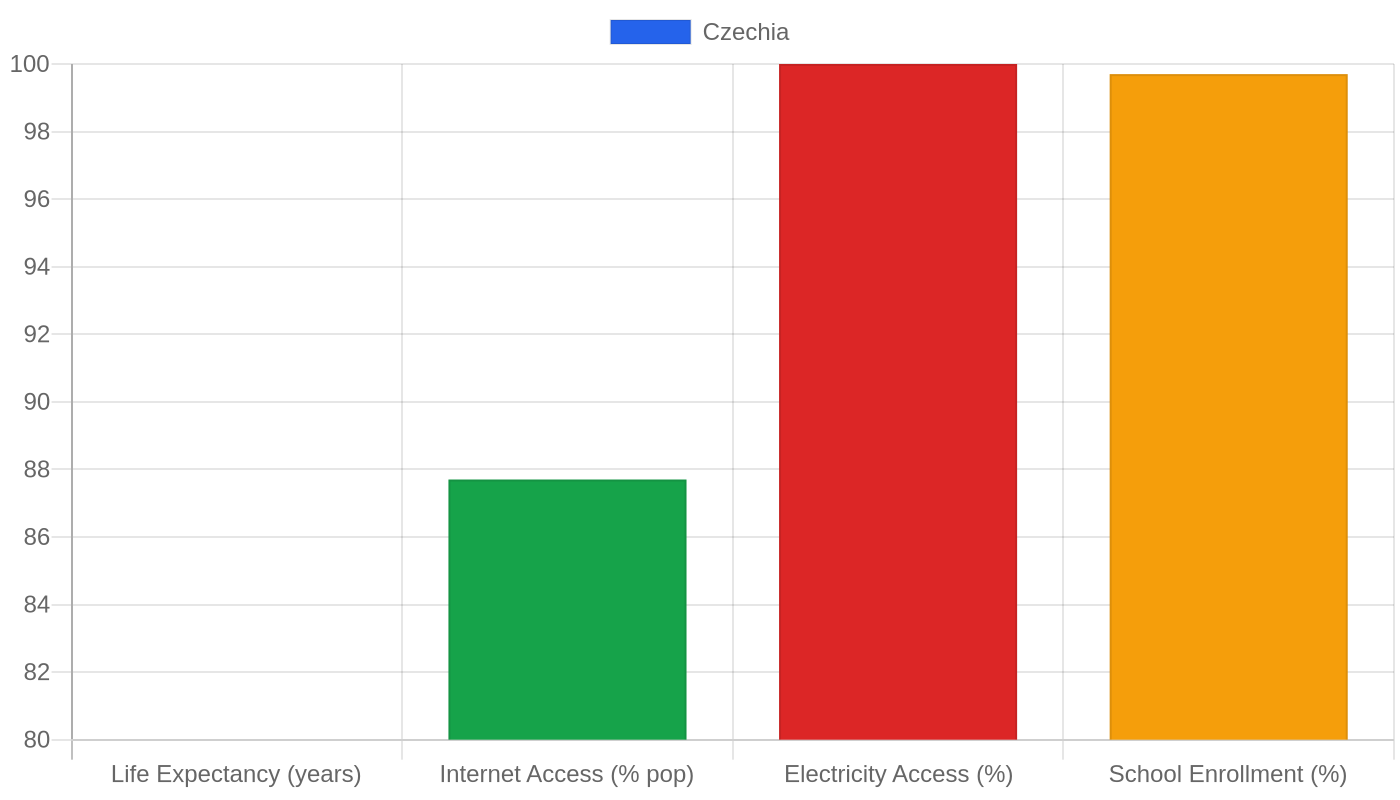
– Economic Data Gap: The World Bank has not released core economic indicators for Czechia in this reporting cycle, making independent analysis and regional comparison challenging.
– Manufacturing and Industrial Core: While specific company data is limited, Czechia’s position as a Central European manufacturing hub remains its defining economic characteristic.
– Safety and Security Profile: With crime and safety indices unavailable, the country’s reputation as a low-crime, high-social-trust nation persists based on historical patterns.
– Structural Political Framework: The bicameral Parliament—with a 200-member Chamber of Deputies and an 81-member Senate—creates a complex legislative environment where coalition building is essential for governance.
The Czech Economic Engine — Between Industrial Heritage and Modern Transition
Czechia’s economic story is one of profound transformation, from a centrally planned economy to one of Central Europe’s most industrialized and export-oriented markets. The World Bank data for GDP growth, inflation, and unemployment remain unreported for this cycle, which in itself tells a story—a country in a data vacuum that makes precise policy assessment difficult.
What we do know is structural: Czechia has long been characterized by its deep integration into European supply chains, particularly in automotive manufacturing, machinery, and engineering. The country’s GDP per capita on a purchasing power parity basis has historically placed it among the wealthier post-communist states, though the current figures are unavailable.
The absence of hard numbers does not erase the fundamental realities. Czechia’s economy has traditionally been heavily export-dependent, with Germany as its primary trading partner. This creates both opportunity and vulnerability—when the European economy breathes, Czech factories hum; when it stutters, the effects ripple quickly through the domestic labor market.
The Czech National Bank has historically maintained a reputation for conservative, inflation-targeting policy, though current CPI data is not available. Unemployment, which has been among the lowest in the European Union for years, remains a critical indicator to watch as demographic pressures and automation reshape the industrial workforce.
What matters most is the direction of travel. Czechia sits at a crossroads between its industrial past and a digital, green-energy future. The transition is not smooth, and the absence of current World Bank data makes it harder to assess whether the country is accelerating or stalling in this transformation. For investors and policymakers, this data gap is itself a concern—one cannot manage what one cannot measure.
Housing and Living Costs — The Squeeze on Czech Households
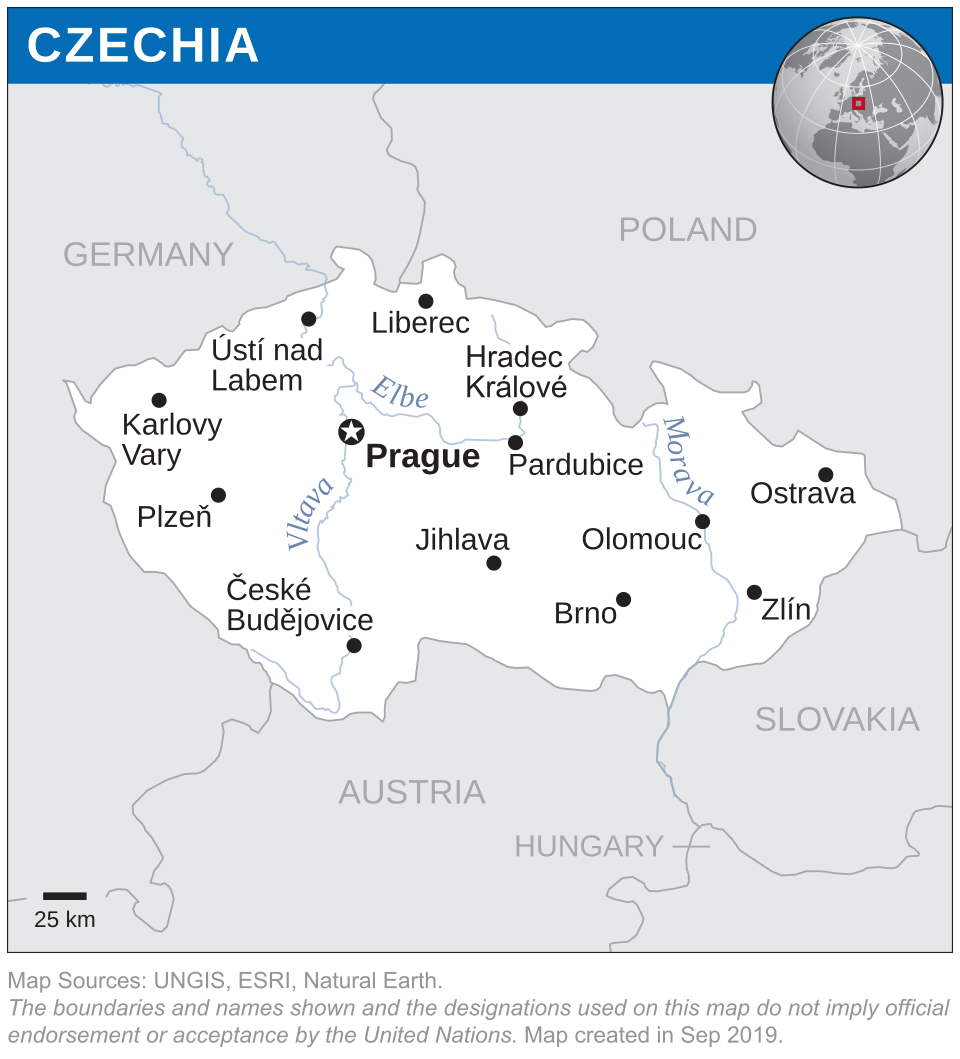
The cost of living in Czechia has been a growing source of public anxiety, even as specific index data remains unreported in this cycle. Prague, the capital, has historically been more affordable than Western European cities like Vienna or Berlin, but the gap has narrowed considerably over the past decade.
Rental prices in the capital have climbed steadily, driven by a combination of limited housing supply, regulatory constraints on new construction, and rising demand from both domestic migration and expatriate workers. The trend has pushed homeownership further out of reach for younger Czechs, creating a generational divide in housing access.
Beyond the capital, regional cities like Brno, Ostrava, and Plzeň offer more moderate costs, but they too have seen prices creep upward. The broader Central European context matters here—Czechia has historically sat between the higher-cost economies of Western Europe and the lower-cost markets of the Eastern EU members. That middle position is eroding as Czech wages rise and the koruna maintains relative strength.
For households, the daily reality involves balancing housing costs against food, energy, and transportation expenses, with energy prices being a particular concern given the country’s industrial energy demands and its complicated relationship with Russian gas imports.
The rent-versus-buy calculation in Czechia has shifted notably. With mortgage rates responding to European Central Bank policy and domestic inflation pressures, the advantage has tilted toward renting for many urban professionals. However, the cultural preference for homeownership remains strong, creating a frustrated demand that the construction sector has struggled to meet. This is a structural issue that no single policy intervention has yet resolved.
Business and Investment — Where Czechia’s Opportunities Lie
Czechia’s business environment is defined by its position as a manufacturing gateway between Western and Eastern Europe. While top company data is not provided in this reporting cycle, the country’s economic fabric has long been woven from a mix of domestically-owned engineering firms, foreign-owned automotive plants, and a growing technology sector.
The automotive industry has been the crown jewel—Škoda Auto, based in Mladá Boleslav, has historically been one of the country’s largest exporters and employers, though specific current figures are unavailable.
The investment climate benefits from Czechia’s central location, skilled workforce, and infrastructure connectivity. The country has attracted significant foreign direct investment, particularly in automotive, electronics, and increasingly in software development and shared services. The business environment, however, is not without friction.
Bureaucratic hurdles, an aging infrastructure in some regions, and a chronic shortage of skilled labor—particularly in technical fields—have been recurring complaints from both domestic entrepreneurs and international investors.
Sectors to watch include advanced manufacturing, where Czechia is positioning itself for the electric vehicle transition, and the technology sector, which has grown from a niche into a meaningful economic force. The country’s engineering tradition provides a solid foundation for automation and Industry 4.0 investments. For investors, the key question is whether Czechia can move up the value chain fast enough to maintain its competitive edge as labor costs rise and global supply chains reconfigure.
Safety, Politics, and the Quality of Life Equation
The Czech Republic’s political system is a pluralist, multi-party parliamentary democracy—a structure that ensures representation but often complicates decisive governance. The Parliament is bicameral, with a 200-member Chamber of Deputies elected for four-year terms through proportional representation, subject to a 5% election threshold. The 81-member Senate provides a check on the lower chamber.
This design, with 14 voting districts mirroring the country’s administrative regions, was intended to balance national and regional interests. In practice, it has produced a fragmented party landscape where coalition governments are the norm and political compromise is essential.
Crime and safety indices are not available in this reporting cycle, but Czechia has historically maintained a reputation as one of the safer countries in Europe. Violent crime rates have been low, and public trust in institutions, while not Scandinavian-level, has been reasonably solid.
The quality of life in Czechia is bolstered by a rich cultural scene, a strong healthcare system, and a deep appreciation for public spaces—Prague’s historic center is a UNESCO World Heritage site, and the country’s beer culture is world-renowned.
The political landscape, however, is not static. The proportional representation system, combined with the 5% threshold, creates an environment where populist movements can gain footholds alongside established parties. Coalition negotiations following elections have historically been protracted, and policy continuity can suffer as a result.
For residents, this means that while the democratic framework is stable, the policy direction can shift with each electoral cycle, affecting everything from energy policy to social spending.
Current Affairs — Czechia at a Pivotal Moment
Right now, Czechia is navigating a complex set of challenges that will define its trajectory through the remainder of the decade. The political system described above is actively shaping the country’s response to these pressures. With a fragmented parliament, the current government must thread the needle between fiscal responsibility, social spending demands, and the need for strategic investment in infrastructure and energy independence.
The energy question looms large. Czechia’s historical dependence on Russian energy has become a strategic vulnerability, and the country has been working to diversify its supply while managing the domestic political fallout of higher energy prices. Inflation, while not currently reported, has been a persistent concern, eroding household purchasing power and complicating the central bank’s policy calculations.
The labor market remains tight, but the sustainability of that tightness is questionable as global economic conditions shift.
On the business front, the automotive industry’s transition to electric vehicles is both an opportunity and a threat. Czechia’s industrial base is deeply tied to internal combustion engine manufacturing, and the shift to EVs requires massive investment in retooling, battery production, and workforce retraining. The government’s policy response to this transition will be critical.
Additionally, the country is grappling with demographic challenges—an aging population and the need to attract foreign workers to fill labor gaps, a politically sensitive issue in a country that has historically been wary of immigration.
The political calendar adds another layer of uncertainty. With the Chamber of Deputies elected for four-year terms, the next electoral cycle will test whether the current coalition can maintain cohesion or whether Czechia will see another period of political fragmentation and extended coalition negotiations. For now, the country continues to function, its economy still anchored by its industrial strengths, but the sense of an impending decision point is palpable.
The Bottom Line
Czechia is a country of considerable economic strength and structural resilience, but it is currently operating in a data vacuum that makes precise assessment difficult. For investors, the country offers a gateway to Central European markets with a skilled workforce and industrial heritage—but the political fragmentation and unresolved energy transition questions demand careful attention.
For policymakers and observers, Czechia represents a test case of whether a mid-sized European economy can successfully navigate the twin transitions of digitalization and decarbonization while maintaining social cohesion. The next few years will be telling, and the world should be watching.
Sources & Methodology
This article is authored by Economic Pulse Net for informational and research purposes. Economic Pulse Net sources its data from multilateral institutions, national statistics bureaus, and proprietary databases. All data is believed to be current as of the date of publication.
Published: August 26, 2026 | Category: Research — Czechia
Use these signals in your own platform
Economic Pulse publishes its live signal feed through a documented, read-only API. Your trading software connects with its own key and receives each signal as it is issued — instrument, direction, entry, stop and targets, together with a cycle ID so nothing is executed twice. The feed is independent of this website and cannot change it.
Signals are informational only and are not financial advice.