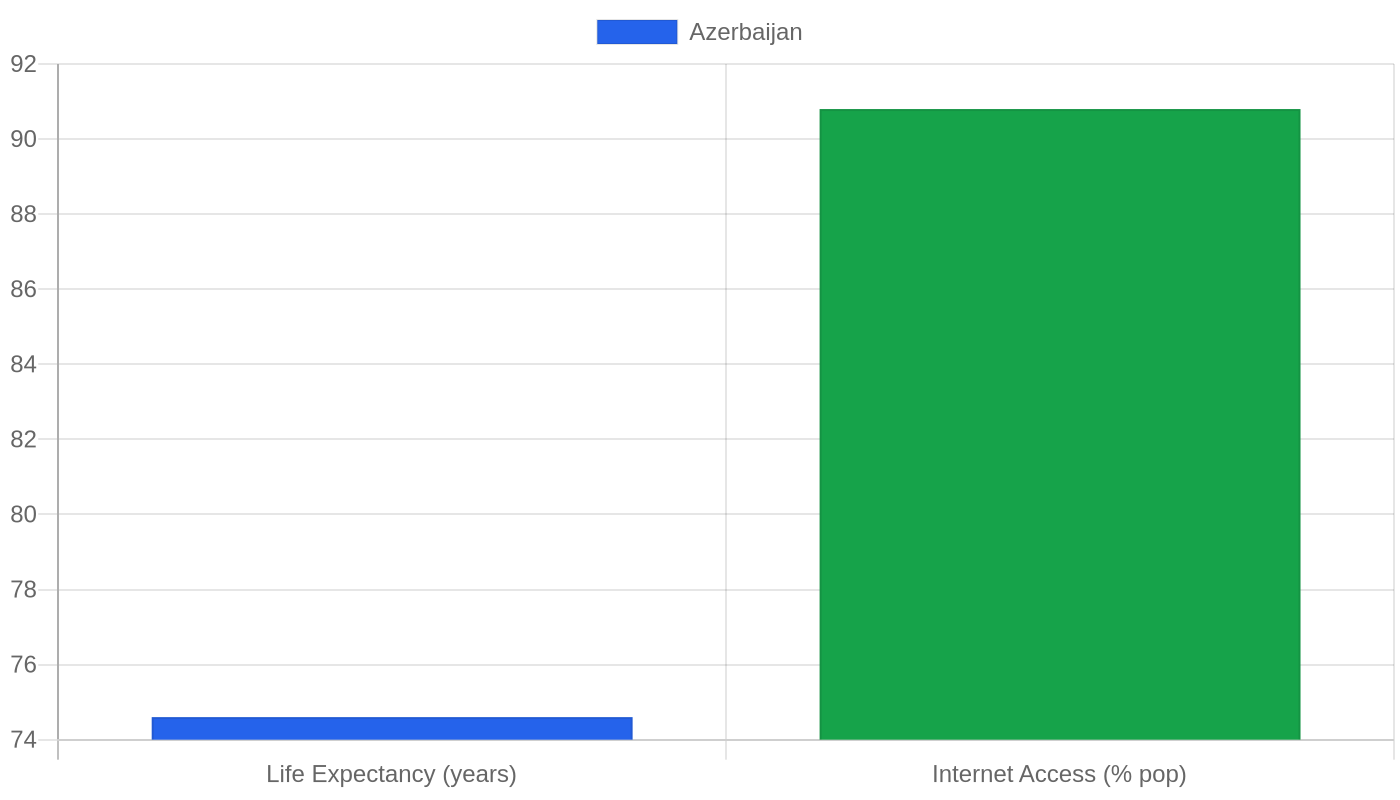
Economic Pulse Net | Sources: World Bank World Development Indicators, Government Sources | 2026
Key Takeaways
– Azerbaijan’s economy remains heavily dependent on oil and gas revenues, though the government has pursued modest diversification into transportation and logistics
– The country operates as a consolidated authoritarian regime under the Aliyev family, with Freedom House ranking it 7 out of 100 on global freedom — among the world’s most restrictive political environments
– State-owned enterprises dominate key sectors, from shipping to railways to water utilities, creating a business climate where political connections determine commercial success
– Despite the absence of recent World Bank economic indicators, Azerbaijan’s strategic location on the Caspian Sea and its role as an energy transit corridor make it a persistent geopolitical player
– The security situation remains tightly controlled, though the lingering Nagorno-Karabakh conflict has historically shaped both domestic politics and regional alliances
The Oil-Fueled Paradox — Growth Without Transparency
Azerbaijan presents a curious case for economic observers. The World Bank has not published recent data on GDP growth, inflation, or unemployment for the country — a silence that itself speaks volumes about data transparency challenges in the Caspian region. What analysts do know is that Azerbaijan’s economy has historically ridden the volatile waves of global energy prices, with hydrocarbons accounting for the overwhelming majority of export revenues and government budgets.
The absence of up-to-date macroeconomic indicators from the World Bank does not mean the economy has stopped moving. Rather, it reflects a broader pattern in which state-controlled statistical agencies release data on irregular schedules, and international institutions struggle to verify ground-level economic realities.
The country’s GDP per capita, when last reliably measured, placed Azerbaijan in the upper-middle-income bracket — a status achieved almost entirely through oil and natural gas extraction from the Caspian Sea basin.
Inflation pressures have been a recurring concern, as energy wealth flows through the economy and drives up prices for non-tradable goods and services. The central bank has periodically tightened monetary policy to contain price growth, but the effectiveness of these measures remains difficult to assess without consistent CPI data.
Unemployment figures are similarly opaque, with official statistics typically showing low jobless rates that many independent analysts suspect undercount informal labor and underemployment.
The structural challenge for Azerbaijan is straightforward but stubborn: how to transition from a rentier state built on hydrocarbon extraction to a diversified economy capable of generating sustainable growth. The country’s main industries, as identified by available data, remain concentrated in industrials and consumer services — sectors that often orbit around state spending and energy sector demand rather than emerging from organic private sector dynamism.
Housing and Daily Life — The Cost of Living in Baku’s Shadow
Azerbaijan’s cost of living is heavily shaped by the sharp divide between the capital Baku and the rest of the country. Baku, with its Caspian Sea waterfront, oil wealth architecture, and growing service sector, has seen property prices climb steadily as energy revenues have concentrated investment and employment in the capital region.
Renting an apartment in central Baku commands a significant premium over regional cities, reflecting both demand from the expatriate energy community and domestic migration from rural areas.
Housing ownership remains the dominant aspiration for Azerbaijani households, though affordability has become strained for younger buyers entering the market. The construction sector, anchored by companies like Akkord Industry Construction Investment Corporation, has responded with new residential developments, but these often target the upper-middle segment rather than addressing broader housing needs.
Outside Baku, housing costs drop considerably, but so do economic opportunities — creating a geographic tension that shapes family decisions across the country.
Daily expenses for food, transportation, and utilities are moderate by regional standards, though inflation in basic goods has periodically eroded household purchasing power. The state-owned utility Azersu Open Joint Stock Company controls water services across the country, while energy prices remain subsidized by hydrocarbon revenues — a policy that keeps household bills low but also discourages efficiency and strains the state budget when global oil prices fall.
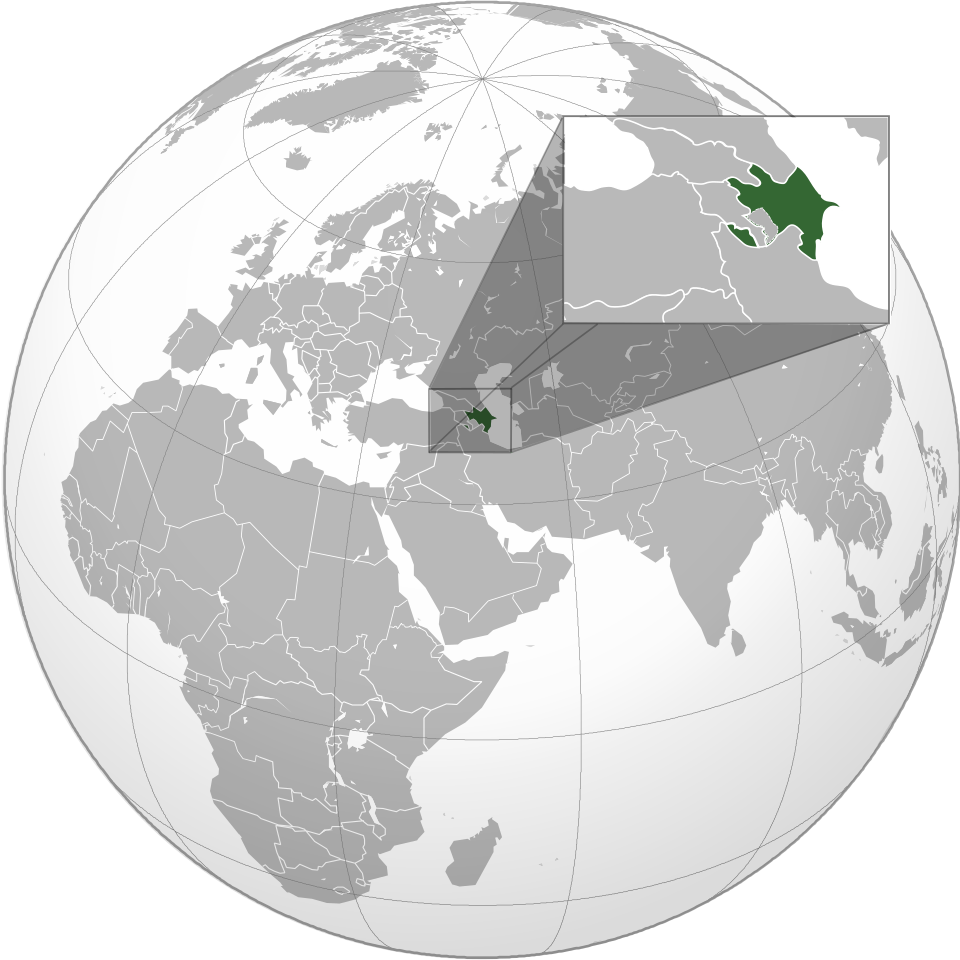
Business and Investment — Where State Power Meets Commercial Ambition
The corporate landscape in Azerbaijan is dominated by state-linked enterprises and companies with close ties to the ruling political establishment. The list of top companies reads like a directory of strategic sectors: Azerbaijan Caspian Shipping Company controls maritime trade on the Caspian; Azerbaijan Railways manages the country’s rail corridors; AccessBank and AtaBank operate in the financial sector under regulatory frameworks that favor established players.
For international investors, the most accessible opportunities have traditionally been in oil and gas extraction, where major production-sharing agreements have brought foreign oil companies into partnership with the state energy company SOCAR. Outside the energy sector, the business climate is more challenging.
The conglomerate AF Holding and its affiliated AF Hotel Group illustrate how commercial success often requires integration across multiple sectors — a strategy that reduces risk but also concentrates economic power in a small number of interconnected groups.
The financial sector remains shallow by international standards. AccessBank Azerbaijan and AtaBank represent a banking system that is adequately capitalized but limited in its lending to small and medium enterprises. Entrepreneurs seeking startup capital often rely on family networks or retained earnings rather than formal credit markets.
The government has spoken about improving the business environment and attracting foreign direct investment beyond hydrocarbons, but concrete reforms have been slow to materialize.
Security, Politics, and the Price of Stability
Freedom House’s assessment of Azerbaijan as “not free” with a score of 7 out of 100 on the Global Freedom Index places the country among the world’s most politically restrictive states. The political system is built around the Aliyev family and the New Azerbaijan Party, which has held uninterrupted power since 1993. Elections are held regularly, but international observers have documented electoral fraud and unfair practices in successive votes.
The political landscape directly shapes quality of life in ways that go beyond economic indicators. Civil society operates under tight constraints, independent media faces persistent pressure, and political opposition has limited space to organize. For many Azerbaijanis, this stability trade-off is accepted as the price of avoiding the chaos that has affected other post-Soviet states — though critics argue that the authoritarian bargain has delivered security at the cost of genuine political accountability.
Crime and safety indices are not available in the current data, but anecdotal evidence suggests that street crime in Baku is relatively low compared to many regional capitals. The state’s extensive security apparatus maintains public order, though this control extends well beyond traditional law enforcement into monitoring of political dissent and social behavior.
For foreign visitors and business travelers, the security environment is generally manageable, provided they avoid political activism or criticism of the government.
The Geopolitical Chessboard — Azerbaijan’s Current Affairs and Strategic Calculus
Azerbaijan’s current position on the global stage is defined by its role as an energy supplier and transit corridor at a time when European nations are urgently seeking alternatives to Russian hydrocarbons. The country’s natural gas exports, delivered via the Southern Gas Corridor, have taken on new strategic significance as the European Union pursues energy diversification following the disruption of Russian pipeline supplies.
This geopolitical tailwind has strengthened Azerbaijan’s bargaining position with both European capitals and regional neighbors.
Domestically, the government continues to manage the post-conflict landscape following the 2020 Nagorno-Karabakh war, which resulted in Azerbaijan reclaiming territories that had been under Armenian control for decades. The reconstruction of these areas represents both an economic opportunity — construction companies like Akkord are positioned to benefit from rebuilding contracts — and a long-term fiscal commitment that will test the state’s financial capacity.
The country’s transportation infrastructure is receiving renewed attention, with Azerbaijan Railways and the Caspian Shipping Company positioned to benefit from growing trade flows along the Middle Corridor connecting China to Europe via Central Asia and the Caucasus.
This transit role offers Azerbaijan a potential economic diversification pathway that does not depend entirely on oil prices, though realizing this potential requires continued investment in port facilities, rail upgrades, and customs modernization.
The Bottom Line
Azerbaijan is a country to watch for investors and analysts interested in energy geopolitics, authoritarian development models, and the economic transformation of post-Soviet states. The combination of hydrocarbon wealth, strategic location, and political stability under autocratic rule creates a distinctive risk-reward profile that appeals to some international partners while deterring others.
For those willing to navigate the political constraints and data opacity, Azerbaijan offers exposure to one of the Caspian region’s most consequential economies — but the absence of reliable macroeconomic indicators and the concentration of power in state-linked enterprises mean that investment decisions must be made with eyes wide open to the political realities that shape every aspect of commercial life.
Sources & Methodology
This article is authored by Economic Pulse Net for informational and research purposes. Economic Pulse Net sources its data from multilateral institutions, national statistics bureaus, and proprietary databases. All data is believed to be current as of the date of publication.
Published: July 30, 2026 | Category: Research — Azerbaijan
Use these signals in your own platform
Economic Pulse publishes its live signal feed through a documented, read-only API. Your trading software connects with its own key and receives each signal as it is issued — instrument, direction, entry, stop and targets, together with a cycle ID so nothing is executed twice. The feed is independent of this website and cannot change it.
Signals are informational only and are not financial advice.