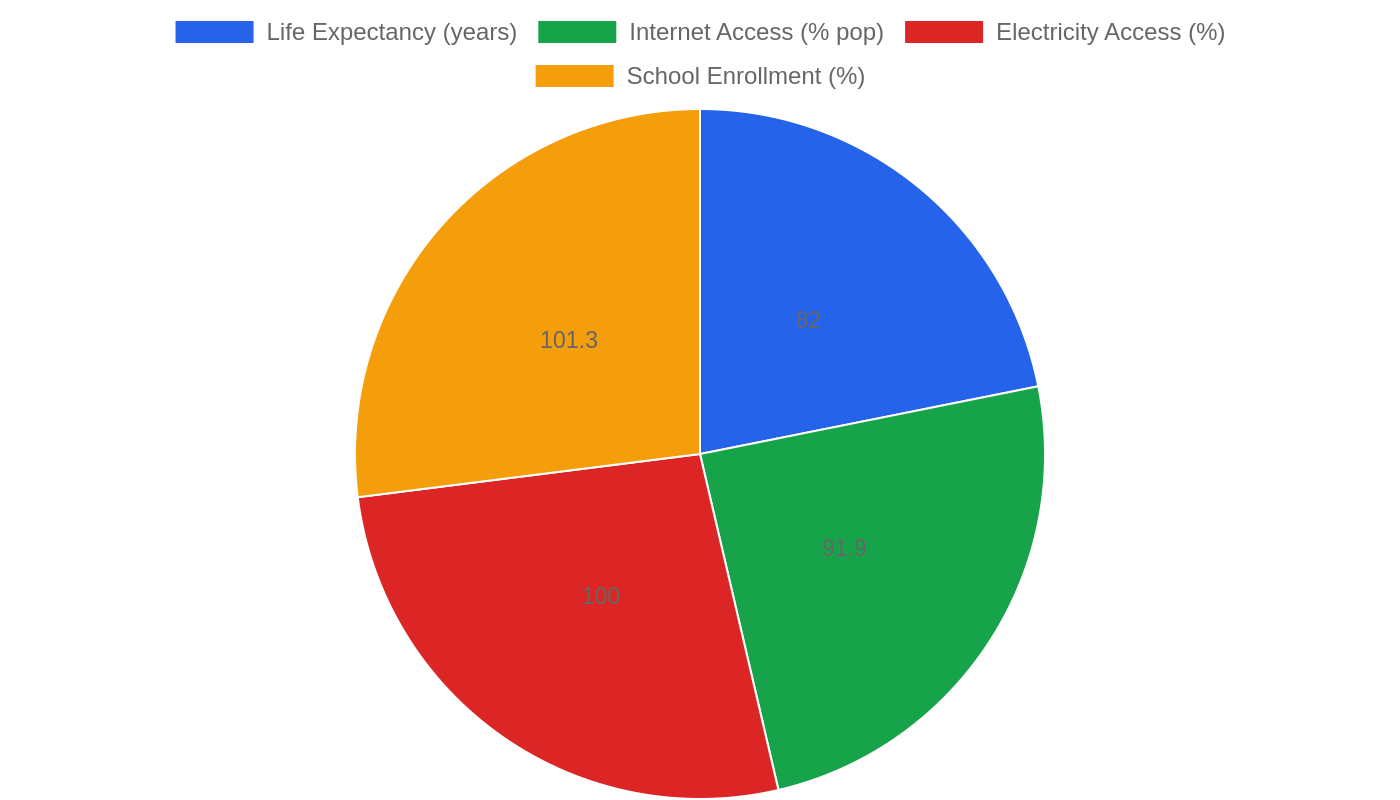
Economic Pulse Net | Sources: World Bank World Development Indicators, Government Sources | 2026
Austria often escapes the headlines, overshadowed by its larger neighbours Germany and Italy. But this landlocked nation of nine federal states, with its grand Habsburg-era architecture and Alpine vistas, is undergoing a subtle economic recalibration. With GDP growth grinding to a near-halt and unemployment creeping toward six percent, the Republic is confronting the reality that its export-driven, high-wage model needs a fresh spark.
Yet, beneath the surface of sluggish expansion lies a formidable industrial base, anchored by global leaders in cooling technology, chip manufacturing, and premium consumer goods, suggesting that Austria’s economic narrative is far from finished.
Key Takeaways
– Minimal Growth, Persistent Anxiety: The World Bank reports Austria’s GDP growth at a mere 0.62% for 2025, signalling a near-stagnant economy that is highly sensitive to external demand shocks.
– Labour Market Strain: Unemployment sits at 5.58%, a level that, while not catastrophic by European standards, indicates a cooling jobs market and rising pressure on social welfare systems.
– Tech and Industry Are the Bedrock: From ams AG in semiconductors to Andritz in industrial plant engineering, Austria’s economic resilience is tied to high-tech manufacturing and niche industrial exports, not just tourism.
– Political Stability as a Shield: With a federal parliamentary system centred in Vienna and a constitution dating back to 1920, Austria offers a predictable governance environment, a crucial asset for long-term investors.
– A Tale of Two Economies: While the headline GDP figure is weak, the presence of globally competitive firms suggests that the corporate sector is healthier than the macro data implies—a classic “profits without prosperity” scenario.
Growth, Jobs, and the Machinery of the State
The World Bank’s latest data paints a picture of a nation caught in a holding pattern. Austria’s GDP growth of 0.615% is the kind of number that keeps finance ministry officials awake at night—not enough to signal a recession, but far too weak to generate the tax revenues needed to maintain the country’s generous public services.
This anaemic expansion is largely a function of Austria’s deep integration into the German supply chain; when the German engine sputters, Austria feels the vibration almost immediately. The industrial sector, which relies heavily on exports of machinery, vehicle parts, and specialised steel products, is facing headwinds from global trade fragmentation and high energy costs, a legacy of the recent European energy crisis.
The labour market is beginning to show the strain of this low-growth environment. With unemployment at 5.58%, the country is seeing a gradual erosion of the “full employment” ethos that has defined Austrian social policy since the post-war era. This figure represents more than just a statistic; it reflects a structural mismatch between the skills of the workforce and the demands of a rapidly digitalising economy.
While the service sector, particularly in Vienna, continues to absorb workers, the industrial heartlands in Upper Styria and Lower Austria are feeling the pinch. The challenge for the new government is to stimulate growth without igniting inflation, a balancing act that requires a deft hand in fiscal policy.
The reliance on a handful of large industrial conglomerates makes the economy vulnerable to sector-specific shocks, yet it also provides a floor under the broader economic downturn, preventing a more precipitous collapse.
Housing, Costs, and the Alpine Premium
For the average Austrian, the cost of living remains a pressing concern, though the data provided offers no specific price indices. However, one can infer from the broader European context that Austria operates with a high-cost, high-quality model. Housing in Vienna, despite its reputation for social housing and rent controls, has seen significant price appreciation in recent years, particularly in desirable inner-city districts.
The dichotomy between rent and buy is stark; while the rental market is heavily regulated and offers security of tenure, purchasing property in the capital requires substantial capital and access to credit, which is becoming more expensive as European interest rates remain elevated. Daily expenses—from groceries to dining out—carry an “Alpine premium” that is noticeably higher than in Southern or Eastern Europe, reflecting the country’s high wages and stringent quality standards.
The cost of energy and utilities is another factor weighing on household budgets. Austria’s transition to renewable energy, while ambitious, has not yet insulated consumers from price volatility in the European grid. For those living in the western provinces like Tyrol and Salzburg, where tourism drives local economies, the cost of living is often inflated by the seasonal influx of visitors, pushing up prices for everything from rental accommodation to basic services.
The gap between the affluent urban professional class and those dependent on fixed incomes or seasonal work is widening, a social fissure that is beginning to dominate domestic political discourse. Despite these pressures, the overall quality of life remains high, with excellent public transport, healthcare, and education systems mitigating some of the financial strain.
Investment, Innovation, and the Export Champions
Austria’s corporate landscape is a fascinating blend of family-owned Mittelstand firms and publicly traded global players. The list of top companies reveals a distinct focus on consumer goods and high-end industrial technology. A. Darbo, known for its premium jams and preserves, represents the strong agri-food processing sector, which leverages Austria’s pristine Alpine image to command premium prices globally.
On the industrial side, Andritz is a behemoth in plant engineering, providing technology for the pulp and paper, and hydropower industries worldwide. Similarly, AHT Cooling Systems is a global leader in commercial refrigeration, a critical niche in the food retail supply chain. These companies are not just manufacturers; they are solution providers whose intellectual property and engineering expertise allow them to weather economic downturns better than commodity producers.
The technology sector is arguably the most critical area to watch. ams AG and AT&S are at the forefront of semiconductor and circuit board technology, respectively. AT&S, in particular, has repositioned itself as a key supplier for the automotive and industrial electronics sectors, betting big on the shift toward electric vehicles and Industry 4.0 applications. For investors, Austria offers a stable regulatory environment and a highly skilled workforce, though the tax burden and labour costs are high.
The business climate is characterised by consensus-based decision-making, which can be slow but ultimately provides a high degree of predictability. The presence of firms like Atomic Skis also highlights the importance of the sporting goods and winter tourism cluster, an industry that is increasingly vulnerable to climate change but remains a vital source of national pride and export revenue.
Governance, Safety, and the Social Contract
Austria’s political system, defined by the Federal Constitutional Law of 1920 and re-enacted in 1945, provides a robust framework for stability. The Second Republic, with its nine states, operates on a principle of social partnership that has historically brought together labour unions, employers, and the government to manage economic policy. This consensus-driven approach has been a bulwark against the kind of political extremism that has plagued other European nations.
While the data does not provide a specific crime index, Austria is widely regarded as one of the safest countries in Europe, with low rates of violent crime and a highly professional police force. The capital, Vienna, consistently ranks high in global liveability indices, a testament to its green spaces, cultural offerings, and efficient public services.
However, the political landscape is not without its tensions. The rise of populist movements in recent years has challenged the traditional centrist parties, forcing debates on immigration and European integration to the forefront. The quality of life, while high, is increasingly contingent on the stability of the social welfare system, which is coming under fiscal pressure due to demographic changes. An ageing population means rising healthcare and pension costs, while the working-age population shrinks.
This demographic squeeze will require difficult choices in the coming years, potentially including pension reforms or increases in the retirement age. For now, the social contract holds, but the seams are visible, and the government’s ability to manage these long-term structural challenges will define the nation’s trajectory.
Current Affairs: The Wait-and-See Economy
As 2025 unfolds, Austria finds itself in a peculiar political and economic limbo. The government is grappling with the need to revitalise growth, but the tools available are constrained by the European Union’s fiscal rules and the need to maintain a balanced budget. The recent news cycle has been dominated by debates over industrial policy, specifically how to support energy-intensive industries that are struggling to compete with rivals in regions with cheaper energy.
The coalition government is under pressure to deliver a “Standortpaket”—a package of measures aimed at improving the competitiveness of Austria as a business location. This includes potential tax incentives for research and development and a streamlining of bureaucratic processes for new investments.
The labour market is another immediate concern, with the unemployment rate of 5.58% likely to be a central topic in upcoming parliamentary debates. There is a growing consensus that the current education and training systems are not adequately preparing workers for the green and digital transitions. The government is exploring “active labour market policies”—essentially retraining programs—but these take time to yield results. Meanwhile, the corporate sector is not waiting for the politicians.
Companies like Andritz and AT&S are forging ahead with their own global expansion plans, diversifying their supply chains to reduce reliance on any single market. The mood is one of cautious optimism; the economy is not collapsing, but there is a palpable sense that the status quo is unsustainable. The next few quarters will be crucial in determining whether Austria can rekindle its growth engine or settle into a prolonged period of stagnation.
The Bottom Line
Austria is a country of solid fundamentals and emerging challenges. For investors, it offers a safe haven with a strong industrial base and political stability, but the low growth rate suggests that returns will be moderate. For policymakers, it is a warning sign that even the most well-managed economies are not immune to global headwinds. For the Austrian people, it is a test of resilience.
This is a nation that needs to watch its step; the path forward requires innovation and a willingness to reform, but the destination—a prosperous, stable, and inclusive society—is well worth the journey.
Sources & Methodology
This article is authored by Economic Pulse Net for informational and research purposes. Economic Pulse Net sources its data from multilateral institutions, national statistics bureaus, and proprietary databases. All data is believed to be current as of the date of publication.
Published: August 04, 2026 | Category: Research — Austria
Use these signals in your own platform
Economic Pulse publishes its live signal feed through a documented, read-only API. Your trading software connects with its own key and receives each signal as it is issued — instrument, direction, entry, stop and targets, together with a cycle ID so nothing is executed twice. The feed is independent of this website and cannot change it.
Signals are informational only and are not financial advice.