Economic Pulse Net | Sources: World Bank World Development Indicators, Government Sources | 2026
🇻🇳 Vietnam 2025: The Engine Roars as “Ardently Capitalist Communists” Defy Gravity
Key Takeaways
- Unprecedented Growth: Vietnam is posting a staggering GDP growth rate of over 8%, signaling a massive acceleration in economic activity for 2025.
- Macro Stability: Despite rapid expansion, the economy remains remarkably stable, with inflation held at a manageable 3.31% and unemployment sitting at a negligible 1.52%.
- Industrial Diversification: The corporate landscape is shifting away from pure agriculture, with significant presence in financial services, technology, and consumer services led by major domestic firms.
- Political Paradox: The nation operates under a strict one-party communist system that is simultaneously pursuing aggressive market-oriented policies, creating a unique hybrid economic model.
The 8% Miracle: Unpacking Vietnam’s Economic Acceleration
The most striking figure in the current World Bank data is Vietnam’s GDP growth rate, which has surged to an impressive 8.02% for 2025.
This is not merely a modest increase; it represents a powerful acceleration that places Vietnam among the fastest-growing major economies in the region.
To understand the magnitude of this achievement, one must look at the scale of the economy itself, which now stands at approximately $514.7 billion.
While the total GDP is substantial, the per capita figures offer a different perspective on living standards.
The GDP per capita at Purchasing Power Parity (PPP) stands at $18,088, suggesting that domestic purchasing power is significantly higher than the nominal GNI per capita of $4,970 might initially imply.
This discrepancy highlights the cost-of-living adjustments that make domestic goods and services more affordable for the average Vietnamese citizen compared to global markets.
Employment statistics further reinforce the robustness of this growth.
With an unemployment rate of just 1.52%, the labor market is effectively at full capacity, indicating that the surge in economic output is being driven by broad-based participation rather than speculative bubbles or isolated industrial booms.
Inflation, meanwhile, remains well-contained at 3.31%.
For an economy growing at 8%, keeping inflation in the low single digits is a testament to effective monetary management.
It suggests that the central bank and fiscal authorities are successfully balancing the need for stimulus with the need to prevent currency devaluation.
This combination of high growth, low unemployment, and controlled inflation is often referred to as “Goldilocks” conditions in economic theory, and Vietnam appears to be thriving under them.
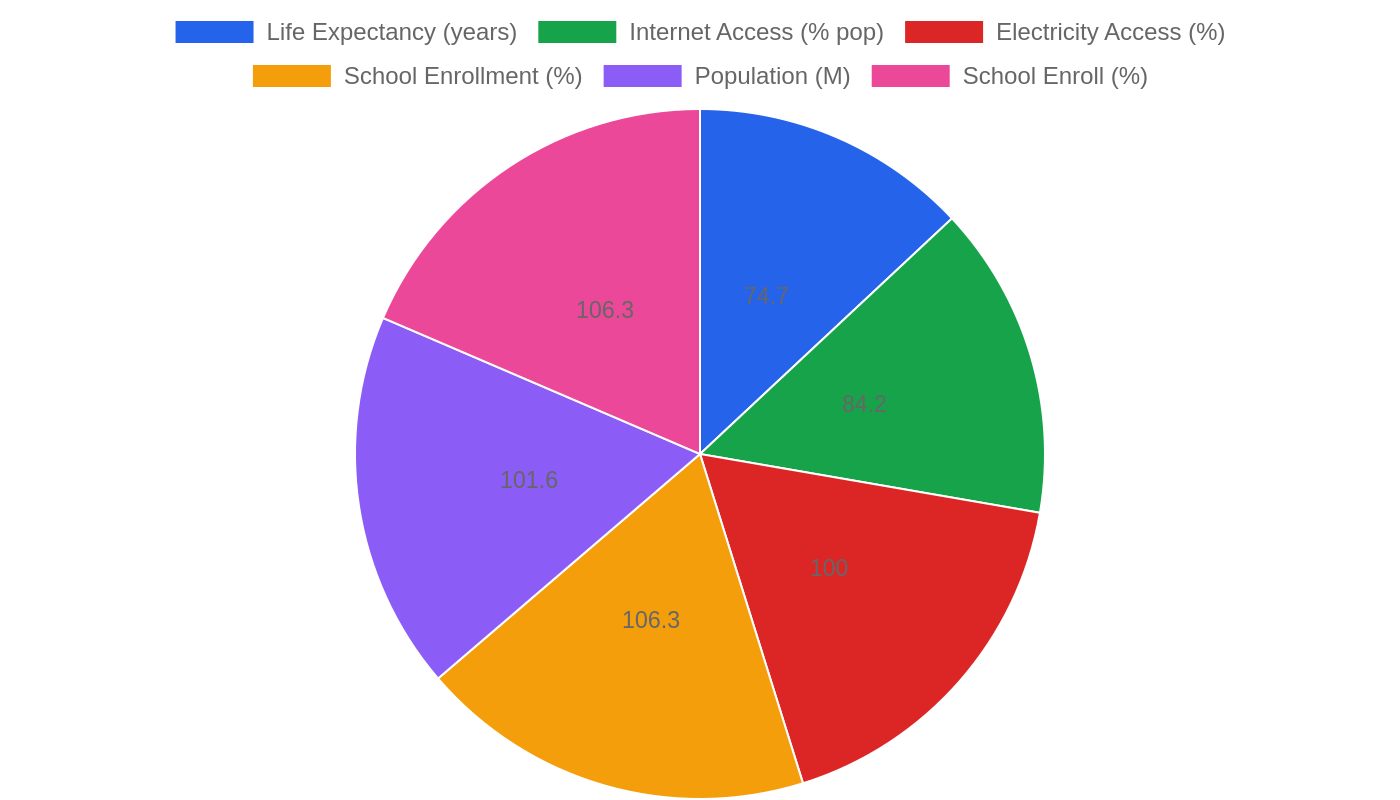
The population of over 101 million people provides the demographic fuel for this engine, creating a massive domestic market that can sustain consumption even if external trade conditions were to shift.
Living in the Boom: Affordability Amidst Rising Ambitions
While the macroeconomic numbers are dazzling, the cost of living remains a critical factor for the average resident.
Although specific housing and daily expense data points are not detailed in the provided dataset, the low inflation rate of 3.31% serves as a crucial buffer against the rising costs of life.
In many high-growth emerging markets, rapid industrialization often leads to a sharp spike in housing prices and daily expenses, outpacing wage growth.
However, Vietnam’s controlled inflation suggests that the cost of goods and services is rising at a predictable, manageable pace.
This stability is vital for the middle class, which is expanding rapidly.
When inflation is low, the real value of wages increases, allowing citizens to save and invest more confidently.
The gap between the GNI per capita of $4,970 and the much higher PPP-adjusted GDP per capita further underscores that while international earnings are modest, local purchasing power is robust.
This implies that for local residents, the cost of living is likely significantly lower than in Western economies, making the current economic boom feel tangible in their daily lives.
The affordability of daily life is also supported by the structure of the economy, which includes strong domestic producers in key sectors.
Companies like Bien Hoa Sugar and An Giang Coffee indicate a strong domestic supply chain for essential consumer goods.
When domestic production is strong, import dependencies are reduced, which helps keep prices stable even if global commodity markets fluctuate.
This local resilience is a key component of quality of life in Vietnam.
As the economy grows, the government and private sector are likely focusing on infrastructure and urban development to match the rising prosperity.
The low unemployment rate ensures that most households have a steady income stream, which is the foundation for any affordable lifestyle.
In essence, the economic data suggests a society where the benefits of growth are being broadly distributed, keeping the cost of living aligned with increasing incomes.
Titans of Trade: The Corporate Landscape and Sectoral Power
The business environment in Vietnam is dominated by a mix of state-influenced giants and emerging private sector players, reflecting the country’s unique political-economic hybrid.
Looking at the top companies, financial institutions hold a commanding presence, with names like Asia Commercial Bank, Bank for Investment and Development of Vietnam, and Bao Viet Holdings leading the pack.
This heavy weighting toward financials suggests that credit availability and capital allocation are the lifeblood of the current economic expansion.
The banking sector is essentially the engine room of Vietnam’s 8% growth, facilitating the investments that drive industrial output.
Beyond finance, the corporate landscape is diversifying into technology and consumer services.
Appota Corporation, a technology firm, signals Vietnam’s ambition to move up the value chain from manufacturing to digital services.
Consumer services are also a major pillar, with entities like Air Mekong and Airports Corporation of Vietnam playing critical roles in connectivity and tourism.
These companies are not just local players but often have significant international interactions, which is vital for a country that relies on trade.
The presence of healthcare firms like Bidiphar and consumer goods producers like Bien Viet Securities (noting the financial/consumer overlap in the list) shows a maturing domestic market.
Investors should watch the technology sector closely, as it often leads the way in productivity gains.
The coexistence of state-owned enterprises in key infrastructure sectors with private firms in consumer and tech sectors creates a complex but dynamic business environment.
This structure allows the state to maintain control over strategic assets while leveraging private sector efficiency in competitive markets.
The result is a business climate that is stable enough for long-term investment but agile enough to adapt to global trends.
The Red Flag Paradox: Politics, Safety, and Social Stability
Vietnam’s political landscape is defined by a distinct duality: it is a unitary communist state that self-designates as a socialist republic, yet its economic policies are increasingly described as capitalist.
The Communist Party of Vietnam (CPV) maintains its constitutional role as the leading force in the state, but external observers, including The Economist, have characterized the leadership as “ardently capitalist communists.” This label captures the essence of the Vietnamese model, where ideological commitment to socialism coexists with a pragmatic drive for market integration and foreign investment.
For the average citizen, this political stability translates into a predictable regulatory environment.
There is no risk of sudden political upheaval or policy reversals that might plague less stable democracies.
The one-party system ensures long-term planning horizons, allowing for consistent economic strategies that span decades.
Safety and quality of life are often high priorities for expatriates and investors, and while specific crime indices are not provided in the data, the low unemployment rate and economic stability are strong proxies for social peace.
High unemployment is often a driver of crime and social unrest, so a rate of 1.52% suggests a society that is largely secure and stable.
The political system’s focus on social harmony and state control of media and dissent helps maintain this order, although it comes with trade-offs in civil liberties.
For those considering living or investing in Vietnam, the political environment offers a sense of permanence and security.
The government’s ability to mobilize resources for national projects, such as infrastructure development, is a direct benefit of this centralized system.
In summary, Vietnam offers a unique proposition: the economic dynamism of a market economy wrapped in the political stability of a single-party state.
The Current Momentum: Why 2025 Is a Pivotal Year
The data for 2025 suggests that Vietnam is not just maintaining its growth trajectory but actively accelerating.
An 8% GDP growth rate is a headline-grabbing figure that requires active policy support and strong domestic demand.
This level of growth indicates that the country is likely in the midst of a major industrial or infrastructural push.
The stability of inflation at 3.31% during such a boom is particularly noteworthy, as it suggests that the central bank is effectively managing liquidity to prevent overheating.
This balance is critical for sustaining long-term growth without triggering a currency crisis.
The low unemployment rate reinforces that this growth is job-creating, which is essential for social stability and continued consumption.
The corporate sector is also signaling confidence.
The prominence of financial firms in the top companies list suggests that capital is flowing efficiently into the economy.
Technology and consumer services firms are also performing well, indicating a broad-based economic recovery and expansion.
The political leadership’s continued commitment to market reforms, despite the communist framework, ensures that the regulatory environment remains favorable for business.
There are no signs of policy paralysis or economic stagnation in the data; instead, the numbers paint a picture of a country that is fully engaged in the global economy.
The population of over 101 million provides a massive labor force and consumer base that can sustain this momentum.
For investors and observers, 2025 appears to be a year of confirmation, where Vietnam’s economic model is proving its viability on a global scale.
The Bottom Line
Vietnam in 2025 is an economic powerhouse in the making, characterized by exceptional growth rates and macroeconomic stability.
With GDP growth exceeding 8% and inflation kept in check, the country is delivering on its promise as a key emerging market.
The unique political structure provides a stable foundation for long-term investment, while the diverse corporate sector ensures resilience across different industries.
For global investors and policymakers, Vietnam is a country to watch closely, as its success offers a viable alternative model for development in the developing world.
The combination of high growth, low unemployment, and political stability makes it a prime destination for capital and talent in the coming years.
Sources & Methodology
This article is authored by Economic Pulse Net for informational and research purposes.
Economic Pulse Net sources its data from multilateral institutions, national statistics bureaus, and proprietary databases.
All data is believed to be current as of the date of publication. Published: September 06, 2026 |
Category: Research — Vietnam
Use these signals in your own platform
Economic Pulse publishes its live signal feed through a documented, read-only API. Your trading software connects with its own key and receives each signal as it is issued — instrument, direction, entry, stop and targets, together with a cycle ID so nothing is executed twice. The feed is independent of this website and cannot change it.
Signals are informational only and are not financial advice.