Economic Pulse Net | Sources: World Bank World Development Indicators, Government Sources | 2026
Key Takeaways
– The UAE posted a robust 3.99 percent GDP growth in 2024, according to the World Bank, defying global economic headwinds and demonstrating the resilience of its diversified economy.
– Inflation remains remarkably subdued at 1.25 percent — a figure that would be the envy of most developed and emerging economies alike, suggesting effective monetary and fiscal management.
– With a GDP per capita (PPP) of $79,343, the UAE ranks among the world’s wealthiest nations, though this masks significant income disparity between citizens and the large expatriate workforce.
– The country’s political structure remains a federal semi-presidential system under semi-constitutional monarchy, with power concentrated among seven hereditary tribal rulers — a model that has delivered stability but raises questions about long-term governance evolution.
– Despite the absence of official unemployment data, the UAE’s economy is heavily dependent on migrant labor, creating a unique demographic and economic dynamic that shapes everything from housing costs to consumer spending.
The Growth Engine — Defying Gravity in a Volatile World
The World Bank’s latest data paints a picture of an economy that has managed to do something rare in the current global climate: grow at nearly 4 percent while keeping inflation at a whisper-quiet **1.25 percent**. For context, most economies wrestling with post-pandemic supply shocks and geopolitical turbulence have struggled to contain price pressures while maintaining expansion.
The UAE’s **GDP of $552.3 billion** places it firmly among the middle-tier global economies, but its per-capita figures tell a different story.
At $79,343 per capita (PPP), the UAE sits comfortably alongside the world’s most developed nations. This figure, reported by the World Bank, reflects an economy that has successfully transitioned from a pure oil-exporting model to one increasingly driven by services, tourism, logistics, and finance. The **GNI per capita of $51,550** — while lower than the PPP figure — still underscores the extraordinary wealth concentration in this federation of seven emirates.
What makes the growth figure particularly noteworthy is what it does *not* include: a massive oil price boom. Unlike previous cycles where UAE growth was largely a function of crude prices, the current expansion appears more structural. The non-oil economy — particularly in Dubai’s real estate, tourism, and financial services sectors, as well as Abu Dhabi’s sovereign wealth and industrial strategies — is carrying the load.
The World Bank data suggests this diversification strategy is working, though the country remains vulnerable to global demand shocks that could hit its logistics and tourism hubs.
The Price of Paradise — Housing and Living in the Gulf’s Consumer Capital
Living in the UAE carries a premium that reflects its status as a regional hub for wealth, commerce, and expatriate talent. While the World Bank data does not provide specific cost-of-living indices, the country’s high per-capita income figures imply a correspondingly high cost structure — particularly in housing.
Dubai and Abu Dhabi consistently rank among the most expensive cities in the Middle East for accommodation, with rents consuming a significant portion of household income for the majority of residents who are expatriates.
The rental market dominates the housing landscape, as foreign ownership restrictions — though loosened in recent years — still limit freehold property access primarily to designated zones and higher-income brackets. For most of the 11.5 million residents, renting is the only viable option. This creates a landlord-friendly market where annual rent increases can be substantial, though the low inflation environment has helped moderate these pressures in recent quarters.
Daily expenses for food, transportation, and utilities are generally higher than in neighboring Gulf states, though the absence of income tax partially offsets these costs. The UAE effectively operates a consumption-tax model, with VAT introduced in 2018 and various municipal fees embedded in utility bills and property transactions.
For the wealthy, the cost of living is a minor consideration; for the millions of blue-collar and mid-level white-collar workers who form the backbone of the economy, it is a constant source of financial pressure.
Where the Money Moves — Investment Climate and Corporate Power
The UAE’s business environment is defined by its openness to foreign capital, its strategic location between East and West, and its political stability — a combination that has made it a magnet for multinational corporations and regional headquarters. While the data provided does not list specific top companies, the landscape is dominated by entities like Emirates Group, Abu Dhabi National Oil Company (ADNOC), DP World, and various sovereign wealth funds that manage hundreds of billions in assets.
The investment climate benefits from a regulatory framework that has consistently ranked well in global ease-of-doing-business indices. Free zones — special economic areas with relaxed ownership rules and tax incentives — have been a particular driver of foreign direct investment, allowing 100 percent foreign ownership in sectors where onshore businesses might require local partners. The World Bank data’s high GDP per capita figure is both a cause and consequence of this capital inflow.
Sectors to watch include renewable energy, where the UAE has made ambitious commitments to solar and hydrogen; technology and artificial intelligence, where the government has launched national strategies and investment funds; and logistics, given the expansion of ports and airports to handle growing trade volumes. The challenge for investors will be navigating the complex federal structure, where each emirate maintains significant autonomy over economic policy and regulation.
Stability and Surveillance — The Social Contract of the Seven Sheikhdoms
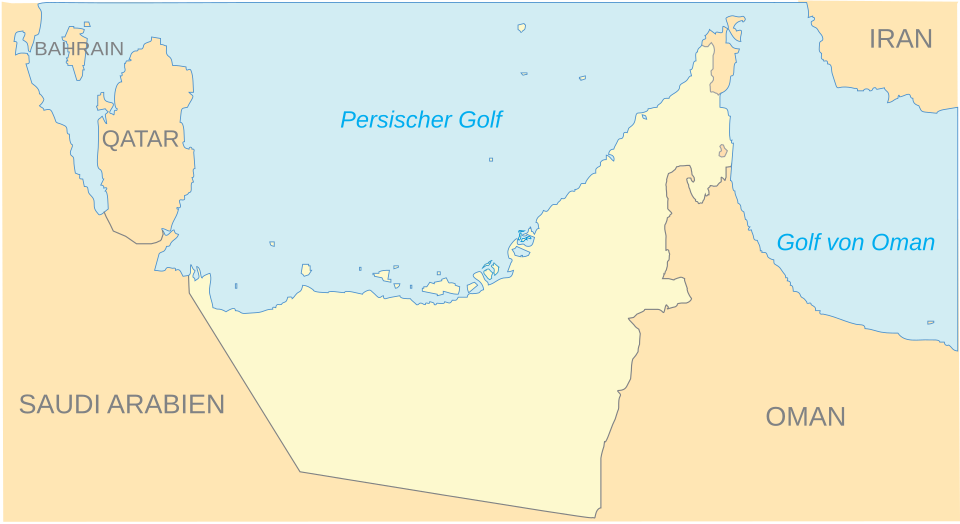
The political landscape, as described in the data, is a federal semi-presidential state under a semi-constitutional monarchy — a system that defies easy categorization. Power flows from the **Federal Supreme Council**, composed of the hereditary rulers of the seven emirates: Abu Dhabi, Ajman, Fujairah, Sharjah, Dubai, Ras Al Khaimah, and Umm Al Quwain. This structure has provided remarkable political stability for over five decades, but it comes with a governance model that prioritizes control over participation.
Crime and safety indices are notably absent from the data, but anecdotal and historical evidence suggests the UAE is among the safest countries in the world for residents and visitors. Petty crime is rare, violent crime even rarer, and the legal system — a hybrid of civil law and Sharia principles — imposes severe penalties for offenses. This safety, however, exists within a framework of extensive surveillance and strict limits on political expression, labor rights, and civil liberties.
Quality of life for the wealthy and for skilled professionals is extraordinarily high: world-class healthcare, education, infrastructure, and leisure facilities are readily available. For lower-income migrant workers — who make up roughly 90 percent of the population — the experience is markedly different, with labor rights concerns, housing in cramped camps, and limited pathways to permanent residency or citizenship. The social contract is clear: economic opportunity in exchange for political quiescence.
The Next Chapter — Diversification, Demographics, and the Digital Push
The most pressing story in the UAE today is the acceleration of its post-oil economic transformation. While the World Bank data shows impressive growth and low inflation, the country is racing against the clock of global energy transition. Every major emirate has launched ambitious economic agendas — Dubai’s D33 plan, Abu Dhabi’s industrial strategy, and the national “We the UAE 2031” vision — all aimed at reducing hydrocarbon dependence.
Demographics remain a critical vulnerability. With a population of 11.5 million but citizens numbering only around 1.5 million, the UAE’s economic model is entirely dependent on continued inflows of foreign talent and labor. Any disruption to this flow — whether from geopolitical tensions, competing regional hubs like Saudi Arabia, or global economic downturns — would have immediate and severe consequences for the real estate market, consumer spending, and government revenues.
The UAE is also positioning itself as a leader in artificial intelligence and digital governance, with the world’s first minister for AI and significant investments in cloud infrastructure and smart city technologies. The challenge will be whether this high-tech push can generate enough high-productivity jobs for a young, educated population — both citizens and long-term expatriates — while managing the social and economic pressures that come with such rapid transformation.
The Bottom Line
The United Arab Emirates in 2026 is a study in controlled success: high growth, negligible inflation, and political stability in a turbulent region. For investors, it offers a gateway to the Middle East, Africa, and South Asia with world-class infrastructure and a favorable tax environment.
For policymakers in other developing nations, it demonstrates that rapid diversification from resource dependence is possible — but the model’s reliance on expatriate labor and its limits on political freedom raise questions about long-term sustainability. This is a country to watch for anyone interested in how petrostates navigate the energy transition, how city-states build global brands, and how authoritarian capitalism delivers material prosperity at the cost of democratic participation.
Sources & Methodology
This article is authored by Economic Pulse Net for informational and research purposes. Economic Pulse Net sources its data from multilateral institutions, national statistics bureaus, and proprietary databases. All data is believed to be current as of the date of publication.
Published: July 20, 2026 | Category: Research — UAE
Use these signals in your own platform
Economic Pulse publishes its live signal feed through a documented, read-only API. Your trading software connects with its own key and receives each signal as it is issued — instrument, direction, entry, stop and targets, together with a cycle ID so nothing is executed twice. The feed is independent of this website and cannot change it.
Signals are informational only and are not financial advice.