Economic Pulse Net | Sources: World Bank World Development Indicators, Government Sources | 2026
Key Takeaways
– Nepal’s economic trajectory remains difficult to quantify, with the World Bank currently lacking updated figures for GDP growth, inflation, and unemployment — a data vacuum that masks the lived reality of a nation navigating profound political and economic change.
– The country’s political landscape has stabilised into a multi-party federal democratic republic, with seven recognised national parties, yet the ideological divide between communist and centrist factions continues to shape policy direction.
– Nepal’s corporate sector is dominated by consumer services and aviation, with a notable presence of conglomerates like Chaudhary Group, suggesting an economy increasingly oriented toward domestic consumption and regional connectivity.
– The absence of reliable crime and safety indices makes it challenging to assess public security, though the political transition since 2015 has proceeded without the widespread civil conflict that marked earlier periods.
– For investors and observers, Nepal represents a frontier market where the gap between potential and data visibility remains a defining characteristic.
The Great Data Gap: Reading Nepal’s Economic Story Between the Lines
Here is the fundamental challenge facing anyone attempting to understand Nepal’s economy in 2026: the World Bank’s latest data points — GDP growth, inflation, unemployment, GDP per capita, GNI per capita, and even population figures — are all currently unavailable. For a country that has undergone one of the most remarkable political transformations in South Asia, this statistical silence is itself a story worth examining.
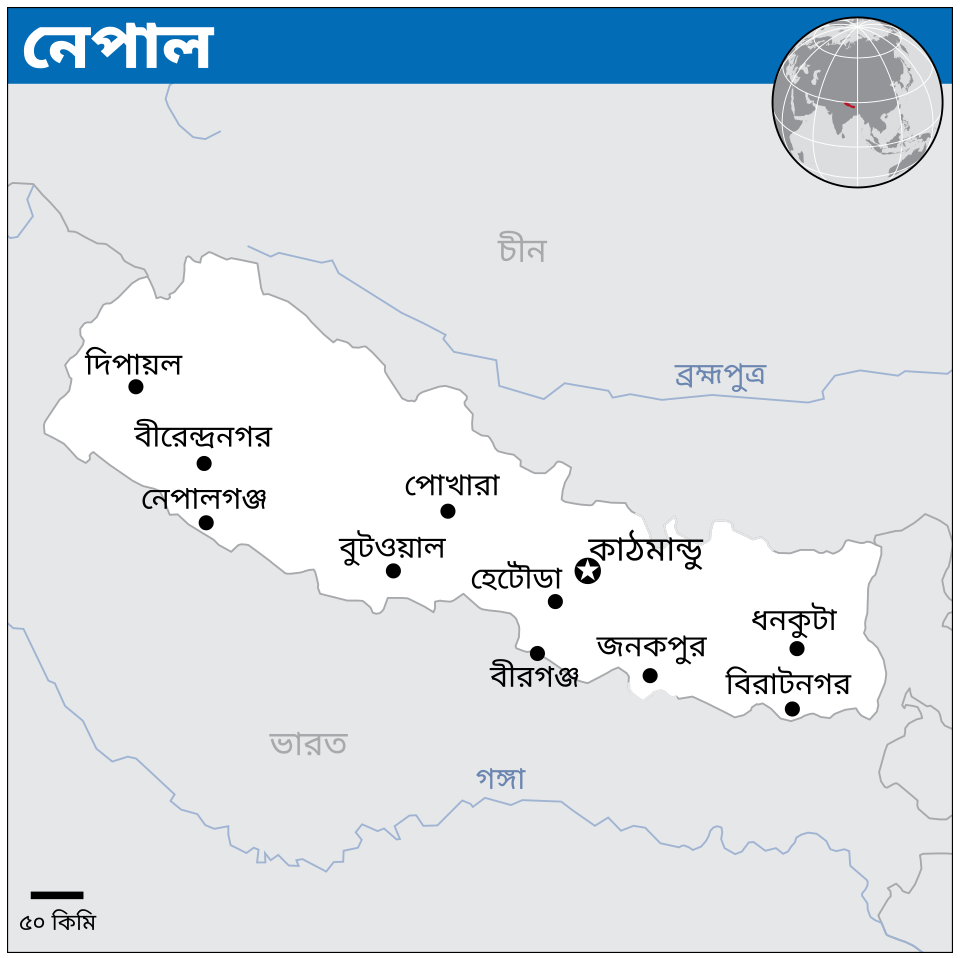
What we do know is that Nepal has been formally operating as the “Federal Democratic Republic of Nepal” since 2015, following the adoption of its new constitution. This political settlement ended a decade-long transition from monarchy to republic and established a federal structure with seven provinces.
The economic implications of this devolution are significant: power and resources have been redistributed from the central government in Kathmandu to regional authorities, creating new dynamics for business, investment, and public service delivery.
The country’s economic identity is primarily shaped by its geography — landlocked between two giants, China to the north and India to the south — and its reliance on remittances, tourism, and agriculture. The World Bank’s inability to provide current GDP figures may reflect the challenges of data collection in a country where much economic activity occurs in the informal sector.
For the Nepali people, however, the economy is experienced through the price of food in local markets, the availability of work, and the flow of money from family members working abroad.
What makes Nepal’s economic situation particularly intriguing is the tension between its political aspirations and its material constraints. The country has committed to federal democracy, but the economic foundations for that democracy — robust growth, stable employment, and reliable public services — remain works in progress.
Without hard numbers, we must rely on qualitative indicators: the presence of domestic companies across consumer services, the ongoing political negotiations among seven national parties, and the broader regional economic context.
The Cost of Living: Navigating Daily Life in the Himalayan Republic
For ordinary Nepalis, the cost of living is a daily negotiation between limited domestic production and heavy reliance on imports. With no current CPI data from the World Bank, we cannot provide precise inflation figures, but the structural pressures are evident from the country’s economic profile. Nepal imports a substantial portion of its consumer goods, particularly from India, which exposes domestic prices to external shocks and supply chain disruptions.
Housing in Nepal presents a stark contrast between urban and rural realities. In Kathmandu, the capital valley has experienced significant urbanisation over the past two decades, with property prices in desirable neighbourhoods rising substantially. The rental market in the capital serves a growing middle class, expatriate workers, and the many young Nepalis who migrate to the city for education and employment.
Outside the capital, particularly in the hill regions and the Terai plains, housing costs are considerably lower, but so are economic opportunities.
The consumer landscape tells an interesting story about spending patterns. The presence of Bhatbhateni Supermarket as one of Nepal’s top companies signals the emergence of organised retail, moving away from traditional bazaar shopping. Similarly, Bajeko Sekuwa, a restaurant chain, reflects the growth of domestic food service and leisure spending.
These consumer-facing businesses suggest that despite economic headwinds, there is a domestic market with disposable income to support formal retail and dining experiences.
Daily expenses in Nepal are shaped by the country’s energy situation, which has historically been characterised by load-shedding and power shortages, though recent hydroelectric development has improved reliability. Transportation costs are significant in a country where geography makes infrastructure development expensive and challenging. For families, education and healthcare represent substantial budget items, with many choosing private services where public provision is perceived as inadequate.
Investment and Business Climate: The Rise of Consumer-Facing Conglomerates
Nepal’s business environment in 2026 is defined by a curious mix of established conglomerates and emerging consumer services. The Chaudhary Group stands as Nepal’s most prominent conglomerate, with interests spanning consumer goods, hospitality, and financial services. Its success demonstrates that Nepali businesses can compete both domestically and regionally when given the right conditions.
The aviation sector deserves particular attention. The presence of multiple airlines — Agni Air, Air Nepal International, Asian Airlines, Base Air, Buddha Air, and Cosmic Air — in the top companies list is striking for a country of Nepal’s size. This proliferation of carriers reflects both the difficult terrain that makes air travel essential for domestic connectivity and the growing demand for regional travel.
Buddha Air, in particular, has established itself as a reliable domestic carrier, while others have come and gone, illustrating both the opportunities and the challenges of operating in Nepal’s aviation market.
The financial sector shows the importance of state-backed institutions, with Agriculture Development Bank featuring prominently. This reflects the agricultural foundations of the Nepali economy and the government’s ongoing role in providing credit to rural communities. The banking sector more broadly has expanded significantly since the early 2000s, though access to financial services remains uneven across the country’s geographically dispersed population.
For foreign investors, Nepal offers opportunities in hydropower, tourism, and information technology services, though the business climate is complicated by bureaucratic hurdles, infrastructure constraints, and political uncertainty. The federal structure established in 2015 has created new layers of governance that businesses must navigate.
However, the country’s strategic location between China and India, its abundant water resources for hydroelectric power, and its cultural heritage for tourism continue to attract interest from international companies.
Safety, Politics, and Quality of Life: Democracy in the Himalayan Shadow
Nepal’s political landscape is a testament to the country’s capacity for peaceful democratic transition, even amid significant challenges. The World Bank data describes Nepal as a “parliamentary republic with a multi-party system,” a formulation that captures the essential character of the state since 2015.
The seven national parties represented in the federal parliament — the Communist Party of Nepal (Unified Marxist–Leninist), Nepali Congress, Communist Party of Nepal (Maoist Centre), Rastriya Swatantra Party, Rastriya Prajatantra Party, People’s Socialist Party, and Janamat Party — span the ideological spectrum from revolutionary communism to constitutional monarchy.
The two major parties, the UML and the Nepali Congress, have alternated in power since the restoration of democracy in 1990, even as new formations like the Maoist Centre and Rastriya Swatantra Party have disrupted traditional patterns. The fact that both major parties “officially espouse democracy” is significant, given Nepal’s history of royal autocracy and armed insurgency.
The current political settlement represents a genuine consensus on democratic governance, even if the practice of democracy remains imperfect.
Crime and safety data is unavailable, making it difficult to assess public security with any precision. Nepal has historically been considered a relatively safe country compared to regional neighbours, though urban crime, particularly in Kathmandu, has been a growing concern. The absence of reliable safety indices is itself notable — it suggests that crime data collection and publication may not be a priority for the current administration.
Quality of life in Nepal is shaped by factors that transcend economic metrics. The country’s natural beauty, rich cultural heritage, and strong community ties contribute to a distinctive way of life that many Nepalis value deeply. However, these positive aspects are counterbalanced by challenges in healthcare access, educational quality, and infrastructure development. The decision to pursue federalism was, in part, an attempt to address these regional disparities by bringing governance closer to the people.
Current Affairs: The Federal Experiment and Its Discontents
As of 2026, Nepal finds itself at a critical juncture in its federal experiment. The political system established in 2015 has matured, but it faces ongoing challenges around implementation, resource allocation, and the balance of power between central and provincial governments.
The seven parties in parliament represent a diverse range of interests, from urban professionals to rural farmers, and their ability to govern effectively will determine whether Nepal can translate its political stability into economic progress.
The consumer economy continues to evolve, with domestic companies expanding their footprints. The presence of multiple airlines in the top companies list suggests that domestic air travel is becoming more accessible, though the industry’s history of airline failures also indicates the fragility of these ventures. The Chaudhary Group’s continued prominence signals that Nepali capital is capable of building substantial business empires, even in challenging conditions.
For the Nepali people, the most pressing issues remain economic opportunity and public services. The country’s young population faces limited domestic employment prospects, driving many to seek work in the Gulf states, Malaysia, and other destinations. This brain drain represents both a loss of human capital and a vital source of remittance income that sustains many households. The tension between these two forces — emigration as both problem and solution — is central to Nepal’s contemporary experience.
The political parties’ focus on democratic governance, while important, must eventually translate into tangible improvements in living standards. The federal structure offers opportunities for more responsive governance, but it also creates new challenges around coordination and capacity. As Nepal continues its journey as a federal democratic republic, the world watches to see whether this Himalayan nation can build a prosperous and stable future for its citizens.
The Bottom Line
Nepal in 2026 is a country of considerable potential and significant uncertainty. For investors, the absence of reliable economic data is both a warning and an opportunity — a warning about the challenges of operating in a frontier market, and an opportunity to enter early before the country’s trajectory becomes clearer.
For policymakers and development professionals, Nepal offers a fascinating case study in democratic transition, federalism, and the challenges of economic development in difficult geography. For the casual observer, Nepal remains what it has always been: a beautiful, complex, and resilient nation navigating the difficult path from its past to its future. The data may be missing, but the story is unmistakable — a country in motion, determined to write its own chapter in the twenty-first century.
Sources & Methodology
This article is authored by Economic Pulse Net for informational and research purposes. Economic Pulse Net sources its data from multilateral institutions, national statistics bureaus, and proprietary databases. All data is believed to be current as of the date of publication.
Published: August 09, 2026 | Category: Research — Nepal
Use these signals in your own platform
Economic Pulse publishes its live signal feed through a documented, read-only API. Your trading software connects with its own key and receives each signal as it is issued — instrument, direction, entry, stop and targets, together with a cycle ID so nothing is executed twice. The feed is independent of this website and cannot change it.
Signals are informational only and are not financial advice.