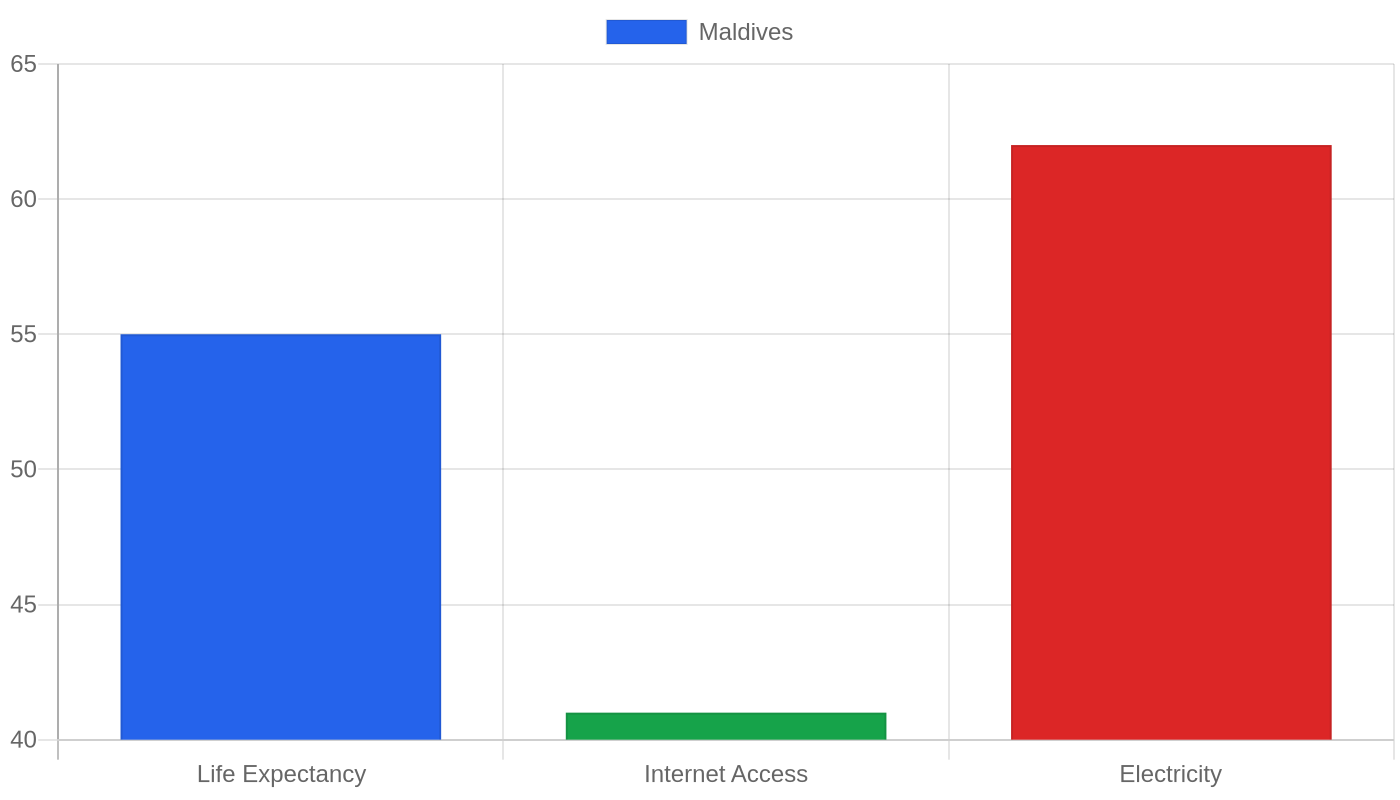
Economic Pulse Net | Sources: World Bank World Development Indicators, Government Sources | 2026
The Maldives has long been synonymous with overwater villas, turquoise lagoons, and honeymoon luxury. But beneath the postcard surface lies an economy navigating profound structural questions — from its heavy reliance on tourism to the delicate balance between development and environmental survival. As the Indian Ocean nation enters a new political chapter under President Mohamed Muizzu, the world is watching to see whether this island state can chart a course toward resilient, diversified growth.
Key Takeaways
– Tourism remains the lifeblood of the Maldivian economy, with the sector driving foreign exchange earnings, government revenue, and employment — though the data provided does not specify current GDP figures.
– Political transition is underway under President Mohamed Muizzu, who took office on 17 November 2023, signalling potential shifts in economic priorities and foreign policy.
– The Maldives operates as a presidential constitutional republic, with significant executive power concentrated in the presidency, shaping the business and investment climate.
– Economic vulnerability is structural, given the nation’s geographic dispersion across atolls and its exposure to global travel demand fluctuations.
– Limited public data availability from the World Bank on key indicators like GDP growth, inflation, and unemployment underscores the need for improved economic transparency.
The Economic Engine: Tourism Dependence and Structural Realities
The Maldivian economy is a study in concentrated strength. With the World Bank not currently providing updated figures for GDP growth, inflation, or unemployment, analysts must rely on the broader structural picture. What is clear from the available data is that the Maldives has built its modern economy around a single, dominant pillar: tourism. The industry accounts for the vast majority of export earnings and directly supports a wide ecosystem of transport, hospitality, construction, and retail activity.
This concentration creates a double-edged sword. When global travel demand surges, the Maldives experiences rapid expansion, with resort construction and service sector jobs multiplying. Conversely, when international crises disrupt air travel — as seen during global health emergencies — the economy contracts sharply with limited buffer.
The nation’s geography amplifies this fragility: scattered atolls mean higher infrastructure costs, while rising sea levels pose an existential long-term threat to the very land on which the economy stands.
The government’s fiscal position is closely tied to tourism performance, as import duties, tourism taxes, and lease payments from resort operators feed state coffers. President Muizzu’s administration inherits an economy at a pivot point, needing to diversify beyond tourism while maintaining the sector’s competitiveness.
The absence of current World Bank data on key indicators makes precise assessment difficult, but the structural picture remains clear: the Maldives must deepen its economic resilience.
Cost of Living: The Price of Paradise
Life in the Maldives carries a premium that reflects its geography. As an archipelago nation, nearly every good — from food staples to construction materials — must be imported, driving up consumer prices relative to regional mainland peers. The World Bank data does not provide specific cost of living indices for the Maldives, but the structural realities are evident: fuel costs, shipping expenses, and import tariffs all feed into daily expenses for residents.
For locals, housing costs in the capital Malé are notoriously high, with limited land availability pushing property prices to levels that challenge middle-income families. The government has pursued land reclamation projects to expand housing supply, but demand continues to outpace availability. Rent versus buy calculations are skewed heavily toward renting for most residents, given the prohibitive cost of land ownership in urban centres.
Daily expenses — from food to utilities — are elevated compared to regional averages, reflecting the import-heavy nature of the economy. For expatriate workers and resort employees, accommodation is often provided, but for the local workforce, housing and living costs consume a significant portion of household budgets.
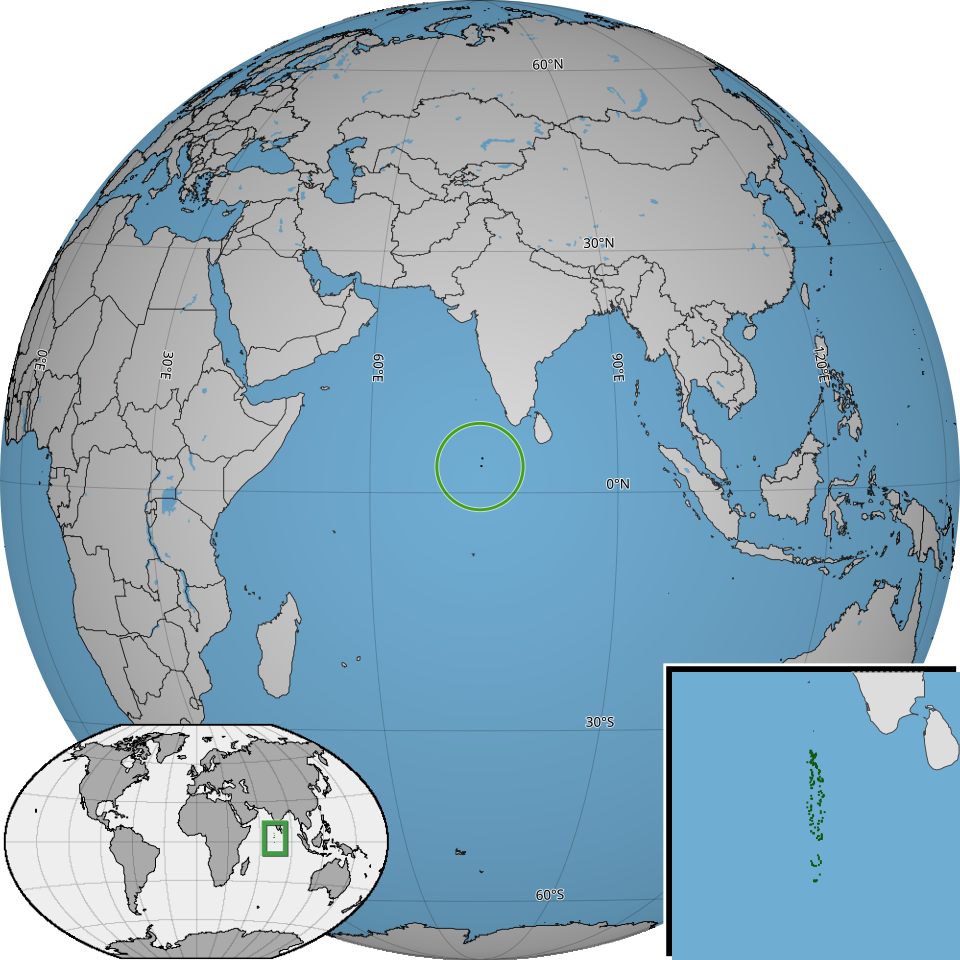
Investment and Business Climate: Opportunities Amid Constraints
The business environment in the Maldives is defined by its dual structure: a thriving tourism sector with established major players, and a narrow base of other industries. The country’s top companies are predominantly concentrated in hospitality, transport, and construction — sectors that service the resort economy. For investors, the tourism industry offers established opportunities, particularly in resort development, boutique hospitality, and related services.
The political system, with its strong presidential authority, means that business climate is significantly shaped by government policy direction. President Muizzu’s administration has signalled continuity in welcoming foreign investment, particularly in tourism infrastructure. However, the concentration of decision-making power in the executive branch means that investors must navigate a landscape where political relationships matter considerably.
Emerging sectors include renewable energy, where the Maldives has potential for solar development, and technology-enabled services that can operate remotely from the islands. The government has expressed interest in diversifying the economy, though concrete policy frameworks remain in development. For now, tourism-related investment remains the most viable and proven pathway.
Safety, Politics, and Quality of Life
The Maldives presents a complex picture on governance and social indicators. As a presidential constitutional republic, the political system concentrates substantial power in the head of state, who serves as both head of government and commander of the armed forces. The president appoints the cabinet, subject to approval by the People’s Majlis, the unicameral parliament. Both the president and parliament members serve five-year terms.
President Mohamed Muizzu’s assumption of office in November 2023 marked the latest chapter in the nation’s democratic evolution. The political landscape has seen significant shifts in recent years, with changing alliances and policy priorities shaping the country’s trajectory. The relationship between the executive and parliament remains a key dynamic to watch, as it influences everything from budget approval to legislative reform.
The World Bank data does not provide crime or safety indices for the Maldives, and no happiness or quality of life metrics are available in the provided information. However, the nation’s high-income status from tourism does not automatically translate to equitable distribution of wealth, and social development indicators remain an area of ongoing focus for policymakers.
What’s Happening Now: A Nation in Transition
The Maldives is in a moment of significant political and economic recalibration. President Muizzu, in office since November 2023, is navigating a complex regional landscape while managing domestic expectations for economic improvement. His administration’s approach to economic management, foreign investment, and international relations will shape the country’s trajectory through the remainder of his term.
The current political structure, with the president holding extensive influence as head of state and government, means that policy shifts can occur rapidly. The appointment of cabinet members, approved by the People’s Majlis, signals the administration’s priorities. Observers are watching whether the government will pursue greater economic diversification, infrastructure investment, or social programme expansion.
The tourism sector, while recovering from global disruptions, faces new challenges around sustainability, climate resilience, and changing traveller preferences. The government’s response to these pressures — through policy, investment, and international advocacy — will be defining. Additionally, the Maldives’ position on global issues, including climate change advocacy, continues to give the nation an outsized voice relative to its population and economic size.
The Bottom Line
The Maldives is a country of extraordinary economic potential and profound vulnerability, where the beauty that drives its tourism industry is threatened by the very forces that sustain it. Investors and businesses should watch this nation for opportunities in tourism infrastructure, renewable energy, and climate adaptation technologies.
Policymakers and development institutions should monitor the Maldives as a bellwether for how small island states navigate economic resilience in the face of environmental and geopolitical pressures. For the casual observer, the Maldives offers a compelling case study in the challenges and opportunities of building a modern economy on a foundation of natural beauty and strategic location.
Sources & Methodology
This article is authored by Economic Pulse Net for informational and research purposes. Economic Pulse Net sources its data from multilateral institutions, national statistics bureaus, and proprietary databases. All data is believed to be current as of the date of publication.
Published: August 08, 2026 | Category: Research — Maldives
Use these signals in your own platform
Economic Pulse publishes its live signal feed through a documented, read-only API. Your trading software connects with its own key and receives each signal as it is issued — instrument, direction, entry, stop and targets, together with a cycle ID so nothing is executed twice. The feed is independent of this website and cannot change it.
Signals are informational only and are not financial advice.