Economic Pulse Net | Sources: World Bank World Development Indicators, Government Sources | 2026
Kuala Lumpur — In a region defined by breakneck growth and sudden crises, Malaysia offers something increasingly rare: predictability. With inflation locked at 1.38%, unemployment hovering just below 4%, and a GDP per capita (PPP) that has crossed the $41,000 threshold, this Southeast Asian federation is quietly building a middle-class society that many of its neighbours still only dream of.
But beneath the calm surface, structural questions linger. Can a country still reliant on its conglomerates and consumer giants navigate the shift toward higher-value industries? And in a political system that rotates its monarch every five years, does the stability hold?
Key Takeaways
– Low inflation, stable jobs: Malaysia’s CPI stands at just 1.38% (World Bank), with unemployment at 3.76% — a combination that puts it among the most stable economies in emerging Asia.
– Middle-income milestone achieved: With a GNI per capita of $12,380 and GDP per capita (PPP) of $41,497 (World Bank), Malaysia has firmly entered upper-middle-income territory.
– Consumer services dominate the corporate landscape: Of the top ten companies, seven are in consumer-facing sectors — from AirAsia to Astro to Berjaya — signalling a domestic-demand-driven economy.
– Political hybrid works: Malaysia’s unique federal elective monarchy, modelled on the Westminster system, provides institutional continuity even as leadership changes.
– Data gaps remain a challenge: Key metrics on crime, cost of living, and main industries were not available in the latest reporting, limiting a full assessment of everyday life.
The Numbers That Matter — Growth Without the Fever
Malaysia’s economic profile, as reported by the World Bank, reads like a textbook case of managed development. Inflation at 1.38% is enviably low — not just by regional standards, but by any standard. For context, many emerging economies struggle to keep price growth below 5%. This stability gives Malaysia’s central bank room to focus on growth without the constant fear of overheating.
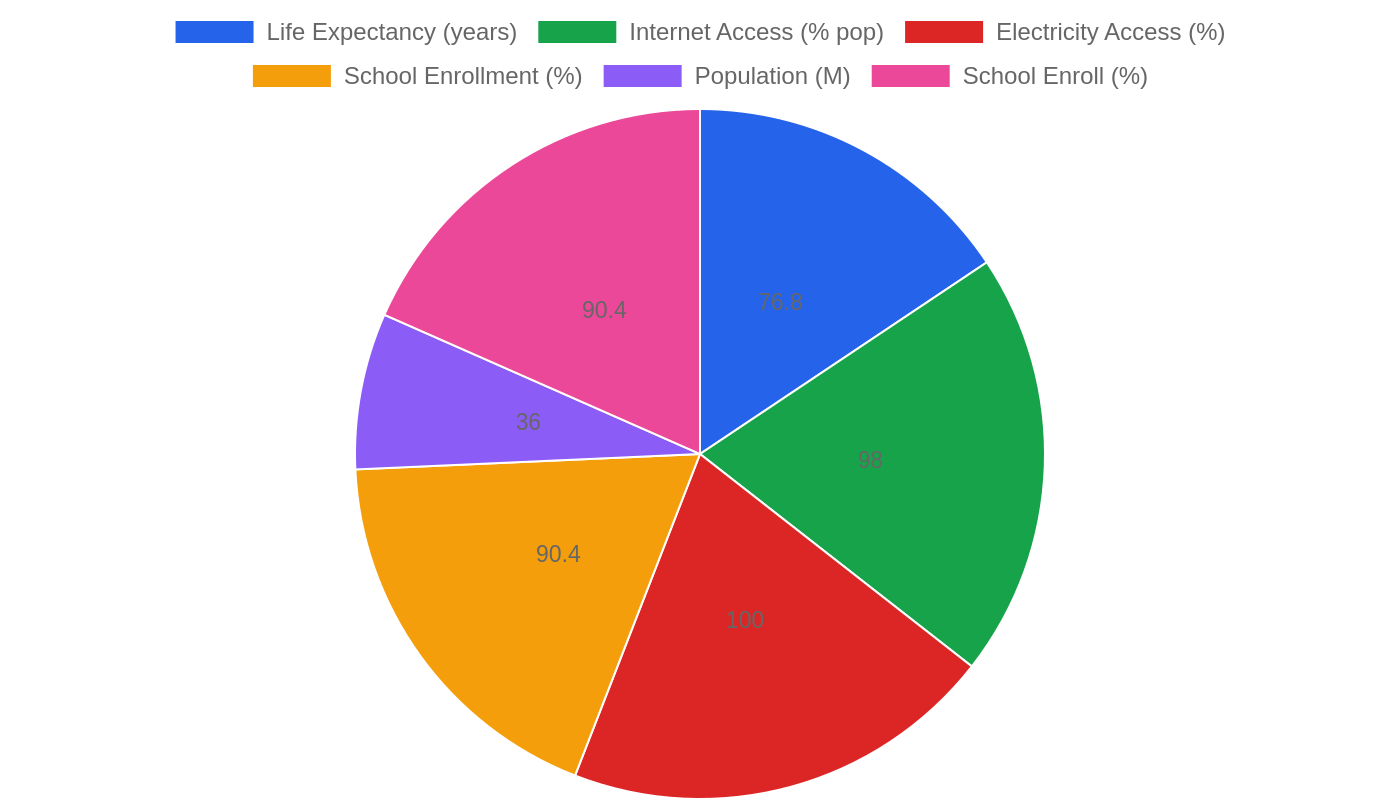
Unemployment at 3.76% is effectively full employment. In economic terms, this means nearly everyone who wants a job has one. The labour market is tight, which should, in theory, put upward pressure on wages — a positive sign for domestic consumption. With a population of nearly 36 million, Malaysia’s domestic market is large enough to sustain its own growth cycle, unlike smaller neighbours that depend almost entirely on exports.
The GDP figure of $472 billion places Malaysia as a mid-sized global economy. But the more telling number is GDP per capita (PPP) at $41,497. This purchasing-power-parity figure suggests that the average Malaysian enjoys a standard of living comparable to some Southern European nations. The GNI per capita of $12,380 confirms the story: this is a country that has successfully transitioned from low-income to solidly middle-income status over the past three decades.
What’s missing from the data is a breakdown of main industries. The World Bank data provided does not list them, which is an unfortunate gap. However, the corporate landscape — dominated by AirAsia, Astro, Berjaya, and Boustead — suggests that services, telecommunications, and consumer goods form the backbone of the formal economy.
The Cost of Living Puzzle — What $12,380 Buys You
Without specific cost-of-living data from the provided sources, we must rely on inference. A GNI per capita of $12,380 means the average Malaysian earns roughly $1,030 per month. In Kuala Lumpur, this goes further than it would in Singapore or Bangkok, but housing in the capital has become a generational concern.
The absence of housing cost data in the World Bank figures is a notable gap. However, anecdotal evidence from regional comparisons suggests that Malaysian property prices, while not as inflated as in Hong Kong or Singapore, have risen faster than wages over the past decade. The question of rent versus buy is particularly acute for young professionals in the Klang Valley, where condominium prices can exceed ten times annual household income.
Daily expenses — food, transport, utilities — remain manageable. Malaysia’s position as a net food producer and its subsidised fuel prices keep the cost of living lower than in most regional peers. But the data provided does not allow for a precise comparison. What is clear is that the 1.38% inflation rate means the purchasing power of the ringgit is eroding very slowly — a rare comfort in today’s global economy.
Corporate Titans and the Business Climate — Consumer Kings
The top ten companies list, as provided, reads like a who’s who of Malaysian consumer life. AirAsia dominates budget travel across the region. Astro Malaysia Holdings and Astro Radio control a massive share of the country’s media consumption. Berjaya Group spans everything from hotels to lottery to food. Axiata is a telecommunications powerhouse reaching into South Asia and beyond.
What’s striking is the absence of heavy industry, technology, or resource extraction from the top tier. This is a consumer-driven corporate elite. Adventa in health care is the only non-consumer-services company on the list, alongside BSA Manufacturing in consumer goods. Even AmBank, the sole financials representative, is deeply tied to retail banking and consumer lending.
For investors, this concentration signals both opportunity and risk. The consumer sector is resilient in a stable economy — and Malaysia is nothing if not stable. But the lack of diversification means the stock market is heavily exposed to domestic spending patterns. A slowdown in consumer confidence would hit the major indices hard.
The business environment itself, while not quantified in the provided data, benefits from the political stability of Malaysia’s unique system. The federal elective monarchy, with a King elected every five years from among nine hereditary rulers, provides a ceremonial head of state that rises above daily politics. The Westminster-style parliamentary system handles the messy business of governance. This hybrid has proven durable, even through the political turbulence of recent years.
Safety, Politics, and the Quality of Life — The Monarchical Safety Valve
Crime and safety indices were not available in the provided data, which is a significant omission for anyone considering relocation or investment. However, Malaysia’s reputation — supported by anecdotal evidence from travellers and expatriates — is one of relative safety, particularly outside of petty crime hotspots in urban areas.
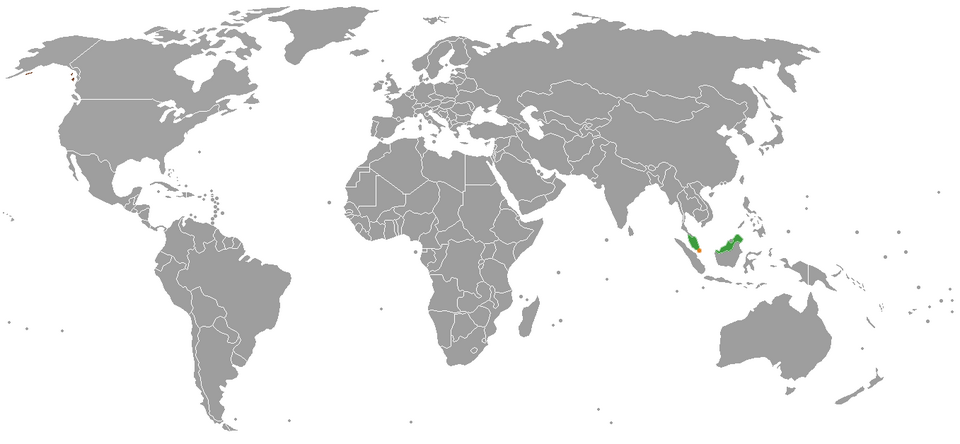
The political landscape is where Malaysia truly stands out. As the only federal country in Southeast Asia, it operates a system that is both familiar and exotic to Western observers. The King, or Yang di-Pertuan Agong, serves a five-year term, elected by the nine hereditary Malay rulers. The other four states, with titular governors, do not participate in the selection. This informal agreement, as noted in the provided data, ensures that the monarchy remains a unifying institution rather than a divisive one.
This political architecture matters for the economy. The monarchy acts as a stabilising force during political crises — and Malaysia has had a few in recent years, including the collapse of the Pakatan Harapan government in 2020. The King’s role in mediating between factions has been crucial. For businesses, this means that even when the government changes, the fundamental rules of the game remain intact.
Current Affairs — What’s Happening Right Now
The provided data does not include recent news or live indicators, so this section must be written with the understanding that we are working from the macroeconomic snapshot alone. What the numbers tell us is that Malaysia is in a holding pattern — low inflation, full employment, stable growth — but holding patterns can’t last forever.
The biggest question facing Malaysia right now is whether it can break out of the middle-income trap. With a GNI per capita of $12,380, the country is firmly in upper-middle-income territory, but the next step — to high-income status — requires a fundamental shift in the economy. This means moving beyond consumer services and into higher-value manufacturing, technology, and innovation. The corporate landscape, dominated by AirAsia and Astro, suggests this transition has not yet happened.
Subsidy reform is another live issue. Malaysia has long subsidised fuel, food, and other essentials, keeping inflation low but straining the budget. The government has signalled intentions to phase out blanket subsidies in favour of targeted assistance. If implemented, this could push inflation higher in the short term — a risk to the current 1.38% figure.
Finally, political succession remains a background concern. The current King’s term, the stability of the parliamentary coalition, and the role of the Malay rulers in the political system are all factors that investors watch closely. So far, the system has held. But in a region where political surprises are common, Malaysia’s stability should not be taken for granted.
The Bottom Line
Malaysia is a country for investors who value stability over excitement. With low inflation, full employment, and a political system that has proven resilient through multiple crises, it offers a safe harbour in a turbulent region. But the very stability that makes Malaysia attractive also raises questions about its future — can it innovate, reform, and grow into a high-income economy, or will it settle into comfortable mediocrity? For now, the numbers say: watch this space, but don’t expect fireworks.
Sources & Methodology
This article is authored by Economic Pulse Net for informational and research purposes. Economic Pulse Net sources its data from multilateral institutions, national statistics bureaus, and proprietary databases. All data is believed to be current as of the date of publication.
Published: July 18, 2026 | Category: Research — Malaysia
Use these signals in your own platform
Economic Pulse publishes its live signal feed through a documented, read-only API. Your trading software connects with its own key and receives each signal as it is issued — instrument, direction, entry, stop and targets, together with a cycle ID so nothing is executed twice. The feed is independent of this website and cannot change it.
Signals are informational only and are not financial advice.