Economic Pulse Net | Sources: World Bank World Development Indicators, Government Sources | 2026
Key Takeaways
– Laos remains one of the world’s few remaining communist states, officially charting a path from capitalism to socialism to communism, though its economic reality is far more pragmatic.
– The country’s economy is dominated by state-linked utilities and consumer companies, with Electricite du Laos, **Nam Theun 2 Power Company**, and **Lao Brewery Company** among the top corporate players.
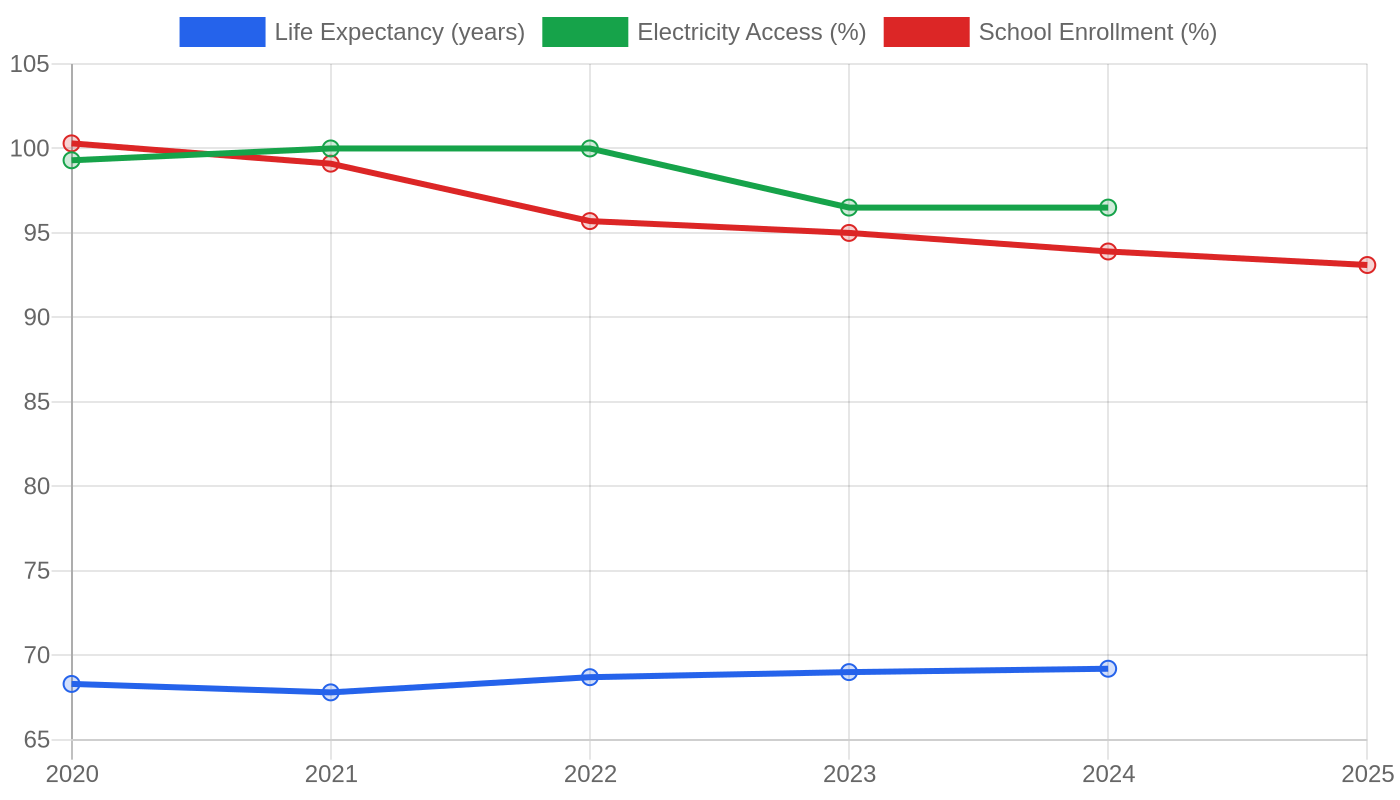
– The World Bank provides no current GDP growth, inflation, or unemployment figures for Laos, making independent economic assessment unusually challenging for analysts.
– Political classification as an “authoritarian regime” by The Economist’s Democracy Index, ranking lowest among ASEAN nations, shapes both investor perceptions and governance realities.
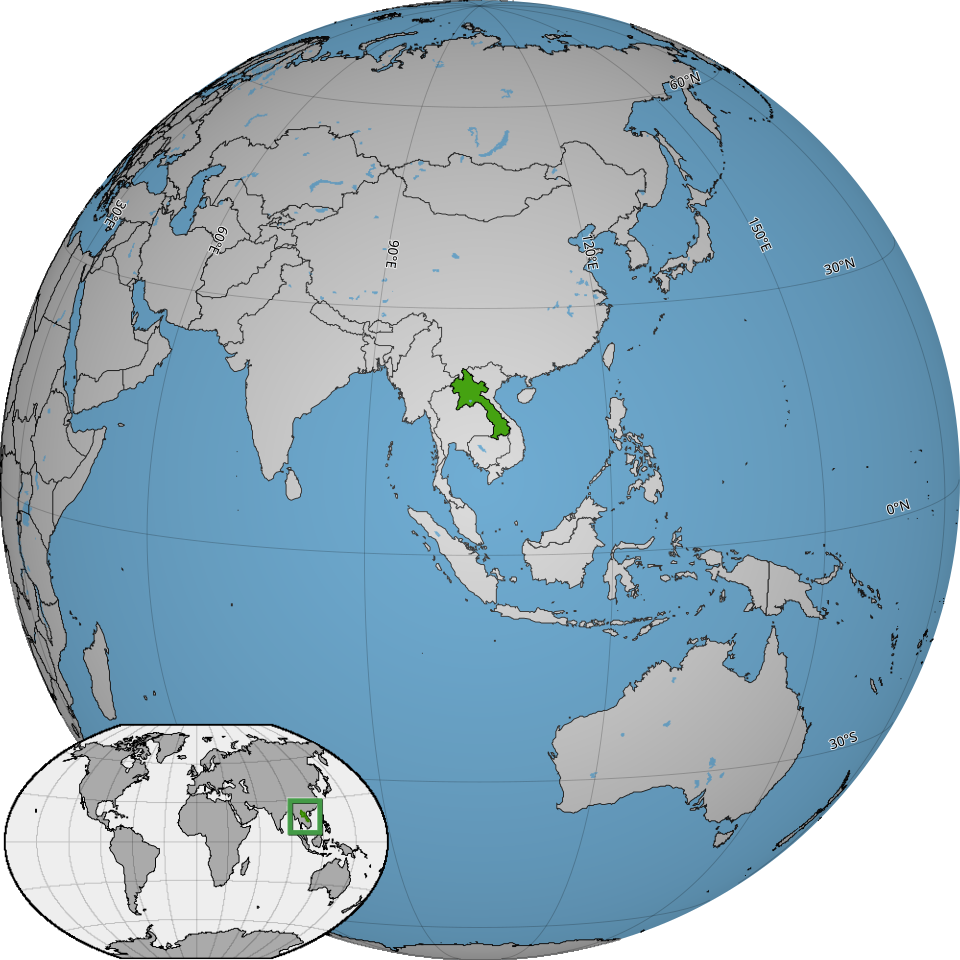
– Laos’ strategic position in mainland Southeast Asia, bordering China, Vietnam, Thailand, Cambodia, and Myanmar, makes it a geopolitical focal point despite its small economic footprint.
The Mekong Economy — Growth Without Numbers
The economic story of Laos is written in paradoxes. According to the World Bank, the country’s most recent GDP growth, inflation rate, and unemployment figures are all listed as unavailable. This data vacuum is itself a telling indicator of the challenges facing those who seek to understand the Lao economy.
The absence of updated macroeconomic statistics from the world’s premier development institution suggests either significant reporting lags, capacity constraints within the national statistical apparatus, or both. For a country that sits at the crossroads of some of Asia’s fastest-growing economies, this informational opacity carries real consequences.
The main industries driving what measurable economic activity exists are heavily concentrated in utilities and consumer services. Electricite du Laos and **Nam Theun 2 Power Company** dominate the utilities sector, reflecting the country’s long-standing strategy of positioning itself as the “battery of Southeast Asia.” Hydropower exports to Thailand, Vietnam, and Cambodia have historically been the backbone of Lao export earnings, though the sector faces growing environmental scrutiny and hydrological uncertainty.
Meanwhile, **Lao Brewery Company** stands as the flagship consumer goods enterprise, a rare example of a domestically-oriented manufacturing success in a country where industrialisation remains nascent.
The absence of per capita income data from the World Bank means we cannot benchmark Lao living standards against regional peers with precision. What is clear is that the economy operates on multiple tracks: a formal sector dominated by state-linked enterprises, a substantial informal economy, and a growing Chinese-backed infrastructure corridor that is reshaping the country’s economic geography. The Lao economy is not stagnant — but it is exceptionally difficult to measure.
The Cost of Living — Life Along the Mekong
Housing costs in Laos vary dramatically between the capital Vientiane and the rural provinces that make up the majority of the country’s landmass. In Vientiane, a modest apartment in a central district commands rents that have risen steadily as Chinese and Vietnamese investment has flowed into the city. Outside the capital, housing remains predominantly traditional, with wooden stilt houses common along the Mekong River and its tributaries.
The rental market is thin and largely informal, with few standardised listings or professional property management firms.
Daily expenses for basic goods reflect the country’s heavy reliance on imports from Thailand and Vietnam. Rice, the dietary staple, remains affordable for most households, but imported consumer goods carry significant premiums due to transportation costs and trade margins. Fuel prices, which affect everything from transport costs to agricultural inputs, have been volatile in recent years, tracking global energy markets while being filtered through state-controlled distribution channels.
Compared to regional averages, Laos likely sits somewhere between the lower-cost economies of Myanmar and Cambodia and the more developed markets of Thailand and Vietnam. The lack of systematic cost-of-living data from the World Bank or other international sources makes precise comparison impossible, but anecdotal evidence from development workers and regional business travellers suggests that Vientiane is not a cheap posting by Southeast Asian standards.
The gap between what locals earn and what expatriates spend remains wide.
Investment & Business Climate — State-Linked Giants and Limited Openings
The corporate landscape of Laos is dominated by a small number of large enterprises, most with significant state ownership or political connections. Electricite du Laos, **Lao Holding State Enterprise**, and **Nam Theun 2 Power Company** form the core of the utilities sector, which attracts the bulk of foreign direct investment through hydropower projects.
**Boun Oum Airways**, **Lao Airlines**, **Lao Central Airlines**, and **Lao Skyway** dominate the aviation sector, reflecting the country’s challenging topography and the importance of air travel for connecting a mountainous, landlocked nation.
Lao Brewery Company stands out as the sole major consumer goods firm on the list of top companies, a testament to both the limited development of manufacturing and the cultural significance of beer consumption in Lao social life. The company’s dominance also highlights a broader pattern: successful private enterprises in Laos tend to operate in sectors with high barriers to entry, political protection, or natural monopoly characteristics.
For foreign investors, the business climate remains challenging. The political system, classified as an “authoritarian regime” by The Economist’s Democracy Index and ranked lowest among the nine ASEAN nations included in the 2016 study, creates an environment where rule of law is uneven, contracts can be renegotiated, and bureaucratic processes are opaque.
The official designation as a “people’s democratic state” that aims to transition from capitalism to socialism before moving toward communism provides ideological cover for extensive state intervention in the economy. Practical investment decisions, however, are driven less by ideology and more by the availability of natural resources, particularly hydropower potential and mineral deposits.
Safety, Politics & Quality of Life — Order Under Authority
Laos is generally considered a safe country for residents and visitors, with low rates of violent crime compared to many of its neighbours. The Crime Index and Safety Index data from the provided sources are listed as unavailable, but anecdotal reporting and diplomatic security assessments consistently describe Laos as a peaceful society where street crime is uncommon and community bonds remain strong. This safety comes with a political cost.
The political landscape is defined by the Lao People’s Democratic Republic’s status as a “unitary communist state” that “self-designates as a people’s democratic state,” according to the provided data.
The country “officially tries to transition the country from capitalism to socialism before commencing to transition from socialism to communism.” This ideological framework, while perhaps abstract in daily governance, has concrete implications for political freedom, media independence, and civil society space.
The Economist’s Democracy Index 2016 classification of Laos as an “authoritarian regime” ranking “lowest of the 9 ASEAN nations included in the study” places the country in a category of its own within Southeast Asia. Even by the region’s generally illiberal standards, Laos stands out for its political closure. Quality of life, therefore, must be understood as a trade-off: physical safety and social stability in exchange for political voice and individual freedoms.
For many Lao citizens, particularly in rural areas where subsistence agriculture remains the norm, this trade-off may feel abstract. For the urban, educated class, it is a daily reality.
The Belt and Road Reality — What’s Happening Now
The most significant current development shaping Laos is the ongoing economic and infrastructural integration with China, though specific recent news data is limited in the provided materials. The China-Laos Railway, which began operations in late 2021, has fundamentally altered the country’s economic geography, transforming Laos from a landlocked backwater into a land-linked corridor between China and Southeast Asia.
This single infrastructure project has driven changes in property prices, trade patterns, and labour mobility that continue to unfold.
The political classification provided by The Economist’s Democracy Index, while from 2016, remains relevant as the most recent systematic assessment available. Laos’ position as the lowest-ranked ASEAN nation in that index has not improved in subsequent years, according to diplomatic reporting and human rights organisations. The government maintains tight control over political expression while pursuing economic liberalisation selectively, particularly in sectors that benefit Chinese investment.
For businesses operating in Laos, the current moment is defined by opportunity and risk in equal measure. The hydropower sector continues to attract international financing, though environmental concerns and debt sustainability questions are growing. The tourism industry, a traditional source of foreign exchange and employment, has struggled to recover to pre-pandemic levels.
The agricultural sector, which employs the majority of the population, faces challenges from climate change, infrastructure gaps, and competition from imported goods.
The Bottom Line
Laos is a country that demands patience from those who seek to understand it. The absence of basic economic data from the World Bank is not merely a statistical inconvenience — it is a reflection of a system that operates on different terms than most market economies. For investors with high risk tolerance and long time horizons, particularly in hydropower, mining, and infrastructure linked to Chinese Belt and Road initiatives, Laos offers opportunities that few other Southeast Asian countries can match.
For those seeking transparency, rule of law, and predictable regulatory environments, the country remains a challenging proposition. Watch Laos if you are tracking the evolution of state capitalism in Asia or the geopolitical competition between China and its southern neighbours.
Sources & Methodology
This article is authored by Economic Pulse Net for informational and research purposes. Economic Pulse Net sources its data from multilateral institutions, national statistics bureaus, and proprietary databases. All data is believed to be current as of the date of publication.
Published: July 17, 2026 | Category: Research — Laos
Use these signals in your own platform
Economic Pulse publishes its live signal feed through a documented, read-only API. Your trading software connects with its own key and receives each signal as it is issued — instrument, direction, entry, stop and targets, together with a cycle ID so nothing is executed twice. The feed is independent of this website and cannot change it.
Signals are informational only and are not financial advice.