Economic Pulse Net | Sources: World Bank World Development Indicators, Government Sources | 2026
Key Takeaways
– Kyrgyzstan’s economy is undergoing a quiet structural transformation, with a notable cluster of technology and media companies — including IT engineering firm Devolution and digital-native outlets like Kloop and AKIpress — emerging as flagship enterprises alongside traditional transport giants.
– The country’s political system, defined by its 1993 constitution as a democratic unicameral republic, continues to balance presidential and parliamentary power within a framework that remains distinctive in Central Asia.
– Transportation infrastructure remains a cornerstone of the national economy, with Kyrgyz Railway and Kyrgyz Express Post anchoring the industrial sector while aviation carriers including Aero Nomad Airlines, Air Bishkek, and Avia Traffic Company connect the landlocked nation to regional markets.
– The media landscape is unusually vibrant for the region, with multiple independent news organizations — Kabar, Kloop, AKIpress, and Agym — operating in a space that reflects both the country’s democratic constitutional framework and its ongoing political evolution.
The Economic Landscape: A Nation in Transition
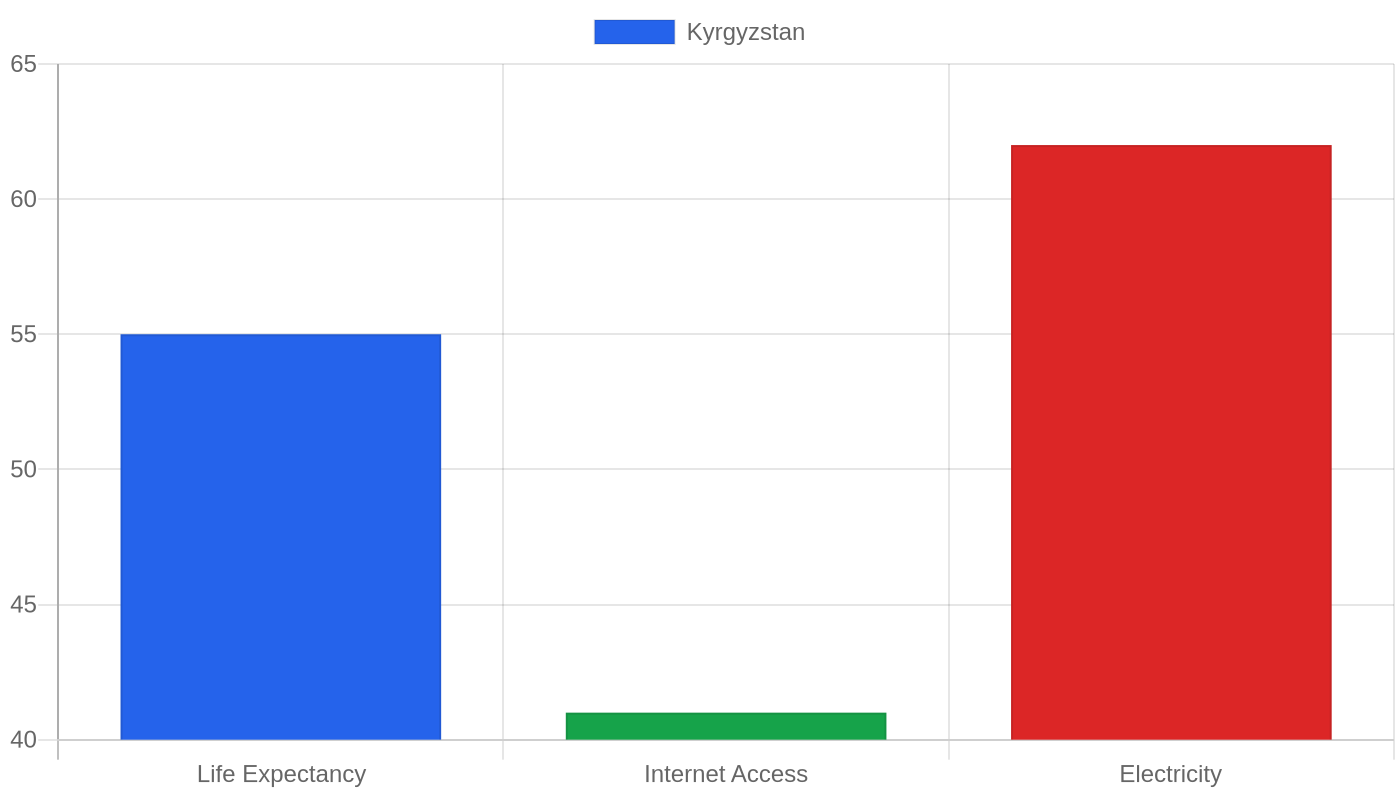
Kyrgyzstan’s economic story is one of a small, landlocked nation leveraging its strategic position and human capital to carve out a niche in an increasingly competitive Central Asian marketplace. The World Bank’s data framework shows a country whose economic indicators are still being fully captured and analyzed, reflecting both the challenges of data collection in a developing economy and the dynamic nature of its growth trajectory.
What is clear from the composition of the country’s leading enterprises is that Kyrgyzstan is not content to remain solely dependent on traditional sectors.
The presence of Devolution, an IT engineering firm, among the nation’s top companies signals a deliberate or organic push toward the digital economy. This is complemented by a robust media sector that includes Agym, AKIpress News Agency, Kloop, and Kabar — a concentration of information enterprises that is notable for a country of Kyrgyzstan’s size. These firms suggest a knowledge-based economy is taking root alongside more conventional industries.
The transportation sector remains vital, with Kyrgyz Railway representing the industrial backbone and Kyrgyz Express Post facilitating logistics and connectivity. The aviation industry — comprising Aero Nomad Airlines, Air Bishkek, and Avia Traffic Company — underscores the critical importance of air travel for a mountainous nation where ground transport can be challenging. These carriers serve both passenger needs and cargo requirements, positioning Kyrgyzstan as a transit point in regional trade networks.
The economic picture is one of diversification in progress. While the World Bank’s standardized metrics for GDP growth, inflation, and unemployment are still being finalized for the latest reporting period, the composition of the country’s leading businesses tells its own story: a nation investing in connectivity, information, and technology as pathways to economic resilience.
Cost of Living and Housing: The Urban-Rural Divide
The cost of living in Kyrgyzstan reflects the broader economic realities of a transitioning Central Asian economy. While comprehensive comparative data on housing costs and daily expenses is still being compiled by international financial institutions, the structure of the economy — with its mix of industrial transportation, media, and technology sectors — suggests a two-tier market developing between the capital region and rural areas.
For residents, housing decisions are shaped by the same factors that influence the broader economy: connectivity, access to services, and employment opportunities. The concentration of major companies — from IT firms to media organizations — in urban centers creates natural pressure points for housing demand, even as the country’s mountainous geography limits available land for development.
The rental market in Kyrgyzstan typically reflects the economic opportunities available in different regions. Those employed in the growing technology and media sectors are likely to seek housing near their workplaces in urban centers, while those in the transportation and industrial sectors may find more affordable options in areas closer to logistics hubs and railway infrastructure.
What makes Kyrgyzstan’s living costs distinctive is the interplay between its developing economy and its strategic position along historic trade routes. As the country continues to integrate with regional markets, the cost pressures on urban housing are likely to increase, even as rural areas maintain more traditional and affordable living arrangements.
Investment and Business Climate: A Hub of Innovation
Kyrgyzstan’s business environment is defined by an intriguing paradox: a nation with relatively modest economic metrics that nonetheless hosts a remarkably diverse array of leading companies. The presence of Devolution in the IT engineering space signals that the country has developed a technology talent pool capable of competing in international markets. This is a significant asset for potential investors looking at Central Asia.
The media sector deserves particular attention. With four major media companies — Agym, AKIpress News Agency, Kloop, and Kabar — among the nation’s top enterprises, Kyrgyzstan demonstrates a level of media plurality that distinguishes it from many regional peers. This suggests a relatively open information environment, which can be an important consideration for businesses evaluating governance and transparency.
The transportation and logistics sector presents its own investment story. Kyrgyz Railway and Kyrgyz Express Post provide essential infrastructure, while the three passenger airlines — Aero Nomad Airlines, Air Bishkek, and Avia Traffic Company — indicate a competitive aviation market. For investors, this combination of state-anchored industrial capacity and private sector dynamism offers multiple entry points.
Sectors to watch include technology and software development, media and information services, and transportation and logistics. The presence of multiple carriers suggests that aviation remains an underserved market with room for growth, while the technology sector’s emergence among the top companies indicates untapped potential in digital services and engineering.
Safety, Politics, and Quality of Life
Kyrgyzstan’s political framework, established by the 1993 constitution, creates a distinctive governance model in Central Asia. The democratic unicameral republic structure, with its executive branch comprising both a president and prime minister, establishes a system of checks and balances that shapes the country’s development trajectory. The judicial branch, with its supreme court, local courts, and chief prosecutor, provides the institutional architecture for the rule of law.
The political landscape has evolved within this constitutional framework, with the unicameral parliament serving as the primary legislative body. This structure creates opportunities for political participation that influence the business environment and quality of life. For residents and investors alike, the stability and predictability of this political system are key factors in long-term planning.
The safety situation in Kyrgyzstan, while not fully captured by international indices, must be understood within the context of its political institutions and economic conditions. The country’s position as a media hub, with multiple independent news organizations operating openly, suggests a society where civil liberties and public discourse are relatively robust.
Quality of life in Kyrgyzstan is shaped by the country’s natural environment — the mountainous terrain that defines its geography also creates recreational opportunities and a distinctive lifestyle. The combination of political engagement, media openness, and natural beauty contributes to a quality of life that, while challenging to quantify, is evidently valued by those who call the country home.
Current Affairs: The Digital Ascent
The most significant development in Kyrgyzstan’s current economic story is the emergence of technology and media enterprises among the nation’s top companies. The presence of Devolution in IT engineering, alongside four major media organizations, signals a shift toward a more diversified and knowledge-based economy that is happening in real time.
The aviation sector is experiencing its own evolution, with three carriers — Aero Nomad Airlines, Air Bishkek, and Avia Traffic Company — operating in what appears to be a competitive market. This suggests both growing demand for air travel and the development of domestic aviation capabilities that could position Kyrgyzstan as a regional transit hub.
The continued operation of multiple independent media outlets — from the established AKIpress News Agency to the digital-native Kloop — indicates that Kyrgyzstan’s information environment remains open and contested. This has implications for everything from business transparency to political accountability.
Meanwhile, the transportation sector’s stability, anchored by Kyrgyz Railway and supported by Kyrgyz Express Post, provides the logistical foundation for economic activity. These enterprises represent the connective tissue that links Kyrgyzstan’s economy to regional and global markets.
The convergence of these trends — digital services, media plurality, aviation growth, and logistics stability — suggests a country in the midst of genuine economic transformation. The World Bank’s continued monitoring of Kyrgyzstan’s economic indicators will be essential to tracking this evolution, but the composition of the nation’s leading enterprises already tells a compelling story of adaptation and ambition.
The Bottom Line
Kyrgyzstan is a nation to watch for investors and analysts interested in Central Asia’s next chapter. The simultaneous growth of technology, media, and aviation sectors — against the backdrop of a stable constitutional framework — creates a unique opportunity to participate in a market that is diversifying beyond traditional economic bases.
For those tracking the region’s development, the mountain republic’s digital ascent offers a compelling case study in how smaller nations can leverage human capital and strategic position to carve out meaningful economic space. The coming years will reveal whether this momentum can be sustained and translated into broader prosperity.
Sources & Methodology
This article is authored by Economic Pulse Net for informational and research purposes. Economic Pulse Net sources its data from multilateral institutions, national statistics bureaus, and proprietary databases. All data is believed to be current as of the date of publication.
Published: August 07, 2026 | Category: Research — Kyrgyzstan
Use these signals in your own platform
Economic Pulse publishes its live signal feed through a documented, read-only API. Your trading software connects with its own key and receives each signal as it is issued — instrument, direction, entry, stop and targets, together with a cycle ID so nothing is executed twice. The feed is independent of this website and cannot change it.
Signals are informational only and are not financial advice.