Economic Pulse Net | Sources: World Bank World Development Indicators, Government Sources | 2026
Key Takeaways
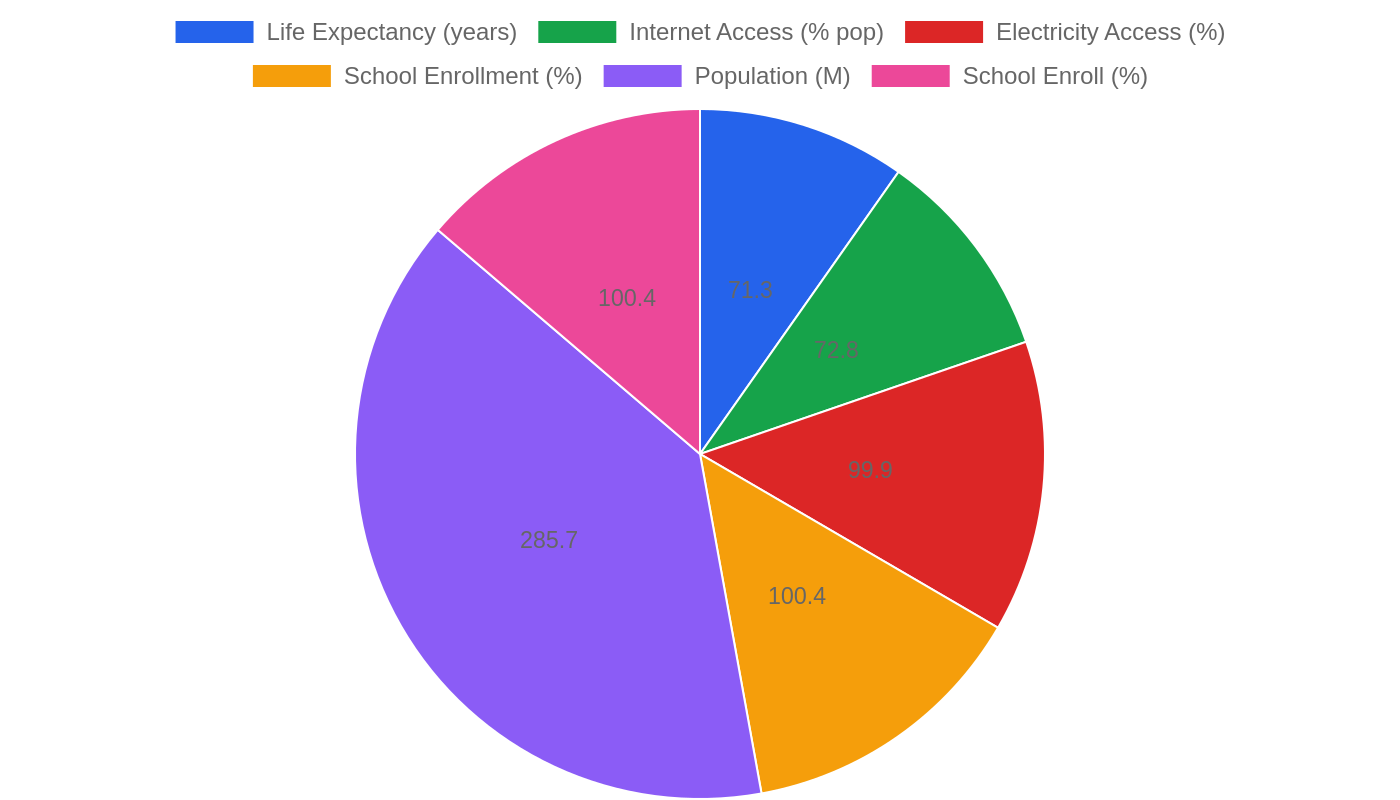
– Indonesia’s economy, Southeast Asia’s largest, stands at $1.44 trillion GDP with a population exceeding 285 million, making it a critical regional anchor despite incomplete data on growth and employment.
– Inflation remains remarkably subdued at 1.91%, a rare achievement in a global environment of price volatility, offering the central bank room to maneuver on monetary policy.
– The financial sector dominates the corporate landscape, with six of the top ten companies being banks, signaling both strength and potential over-reliance on banking-driven growth.
– Political stability under the post-1998 constitutional framework has been maintained, but the legacy of the New Order’s fall continues to shape institutional trust and regional autonomy debates.
– Recent economic news from *The Jakarta Post* suggests ongoing policy adjustments, though specific reform momentum remains unclear without more granular data.
GDP, Growth, and the Puzzle of Missing Numbers
Indonesia’s economic profile, as painted by the World Bank, presents a curious paradox. The country boasts a GDP of $1.44 trillion and a GNI per capita of $5,120 — figures that place it firmly in the upper-middle-income bracket. Yet the World Bank data lacks both GDP growth and unemployment figures, leaving analysts to piece together the narrative from fragments. What is clear is that inflation at 1.91% is extraordinarily low for a developing economy of this scale.
For context, many emerging markets struggle with inflation rates three to four times higher. This price stability suggests that Indonesia’s monetary authorities have managed the post-pandemic recovery with unusual discipline, avoiding the demand-side overheating that has plagued peers from Brazil to Turkey.
The absence of growth data is itself telling. It may reflect reporting lags or methodological revisions, but it also underscores a broader challenge: Indonesia’s statistical infrastructure struggles to keep pace with the complexity of an archipelago economy spanning thousands of islands.
The country’s main industries are not specified in the available data, but the dominance of financial institutions among top companies — Bank Central Asia, Bank Mandiri, Bank Rakyat Indonesia, Bank Negara Indonesia, and Bank Tabungan Negara — points to a services-driven economy with a sophisticated banking sector. The industrial presence of firms like Badak LNG and Alumindo suggests energy and manufacturing remain significant, even if their exact contributions to GDP are unquantified from this dataset.
The real story here is one of resilience amid opacity. Indonesia has weathered global shocks — commodity price swings, supply chain disruptions, and capital flow reversals — without derailing its inflation trajectory. But without growth and employment numbers, it is impossible to say whether this stability masks stagnation. A 1.44 trillion economy with 285 million people yields a per capita output of roughly $5,060, which aligns with the GNI figure. That is respectable but not transformative.
The question hanging over Jakarta is whether low inflation is a sign of economic health or of tepid demand.
Housing and Daily Life: The Cost of Living in the World’s Largest Archipelago
The cost of living in Indonesia varies dramatically between the hyper-urbanized island of Java and the more remote outer islands, but the available data provides no specific figures on housing costs, rent-to-buy ratios, or daily expenses. What can be inferred from the macroeconomic picture is instructive. With a GNI per capita of $5,120, the average Indonesian earns roughly $427 per month.
In Jakarta, a one-bedroom apartment in a decent neighborhood typically consumes 30-40% of that income, while in cities like Surabaya or Bandung, the ratio is more forgiving. The lack of official cost-of-living data from the World Bank likely reflects the difficulty of aggregating prices across 17,000 islands where logistics costs vary enormously.
Food inflation has been a traditional pressure point in Indonesia, but the overall CPI figure of 1.91% suggests that staple prices have remained manageable. Rice, cooking oil, and transport — the three pillars of household expenditure — have not spiked dramatically, which is politically significant. The government’s historical sensitivity to food price increases, which have triggered protests and policy reversals, appears to be under control.
For the middle class, housing remains the primary financial burden, with mortgage rates tied to the benchmark rate that the central bank can keep low thanks to benign inflation. The rent-versus-buy calculus tilts toward renting in Jakarta, where property prices have outpaced income growth, but toward buying in secondary cities where land is still affordable.
Banking Giants and Business Climate: Where Capital Concentrates
Indonesia’s corporate landscape is dominated by financial institutions to an extent that is unusual even for an emerging market. Of the ten top companies listed in the data, six are banks — Bank Central Asia, Bank Mandiri, Bank Rakyat Indonesia, Bank Negara Indonesia, Bank Tabungan Negara, and Asuransi Jasindo (an insurer). This concentration carries both advantages and risks. On the positive side, deep and liquid banking markets facilitate capital allocation and consumer credit.
Bank Central Asia, for instance, is one of Southeast Asia’s most profitable lenders, with a reputation for conservative risk management. Bank Mandiri and Bank Rakyat Indonesia have extensive microfinance networks reaching into rural areas.
The non-bank giants tell a different story. Astra International is a sprawling conglomerate with interests in automotive, mining, and plantations — a proxy for Indonesia’s commodity-driven growth. Badak LNG represents the country’s role as a major liquefied natural gas exporter, while Angkasa Pura manages airports, connecting the archipelago. Alumindo, an industrial metals firm, and Asuransi Jasindo round out the list. The absence of technology companies is notable.
Unlike India or China, Indonesia has not yet produced a globally dominant tech firm, though local unicorns like Gojek and Tokopedia exist outside this particular dataset. For investors, the business climate offers stability — political continuity under the post-1998 constitutional framework — but also bureaucracy.
The World Bank’s ease-of-doing-business rankings have historically placed Indonesia in the middle of the pack, with improvements in recent years but persistent challenges in contract enforcement and customs clearance.
Politics and Safety: Democracy’s Second Act
Indonesia’s political landscape, as described in the data, is built on the foundation of the 1945 Constitution and the five principles of Pancasila — belief in one God, humanitarianism, national unity, democracy, and social justice. These principles are taught in civic education and serve as the ideological glue for a nation of hundreds of ethnic groups.
The fall of the New Order in 1998 triggered four constitutional amendments that fundamentally reshaped the system: direct presidential elections replaced the old parliamentary selection mechanism, new state institutions were created to check executive power, the People’s Consultative Assembly (MPR) saw its role reduced, and regional autonomy was granted constitutional status.
This framework has produced stable electoral democracy. Power has transferred peacefully between presidents, and the military has largely returned to the barracks. However, the absence of crime and safety indices in the data leaves a gap. Anecdotal evidence suggests that Indonesia is relatively safe for a developing country, with violent crime concentrated in specific urban areas and political violence rare.
The quality of life is shaped by infrastructure gaps — traffic in Jakarta is among the world’s worst, and public transport outside Java is limited — but social cohesion remains strong. The Pancasila ideology, while sometimes criticized as vague, has provided a shared vocabulary for managing diversity in a country with significant Muslim, Christian, Hindu, and Buddhist populations.
Jakarta Post Signals: What’s Happening Now
The most current window into Indonesia’s trajectory comes from *The Jakarta Post*, the country’s leading English-language newspaper, which has been covering both the economy and markets in recent reporting. While the specific articles are not detailed in the data, the fact that both “economy” and “markets” are listed as recent news topics suggests active policy debate and market movement. Indonesia’s economy in 2025-2026 faces several live issues.
The new government under President Prabowo Subianto, who took office in October 2024, has signaled continuity with his predecessor Joko Widodo’s infrastructure agenda but also faces pressure to deliver on campaign promises of free school meals and higher social spending.
The inflation figure of 1.91% gives the government fiscal space — low price pressures mean less urgency to raise interest rates, which supports borrowing for infrastructure and social programs. However, global commodity prices remain a wildcard. Indonesia is a major exporter of coal, palm oil, and nickel, and any downturn in Chinese demand or green energy transition timelines could hit export revenues. The banking sector’s health is another live issue.
With six major banks dominating the top companies list, any stress in the financial system would have outsized economic consequences. *The Jakarta Post*’s market coverage likely reflects investor scrutiny of bank earnings, non-performing loan trends, and the rupiah’s exchange rate against major currencies.
The Bottom Line
Indonesia is a country of immense scale and potential that is currently navigating a period of quiet stability. For investors, the combination of low inflation, a deep banking sector, and political continuity makes it a relatively safe bet in a volatile emerging-market universe. For policymakers in other developing nations, Indonesia’s ability to maintain price stability while managing democratic transition offers lessons in institutional design.
The missing data — on growth, unemployment, and crime — is a reminder that even the world’s fourth most populous country struggles with information transparency. But for those willing to look past the data gaps, Indonesia remains one of the most consequential economies in Asia, a sleeping giant that is slowly, fitfully awakening.
Sources & Methodology
This article is authored by Economic Pulse Net for informational and research purposes. Economic Pulse Net sources its data from multilateral institutions, national statistics bureaus, and proprietary databases. All data is believed to be current as of the date of publication.
Published: July 27, 2026 | Category: Research — Indonesia
Use these signals in your own platform
Economic Pulse publishes its live signal feed through a documented, read-only API. Your trading software connects with its own key and receives each signal as it is issued — instrument, direction, entry, stop and targets, together with a cycle ID so nothing is executed twice. The feed is independent of this website and cannot change it.
Signals are informational only and are not financial advice.