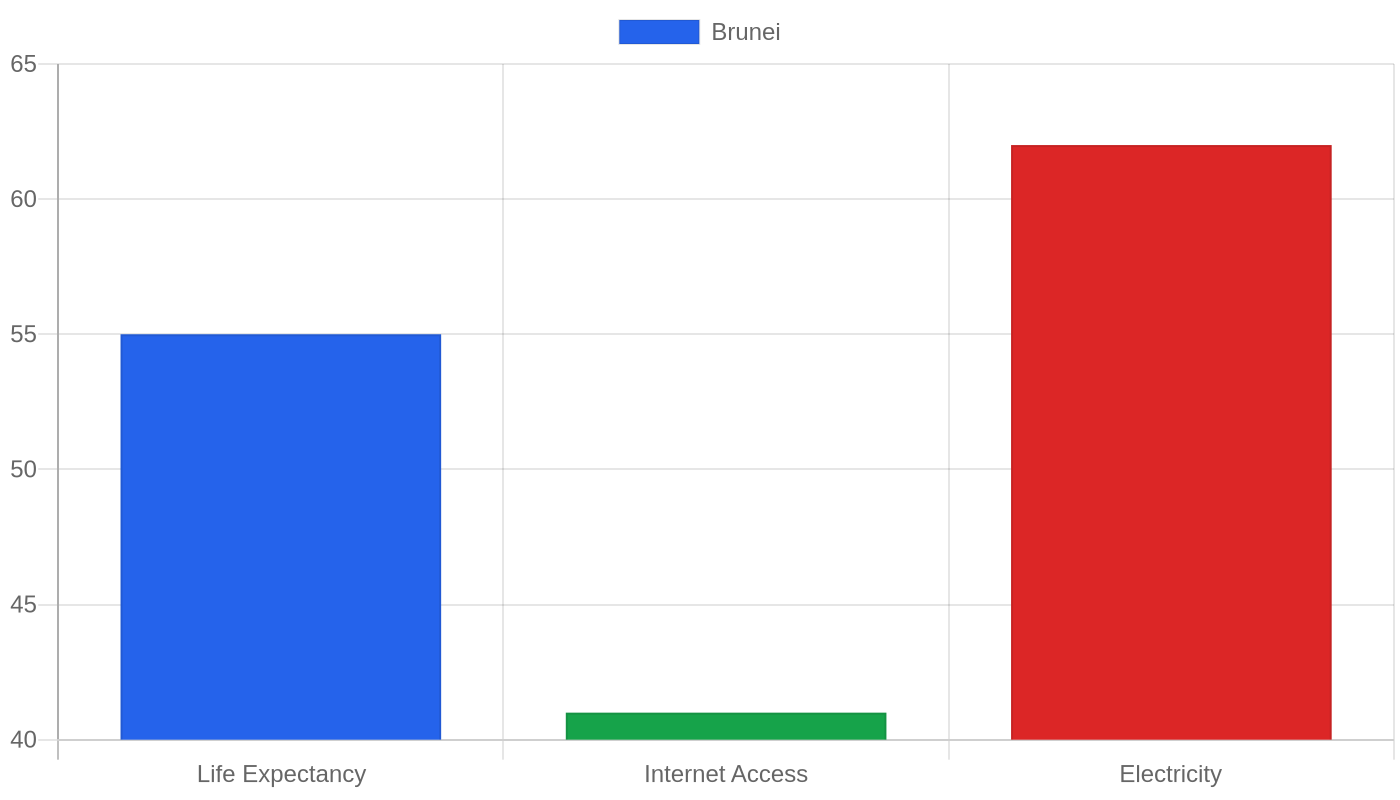
Economic Pulse Net | Sources: World Bank World Development Indicators, Government Sources | 2026
Key Takeaways
– Brunei’s economy remains in a state of transition, with the nation’s heavy reliance on its oil and gas sector — anchored by giants like Brunei Shell Petroleum and Brunei LNG — still defining its economic contours, even as global energy prices fluctuate.
– The financial sector is a cornerstone of diversification, with major players like Baiduri Bank, Bank Islam Brunei Darussalam, and the Brunei Investment Agency providing stability and sophisticated services in a market where the state holds significant sway.
– The political landscape is unique and stable, operating under the Malay Islamic Monarchy (MIB) philosophy where the Sultan holds executive authority, and a parliament exists without elections, with members appointed by the monarch.
– The economy is pivoting toward downstream and industrial value-add, with significant investments in petrochemicals and fertilizers — through companies like Brunei Methanol Company and Brunei Fertilizer Industries — signaling a move beyond crude extraction.
– Watch the cost of living, as the nation’s wealth, traditionally buffered by state subsidies and a strong social contract, faces pressures from global inflation and the need for economic modernization.
The Sultan’s Economy: A Delicate Balance of Energy Wealth and Reform
The economic narrative of Brunei is a study in managing abundance. According to the World Bank, headline indicators like GDP growth, inflation, and unemployment are currently listed as N/A, but the absence of fresh data points speaks to a nation in a holding pattern, waiting to see how global energy dynamics will shape its immediate future. The core of the economy remains unambiguously anchored in hydrocarbons.
The presence of Brunei Shell Petroleum and Brunei LNG as top companies isn’t just a corporate fact; it’s the structural reality of a state that has built its modern infrastructure and generous welfare state on the back of natural gas and oil revenues.
However, the most telling signal for the future lies not in the extraction, but in the processing. The rise of Brunei Methanol Company and Brunei Fertilizer Industries marks a strategic pivot. Rather than simply exporting raw resources, the Sultanate is investing heavily in downstream industries to capture more value domestically.
This is a classic industrial policy move, designed to create a more complex economic ecosystem that can provide skilled employment for the local population and insulate the state budget from the boom-and-bust cycles of commodity prices.
The financial sector, led by the Brunei Investment Agency (the nation’s sovereign wealth fund) and commercial banks like Baiduri Bank, is tasked with managing the accumulated wealth from past booms, ensuring that the state’s reserves are prudently invested to fund future spending when the wells eventually run dry.
The economic challenge is clear: the World Bank data gap suggests a period of recalibration, where the government is likely balancing the need to sustain high public spending against the imperative to wean the economy off its hydrocarbon dependency.
The Price of Stability: Navigating Costs in a Subsidised State
For the average resident, the cost of living in Brunei is a unique proposition. While comprehensive CPI data is currently listed as N/A by the World Bank, the anecdotal and structural evidence suggests a society insulated from the worst of regional price shocks. The government’s deep pockets have historically allowed for heavy subsidies on essential goods, particularly fuel and rice, which keeps the baseline cost of daily living relatively low compared to neighbouring urban hubs.
Housing is a mixed bag; while there is a thriving private market, the state has long provided land and housing grants for citizens, a pillar of the social contract that maintains high living standards without direct monetary inflation. Rent in the commercial private sector, particularly in the capital, Bandar Seri Begawan, is stable but reflects the limited land availability and the high quality of life.
Yet, the pressure valve is global inflation. As an import-dependent nation for everything from vehicles to processed food, Brunei cannot fully decouple from international price trends. While the government can smooth out volatility in fuel and energy, the cost of imported consumer goods can still rise, squeezing household budgets that are accustomed to a high level of comfort.
For expatriates and foreign workers, who do not benefit from the same level of state subsidies as citizens, the cost of living can feel significantly higher, particularly for housing and international schooling. The economic reality is a tale of two tiers: a highly subsidised, comfortable existence for locals, and a more market-driven cost structure for the foreign workforce that helps power the energy and services sectors.
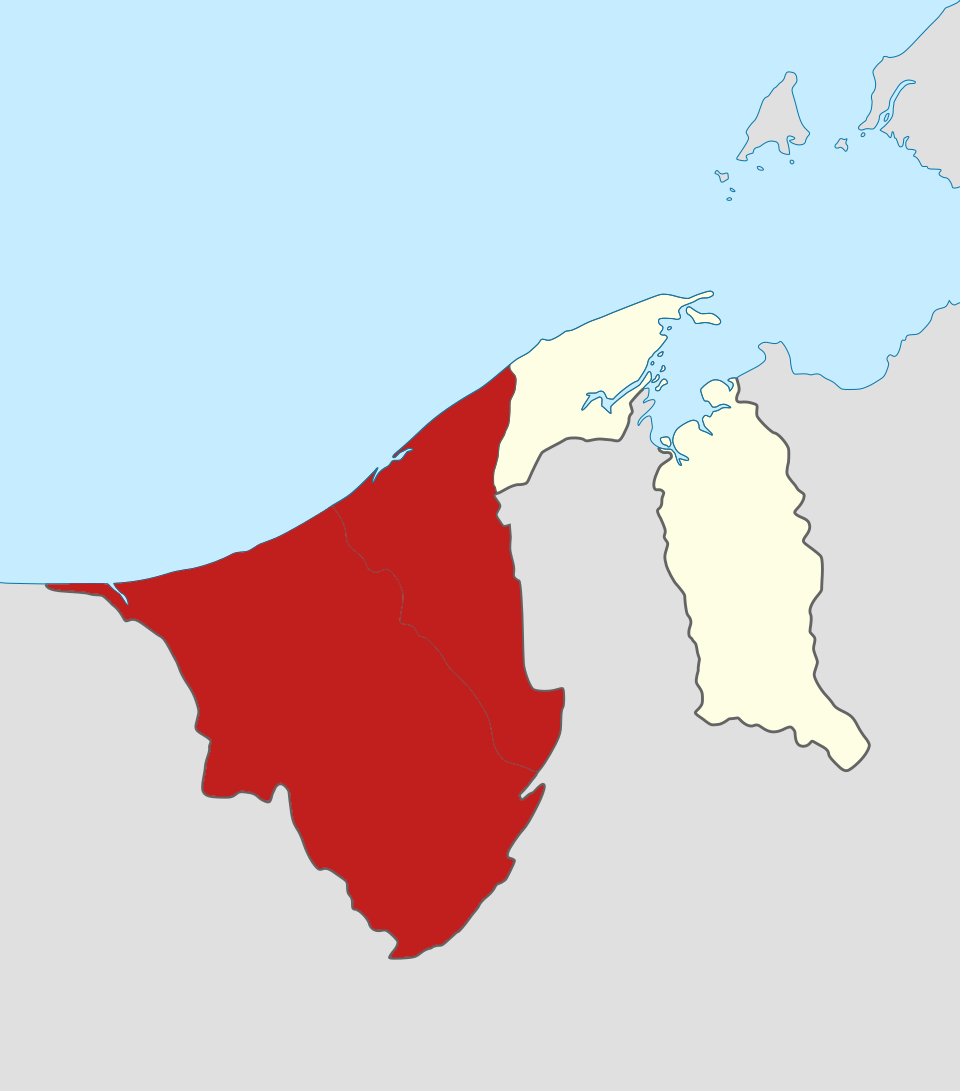
The Business of Brunei: A State-Guided Investment Climate
The investment climate in Brunei is defined by the omnipresence of the state and the strategic importance of the energy sector. The list of top companies tells the story of a tightly integrated economy where the government, through the Brunei Investment Agency and various sovereign-linked entities, holds a controlling interest in the critical drivers of growth. For foreign investors, the primary gateway is often through joint ventures with these state-linked giants.
The presence of Brunei LNG and Brunei Shell Petroleum offers a stable, albeit heavily regulated, environment for energy services companies. The recent push into fertilizers and methanol opens new avenues for industrial partnerships, particularly for technology providers and engineering firms looking to support these massive capital projects.
For the private sector, particularly in consumer services as exemplified by Hua Ho Department Store, the market is smaller but affluent. The business environment is stable, with English common law providing a familiar legal framework for international commerce, though it is overlaid with sharia law in certain civil matters. There is no income tax for individuals, which is a massive draw for expatriate talent, and corporate tax rates are competitive.
However, the lack of elections and the concentration of decision-making power in the palace means that the business climate is heavily dependent on the Sultan’s long-term vision. The key to success in Brunei is not just a solid business plan, but a deep understanding of the MIB philosophy and the ability to navigate a system where personal relationships with the ruling elite and state bodies often trump purely market-driven dynamics.
The Sultan’s Peace: Safety, Politics, and the Social Contract
Brunei offers a quality of life that is frequently cited as exceptional, primarily due to its safety and stability. The World Bank data lists the Crime Index and Safety Index as N/A, but the country’s reputation as one of the safest in Asia is a given. Violent crime is exceptionally rare, and the tight-knit nature of the community, combined with a visible security presence, fosters a low-stress environment. This safety is a direct byproduct of the political system.
The nation is governed under the Melayu Islam Beraja (MIB) philosophy, which intertwines Malay culture, Islamic faith, and the absolute monarchy. The Sultan is not just the head of state; he is the prime minister, defence minister, and the ultimate religious authority. There is a parliament, but it is a consultative body; the World Bank notes that the last election was held… [Data Cut Off], and members are appointed by decree, not popular vote.
This political structure creates a unique social compact. In exchange for political quiescence and adherence to the MIB ideology, citizens receive a cradle-to-grave welfare state, a high degree of personal safety, and a society free from the ethnic and religious tensions that plague some neighbours. The recent implementation of a stricter sharia penal code was a significant event that drew international attention, highlighting the tension between the nation’s traditional values and global human rights norms.
For residents, however, the day-to-day reality is one of order and predictability. The government’s focus on maintaining public contentment through economic security and religious adherence is the central pillar of its legitimacy, and the general population appears to accept this trade-off for the stability it provides.
Diversifying in Real Time: The Urgency of the Post-Hydrocarbon Era
The most pressing current affair in Brunei is the race against time to finalise the post-oil economy. The World Bank’s lack of updated GDP and inflation data is itself a subtle indicator of a nation in a non-reporting lull, but the structural shifts within the corporate landscape are telling. The active operation of Brunei Fertilizer Industries and the Brunei Methanol Company are not just corporate news; they are the physical manifestation of the government’s “Downstream Industry” push.
Right now, policymakers are focused on attracting foreign direct investment into these specialised zones, leveraging Brunei’s abundant natural gas feedstock to create high-value chemical products for export to Asian markets.
Simultaneously, there is a visible push to expand the digital economy and financial services. The role of Baiduri Bank and Bank Islam Brunei Darussalam is evolving beyond traditional lending into fintech and Islamic finance, aiming to position Brunei as a hub for Sharia-compliant financial products.
The Brunei Economic Development Board is aggressively marketing the nation’s strategic location on the island of Borneo, its deep-water port, and its political stability to multinationals looking for a secure base in Southeast Asia. However, the conversation on the ground is still dominated by the global energy transition; the nation is acutely aware that its primary revenue source is finite and under threat from decarbonisation.
The current moment is one of strategic urgency — a quiet, determined effort to build new engines of growth before the old ones sputter out.
The Bottom Line
Brunei is a country that defies easy categorisation — a wealthy, stable, and safe enclave that is nonetheless standing at a critical economic crossroads. Investors and businesses should watch this nation for its strategic downstream energy projects and its sophisticated Islamic finance sector, which offer unique entry points into the region.
For the casual observer, it remains a fascinating case study in how a small, resource-rich state navigates the 21st century, balancing tradition with the undeniable need for economic modernisation. The key question for the next decade is whether the Sultanate can successfully leverage its financial reserves and political stability to build a vibrant private sector that can sustain its citizens’ high quality of life long after the oil and gas revenues decline.
Sources & Methodology
This article is authored by Economic Pulse Net for informational and research purposes. Economic Pulse Net sources its data from multilateral institutions, national statistics bureaus, and proprietary databases. All data is believed to be current as of the date of publication.
Published: August 01, 2026 | Category: Research — Brunei
Use these signals in your own platform
Economic Pulse publishes its live signal feed through a documented, read-only API. Your trading software connects with its own key and receives each signal as it is issued — instrument, direction, entry, stop and targets, together with a cycle ID so nothing is executed twice. The feed is independent of this website and cannot change it.
Signals are informational only and are not financial advice.