Economic Pulse Net | Sources: World Bank World Development Indicators, Government Sources | 2026
Key Takeaways
– Bhutan remains one of the world’s most enigmatic economies, pursuing Gross National Happiness over conventional GDP growth metrics, a philosophy that shapes every aspect of its economic policy.
– The country’s democratic transition in 2008, classified as an electoral democracy by the V-Dem Democracy Indices for 2024, represents a carefully managed evolution from absolute monarchy to parliamentary constitutional rule.
– Bhutan’s corporate landscape is dominated by consumer services companies, with media organizations like Kuensel, Bhutan Times, and Bhutan Observer forming the backbone of the private sector alongside the national airline Druk Air.
– The political environment remains stable under Prime Minister Tshering Tobgay of the People’s Democratic Party, with King Jigme Khesar Namgyel Wangchuck serving as constitutional monarch in a system that blends tradition with modern governance.
The Happiness Paradox — An Economy That Refuses to Measure Itself
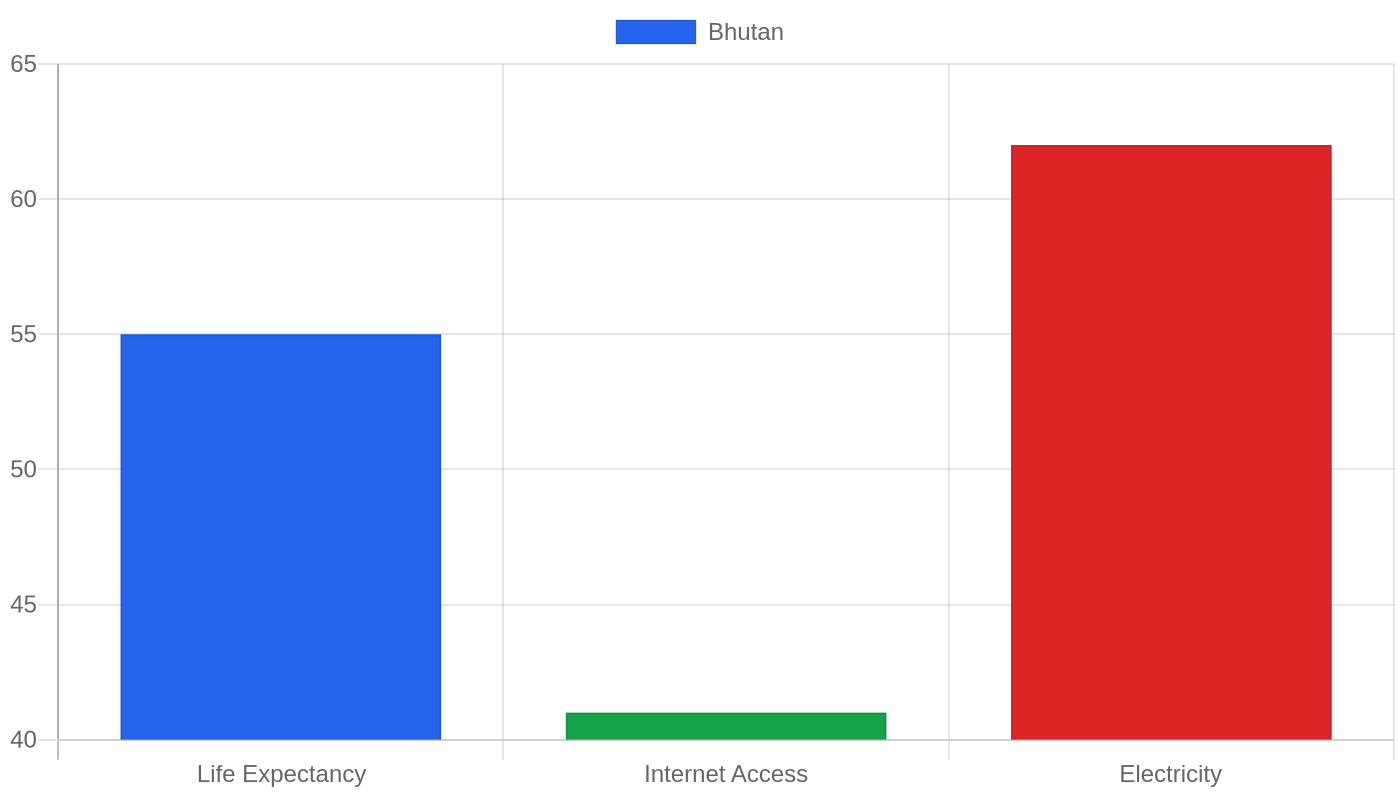
Bhutan presents a fascinating puzzle for economic journalists: a country that has deliberately chosen to prioritize well-being over wealth, yet must still navigate the practical realities of trade, employment, and fiscal sustainability. The World Bank data available for Bhutan is notably sparse — GDP growth, inflation, unemployment, GDP per capita, and GNI per capita are all marked as unavailable in the latest reporting period. This absence is not merely a data gap; it reflects a philosophical choice.
Bhutan’s famous Gross National Happiness index, developed in the 1970s under the fourth King Jigme Singye Wangchuck, has become the country’s primary development metric, measuring everything from psychological well-being to community vitality and environmental conservation.
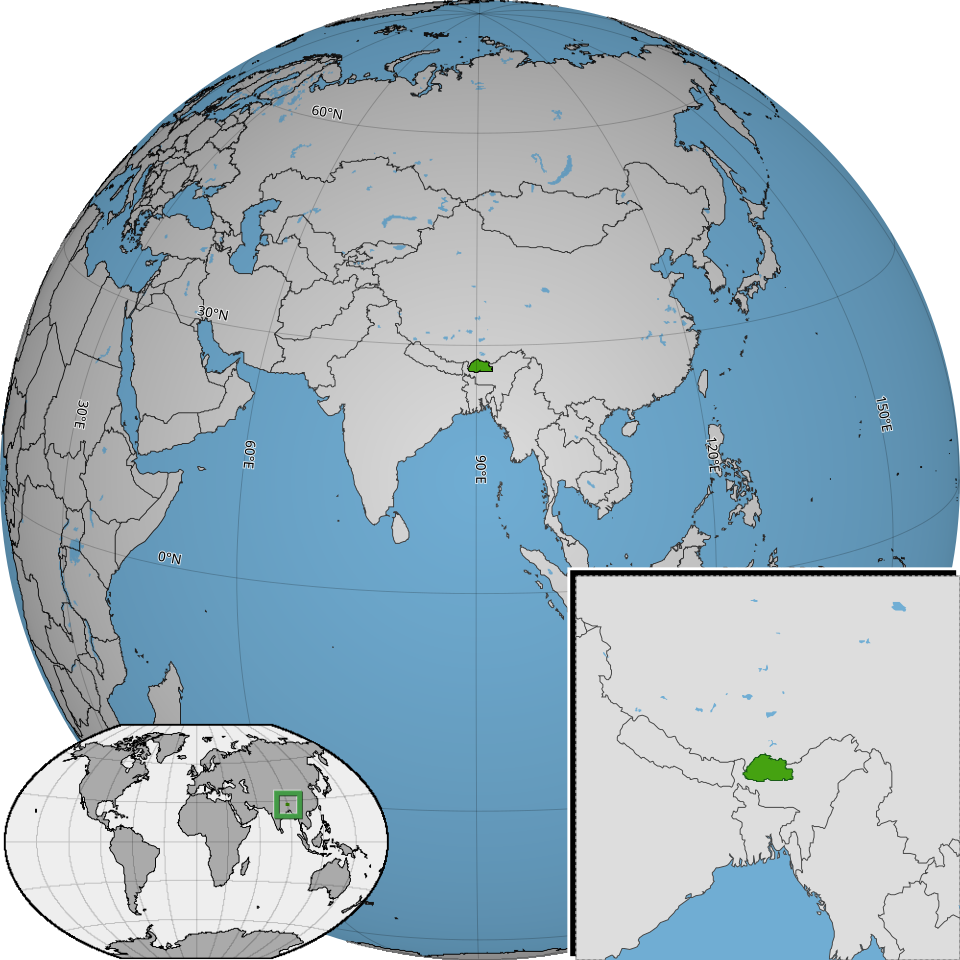
Yet the lack of conventional economic indicators makes it difficult to assess Bhutan’s position in the global economy with precision. What is clear is that Bhutan operates a small, landlocked economy heavily dependent on hydropower exports to India, tourism, and agriculture. The country’s mountainous terrain limits industrial expansion, while its commitment to environmental preservation — enshrined in the constitution requiring 60% forest cover in perpetuity — constrains resource extraction.
The World Bank’s silence on Bhutan’s inflation and employment figures suggests either reporting challenges or a deliberate de-emphasis of these metrics in favor of happiness-based measurements. For investors and analysts accustomed to data-rich environments, Bhutan requires a different analytical lens entirely.
The Housing Question — Where Tradition Meets Modern Aspiration
Housing costs in Bhutan reflect the country’s unique development path. Thimphu, the capital, has experienced rapid urbanization as rural populations move toward economic opportunities, putting pressure on limited flat land in the narrow valleys.
The cost of living data is not provided by the World Bank, but anecdotal evidence from travelers and expatriates suggests that housing in Thimphu and Paro commands a premium relative to regional peers, driven by scarcity of buildable land and strict building codes that mandate traditional architectural styles. Renting a modest apartment in central Thimphu typically requires a significant portion of a local professional’s income, while homeownership remains aspirational for many young Bhutanese.
The government’s commitment to cultural preservation means that modern high-rise development is restricted, keeping housing supply constrained. Daily expenses for food and transportation are moderated by subsidized utilities and a relatively simple consumption pattern, but imported goods — from electronics to vehicles — carry substantial costs due to Bhutan’s landlocked geography and limited trade infrastructure.
The contrast between the official happiness metrics and the practical economic pressures facing urban dwellers creates a tension that defines modern Bhutanese life.
The Media Kingdom — Bhutan’s Unlikely Corporate Landscape
Bhutan’s top companies present a striking picture: of the ten largest firms identified in the data, eight are media or consumer services organizations. Kuensel, Bhutan’s oldest newspaper, sits alongside Bhutan Times, Bhutan Today, Business Bhutan, and Druk Yoedzer as pillars of the private sector. Bhutan Broadcasting Service provides television and radio services, while Bhutan Observer rounds out the media landscape.
This concentration of media companies suggests that Bhutan’s information sector is both commercially viable and politically significant — a notable achievement for a small democracy that transitioned from monarchy only seventeen years ago.
The two non-media companies in the top ten are Bhutan Postal Corporation, operating in the industrials sector, and the airlines Druk Air and Bhutan Airlines. The dominance of aviation companies underscores tourism’s critical role in Bhutan’s economy. Druk Air, the national carrier, and Bhutan Airlines provide the only practical access to this Himalayan kingdom, controlling the flow of high-value tourists who pay the country’s famous daily tariff.
The absence of manufacturing, technology, or financial services companies from the top ranks reveals an economy still in early stages of diversification. For investors, the opportunity lies in sectors that don’t yet exist in Bhutan — banking, renewable energy beyond hydropower, or sustainable tourism infrastructure.
Stability as Strategy — Politics, Safety, and the Happiness Dividend
Bhutan’s political landscape is remarkable for its stability in a region often marked by turmoil. The country is a constitutional monarchy with a parliamentary form of government, where King Jigme Khesar Namgyel Wangchuck serves as head of state while Prime Minister Tshering Tobgay leads the elected government. The 2008 democratic transition was not forced by popular uprising but initiated by the monarchy itself, a deliberate devolution of power designed to ensure long-term institutional resilience.
The V-Dem Democracy Indices classified Bhutan as an electoral democracy for 2024, placing it among the world’s functioning democratic systems.
Crime and safety indices are not available from the data, but Bhutan’s reputation for safety is well-established. The country’s Buddhist culture, small population, and strong community bonds contribute to low crime rates that would be the envy of many developed nations. Quality of life in Bhutan is measured through the Gross National Happiness framework rather than conventional economic metrics, making direct comparisons difficult.
However, the country consistently ranks highly in global happiness surveys, suggesting that the trade-off between material wealth and well-being is working for many Bhutanese. The political stability provided by the constitutional monarchy, combined with low crime and strong social cohesion, makes Bhutan an outlier in South Asia.
The Tobgay Era — Navigating Modernity Without Losing the Soul
Current affairs in Bhutan center on the leadership of Prime Minister Tshering Tobgay, whose People’s Democratic Party returned to power in the most recent elections. Tobgay, a former civil servant and environmental advocate, represents a generation of Bhutanese leaders educated abroad who must balance modernization with cultural preservation.
The government faces pressing challenges: youth unemployment, particularly among educated Bhutanese who cannot find work matching their qualifications; the need to diversify an economy over-reliant on hydropower and tourism; and the environmental pressures of climate change that threaten glacial meltwater and agricultural patterns.
The tourism sector, which provides crucial foreign exchange through Bhutan’s “high value, low impact” policy, is recovering from pandemic-era disruptions but faces questions about sustainability. The daily tourist tariff — which includes accommodation, meals, and guide services — makes Bhutan one of the world’s most expensive destinations, limiting visitor numbers but ensuring high-quality experiences.
Prime Minister Tobgay’s government is exploring digital nomad visas and longer-term stays to attract a different type of visitor, while maintaining the core principle that tourism should not degrade Bhutanese culture or environment. The tension between economic necessity and cultural preservation defines every policy debate in Thimphu.
The Bottom Line
Bhutan is not a country for investors seeking quick returns or conventional growth stories. It is a nation that has deliberately chosen a different path, prioritizing happiness, environmental protection, and cultural continuity over GDP maximization. For development economists, political scientists, and travelers seeking a model of alternative development, Bhutan offers invaluable lessons.
For businesses, the opportunity lies in sectors that align with Bhutan’s values — sustainable tourism, renewable energy, organic agriculture, and digital services that don’t disrupt traditional life. The kingdom’s stability, safety, and democratic governance make it a rare bright spot in a turbulent region, but its small size and philosophical constraints mean it will never be a major economic power. That, perhaps, is precisely the point.
Sources & Methodology
This article is authored by Economic Pulse Net for informational and research purposes. Economic Pulse Net sources its data from multilateral institutions, national statistics bureaus, and proprietary databases. All data is believed to be current as of the date of publication.
Published: July 30, 2026 | Category: Research — Bhutan
Use these signals in your own platform
Economic Pulse publishes its live signal feed through a documented, read-only API. Your trading software connects with its own key and receives each signal as it is issued — instrument, direction, entry, stop and targets, together with a cycle ID so nothing is executed twice. The feed is independent of this website and cannot change it.
Signals are informational only and are not financial advice.