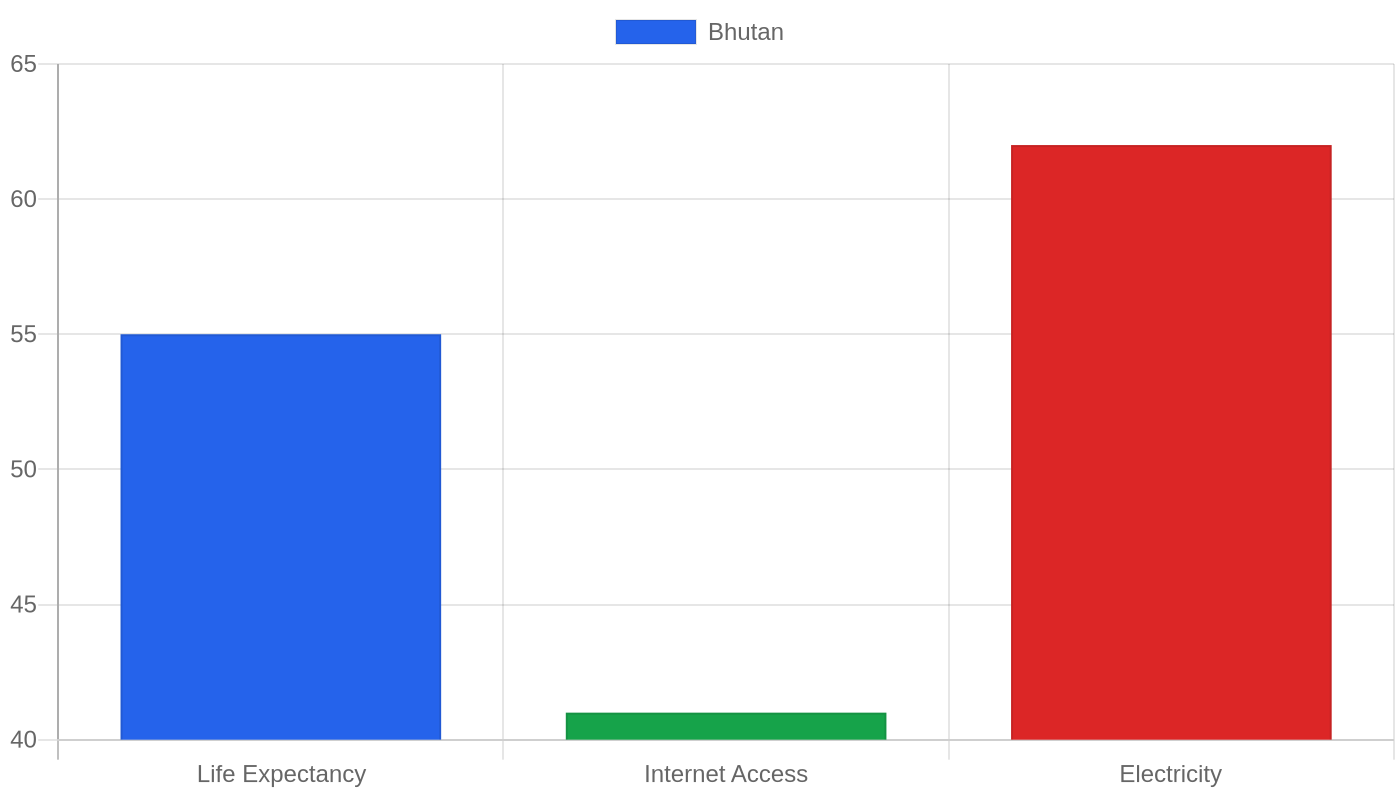
Economic Pulse Net | Sources: World Bank World Development Indicators, Government Sources | 2026
Key Takeaways
– Bhutan stands as a unique hybrid: a constitutional monarchy with a parliamentary system, where the King and elected officials share the governance of this Himalayan nation.
– The country’s democratic journey is young but resilient, with its 2008 transition marking a pivotal evolution of a social contract with the monarchy that dates back to 1907.
– Bhutan’s economy remains anchored in consumer services and state-linked enterprises, with a corporate landscape dominated by airlines, broadcasters, and postal services.
– The political climate is stable but active, with the People’s Democratic Party’s Tshering Tobgay currently serving as Prime Minister, reflecting the peaceful transfer of power that has become a hallmark of the system.
– As an electoral democracy classified by the V-Dem Democracy Indices for 2024, Bhutan is navigating the complexities of modernization while preserving its distinctive cultural and environmental identity.
The Economic Canvas: Gross National Happiness Meets Fiscal Reality
The World Bank’s latest data on Bhutan presents a portrait of an economy in a state of quiet transformation, though hard numbers remain elusive in the current reporting cycle. What we do know is that Bhutan’s economic philosophy has long been guided by the principle of Gross National Happiness—a holistic approach that prioritizes sustainable development, cultural preservation, and environmental conservation alongside traditional economic metrics.
This philosophy shapes everything from tourism policy to infrastructure spending, and it creates a unique business environment where growth is measured not just in GDP terms but in societal well-being.
The absence of updated GDP growth figures from the World Bank speaks to a broader challenge facing analysts and investors alike: Bhutan is a nation that has historically been cautious about rapid economic expansion, preferring measured progress over breakneck development. The country’s economy has traditionally relied on hydropower exports, tourism, and agriculture, though the current data emphasizes a corporate sector heavily weighted toward consumer services.
This suggests a domestic economy that is increasingly service-oriented, with state-linked entities playing a significant role in providing employment and essential services to a population that remains largely rural.
Inflation and unemployment figures are similarly unavailable in the current dataset, which itself tells a story of a country that may be between statistical reporting cycles or undergoing methodological revisions. For a nation of Bhutan’s size and geographic isolation, economic data collection presents unique challenges.
The country’s mountainous terrain and dispersed population make comprehensive surveying difficult, and the government has often prioritized qualitative measures of well-being over purely quantitative economic indicators. This is not to suggest that Bhutan is economically stagnant—rather, it is a reminder that the kingdom’s definition of economic success may not always align with conventional international benchmarks.
The Price of Paradise: Cost of Living and Housing in the Last Shangri-La
Housing and living costs in Bhutan reflect the country’s unique position as a nation that has deliberately limited tourism and foreign investment to preserve its cultural and environmental heritage. The capital city of Thimphu has seen gradual urbanization, with traditional Bhutanese architecture mandated by law, creating a distinctive housing market where construction must adhere to aesthetic and cultural guidelines.
This regulation, while preserving the country’s visual identity, also constrains the housing supply and influences affordability in ways that differ significantly from neighboring South Asian markets.
Rent versus buy dynamics in Bhutan are shaped by land ownership laws that restrict foreign ownership and prioritize citizen access to property. For locals, the housing market is relatively stable, with the government historically playing a role in providing accommodation for civil servants. However, as the economy becomes more service-oriented and urban centers grow, pressure on housing in cities like Thimphu and Paro is likely increasing.
Daily expenses in Bhutan are influenced by the country’s reliance on imports for many goods, given its landlocked position between India and China, which can push up prices for consumer items even as local food production meets some domestic needs.
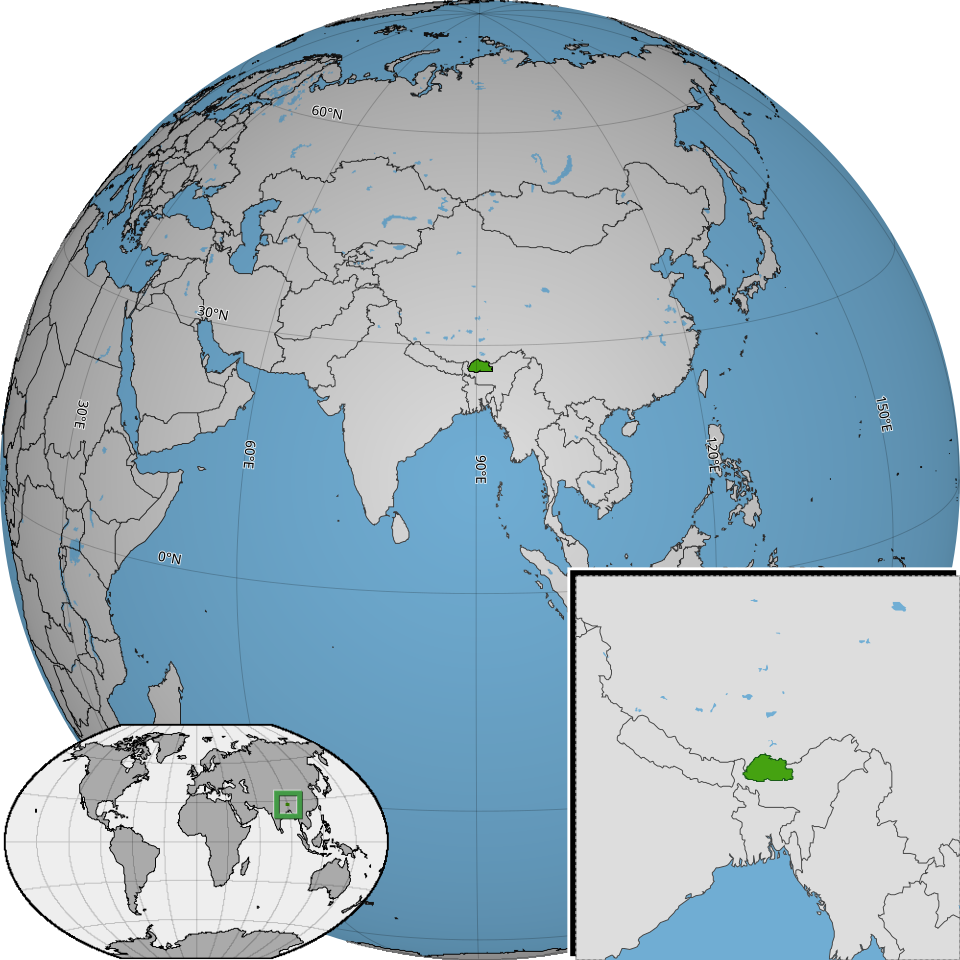
The Corporate Kingdom: Investment and Business in Bhutan
The landscape of Bhutanese business is dominated by a mix of state-owned enterprises and private companies that serve the domestic market. The top companies list is telling: Bhutan Airlines and Druk Air, the national carriers, hold prominent positions, reflecting the critical role of aviation in connecting this isolated kingdom to the outside world.
Media companies like Kuensel, the Bhutan Observer, and Bhutan Times round out the corporate roster, indicating a vibrant domestic media sector that operates within the framework of the constitutional monarchy.
For investors, Bhutan presents a paradox: a stable, peaceful democracy with clear rules, but also a market that is deliberately protective of its cultural and environmental assets. The business environment is not hostile to investment, but it is cautious, with regulations designed to ensure that economic development does not come at the cost of the nation’s identity.
The service sector, particularly tourism-related services and media, appears to be the most dynamic area of the economy, though the data suggests that these industries are primarily focused on domestic consumption rather than export-oriented growth.
Stability in the Himalayas: Safety, Politics, and Quality of Life
Bhutan’s political landscape is defined by its unusual constitutional arrangement, where the monarchy and democratic institutions coexist in a carefully balanced system. The current Prime Minister, Tshering Tobgay of the People’s Democratic Party, leads a government that operates within a framework established by the 2008 transition to parliamentary democracy.
The V-Dem Democracy Indices classification of Bhutan as an electoral democracy for 2024 underscores the country’s commitment to democratic processes, even as it maintains the ceremonial and spiritual role of the monarchy.
Crime and safety indices are not available, but Bhutan has a well-earned reputation as one of the safest countries in Asia, with low crime rates and a strong sense of community cohesion. The country’s Buddhist heritage and cultural values emphasize harmony and non-violence, which translates into a social environment that is markedly peaceful.
This safety, combined with the country’s stunning natural beauty and commitment to environmental preservation, contributes to a quality of life that consistently ranks high in subjective well-being surveys, even when traditional economic indicators may lag behind regional peers.
The Road Ahead: Bhutan’s Current Political and Economic Crossroads
Bhutan is currently navigating a period of significant transition, with the democratic system established in 2008 now entering its second decade of operation. The political landscape is active, with the People’s Democratic Party under Tshering Tobgay holding the premiership, demonstrating that the country’s democratic institutions are functioning and capable of facilitating peaceful political change.
This political stability provides a foundation for economic policy, even as the country grapples with the challenges of modernization, youth unemployment, and the need to diversify an economy that has historically relied on a narrow set of industries.
The current moment in Bhutan is defined by a tension between tradition and modernity—a tension that is playing out in everything from media expansion to infrastructure development. The prominence of companies like Bhutan Postal Corporation in the corporate landscape suggests a country that is modernizing its services, though the pace of change remains deliberately measured.
As the world increasingly focuses on sustainability and environmental conservation, Bhutan’s model of development, which has long prioritized these values, may position the country as a leader in alternative approaches to economic growth. The coming years will test whether this model can deliver the material improvements that citizens expect while maintaining the cultural and environmental integrity that makes Bhutan unique.
The Bottom Line
Bhutan is a country that demands attention not for its economic scale, but for its distinctive approach to governance and development. For political scientists, it offers a fascinating case study of successful democratic transition within a monarchical framework. For investors, it presents a small but stable market with clear rules and a focus on sustainable development.
And for anyone interested in alternative models of national success, Bhutan’s ongoing experiment with Gross National Happiness provides a compelling counterpoint to conventional economic wisdom. This is a nation to watch—not for explosive growth, but for the quiet, deliberate way it is charting a course through the complexities of the 21st century.
Sources & Methodology
This article is authored by Economic Pulse Net for informational and research purposes. Economic Pulse Net sources its data from multilateral institutions, national statistics bureaus, and proprietary databases. All data is believed to be current as of the date of publication.
Published: August 16, 2026 | Category: Research — Bhutan
Use these signals in your own platform
Economic Pulse publishes its live signal feed through a documented, read-only API. Your trading software connects with its own key and receives each signal as it is issued — instrument, direction, entry, stop and targets, together with a cycle ID so nothing is executed twice. The feed is independent of this website and cannot change it.
Signals are informational only and are not financial advice.