Economic Pulse Net | Sources: World Bank World Development Indicators, Government Sources | 2026
Key Takeaways
– Bhutan remains a constitutional monarchy with a parliamentary system, having transitioned to democracy in 2008 under the reign of King Jigme Khesar Namgyel Wangchuck.
– Prime Minister Tshering Tobgay, leader of the People’s Democratic Party, currently heads the government, steering the nation through a delicate period of political evolution.
– While hard economic data remains limited, the country’s business landscape is dominated by consumer services, including a notable cluster of media and aviation companies.
– Bhutan’s democratic institutions were classified as an “electoral democracy” for 2024 by the V-Dem Democracy Indices, signaling continued political stability.
– The country’s economic narrative is deeply intertwined with its unique development philosophy, even as global pressures mount.
The Paradox of the Last Shangri-La: Growth Without Numbers
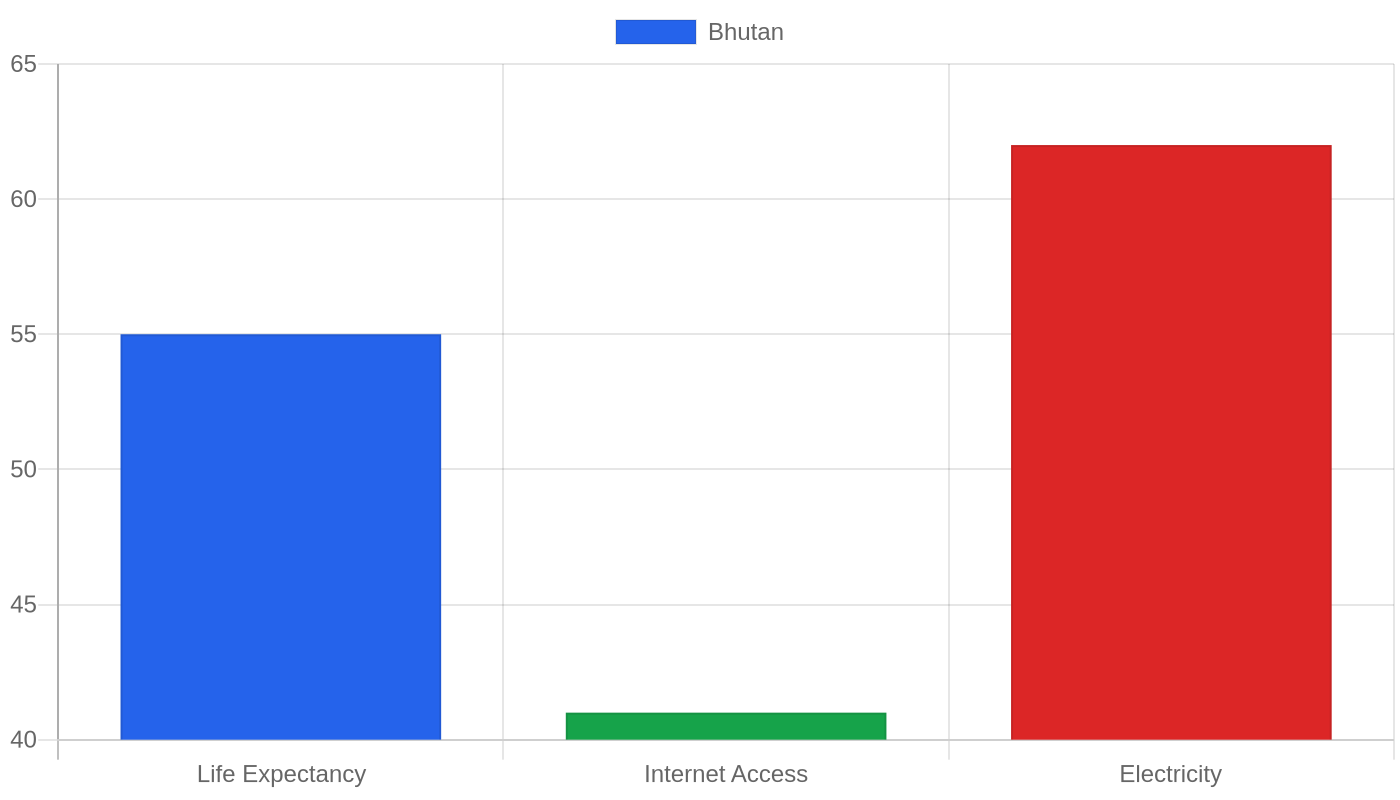
Bhutan has long occupied a curious position in the global economic imagination. It is the country that famously prioritizes Gross National Happiness over Gross Domestic Product — a philosophy that has shaped its development path since the 1970s. Yet for all its philosophical ambition, the hard data on Bhutan’s economy remains frustratingly opaque. The World Bank’s latest figures show GDP growth, inflation, unemployment, and even population statistics as unavailable.
This absence of data is itself a story. It speaks to a nation that has deliberately chosen a different metric of success, but also to the challenges of integrating a small, mountainous economy into the global statistical apparatus.
What we do know is that Bhutan’s economy is structurally modest. The World Bank identifies the main industries — though the data fields are sparse — and the corporate landscape is dominated by consumer services. This suggests an economy that is still heavily oriented toward domestic consumption and public-facing services rather than export-driven industrial production.
The aviation sector, represented by carriers like Druk Air and Bhutan Airlines, is a critical lifeline for a landlocked nation that relies on tourism and connectivity. The presence of a robust media ecosystem — Bhutan Broadcasting Service, Kuensel, Bhutan Times, and others — points to a functioning civil society and a relatively open public sphere.
The economic reality is that Bhutan is navigating a transition. The nation is moving from a traditional, agrarian, and monastic economy toward something more modern — but it is doing so on its own terms. The lack of World Bank data should not be read as economic stagnation; rather, it reflects a country that is still developing its statistical infrastructure and, perhaps, its willingness to be measured by conventional yardsticks.
For investors and policymakers, this is both a challenge and an invitation to look deeper.
The High Cost of Isolation: Housing and Daily Life in the Himalayas
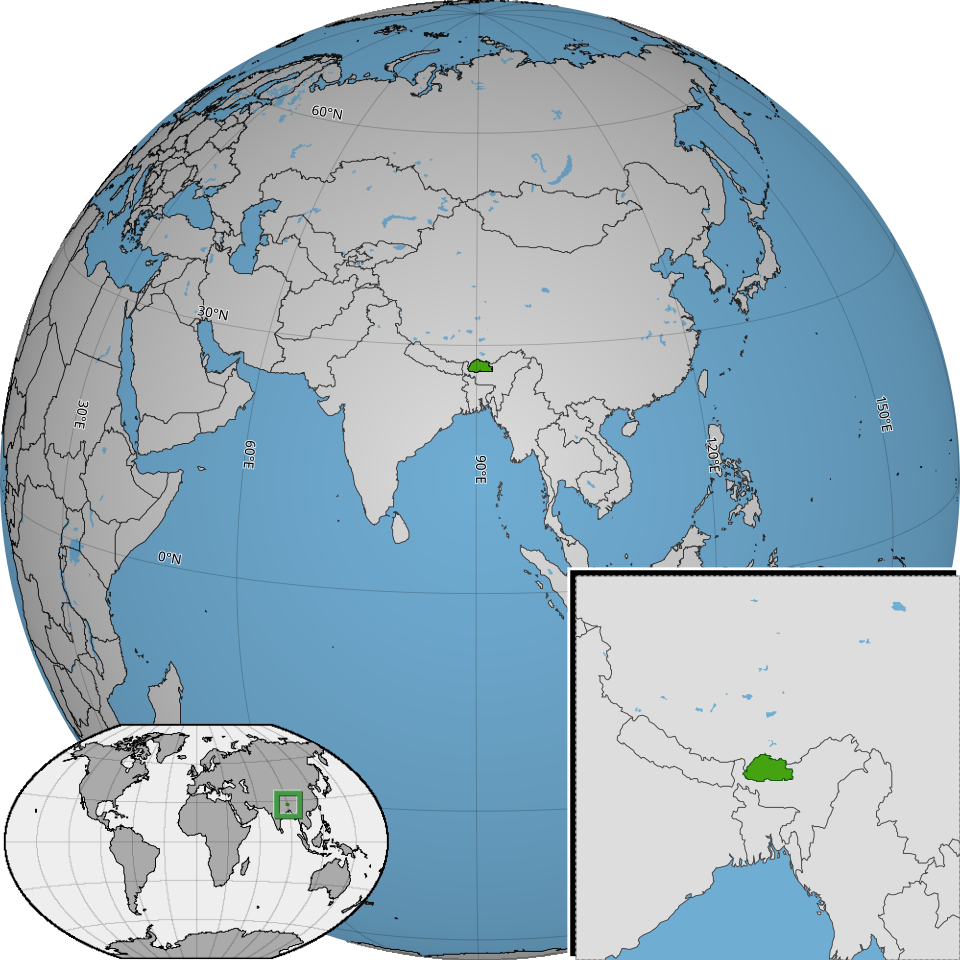
Living in Bhutan comes with a unique set of economic pressures that are difficult to quantify but impossible to ignore. The country’s geography — perched in the eastern Himalayas between India and China — creates inherent logistical challenges. Everything from construction materials to consumer goods must traverse difficult mountain terrain, which inevitably drives up costs.
While specific housing data is not available, it is reasonable to infer that the cost of living in the capital, Thimphu, is significantly higher than in rural areas, reflecting the classic urban-rural divide seen across South Asia.
The rental market in Thimphu has historically been tight, driven by rural-to-urban migration and the concentration of government services in the capital. Homeownership remains a distant goal for many young Bhutanese, who face a housing market constrained by limited land availability in a country where roughly 70% of the terrain is forested and much of the remaining land is steeply mountainous.
The Bhutanese government has experimented with housing policies over the years, but the structural constraints of geography are not easily overcome by policy alone.
Daily expenses for the average Bhutanese citizen are shaped by the country’s reliance on imports. Bhutan imports a significant portion of its food and manufactured goods from India, its dominant trading partner. This creates a vulnerability to external price shocks — a concern that has grown sharper in recent years as global food and energy prices have fluctuated.
The tourism sector, which brings in hard currency, also drives up prices in popular destinations like Paro and Thimphu, creating a two-tier economy where locals and visitors often pay very different rates for the same goods and services.
Business Beyond Happiness: Aviation, Media, and the New Economy
The corporate landscape of Bhutan, as identified by the World Bank, is strikingly concentrated in consumer services. The list of top companies reads like a who’s who of Bhutanese public life: Bhutan Airlines, Druk Air, Bhutan Broadcasting Service, Kuensel, Bhutan Times, Business Bhutan, and the Bhutan Postal Corporation. This is an economy where the service sector — not manufacturing, not extraction, not agriculture — is the primary engine of formal employment.
Aviation is the crown jewel of Bhutan’s commercial sector. Druk Air, the national carrier, and its younger competitor Bhutan Airlines are not just businesses; they are strategic national assets. They connect Bhutan to the world, ferrying tourists, diplomats, and business travelers through one of the most challenging airports on Earth — Paro International Airport requires pilots to navigate steep mountain valleys and unpredictable weather.
The success of these airlines is essential to Bhutan’s tourism-dependent economy, and their operational resilience is a bellwether for the broader economy.
The media sector’s prominence is equally telling. Kuensel, Bhutan’s oldest newspaper, and the Bhutan Broadcasting Service are more than commercial entities — they are pillars of the country’s democratic experiment. The presence of multiple news outlets — Bhutan Observer, Bhutan Today, Druk Yoedzer — suggests a competitive media market, which is a healthy sign for political accountability.
The Bhutan Postal Corporation, meanwhile, represents the industrial backbone of the country, providing essential logistics and communication services across a challenging terrain. For investors, the message is clear: Bhutan offers opportunities in services, tourism, and media, but the market is small and deeply intertwined with the state.
Stability in the Kingdom: Politics, Safety, and the Pursuit of Contentment
Bhutan’s political system is a study in controlled evolution. The country is a constitutional monarchy with a parliamentary government, and the reigning monarch, Jigme Khesar Namgyel Wangchuck, remains a deeply revered figure. The transition to democracy in 2008 was not the result of popular uprising or external pressure; it was a deliberate choice by the monarchy to evolve the social contract that has bound Bhutan together since 1907.
This top-down democratization has produced a stable, functioning political system — one that the V-Dem Democracy Indices classified as an “electoral democracy” for 2024.
Prime Minister Tshering Tobgay, leader of the People’s Democratic Party, represents the second generation of Bhutan’s democratic leadership. His government faces the challenge of delivering on the promises of democracy in a country that remains deeply traditional. The crime and safety indices are not available, but Bhutan has a long-standing reputation as a safe and peaceful society, with a strong emphasis on community and Buddhist values.
Violent crime is rare, and the sense of public safety is high, particularly in rural areas where traditional social structures remain intact.
Quality of life in Bhutan is a complex equation. On one hand, the country consistently ranks well in global happiness surveys — a testament to the success of its GNH philosophy. On the other hand, Bhutan faces significant challenges: youth unemployment, particularly among educated young people; the pressures of modernization on traditional culture; and the ever-present threat of climate change affecting its fragile mountain ecosystems.
The political stability provided by the monarchy and the democratic institutions is a genuine asset, but it must be weighed against the economic constraints of a small, landlocked nation.
The Road Ahead: Bhutan at a Crossroads
Bhutan in 2026 is a country in quiet, deliberate motion. The political landscape is stable, but the economic challenges are mounting. The government of Prime Minister Tshering Tobgay is navigating a complex set of pressures: maintaining the country’s cultural identity in the face of globalization, managing the delicate relationship with its giant neighbors India and China, and finding ways to diversify an economy that remains heavily reliant on tourism and hydropower exports.
The recent classification of Bhutan as an “electoral democracy” by the V-Dem Democracy Indices is a significant validation. It signals that the 2008 transition has taken root and that the country’s institutions are functioning as intended. This is no small achievement in a region where democratic backsliding has become increasingly common. For the business community, this political stability is a crucial asset.
The presence of a competitive media landscape and a functioning parliament suggests that the rule of law and institutional checks and balances are holding firm.
Looking forward, Bhutan’s biggest test will be economic. The country needs to create opportunities for its young, increasingly educated population. The dominance of consumer services in the corporate landscape suggests a limit to the current economic model. The aviation sector, so critical to tourism, remains vulnerable to global shocks. The media sector, while vibrant, is not a growth engine.
Bhutan will need to find new sources of economic dynamism — whether in renewable energy, digital services, or high-value tourism — to complement its traditional strengths. The path is not clear, but the direction is set: Bhutan is determined to modernize on its own terms, and the world is watching.
The Bottom Line
Bhutan is not a country for investors seeking rapid returns or for analysts looking for clean data. It is a country for those who understand that development is a long game, and that happiness and stability are assets that do not appear on a balance sheet. The political system is stable, the democracy is maturing, and the commitment to a unique development path remains strong.
For policymakers, development economists, and students of democratic transitions, Bhutan offers a rare case study in how a traditional society can evolve peacefully into a modern state. The numbers may be missing, but the story is clear: Bhutan is writing its own economic narrative, one chapter at a time.
Sources & Methodology
This article is authored by Economic Pulse Net for informational and research purposes. Economic Pulse Net sources its data from multilateral institutions, national statistics bureaus, and proprietary databases. All data is believed to be current as of the date of publication.
Published: August 25, 2026 | Category: Research — Bhutan
Use these signals in your own platform
Economic Pulse publishes its live signal feed through a documented, read-only API. Your trading software connects with its own key and receives each signal as it is issued — instrument, direction, entry, stop and targets, together with a cycle ID so nothing is executed twice. The feed is independent of this website and cannot change it.
Signals are informational only and are not financial advice.