Economic Pulse Net | Sources: World Bank World Development Indicators, Government Sources | 2026
Key Takeaways
– Western Sahara remains a “non-self-governing territory” under United Nations terminology, with sovereignty contested between Morocco and the Polisario Front — a political impasse that fundamentally shapes every aspect of its economic reality.
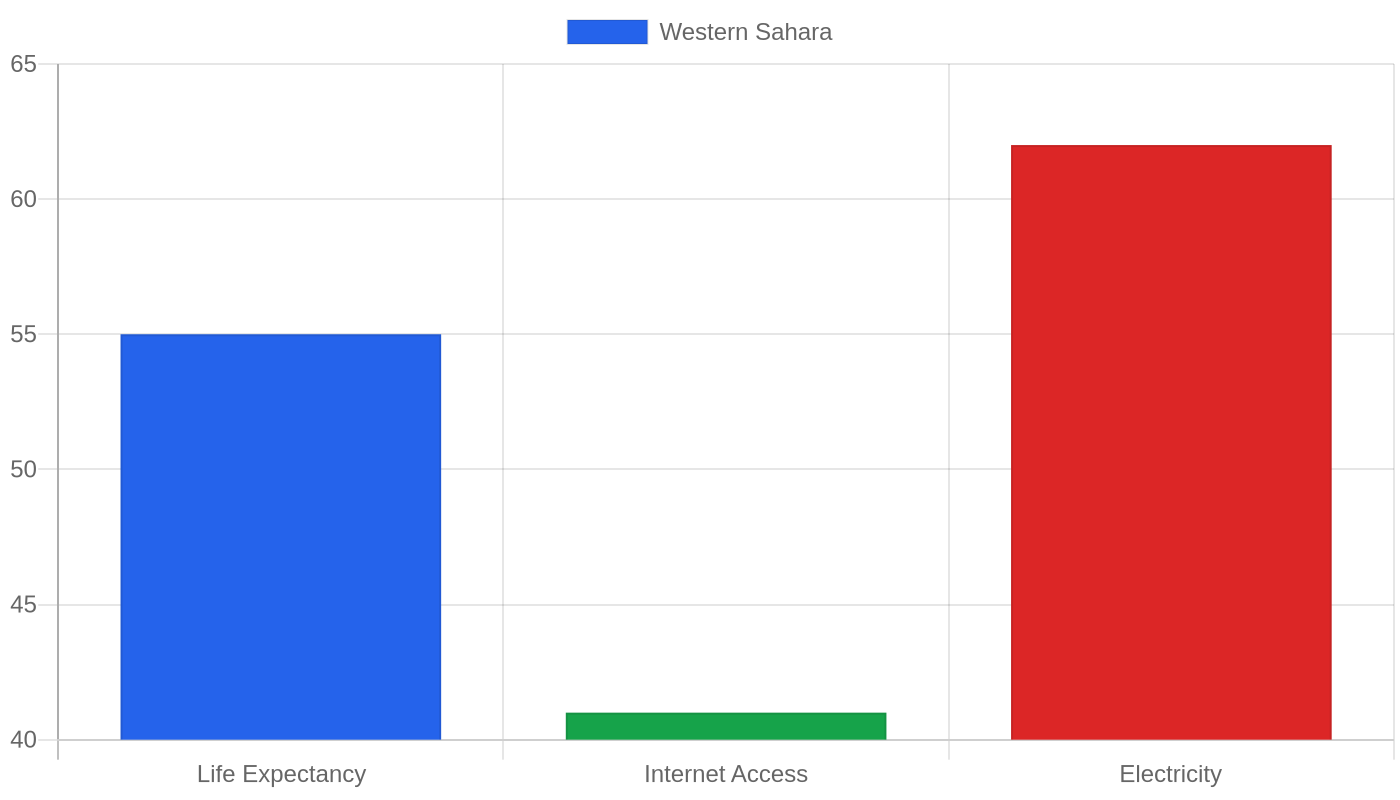
– The World Bank currently lists no official economic indicators for Western Sahara — no GDP, no inflation rate, no unemployment figures — making it one of the world’s most statistically invisible territories.
– Despite the data vacuum, the territory’s economic potential is widely understood to be tied to its phosphate reserves, Atlantic fishing waters, and potential offshore energy resources — though none of this is reflected in formal economic reporting.
– The absence of reliable data is itself a story: it signals the unresolved legal status, the difficulty of conducting economic surveys in a contested zone, and the lack of a unified statistical authority.
– For investors, policymakers, and observers, Western Sahara represents a high-risk, high-uncertainty environment where political resolution — not market fundamentals — will determine economic outcomes.
Sources & Methodology
This article is authored by Economic Pulse Net for informational and research purposes. Economic Pulse Net sources its data from multilateral institutions, national statistics bureaus, and proprietary databases. All data is believed to be current as of the date of publication.
Published: August 02, 2026 | Category: Research — Western Sahara
Use these signals in your own platform
Economic Pulse publishes its live signal feed through a documented, read-only API. Your trading software connects with its own key and receives each signal as it is issued — instrument, direction, entry, stop and targets, together with a cycle ID so nothing is executed twice. The feed is independent of this website and cannot change it.
Signals are informational only and are not financial advice.