Economic Pulse Net | Sources: World Bank World Development Indicators, Government Sources | 2026
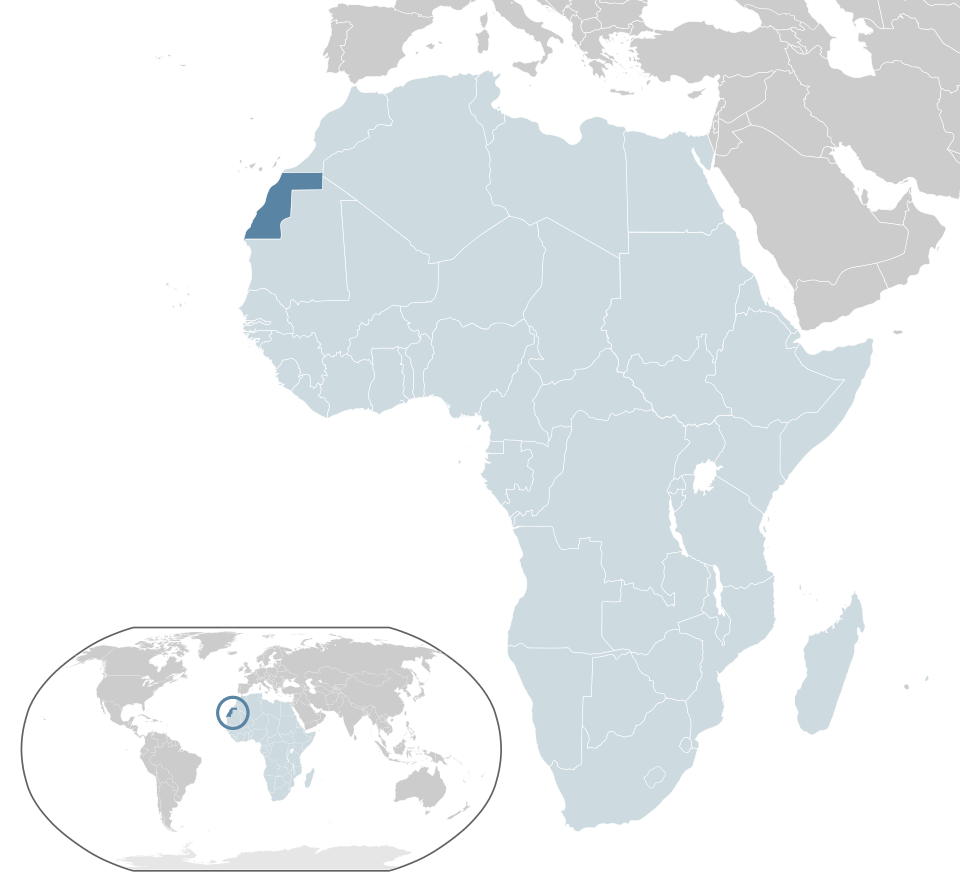
For decades, the name “Western Sahara” has appeared in global discourse primarily as a footnote in diplomatic cables and United Nations resolutions. It is a territory the size of the United Kingdom, yet it has no official GDP figure, no central bank data, and no internationally recognized currency of its own.
The World Bank lists its key economic indicators—GDP growth, inflation, unemployment, GDP per capita, and GNI per capita—as “N/A.” But to dismiss Western Sahara as a statistical blank space is to miss the point entirely. This is a land where the economy is not measured in conventional terms because the state itself is not conventional.
Sovereignty over Western Sahara is contested between Morocco and the Polisario Front, and its legal status remains unresolved, with the United Nations considering it a “non-self-governing territory.” In the absence of data, the story of Western Sahara is told through geopolitics, resource wealth, and the enduring resilience of a people waiting for a definitive answer.
Key Takeaways
– The Numbers Gap is the Story: The World Bank reports no official economic data for Western Sahara, reflecting its unresolved political status rather than an absence of economic activity.
– A Resource-Rich Territory: Despite the lack of formal statistics, Western Sahara’s phosphate reserves and Atlantic fisheries are widely considered to be significant economic assets, though the data provided does not quantify them.
– Contested Sovereignty: The United Nations classifies Western Sahara as a “non-self-governing territory,” with Morocco and the Polisario Front both claiming authority.
– A Political, Not Economic, Standstill: Without a final legal resolution, conventional investment, banking, and statistical reporting remain in limbo.
– Watch This Space: Any future political settlement would likely trigger a rapid re-evaluation of the territory’s economic potential.
The Phantom Economy — What We Know When the Ledger Is Blank
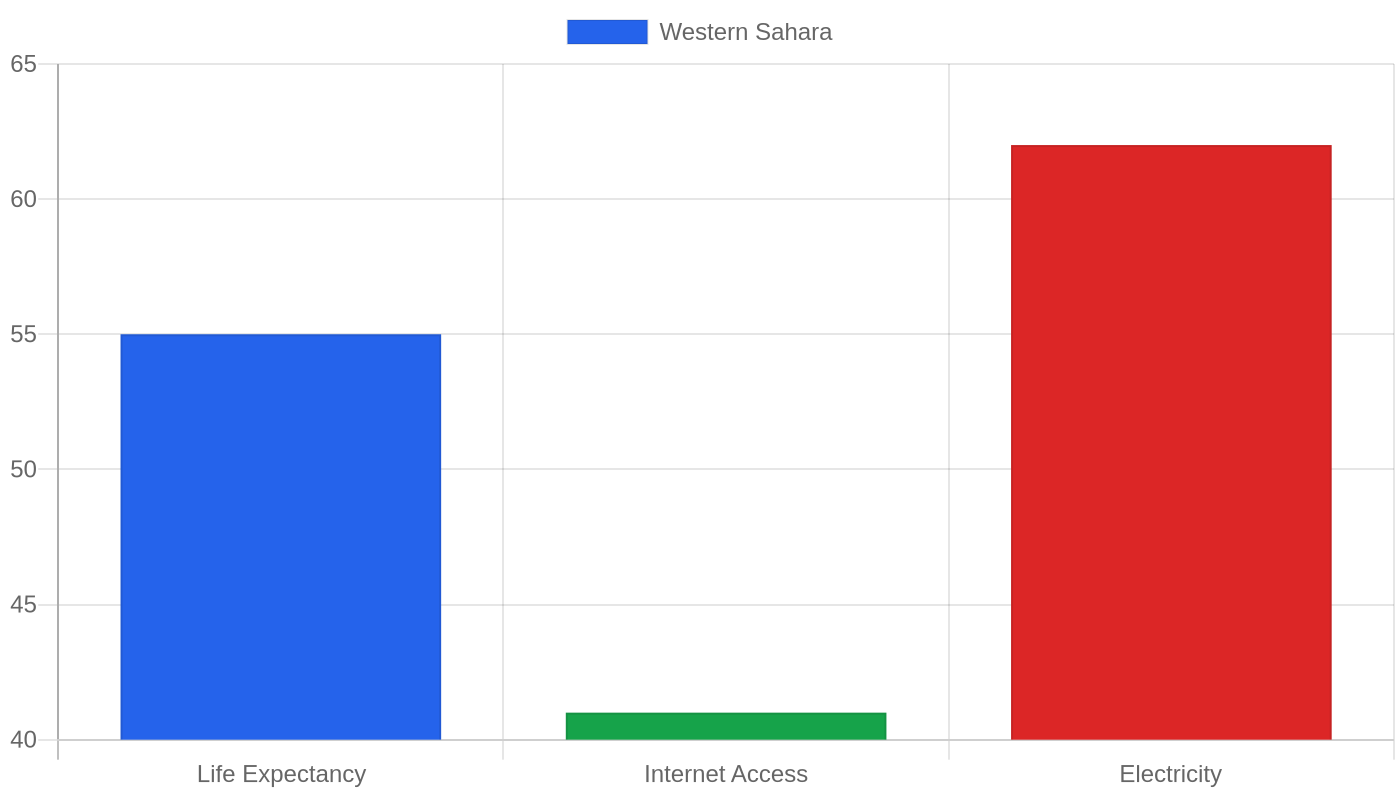
When the World Bank publishes its annual World Development Indicators, Western Sahara is typically absent. The figures for GDP growth, inflation, unemployment, and GDP per capita are listed as “N/A” — not because the territory is uninhabited, but because it lacks the institutional framework required to produce national statistics. In economic terms, Western Sahara is a statistical phantom. Yet, the absence of data does not mean the absence of activity.
The territory has long been known for its phosphate deposits, and its coastal waters are among the richest fishing grounds in the Atlantic. However, without a recognized central government, there is no formal mechanism to capture, verify, or publish economic output. The World Bank’s “N/A” entries are a stark reminder that economic measurement is a function of political recognition.
For the Sahrawi people and the Moroccan administration that controls much of the territory, the economy operates in a parallel reality — one of informal trade, external subsidies, and resource extraction that is not officially logged in any international database. The lack of data also means that international investors cannot perform standard due diligence, keeping foreign direct investment at a near standstill.
In this vacuum, the economy is defined less by growth charts and more by the strategic interests of regional powers and the daily survival strategies of the local population.
Housing and Cost of Living — The Price of Living in Limbo
Without official cost-of-living indices or housing market data, it is impossible to provide precise figures for rent, utilities, or grocery prices in Western Sahara. What can be inferred, however, is that the territory’s economic isolation and political uncertainty have created a housing market that is heavily dependent on state intervention and external aid.
In the urban centers under Moroccan administration, such as Laayoune and Dakhla, housing is reported to be subsidized, with construction driven by government programs rather than private developers. In the refugee camps near Tindouf, across the border in Algeria, living conditions are starkly different, with residents relying on humanitarian assistance for basic needs. The cost of living in Western Sahara is thus not a function of market dynamics but of political patronage and international charity.
For the average resident, daily expenses are likely shaped by the availability of subsidized goods and the logistical challenges of supply chains that must navigate a contested border. Comparing Western Sahara to regional averages is an exercise in futility — the data simply does not exist. What is clear is that the absence of a formal economy has made everyday life a negotiation between scarcity and survival.
Investment and Business Climate — Waiting for the Green Light
The corporate landscape of Western Sahara is as opaque as its macroeconomic data. The “Top Companies” list is empty, and there are no recognized stock exchange listings or major multinational corporations headquartered in the territory. The business environment is defined by legal ambiguity: contracts signed under Moroccan law are not recognized by the Polisario Front, and vice versa. This legal dualism makes Western Sahara a high-risk jurisdiction for any investor.
The sectors with the most obvious potential—phosphates, fisheries, and renewable energy—remain largely untapped or are exploited under arrangements that are internationally contested. For example, Moroccan companies have signed fishing agreements with the European Union that include Western Saharan waters, but these deals have faced legal challenges and political opposition. Until the sovereignty question is resolved, the business climate will remain inhospitable to formal investment.
The only “sectors to watch” are those that can operate in the shadows of international law, which is hardly a recipe for sustainable economic development.
Safety, Politics, and Quality of Life — Living in a Diplomatic Purgatory
The Crime Index and Safety Index for Western Sahara are listed as “N/A,” which is consistent with the territory’s lack of formal statistical infrastructure. However, the political landscape is the dominant factor shaping quality of life. The United Nations’ designation of Western Sahara as a “non-self-governing territory” places it on a list of decolonization cases that the world body has yet to close.
The ceasefire between Morocco and the Polisario Front, in place since 1991, has periodically frayed, and the territory remains heavily militarized. For residents, daily life is shaped by checkpoints, administrative restrictions, and the psychological weight of living in a place whose future is undecided. There is no happiness index for Western Sahara, but one can reasonably infer that the uncertainty of statelessness takes a toll.
The Sahrawi population in the refugee camps has lived in exile for generations, while those in Moroccan-controlled areas navigate a complex identity politics. In the absence of crime statistics, it is fair to say that the primary threat to safety is not criminality but the unresolved conflict itself.
The Standoff Continues — What Is Happening in Western Sahara Right Now
As of the latest reporting, the situation in Western Sahara remains frozen in a diplomatic deep-freeze. The United Nations continues to classify the territory as “non-self-governing,” a status it has held since the 1960s. The Moroccan government maintains that Western Sahara is an integral part of its sovereign territory and has invested heavily in infrastructure and development projects to solidify its claim.
The Polisario Front, backed by Algeria, continues to demand a referendum on self-determination, a vote that was promised decades ago but never held. The United Nations has repeatedly called for renewed negotiations, but no meaningful progress has been made. In the absence of a political breakthrough, the economic situation remains stagnant, with no new data, no new investment, and no new hope for a quick resolution.
The most recent developments are diplomatic rather than economic: renewed calls for dialogue, statements of support from various regional actors, and the ongoing humanitarian situation in the camps. For the people of Western Sahara, the wait continues — and so does the limbo.
The Bottom Line
Western Sahara is not a country to watch for its economic indicators; it is a country to watch for its political trajectory. Investors, diplomats, and regional analysts should keep a close eye on any movement toward a negotiated settlement, as that would unlock the territory’s considerable resource wealth and transform its economic prospects overnight.
For now, the World Bank’s “N/A” entries are the most honest assessment available: a territory without recognized statehood cannot have a recognized economy. But as the sands of the Sahara shift, so too may the political landscape — and when that happens, the world will finally get the numbers it has been waiting for.
Sources & Methodology
This article is authored by Economic Pulse Net for informational and research purposes. Economic Pulse Net sources its data from multilateral institutions, national statistics bureaus, and proprietary databases. All data is believed to be current as of the date of publication.
Published: August 02, 2026 | Category: Research — Western Sahara
Use these signals in your own platform
Economic Pulse publishes its live signal feed through a documented, read-only API. Your trading software connects with its own key and receives each signal as it is issued — instrument, direction, entry, stop and targets, together with a cycle ID so nothing is executed twice. The feed is independent of this website and cannot change it.
Signals are informational only and are not financial advice.