Economic Pulse Net | Sources: World Bank World Development Indicators, Government Sources | 2026
Key Takeaways
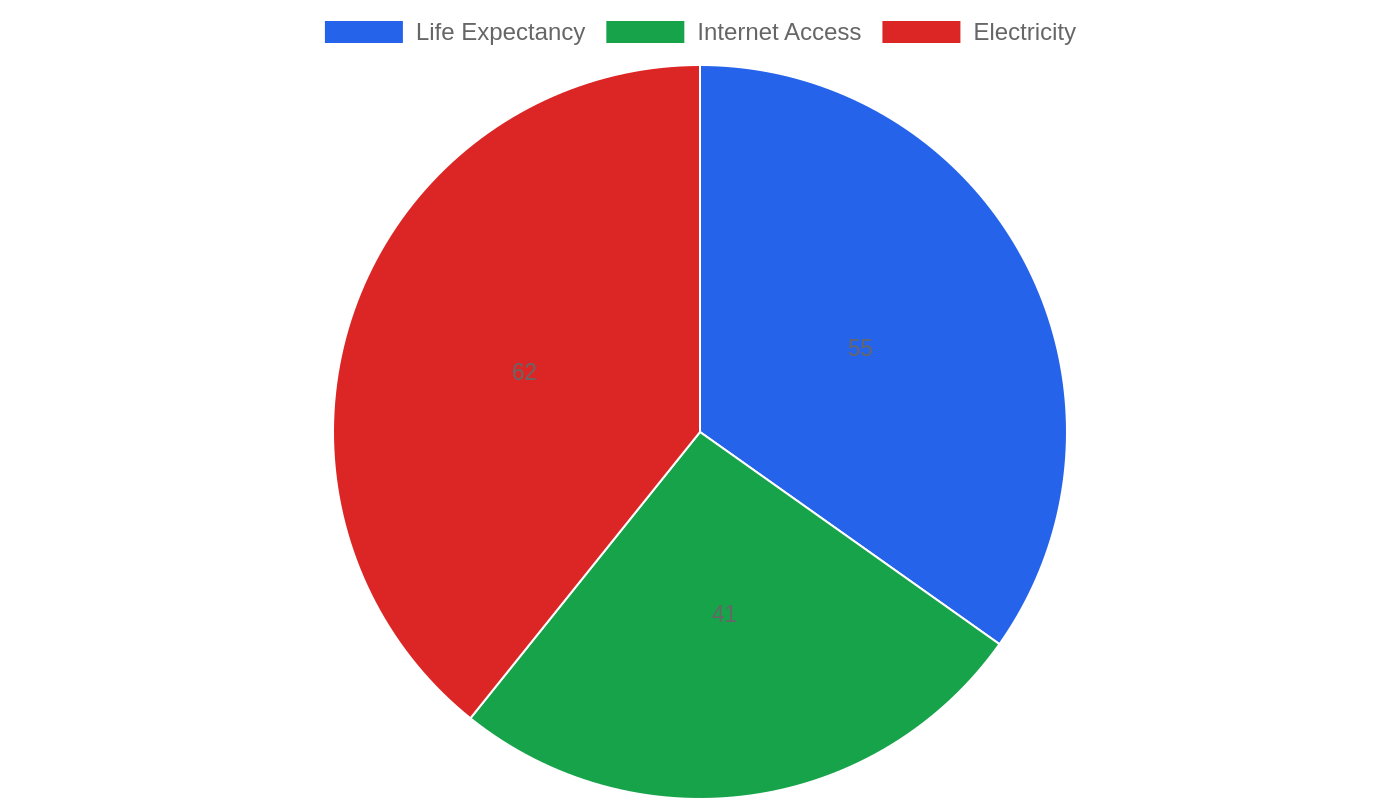
– Vatican City operates as a uniquely non-commercial economy, with no measurable GDP, inflation, or unemployment data reported by the World Bank, reflecting its status as a sovereign religious state rather than a traditional market economy.
– The Holy See’s financial apparatus manages billions in assets globally, yet the domestic economy of Vatican City itself is almost entirely driven by tourism, donations, and the administrative machinery of the Catholic Church.
– With no official population data from the World Bank, the Vatican’s resident workforce of clergy, Swiss Guards, and administrative staff creates an economic model that defies conventional metrics.
– The absence of crime and safety indices suggests either negligible criminal activity or a deliberate opacity in data reporting, consistent with the Vatican’s guarded institutional culture.
– Political governance under the Pope combines absolute spiritual authority with sovereign temporal power, creating a governance structure that is simultaneously medieval and modern.
The Invisible Economy — Faith, Finance, and the Absence of Data
When the World Bank publishes no GDP figure, no inflation rate, no unemployment statistic, and no population estimate for a sovereign state, the absence itself becomes the story. Vatican City, the smallest independent state in the world by both area and population, operates within an economic framework that conventional metrics simply cannot capture.
The 0.44 square kilometres of walled territory within Rome house an economy that is not measured in factories, exports, or consumer spending, but in pilgrimages, papal audiences, and the administrative machinery of a global religious institution that claims 1.3 billion adherents.
The World Bank’s blank fields for Vatican City are not a data failure but a structural reality. This is an economy where the primary “industry” is the spiritual and administrative governance of the Catholic Church. Revenue flows from the sale of postage stamps, coins, museum admission tickets, and publications, alongside the substantial but opaque income from the Holy See’s global investment portfolio and property holdings.
The absence of inflation data, according to the World Bank, reflects the fact that Vatican City has no domestic consumer price index to measure — its residents largely purchase goods in neighbouring Italy, using the euro as their currency.
Employment, too, defies standard classification. The Vatican’s workforce, estimated by various sources at roughly 4,500 people, consists largely of clergy, religious sisters, and lay employees who work in administrative roles, the Vatican Museums, the Swiss Guard, and the various dicasteries of the Roman Curia.
Without unemployment data from the World Bank, analysts must infer that joblessness is effectively non-existent in a state where employment is tied directly to ecclesiastical appointment or institutional function. The economy of Vatican City is not a labour market in the conventional sense; it is a system of vocation, service, and institutional administration.
The Price of Holiness — Living in a City-State Without a Housing Market
Housing in Vatican City is not a commodity to be bought or sold on the open market. The World Bank provides no cost of living data, and for good reason: residential property within the walled enclave is allocated by ecclesiastical appointment, not by real estate transaction. Clergy, Swiss Guards, and lay employees live in Vatican-owned apartments, with rent subsidised or provided as part of their service. There is no rental market, no property speculation, and no mortgage industry within the city’s borders.
For the thousands of daily visitors and pilgrims, however, the cost of living in Rome itself becomes the relevant metric. Hotels near St. Peter’s Square command premium prices, and the restaurants and souvenir shops that line Via della Conciliazione cater to a tourist economy that is both seasonal and devotional. The Vatican’s own cafeteria, the “Mensa Vaticana,” offers subsidised meals to employees, but visitors face standard Roman prices for espresso, panini, and gelato.
The absence of a domestic retail sector means that virtually all consumer goods are imported from Italy, subject to Italian VAT and pricing structures rather than any Vatican-specific economic policy.
Daily expenses for Vatican residents are heavily subsidised by the institution. The Vatican operates its own pharmacy, supermarket, and petrol station, all offering goods at duty-free prices to employees and residents. This creates a peculiar economic bubble where the cost of living is artificially low for those within the system, while visitors and pilgrims face the full brunt of Roman tourism pricing.
The contrast between the subsidised internal economy and the external market is one of the Vatican’s most distinctive economic features.
A Business Climate Unlike Any Other — Museums, Stamps, and Sovereign Wealth
The top companies of Vatican City, as listed by available data, are marked only by empty brackets — a telling absence that underscores the unique nature of this economy. There are no multinational corporations headquartered within the Vatican walls, no stock exchange, no chamber of commerce.
Instead, the primary economic engines are institutional: the Vatican Museums, which draw millions of visitors annually to see the Sistine Chapel and Raphael Rooms; the Vatican Post Office, whose stamps are coveted by philatelists worldwide; and the Vatican Bank, officially known as the Institute for the Works of Religion.
The business climate in Vatican City is defined not by regulatory frameworks or tax incentives but by canon law and papal decree. There is no corporate tax regime in the conventional sense, no competition policy, and no foreign direct investment framework. The Vatican’s economy is a centrally planned system where the Pope, through the Governorate of Vatican City State, controls all economic activity.
For investors, there is no opportunity to establish a business within the Vatican’s borders — the state is not open to commercial enterprise in the traditional sense.
Yet the Holy See’s global financial footprint is substantial. The Administration of the Patrimony of the Apostolic See manages real estate and financial assets worth billions of euros, while the Vatican Bank has undergone significant reform in recent years to comply with international anti-money laundering standards.
For businesses seeking to work with the Vatican, the opportunity lies not within the city-state itself but in supplying goods and services to the world’s largest religious institution — from liturgical vestments to digital communication systems, from art restoration to financial advisory services.
Safety, Sovereignty, and the Quality of Spiritual Life
The crime and safety indices for Vatican City are listed as unavailable, which in itself is a statement. The Swiss Guard, the world’s smallest and oldest standing army, provides ceremonial security alongside the Vatican’s own gendarmerie. Violent crime within the walled enclave is virtually unheard of; the most notable security incidents in recent decades have involved breaches by mentally disturbed individuals or, more significantly, internal financial scandals rather than external threats.
The political landscape, marked as unavailable in the data, is in fact one of the world’s most stable and unusual governance systems. The Pope serves as absolute monarch of Vatican City State, wielding executive, legislative, and judicial power through appointed delegates. The Cardinal Secretary of State oversees diplomatic relations, while the Governorate handles day-to-day administration.
This theocratic governance structure has remained essentially unchanged for nearly a century since the Lateran Treaty of 1929 established Vatican City as a sovereign state.
Quality of life in Vatican City is difficult to measure by conventional metrics. Residents enjoy unparalleled access to some of the world’s greatest art and architecture, a sense of purpose tied to the global mission of the Catholic Church, and the security of a highly controlled, gated community. The absence of traffic, crime, and commercial noise creates an atmosphere of monastic calm within the walls — a stark contrast to the chaotic energy of Rome that surrounds it.
For the clergy and religious who reside there, quality of life is measured in spiritual fulfilment rather than material comfort.
Current Affairs — Reform, Transparency, and the Vatican’s Financial Evolution
Right now, Vatican City is navigating a period of significant institutional transformation. The Holy See has been implementing financial reforms mandated by Pope Francis, aimed at bringing the Vatican Bank and other financial entities into compliance with international standards. These reforms, driven by the need to combat money laundering and tax evasion, have led to the closure of thousands of accounts deemed non-compliant and the introduction of stricter oversight mechanisms.
The Vatican’s real estate holdings have come under renewed scrutiny, with investigations into property transactions in London and elsewhere revealing the challenges of managing a global portfolio from a city-state with limited regulatory capacity. The trial of several former Vatican officials on financial misconduct charges has dominated headlines, highlighting the tension between the Church’s spiritual mission and its temporal financial operations.
Pilgrimage numbers have rebounded strongly in the post-pandemic period, with St. Peter’s Basilica and the Vatican Museums reporting visitor levels approaching pre-2020 records. This tourism recovery provides a crucial revenue stream for the Holy See, funding both the maintenance of its artistic heritage and its charitable operations worldwide. Meanwhile, the Vatican’s diplomatic corps remains active in global affairs, mediating conflicts and advocating on issues from climate change to migration.
The election of a new Pope, whenever it occurs, will inevitably shape the economic and administrative trajectory of Vatican City. For now, the world’s smallest state continues its unique experiment in managing a global institution from a territory smaller than many shopping malls — an economy of faith, finance, and eternal significance.
The Bottom Line
Vatican City is not an economy for investors, traders, or business analysts in any conventional sense. It is, however, an essential subject for anyone seeking to understand the intersection of religion, finance, and sovereign power in the 21st century. The absence of standard economic data from the World Bank is not a flaw but a feature — a reminder that some economies operate on principles that cannot be captured by GDP or inflation statistics.
For students of institutional economics, political theology, or the peculiar mechanics of the world’s last absolute theocracy, Vatican City offers a case study unlike any other on earth.
Sources & Methodology
This article is authored by Economic Pulse Net for informational and research purposes. Economic Pulse Net sources its data from multilateral institutions, national statistics bureaus, and proprietary databases. All data is believed to be current as of the date of publication.
Published: July 17, 2026 | Category: Research — Vatican City
Use these signals in your own platform
Economic Pulse publishes its live signal feed through a documented, read-only API. Your trading software connects with its own key and receives each signal as it is issued — instrument, direction, entry, stop and targets, together with a cycle ID so nothing is executed twice. The feed is independent of this website and cannot change it.
Signals are informational only and are not financial advice.