Economic Pulse Net | Sources: World Bank World Development Indicators, Government Sources | 2026
Key Takeaways
– Vatican City operates as a unique non-commercial economy, sustained primarily by donations, museum revenues, stamp and coin sales, and a global real estate portfolio rather than traditional GDP-generating industries
– The Holy See maintains a deeply opaque financial system, with no publicly available World Bank data on GDP, inflation, unemployment, or population — making it one of the least transparent economies on earth
– Despite its minuscule geographic footprint and lack of conventional economic metrics, the Vatican controls an estimated multi-billion-euro asset base and exerts significant moral and diplomatic influence over global financial ethics discussions
– Recent years have seen the Vatican implement unprecedented financial reforms under Pope Francis, including tighter anti-money laundering controls and greater scrutiny of its investment portfolio
– The city-state’s economic model faces structural challenges: declining church attendance in Europe, aging clergy demographics, and reputational risks from past financial scandals
The Invisible Economy — A Nation Without Numbers
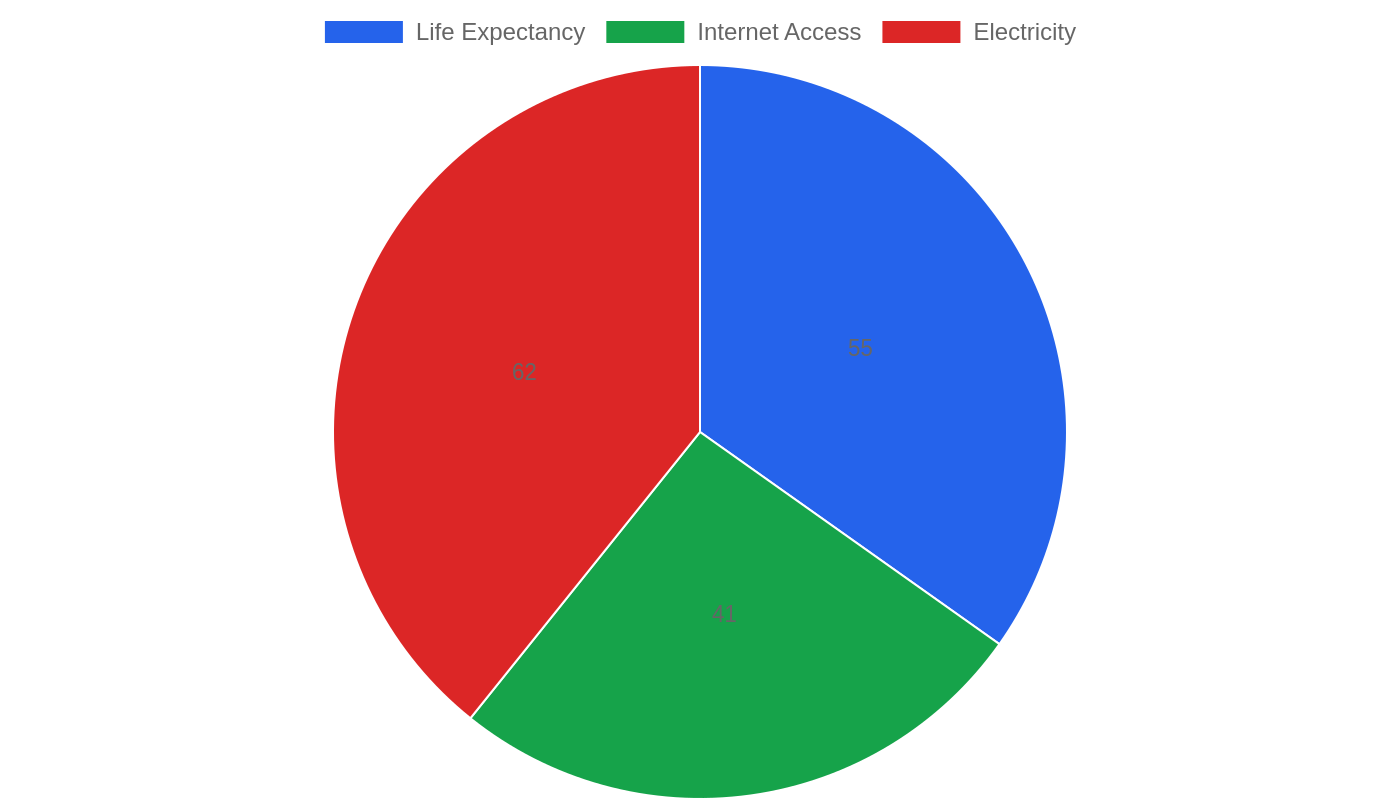
The Vatican City presents an extraordinary challenge to conventional economic analysis. The World Bank, the institution that tracks the pulse of nearly every nation on earth, offers no data whatsoever for this sovereign microstate. No GDP growth figure. No inflation rate. No unemployment statistic. No population count. No GNI per capita. This absence is not an oversight — it is a statement about the nature of the Vatican’s economic model.
The Holy See does not function like a nation-state in the traditional sense. It generates revenue not through taxation of citizens or value-added production, but through a combination of tourism receipts (the Vatican Museums draw approximately six million visitors annually), the sale of postage stamps and commemorative coins, publication sales, and — most significantly — investment income from a global real estate and financial portfolio estimated by analysts at several billion euros.
The Vatican Bank, officially known as the Institute for the Works of Religion (IOR), manages accounts for clergy, religious orders, and Vatican employees, and has been at the center of both financial controversy and reform efforts.
Peter’s Pence, the annual collection taken up in Catholic churches worldwide, provides another critical revenue stream, though exact figures are closely guarded. In recent years, the Vatican has also drawn down on its reserves to cover budget deficits, a sign of structural financial strain. The absence of World Bank data means economists must rely on Vatican-published budgets and occasional investigative reporting to piece together the picture.
What emerges is an economy that is small in scale but vast in symbolic and moral weight — a financial system built not on productivity but on faith, heritage, and institutional legacy.
The Cost of Holiness — Living in a City Without Rent
Housing in Vatican City operates under a logic entirely alien to the outside world. There is no rental market, no real estate speculation, no housing bubble. The approximately 800 residents — clergy, Swiss Guards, and lay employees — live in accommodation provided by the Holy See as part of their service. The concept of “rent versus buy” does not apply within the Leonine Walls.
For those who work in the Vatican but live in Rome, housing costs follow Italian market rates, which have seen significant increases in recent years.
Daily expenses for Vatican residents are subsidized. The city-state operates its own supermarket, pharmacy, post office, and fuel station, all offering goods at duty-free prices. This creates a peculiar economic bubble: employees can purchase goods significantly below Italian retail prices, insulating them from the inflation pressures affecting the broader eurozone. The Vatican’s pharmacy is legendary among Romans for its low prices and wide selection.
For the thousands of lay employees who commute daily from Rome, however, the cost of living is a very different story. These workers — museum staff, office personnel, maintenance crews — receive salaries that must stretch to cover Roman rents, which have climbed steadily. The Vatican has faced criticism over wage levels for its lay workforce, with unions occasionally protesting for higher pay and better conditions.
The contrast between the subsidized internal economy and the external Roman market creates a two-tier experience of Vatican economic life that reflects broader tensions within the institution.
Banking on Faith — Investment, Reform, and the Business of the Holy See
The Vatican’s business climate is unlike any other on earth. Its top companies, as listed in available data, are marked only as numbered entries with empty parentheses — a fitting symbol for an economy that operates with deliberate obscurity. The most significant economic entity is the aforementioned Institute for the Works of Religion, the Vatican Bank, which has undergone a dramatic transformation in recent years.
Under Pope Francis, the Vatican has pursued an aggressive financial reform agenda. The bank has closed thousands of accounts deemed non-compliant with new transparency standards, implemented stricter anti-money laundering protocols, and submitted to external audits by the Council of Europe’s Moneyval committee. These reforms followed a series of scandals, including the 2010 investigation into alleged money laundering that saw €23 million in Vatican assets seized by Italian authorities (later returned).
The reforms have been painful but necessary, as the Vatican seeks to secure its place in the legitimate global financial system.
The sectors to watch are not traditional industries but rather the Vatican’s investment portfolio, which includes significant real estate holdings in London, Paris, Geneva, and other prime markets. The 2021 trial over the London property deal — in which Vatican prosecutors alleged that senior clerics and financiers defrauded the Holy See of tens of millions of euros in a luxury real estate investment — highlighted both the risks and the scale of Vatican financial operations.
The case, still ongoing in various forms, has become a symbol of the tensions between old guard financial practices and the reformist agenda.
The Safest Place on Earth — Politics, Crime, and Life in the World’s Only Absolute Elective Monarchy
Vatican City consistently ranks as one of the safest places on the planet, though no formal Crime Index or Safety Index data is available from standard sources. The Swiss Guard, a corps of approximately 135 soldiers, provides security alongside the Vatican Gendarmerie. Crime is minimal and typically limited to petty theft targeting tourists in St. Peter’s Square, pickpocketing that is far more a Roman problem than a Vatican one.
The political landscape is sui generis. Vatican City is an absolute elective monarchy, with the Pope holding supreme legislative, executive, and judicial power. The Pope is elected by the College of Cardinals in a conclave, serving for life or until resignation.
The current governance structure, established by the 1929 Lateran Treaty with Italy, creates a unique political entity that is simultaneously a sovereign state, the headquarters of the world’s largest religious organization, and a cultural heritage site of incalculable value.
Quality of life for residents is unusual by any standard. There are no birth rates to track, no census data to analyze. The population is overwhelmingly male, largely celibate clergy, and aging. The city has no hospitals, no schools for children (beyond a small number of seminarians), and no entertainment districts. Life is monastic, structured around prayer, work, and service.
For the lay employees who live in Rome and commute in, quality of life is measured by the privilege of working in one of the world’s most iconic institutions — balanced against the challenges of Roman traffic, bureaucracy, and cost of living.
The Reform Era — Pope Francis and the Financial Revolution That Is Still Unfolding
Right now, Vatican City is in the midst of a transformation that will define its economic future for decades. Pope Francis, now in the twilight of his papacy, has pushed through financial reforms that his predecessors avoided for generations. The 2020 appointment of a lay economist, Juan Antonio Guerrero Alves, as prefect of the Secretariat for the Economy marked a significant shift toward professional management of Vatican finances.
The subsequent consolidation of the Holy See’s various financial entities under greater central control has been contentious but ongoing.
The most immediate issue is the Vatican’s budget deficit, which has been a persistent challenge. The COVID-19 pandemic dealt a severe blow to museum revenues, which had previously been a reliable income source. While tourism has rebounded, it has not fully recovered to pre-pandemic levels. The Vatican has responded by cutting costs, including salary freezes and reduced spending on administrative functions. The 2023 budget showed some improvement, but structural deficits remain.
The trial over the London property deal continues to cast a long shadow. The conviction of Cardinal Angelo Becciu in December 2023 on embezzlement charges was a landmark moment — the first time a cardinal had been convicted by a Vatican criminal court. The case exposed deep divisions within the Curia between reformists and traditionalists, and the appeals process is being closely watched.
Meanwhile, the Vatican continues to negotiate with Italian authorities over financial oversight and information sharing, seeking to demonstrate its commitment to transparency while maintaining its sovereign prerogatives.
The Bottom Line
Vatican City is not a country to watch for its economic growth or investment opportunities. It is a country to watch for what it reveals about the intersection of faith, finance, and power in the 21st century. For economists, it offers a case study in non-market economics, institutional reform, and the challenges of transparency in a system built on secrecy.
For investors, the Vatican’s real estate portfolio and financial reforms signal a cautious opening to greater professional management, though direct investment remains inaccessible. For anyone interested in how the world’s oldest institution is navigating the complexities of modern finance, Vatican City is the most fascinating small economy on earth — a place where the numbers may be missing, but the story is unmistakably clear.
Sources & Methodology
This article is authored by Economic Pulse Net for informational and research purposes. Economic Pulse Net sources its data from multilateral institutions, national statistics bureaus, and proprietary databases. All data is believed to be current as of the date of publication.
Published: July 26, 2026 | Category: Research — Vatican City
Use these signals in your own platform
Economic Pulse publishes its live signal feed through a documented, read-only API. Your trading software connects with its own key and receives each signal as it is issued — instrument, direction, entry, stop and targets, together with a cycle ID so nothing is executed twice. The feed is independent of this website and cannot change it.
Signals are informational only and are not financial advice.