Economic Pulse Net | Sources: World Bank World Development Indicators, Government Sources | 2026
Key Takeaways
– The Cayman Islands remains one of the world’s most significant offshore financial centers, but its status as a British Overseas Territory places it under increasing international scrutiny over tax transparency and regulatory standards.
– Political life is governed by a 19-seat elected Parliament under a 2009 Constitution that includes a Bill of Rights, yet the territory is listed by the UN Special Committee of 24 as one of 17 non-self-governing territories — a label with lingering colonial implications.
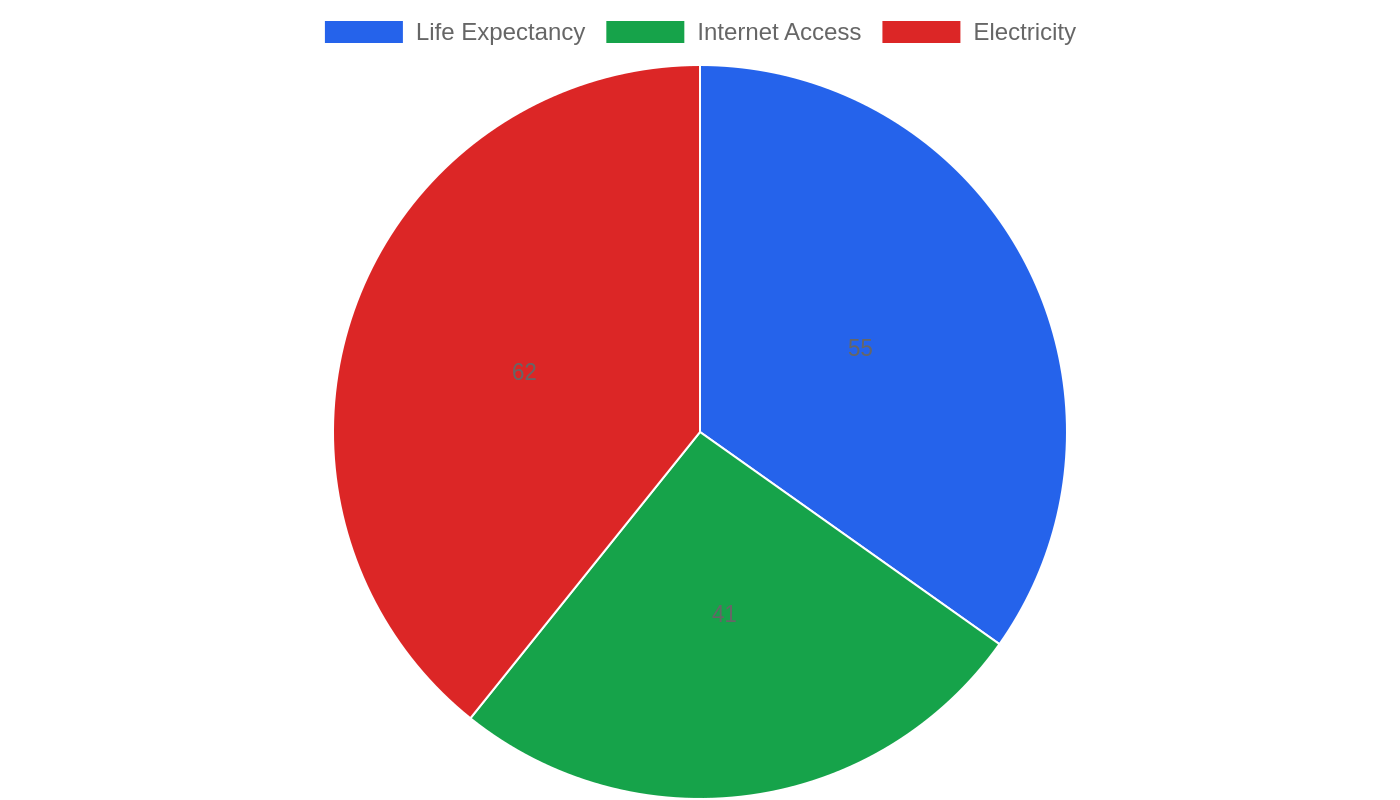
– Economic data from the World Bank is notably absent for GDP growth, inflation, unemployment, and per capita income, raising questions about data transparency in a jurisdiction that manages trillions in global capital.
– The cost of living and safety indices are also unreported by standard international databases, creating a paradox where the islands are globally integrated financially yet statistically opaque.
– Recent constitutional developments and the ongoing dialogue between local government and London over autonomy versus oversight are the defining political storylines for 2025 and beyond.
The Numbers Gap — What the World Bank Doesn’t Tell Us
The Cayman Islands presents a peculiar challenge for economic journalists: the World Bank, the gold standard for cross-country economic data, reports no figures for GDP growth, inflation, unemployment, or GDP per capita. This statistical silence is not accidental. As a British Overseas Territory, the Cayman Islands does not file the same comprehensive national accounts that sovereign states submit to international bodies.
The data gap speaks to the territory’s unique constitutional status — wealthy, sophisticated, but not quite a nation in the statistical sense.
What we do know is structural. The Cayman Islands has no direct taxation — no income tax, no corporate tax, no capital gains tax. This fiscal architecture has made it a global hub for hedge funds, banking, and insurance. The economy is overwhelmingly service-based, with financial services accounting for an estimated 40-50% of economic activity. Tourism provides the other major pillar, with the islands drawing visitors for their beaches, diving, and luxury resorts.
The absence of World Bank data means analysts must rely on sectoral reports and private sector estimates, but the core reality is clear: this is a high-income, services-driven economy that has prospered precisely because of its regulatory and tax framework.
The lack of inflation or unemployment figures is equally telling. In a jurisdiction where much of the workforce is expatriate and where the cost of living is notoriously high, official statistics would be politically sensitive. The government of the Cayman Islands does produce some local economic data through its Economics and Statistics Office, but it is not submitted to the World Bank’s standardized database.
This creates a situation where the territory is deeply integrated into global capital markets yet exists in a statistical blind spot — a fact that critics of offshore finance are quick to highlight.
The Price of Paradise — Housing and Daily Life in a Tax Haven
Without official cost-of-living indices from the World Bank or other international bodies, understanding daily expenses in the Cayman Islands requires looking at what is known anecdotally and through private sector surveys. The territory is widely recognized as one of the most expensive places to live in the Caribbean, if not the world.
Housing is the primary driver: a modest one-bedroom apartment in George Town can command rents comparable to central London or Manhattan, driven by demand from financial sector expatriates and limited land availability.
The rental market dominates, as property prices are prohibitive for most local residents. Buying a home typically requires significant capital, and mortgages are structured differently than in larger economies. Utilities, imported food, and transportation add to the burden — almost everything is imported, and the islands have no domestic agriculture to speak of. A meal out, a gallon of petrol, or a simple grocery run all carry price tags that would shock visitors from mainland North America or Europe.
For local Caymanians, the cost of living creates real social pressure. While the absence of income tax is a major advantage, it does not offset the high baseline expenses. The government has attempted to address housing affordability through various schemes, but the fundamental tension remains: the financial services industry that generates the territory’s wealth also drives up the cost of living for everyone.
This economic dynamic shapes local politics and public sentiment in ways that are not captured by standard data.
Business and Investment — The Offshore Engine
The Cayman Islands is home to some of the world’s largest financial institutions by assets under management, though the top companies are often global banks and investment firms operating through local subsidiaries rather than indigenous corporations. The territory is the world’s fifth-largest financial center by assets, with over $1 trillion in banking liabilities and more than 10,000 hedge funds registered.
The Cayman Islands Stock Exchange provides a listing venue for investment vehicles, while the insurance sector — particularly captive insurance — is among the most developed globally.
The business climate is deliberately designed to attract capital. There is no direct taxation, minimal regulatory red tape for financial entities, and a legal system based on English common law. The territory has a double taxation agreement with the United Kingdom and a network of tax information exchange agreements with other jurisdictions. However, the business environment is not without risk.
The European Union has placed the Cayman Islands on its list of non-cooperative jurisdictions for tax purposes in the past, and the territory has had to implement economic substance requirements to satisfy international standards.
Sectors to watch include fintech and digital assets, where the Cayman Islands is positioning itself as a regulated hub for cryptocurrency funds and blockchain-based businesses. The government has introduced legislation to license and supervise virtual asset service providers, aiming to balance innovation with compliance. For investors, the territory offers stability, a sophisticated legal framework, and access to global capital — but the regulatory landscape is evolving rapidly as international pressure mounts.
Politics, Safety, and the Colonial Question
The political landscape of the Cayman Islands is defined by its status as a British Overseas Territory. The current Constitution, enacted by a statutory instrument of the United Kingdom in 2009, includes a Bill of Rights and establishes a 19-seat Parliament elected every four years. Two additional non-voting members are appointed by the Governor, who represents the British Crown.
This arrangement means that while the islands handle domestic affairs, the UK retains responsibility for defense, foreign affairs, and ultimately, good governance.
The UN Special Committee of 24 lists the Cayman Islands as one of 17 non-self-governing territories — a designation that carries historical weight from the decolonization era. This label has practical implications: the UK is required to report to the UN on the territory’s progress toward self-determination. The question of independence is not actively debated in mainstream Caymanian politics, but the tension between local autonomy and London’s oversight is a recurring theme.
Recent years have seen disputes over the UK’s ability to impose legislation on the territory, particularly around beneficial ownership registers and financial transparency.
Crime and safety indices are not available from standard international sources, but the Cayman Islands is generally considered a safe destination for tourists and residents alike. Violent crime is low by regional standards, though property crime and petty theft occur, particularly in tourist areas. The Royal Cayman Islands Police Service maintains a visible presence, and the legal system functions effectively.
Quality of life is high for those who can afford it, with excellent healthcare, international schools, and a strong sense of community among both locals and expatriates. However, the social divide between wealthy expats and working-class Caymanians is a persistent undercurrent.
Current Affairs — Navigating the New Transparency Era
As of 2025, the Cayman Islands finds itself at the center of a global debate over tax transparency and financial regulation. The European Union continues to monitor the territory’s compliance with economic substance requirements, while the UK government has pushed for public beneficial ownership registers — a move that the Caymanian government has resisted, arguing it would undermine the jurisdiction’s competitive position.
This dispute has created friction between George Town and London, with local politicians accusing the UK of sacrificing the territory’s interests for diplomatic points with Brussels.
The financial services sector is adapting to the new reality. The Cayman Islands Monetary Authority has ramped up enforcement, issuing fines and revoking licenses for non-compliance with anti-money laundering rules. The territory has also signed onto the OECD’s Common Reporting Standard for automatic exchange of financial account information. These moves are designed to keep the Cayman Islands off blacklists, but they represent a significant shift from the era of absolute banking secrecy.
Tourism, meanwhile, is recovering strongly from the pandemic-era downturn. Visitor arrivals have rebounded, driven by luxury travel and the islands’ reputation as a safe, high-end destination. The government is investing in infrastructure, including airport expansion and cruise ship facilities, to support continued growth.
However, the dual-track economy — financial services and tourism — faces headwinds from global economic uncertainty and the long-term threat of climate change, which poses existential risks to low-lying Caribbean islands.
The Bottom Line
The Cayman Islands is a jurisdiction of contradictions: a tax haven under colonial oversight, a global financial powerhouse with minimal economic data, and a paradise that is increasingly expensive for its own people. Investors and financial institutions should watch the territory closely as it navigates the tension between maintaining its competitive edge and complying with international transparency standards.
For policymakers and journalists, the Cayman Islands offers a case study in how small, wealthy territories adapt to a world that is simultaneously more interconnected and more demanding of accountability. The next few years will determine whether this offshore model can survive the tide of global regulatory reform.
Sources & Methodology
This article is authored by Economic Pulse Net for informational and research purposes. Economic Pulse Net sources its data from multilateral institutions, national statistics bureaus, and proprietary databases. All data is believed to be current as of the date of publication.
Published: July 28, 2026 | Category: Research — Cayman Islands
Use these signals in your own platform
Economic Pulse publishes its live signal feed through a documented, read-only API. Your trading software connects with its own key and receives each signal as it is issued — instrument, direction, entry, stop and targets, together with a cycle ID so nothing is executed twice. The feed is independent of this website and cannot change it.
Signals are informational only and are not financial advice.