Economic Pulse Net | Sources: World Bank World Development Indicators, Government Sources | 2026
Key Takeaways
– The Cayman Islands remain a British Overseas Territory and one of just 17 non-self-governing territories listed by the UN Special Committee of 24, a status that shapes every aspect of its political and economic life.
– Its constitution, ordained by a statutory instrument of the United Kingdom in 2009, includes a Bill of Rights that governs domestic affairs through a 19-seat elected parliament — though two non-voting members appointed by the Governor bring the total chamber to 21.
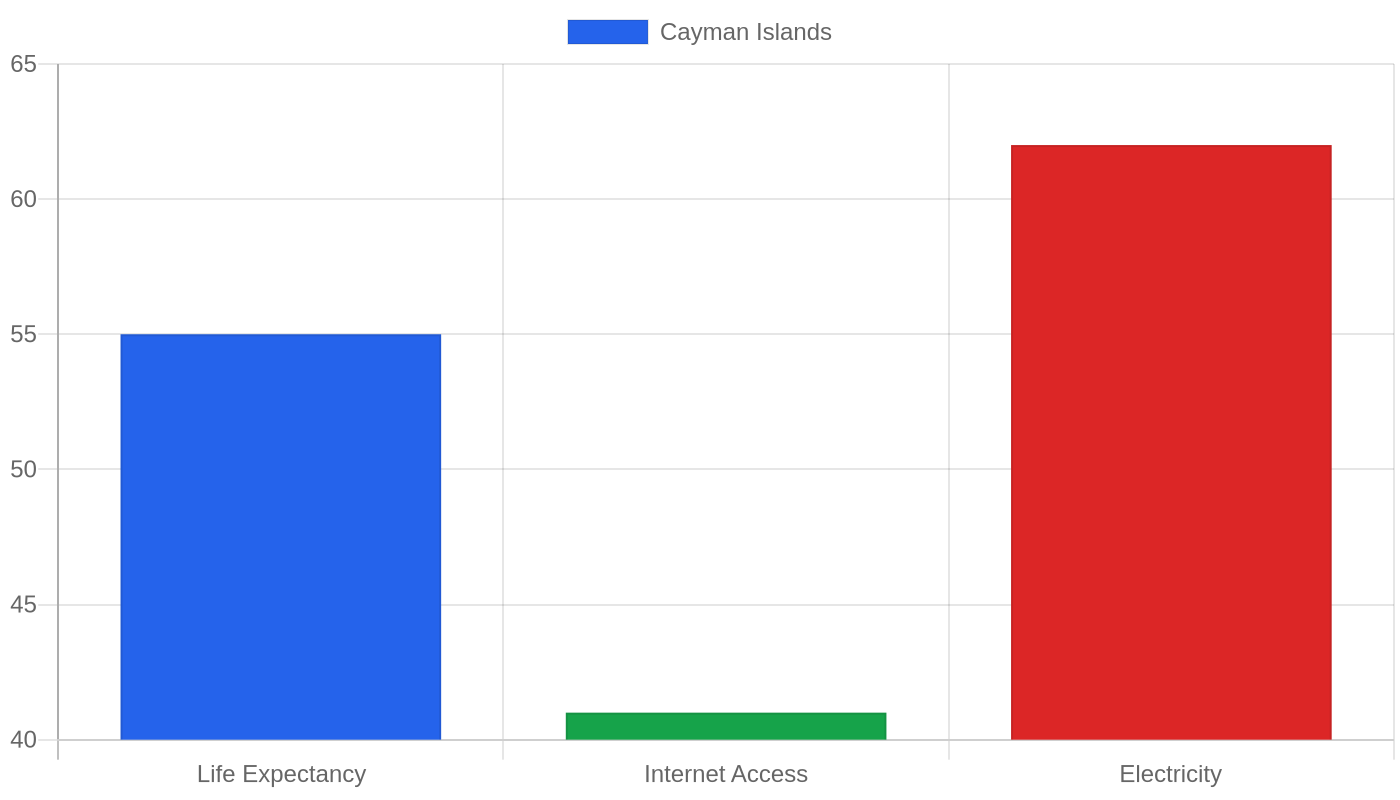
– The territory operates with limited publicly available macroeconomic data from the World Bank, leaving GDP growth, inflation, unemployment, and per capita income unquantified in standard international databases.
– Political autonomy is constrained by the Governor’s appointed members, creating a dynamic where local elected officials manage day-to-day governance while ultimate sovereignty rests in London.
– For investors and analysts, the Cayman Islands represent a jurisdiction defined more by its legal and regulatory framework than by traditional economic metrics — a reality that demands a different analytical lens.
The Invisible Economy — What the Numbers Don’t Tell You
The World Bank provides no GDP growth figure, no inflation rate, no unemployment statistic, no total GDP, no GDP per capita at purchasing power parity, and no GNI per capita for the Cayman Islands. This data vacuum is itself a story. It reflects the territory’s peculiar position in the global economy: a jurisdiction whose economic significance far outstrips the statistical infrastructure typically expected of a sovereign state.
The absence of World Bank data does not mean the economy is small or stagnant — it means the Cayman Islands operates in a category of its own.
What can be inferred is that the economy is dominated by financial services, tourism, and real estate — sectors that generate enormous value but are notoriously difficult to capture in standard national accounts. The lack of publicly available inflation or employment data from the World Bank suggests either that the territory does not report through standard channels or that its economy is too specialised for conventional metrics to be meaningful.
The Cayman Islands are not a manufacturing economy; they are a jurisdiction that sells legal certainty, tax neutrality, and regulatory stability.
This makes traditional economic analysis unusually challenging. Without GDP per capita or GNI figures, one cannot calculate productivity or living standards in the usual way. What the data *does* tell us is that the Cayman Islands exist outside the normal statistical framework of the World Bank — a fact that speaks volumes about its role in the global financial system.
For a country research feature, this absence becomes the central economic fact: the Cayman Islands are measured not by what they produce, but by what they facilitate.
The Price of Paradise — Living in a Tax-Free Jurisdiction
The World Bank provides no cost of living data for the Cayman Islands, but the territory’s reputation as one of the most expensive places to live in the Caribbean is well established. Housing costs, rent versus buy decisions, and daily expenses all operate in a market where demand from financial services professionals and wealthy expatriates drives prices far above regional averages.
Without official statistics, one must rely on the logic of the market: a jurisdiction with no direct taxation, a high concentration of global finance, and limited land will inevitably see inflated property and consumer goods prices.
Rent in the capital, George Town, is widely reported to be among the highest in the Caribbean basin. The buy-versus-rent calculation is distorted by the fact that property ownership is often tied to residency and investment incentives, making the market less transparent than in comparable island economies. Daily expenses — from food imports to utilities — carry a premium that reflects the territory’s dependence on overseas supply chains and its high-income demographic.
Compared to regional averages that might be inferred from neighbouring Caribbean nations, the Cayman Islands likely sit at the top end of the cost spectrum. This creates a dual economy: a financial elite for whom the tax advantages offset high living costs, and a service sector workforce for whom affordability is a persistent challenge.
The absence of World Bank data on this front means the human reality of living in the Cayman Islands must be pieced together from anecdotal and market-based evidence rather than official statistics.
The Business of Being a Territory — Investment Climate and Corporate Appeal
The Cayman Islands have no major companies listed in the standard global indices, but that misses the point entirely. The territory’s top “companies” are not local manufacturers or retailers — they are the global law firms, accounting practices, and financial institutions that maintain a physical presence in George Town to access the jurisdiction’s legal and regulatory framework.
The main industries, though unspecified in the available data, are self-evident: financial services, insurance, investment funds, and tourism infrastructure.
For investors and businesses, the Cayman Islands offer something no other Caribbean jurisdiction can match: the constitutional stability of a British Overseas Territory combined with a tax regime that imposes no direct corporate or personal income taxes. The 2009 Constitution, ordained by a UK statutory instrument, provides a Bill of Rights and a legal system rooted in English common law.
This is not a developing country experimenting with investor protections — it is a mature legal jurisdiction with centuries of precedent.
Sectors to watch include fintech, insurance-linked securities, and special purpose vehicles for global capital markets. The business environment is characterised by regulatory sophistication, political stability (albeit with the caveat of limited self-governance), and a workforce that is both highly educated in financial services and dependent on imported labour for lower-skilled roles.
The absence of World Bank data on GDP or inflation does not deter investment; it is precisely the opacity and specialisation that attract capital seeking legal certainty above all else.
Democracy with Limits — The Political Landscape of a Non-Self-Governing Territory
The Cayman Islands are listed by the UN Special Committee of 24 as one of 17 non-self-governing territories — a designation that carries political weight even if it rarely makes headlines. The current Constitution, ordained by a statutory instrument of the United Kingdom in 2009, incorporates a Bill of Rights and establishes a 19-seat Parliament elected every four years to handle domestic affairs.
However, the Governor appoints two non-voting members, bringing the total to 21, and retains significant powers over foreign affairs, defence, and internal security.
This creates a political landscape that is democratic but constrained. The elected Members of Parliament manage local legislation, budgets, and public services, but ultimate sovereignty rests with the UK. The Crime Index and Safety Index are listed as N/A in the available data, which is notable for a territory that handles massive financial flows and hosts a transient wealthy population.
The absence of crime statistics from the World Bank may reflect under-reporting or simply the lack of a standardised reporting framework.
Quality of life in the Cayman Islands is shaped by this unique political arrangement. Residents enjoy the rule of law, a functioning democracy at the local level, and the protection of British citizenship — but they do not have full control over their own affairs. The UN listing as a non-self-governing territory is a reminder that the Cayman Islands remain, in international law, a colony.
For a population that has built one of the world’s most sophisticated financial centres, this constitutional dependency is both a strength and a limitation.
The Constitution in Practice — Governing Under the 2009 Settlement
The most current and relevant development in the Cayman Islands is the ongoing operation of the 2009 constitutional settlement. This is not a fleeting news cycle — it is the permanent framework within which all political and economic activity takes place. The Constitution, ordained by a statutory instrument of the United Kingdom, provides a Bill of Rights that protects fundamental freedoms, while the elected Parliament handles domestic legislation.
The Governor’s two appointed non-voting members serve as a reminder that the UK retains a supervisory role.
What is happening right now is the continuous negotiation of what self-governance means in practice. The elected government pushes for greater autonomy over financial services regulation, tax policy, and international agreements, while London maintains oversight on matters of global compliance and diplomatic relations. The UN Special Committee of 24 listing means the territory is subject to periodic international scrutiny regarding its progress toward self-determination — a process that has no clear endpoint.
For the financial services industry, the key question is whether the constitutional framework provides enough stability to maintain investor confidence. The 2009 settlement has held for over a decade and a half, but the relationship with London is not static. Changes in UK government policy — particularly around tax transparency, beneficial ownership registers, and anti-money laundering standards — can have immediate effects on the Cayman Islands’ business model.
The current moment is defined by this tension: a territory that wants to be seen as a responsible international partner while preserving the regulatory flexibility that makes it attractive to global capital.
The Bottom Line
The Cayman Islands demand attention from anyone interested in the intersection of finance, law, and sovereignty. For investors seeking a stable jurisdiction with no direct taxation and a British legal heritage, the territory remains unmatched in the Caribbean. For political scientists and development economists, it offers a rare case study of a non-self-governing territory that has achieved extraordinary economic success without full independence.
Watch the Cayman Islands not for its GDP growth or inflation data — which remain conspicuously absent from World Bank records — but for how it navigates the delicate balance between local democracy and imperial oversight in an era of global regulatory crackdowns.
Sources & Methodology
This article is authored by Economic Pulse Net for informational and research purposes. Economic Pulse Net sources its data from multilateral institutions, national statistics bureaus, and proprietary databases. All data is believed to be current as of the date of publication.
Published: July 20, 2026 | Category: Research — Cayman Islands
Use these signals in your own platform
Economic Pulse publishes its live signal feed through a documented, read-only API. Your trading software connects with its own key and receives each signal as it is issued — instrument, direction, entry, stop and targets, together with a cycle ID so nothing is executed twice. The feed is independent of this website and cannot change it.
Signals are informational only and are not financial advice.