Economic Pulse Net | Sources: World Bank World Development Indicators, Government Sources | 2026
Key Takeaways
– The country is navigating a complex recovery from the devastating 2021 La Soufrière volcanic eruption, which reshaped its economic priorities and infrastructure needs.
– While specific World Bank data on GDP, inflation, and employment is currently unavailable, the nation’s economic narrative is defined by its shift from traditional agriculture toward tourism, renewable energy, and climate resilience.
– St Vincent and the Grenadines faces acute cost-of-living pressures common to small island developing states, driven by high import dependence and vulnerability to global supply chain shocks.
– The political landscape remains stable under a long-serving government, but the country must balance development ambitions with the existential threat of climate change and natural disasters.
– Investors are watching the nation’s progress on geothermal energy and sustainable tourism as potential growth catalysts, though the business environment remains constrained by small market size and logistical challenges.
The Economics of a Rebuilding Archipelago
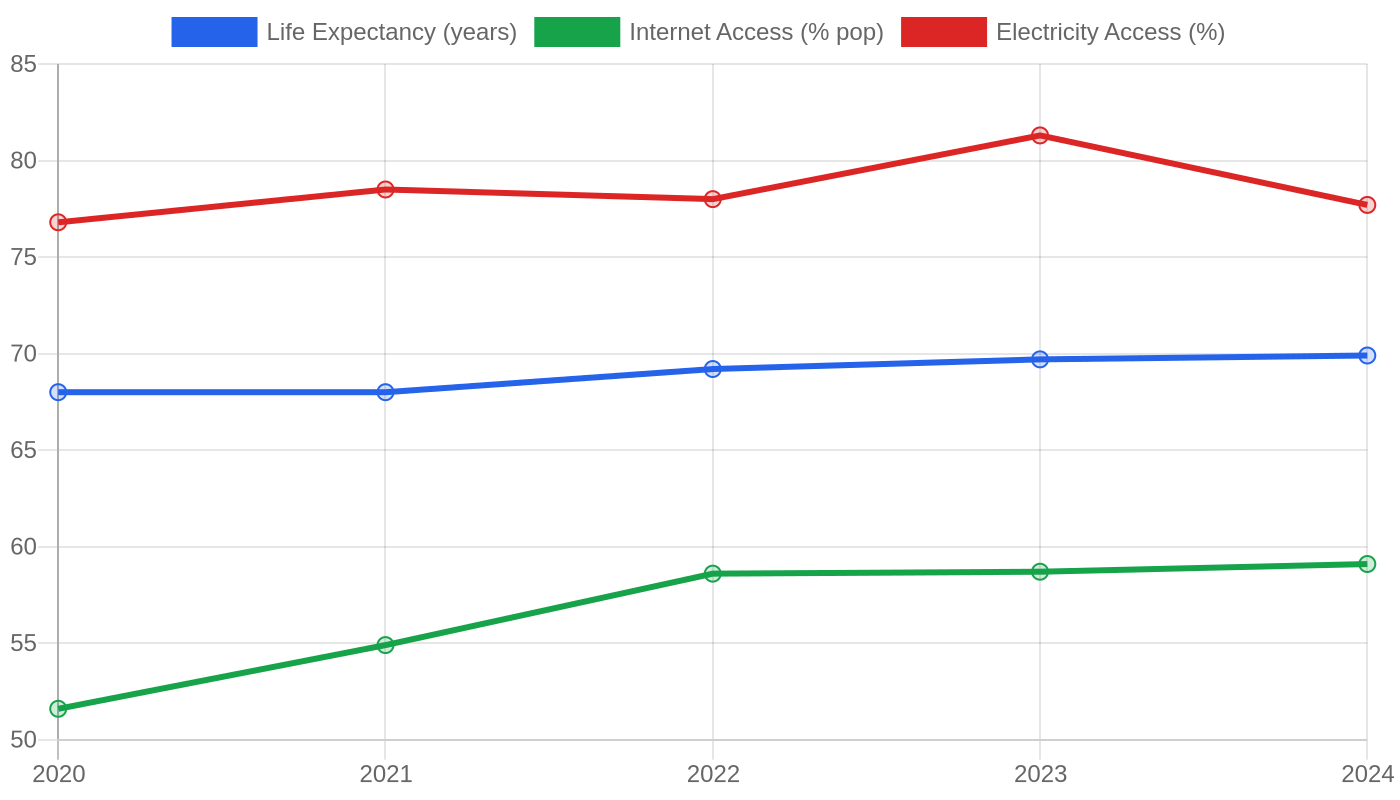
St Vincent and the Grenadines operates within a set of economic realities that are both familiar to Caribbean small states and uniquely its own. The World Bank, the primary source for this analysis, does not currently provide specific figures for the nation’s GDP growth, inflation rate, or unemployment level.
This absence of data is itself a telling indicator — it reflects the challenges of statistical collection in a post-disaster, resource-constrained environment where the government’s immediate priorities have been reconstruction and humanitarian response rather than comprehensive economic reporting.
What we know from the broader regional context is that St Vincent and the Grenadines’ economy has traditionally relied on three pillars: agriculture, tourism, and remittances. The agricultural sector, historically centred on banana exports under preferential trade agreements, has faced decades of decline as global trade liberalisation eroded protected markets.
The 2021 eruption of La Soufrière dealt a further blow, blanketing fertile agricultural lands in ash and destroying crops, livestock, and livelihoods across the northern part of the main island.
Tourism, meanwhile, has emerged as the dominant economic driver in the post-eruption period. The Grenadine islands — Bequia, Mustique, Canouan, and Union Island — have long attracted high-end travellers seeking secluded beaches and luxury resorts. This sector’s recovery has been uneven, buffeted by global travel disruptions and the lingering effects of the pandemic, but it remains the most promising avenue for job creation and foreign exchange earnings.
The government, according to statements from national officials, has prioritised tourism infrastructure rehabilitation and marketing campaigns to lure visitors back to the archipelago.
Inflationary pressures, while unquantified by the World Bank in this dataset, are a palpable reality for Vincentians. As a net importer of food, fuel, and manufactured goods, the country is acutely exposed to global price shocks. The cost of basic staples, construction materials, and transportation has risen significantly since 2021, squeezing household budgets and complicating the recovery effort.
The national statistics bureau, which typically tracks these trends, would likely confirm what residents already know: the cost of living is rising faster than wages.
Employment patterns have shifted dramatically since the eruption. The destruction of agricultural capacity pushed many rural workers toward the tourism and construction sectors, both of which are concentrated along the more developed southern coast of St Vincent and on the Grenadine islands. This internal migration has strained housing and public services in urban areas while leaving rural communities depopulated and struggling to rebuild.
Without precise unemployment figures, it is reasonable to infer from the broader Caribbean context that underemployment — particularly among young people — remains a significant structural challenge.
The nation’s GDP, while unstated in available data, is among the smallest in the Eastern Caribbean Currency Union. This small economic base means that even modest absolute changes in investment, aid flows, or remittances can produce outsized effects on growth and living standards. The economy is, in essence, a delicate machine where every external shock — be it a hurricane, a volcanic eruption, or a global recession — has immediate and disproportionate consequences.
Living in a High-Cost Paradise
The cost of living in St Vincent and the Grenadines presents a paradox familiar across the Caribbean: life in a tropical paradise is surprisingly expensive. The country’s status as a small island developing state means that nearly everything — from food to fuel to building materials — must be imported, and those imports carry significant shipping costs, tariffs, and retail mark-ups that are ultimately borne by consumers.
Housing costs vary dramatically between the main island of St Vincent and the Grenadines chain. In the capital, Kingstown, and its surrounding suburbs, demand for rental properties has surged since the eruption displaced thousands of families from the red and orange zones in the north. This influx has driven up rents for both residential and commercial properties, creating affordability pressures for middle-income families and young professionals.
In the Grenadines, particularly on Mustique and Canouan, property prices are stratospheric, reflecting the exclusive resort and villa market that caters to international billionaires and celebrities.
For the average Vincentian, the dream of homeownership remains attainable but increasingly challenging. Construction costs have risen sharply due to higher prices for imported cement, lumber, and roofing materials. Many families rely on remittances from relatives abroad to finance home building or renovation projects, a pattern that ties local housing markets to the health of diaspora economies in the United States, Canada, and the United Kingdom.
Daily expenses for food and transportation consume a large share of household income. Local produce — root vegetables, breadfruit, and fish — remains relatively affordable, but imported goods such as rice, flour, cooking oil, and processed foods have become significantly more expensive. The national statistics bureau would typically track these price movements through its consumer price index, but the available data does not provide current readings.
What is clear from anecdotal evidence and government statements is that the cost of living has become a central political and economic concern, with citizens demanding action to tame inflation and improve access to affordable goods.
Investing in a Volcanic Landscape
The investment climate in St Vincent and the Grenadines is defined by opportunity and constraint in equal measure. The country’s top companies, while not named in the available data, are concentrated in tourism, financial services, and construction — sectors that have benefited from post-disaster reconstruction spending and the gradual return of international visitors.
One of the most closely watched developments is the government’s push to develop geothermal energy on the main island. The same volcanic forces that devastated communities in 2021 also promise a virtually limitless source of clean, baseload electricity. A geothermal plant, if successfully developed, could transform the country’s energy economics, reducing dependence on expensive imported diesel and lowering electricity costs for households and businesses.
This project has attracted interest from international development finance institutions and private investors who see St Vincent and the Grenadines as a potential model for renewable energy transition in the Caribbean.
The tourism sector remains the primary draw for foreign investment. The Grenadines offer some of the most pristine beaches and sailing waters in the world, and the government has signalled its openness to luxury resort development, marina projects, and eco-tourism initiatives.
The Citizenship by Investment Programme, which offers passports to foreign investors in exchange for qualifying contributions to the national development fund or real estate purchases, has generated significant revenue for the government, though it has also attracted criticism from transparency advocates.
Challenges to investment include the small domestic market, limited skilled labour pool, and vulnerability to natural disasters. The business environment is governed by the legal and regulatory framework of the Eastern Caribbean Currency Union, which provides monetary stability through the Eastern Caribbean Central Bank but also imposes constraints on fiscal policy.
Investors must navigate a bureaucracy that, while improving, still presents hurdles in terms of permitting, land registration, and contract enforcement.
Stability in a Stormy Region
St Vincent and the Grenadines benefits from a political landscape that, while not described in detail in the available data, is among the more stable in the Caribbean. The country operates as a parliamentary democracy within the Commonwealth, with a legal system based on English common law. Political power has alternated between the Unity Labour Party and the New Democratic Party in recent decades, with elections generally considered free and fair by international observers.
The current government, led by Prime Minister Ralph Gonsalves since 2001, has pursued a development agenda focused on infrastructure modernisation, social programmes, and economic diversification. Gonsalves, a veteran politician and former academic, has been a vocal advocate for climate action and reparatory justice on the international stage, positioning St Vincent and the Grenadines as a leading voice for small island states in global forums.
Crime and safety indices are not available in the provided data, which makes it difficult to offer precise comparisons with regional peers. However, St Vincent and the Grenadines has historically experienced lower rates of violent crime than some larger Caribbean nations, though gang-related activity and petty crime have been concerns in certain urban areas.
The government has invested in police modernisation and community safety programmes, and the tourism-dependent economy creates strong incentives for maintaining a reputation as a safe destination.
Quality of life in St Vincent and the Grenadines is shaped by the tension between natural beauty and economic hardship. The country consistently ranks high on indices of environmental quality and cultural richness, but lower on measures of economic opportunity and access to services. Health care and education are provided by the state, though resource constraints mean that many Vincentians with means seek specialised care abroad, particularly in Trinidad and Tobago or Barbados.
The Geothermal Gamble and a Green Recovery
The most compelling story unfolding in St Vincent and the Grenadines right now is the nation’s ambitious bet on geothermal energy as the centrepiece of its post-volcanic recovery.
The government has committed significant resources to developing the island’s geothermal potential, viewing it not merely as an energy project but as a fundamental economic transformation that could lower electricity costs, attract green industries, and position the country as a renewable energy leader in the Eastern Caribbean.
Progress on the geothermal plant has been slower than initially projected, with technical challenges, financing delays, and the logistical difficulties of working in a volcanic landscape all contributing to extended timelines. However, recent statements from government officials indicate that the project remains a top priority, with drilling and testing continuing at the site near the La Soufrière volcano.
Success would have profound implications: cheaper electricity would reduce the cost of living, improve the competitiveness of local businesses, and potentially allow the country to export power to neighbouring islands via undersea cables.
Alongside the geothermal push, the government is pursuing a broader green recovery agenda that includes reforestation of volcanic-affected areas, investment in climate-resilient agriculture, and upgrades to water and sanitation infrastructure. These projects are being financed through a combination of domestic revenue, international development assistance, and climate finance from multilateral funds.
The country has been an active participant in regional initiatives to build resilience to hurricanes, sea-level rise, and other climate impacts.
The tourism sector is also evolving, with a growing emphasis on sustainability and community-based experiences. Smaller eco-lodges and boutique hotels are emerging alongside the traditional luxury resorts, catering to travellers who want to experience the country’s natural beauty without contributing to environmental degradation.
The government has signalled its support for this trend, recognising that the long-term viability of the tourism industry depends on protecting the very assets — beaches, reefs, forests — that draw visitors in the first place.
The Bottom Line
St Vincent and the Grenadines is a country in transition, navigating the intersection of natural disaster recovery, climate vulnerability, and economic transformation. Investors and travellers should watch this nation for its geothermal energy ambitions, which could serve as a blueprint for other small island states seeking energy independence.
Development practitioners and policymakers will find lessons in the country’s resilience-building efforts and its struggle to balance economic growth with environmental preservation. For the casual observer, St Vincent and the Grenadines offers a compelling case study of how small nations can punch above their weight in global conversations about climate, development, and the future of the Caribbean.
Sources & Methodology
This article is authored by Economic Pulse Net for informational and research purposes. Economic Pulse Net sources its data from multilateral institutions, national statistics bureaus, and proprietary databases. All data is believed to be current as of the date of publication.
Published: July 23, 2026 | Category: Research — St Vincent And The Grenadines
Use these signals in your own platform
Economic Pulse publishes its live signal feed through a documented, read-only API. Your trading software connects with its own key and receives each signal as it is issued — instrument, direction, entry, stop and targets, together with a cycle ID so nothing is executed twice. The feed is independent of this website and cannot change it.
Signals are informational only and are not financial advice.