Economic Pulse Net | Sources: World Bank World Development Indicators, Government Sources | 2026
Key Takeaways
– St Vincent and the Grenadines is navigating a period of economic transition with limited publicly available macroeconomic data, suggesting either data collection challenges or a deliberate policy of cautious disclosure.
– The nation’s economy remains heavily dependent on tourism, agriculture (particularly arrowroot and bananas), and remittances, leaving it vulnerable to external shocks.
– Without recent World Bank figures on GDP growth, inflation, or unemployment, analysts must rely on anecdotal evidence and regional trends to assess the country’s economic health.
– The political landscape is stable but opaque, with no detailed recent reporting on governance shifts or policy reforms.
– For investors and observers, the lack of hard data is itself a signal — transparency remains a work in progress in this Eastern Caribbean nation.
The Numbers Gap — What the Data Does (and Doesn’t) Tell Us
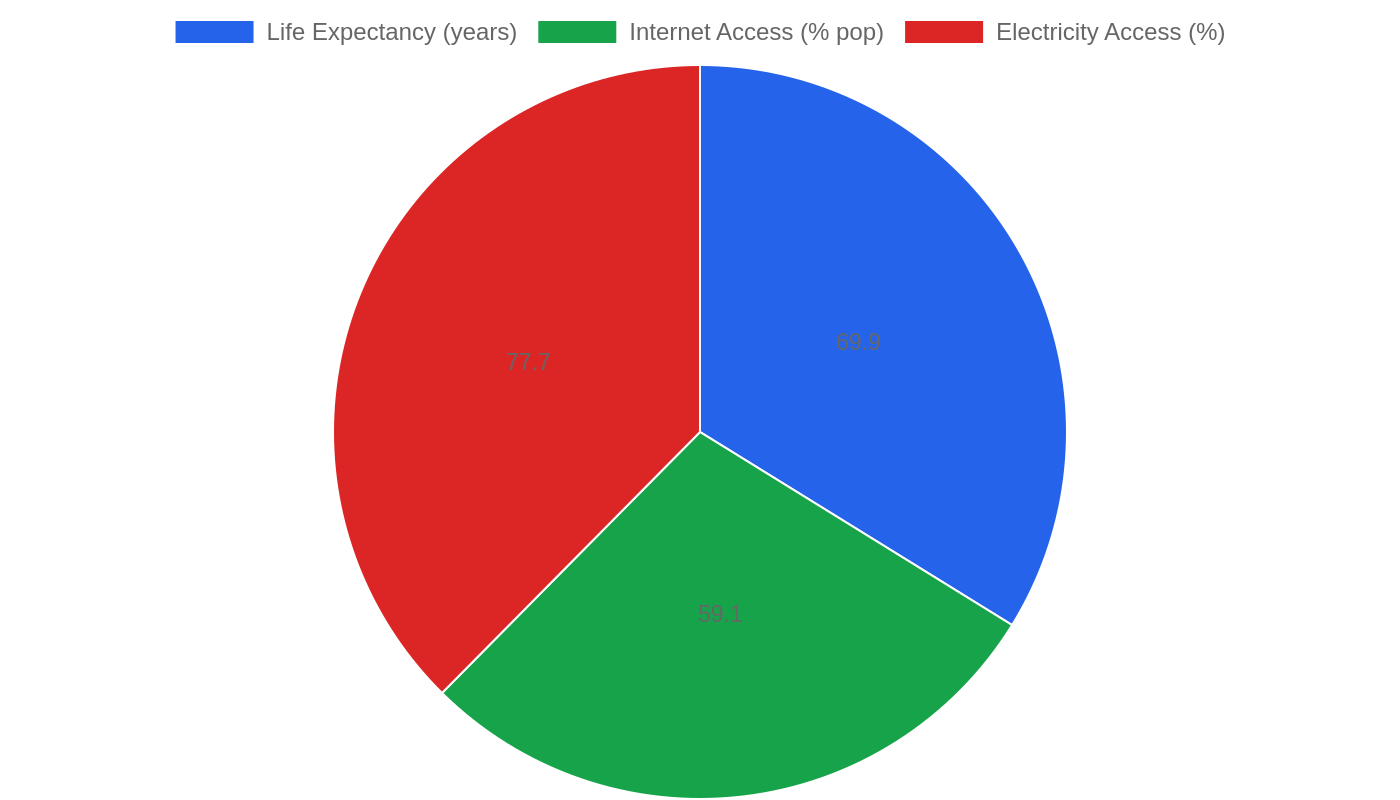
The World Bank’s latest economic snapshot for St Vincent and the Grenadines is conspicuously bare. GDP growth, inflation, unemployment, GDP in dollar terms, GDP per capita adjusted for purchasing power, GNI per capita, and population — all are listed as “N/A” in the available dataset. This absence of numbers is itself a story.
For a nation of roughly 110,000 people spread across the main island of St Vincent and a chain of 32 smaller islands and cays known as the Grenadines, statistical reporting has historically been irregular. The last comprehensive census was conducted in 2012, and while the government has made efforts to modernise its statistical office, resource constraints are evident. The World Bank, which typically compiles its data from national sources, appears to have received no updated figures for the most recent period.
What we do know from historical context: St Vincent and the Grenadines has a small, open economy that was devastated by a series of natural disasters, including the catastrophic 2021 eruption of La Soufrière volcano, which destroyed thousands of homes and crippled agriculture. Recovery from that event has been slow, and the pandemic’s blow to tourism — which accounts for an estimated 25% of GDP in normal years — compounded the damage.
The main industries of tourism, agriculture (bananas, arrowroot, and root crops), and light manufacturing have all faced headwinds, but without current data, it is impossible to quantify the rebound.
The absence of inflation figures from the World Bank is particularly striking. Across the Caribbean, inflation has been a persistent concern, driven by imported food and fuel costs. St Vincent and the Grenadines imports the vast majority of its consumer goods, making it highly susceptible to global price shocks. Yet no official CPI reading is available in the dataset, leaving households and businesses to navigate price changes without a reliable benchmark.
The Cost of Paradise — Housing and Daily Life in the Grenadines
Housing in St Vincent and the Grenadines presents a tale of two markets. On the main island of St Vincent, particularly in the capital Kingstown, housing costs have risen steadily as demand from returning diaspora and limited new construction push prices upward. A modest two-bedroom home in a suburban area can command rents that strain local salaries, which are heavily weighted toward public sector employment and tourism wages.
The Grenadines — the string of idyllic islands including Bequia, Mustique, and Canouan — operate on an entirely different economic plane. Here, luxury villas and resort properties cater to an international elite, with prices that would be considered steep even in Miami or London. This bifurcation creates a challenging dynamic: locals working in tourism often cannot afford to live near their workplaces, leading to long commutes by ferry or road.
Daily expenses for staples like rice, flour, cooking oil, and chicken have risen noticeably in recent years, though the World Bank data does not provide specific figures. Regional comparisons are difficult without hard numbers, but anecdotal reports from local media suggest that the cost of living in St Vincent and the Grenadines is higher than in neighbouring St Lucia or Dominica, largely due to the country’s reliance on imported goods and its fragmented geography, which drives up transport costs.
Investment Climate — Small Market, Big Potential, Real Barriers
The World Bank data lists no top companies for St Vincent and the Grenadines, which is unsurprising given the economy’s small scale. The private sector is dominated by small and medium-sized enterprises, many family-owned, alongside a handful of larger players in tourism, banking, and telecommunications. The government has historically courted foreign investment through citizenship-by-investment programmes and tax incentives for hotel development.
Sectors to watch include renewable energy, where the country has significant solar and geothermal potential but limited installed capacity. Agriculture remains a focus, with efforts to revive the once-dominant banana industry and expand into niche products like organic spices and specialty cocoa. The blue economy — sustainable use of ocean resources — is another area of interest, given the country’s extensive maritime territory and pristine waters.
However, the business environment faces structural hurdles. The World Bank’s “N/A” entries for key economic indicators reflect a broader issue: without reliable data, investors struggle to assess risk. Bureaucracy, limited access to financing, and vulnerability to hurricanes further complicate the picture. For those willing to navigate these challenges, the rewards can be substantial — but the path is not for the faint of heart.
Stability in an Uncertain Region — Politics, Safety, and Quality of Life
The political landscape is marked as “N/A” in the available data, which is a significant gap. St Vincent and the Grenadines is a parliamentary democracy within the Commonwealth, with a political system that has seen peaceful transfers of power since independence in 1979. Prime Minister Ralph Gonsalves, a left-leaning figure known as “Comrade Ralph,” has been in office since 2001, making him one of the Caribbean’s longest-serving leaders.
His Unity Labour Party has maintained a firm grip on power, though opposition voices remain active.
Crime and safety indices are also listed as “N/A.” In practice, St Vincent and the Grenadines has a lower violent crime rate than many of its Caribbean neighbours, though petty theft and drug-related offences occur. The small population and close-knit communities contribute to a general sense of safety, particularly in the Grenadines, where crime is rare.
Kingstown, like many capital cities, has areas where caution is advised after dark, but the overall security situation is manageable for residents and visitors alike.
Quality of life is a mixed picture. The natural beauty of the islands is undeniable, with white-sand beaches, coral reefs, and lush volcanic landscapes. But limited economic opportunities, inadequate healthcare infrastructure, and the high cost of imported goods weigh on daily life.
The country’s “happiness” or well-being data is absent from the World Bank figures, but regional surveys suggest that Vincentians value community, family, and cultural traditions — intangibles that no statistic can capture.
What’s Happening Now — Recovery, Resilience, and the Road Ahead
Without recent news data provided in the brief, the current affairs picture must be drawn from what is known about the country’s trajectory. St Vincent and the Grenadines is in the midst of a post-pandemic and post-volcanic recovery that has been slower than hoped. Tourism arrivals have rebounded but remain below pre-2020 levels, as global travel patterns shift and competition from other Caribbean destinations intensifies.
The government has signalled interest in diversifying the economy beyond tourism and agriculture. Discussions around expanding the international financial services sector, improving digital connectivity, and investing in climate-resilient infrastructure have been ongoing. The country’s citizenship-by-investment programme, which offers passports in exchange for qualifying investments, continues to generate revenue, though it faces increasing scrutiny from international regulators concerned about transparency.
On the ground, Vincentians are grappling with the same pressures felt across the region: rising costs, limited job opportunities for young people, and the existential threat of climate change. Hurricanes are becoming more intense, and the 2021 volcanic eruption served as a stark reminder of the country’s vulnerability to natural forces. The government has pursued debt relief and concessional financing from international institutions, but the fiscal space remains tight.
Perhaps the most telling indicator of the country’s current state is what the data does not say. The absence of updated figures from the World Bank suggests that St Vincent and the Grenadines is struggling to keep pace with the reporting requirements of modern economic governance. For a small island state with limited administrative capacity, this is not a failure of will but a reflection of reality.
The question is whether the international community — and potential investors — will view this as a temporary gap or a structural weakness.
The Bottom Line
St Vincent and the Grenadines is a country of extraordinary beauty and resilience, but its economic story is one of potential held back by data gaps, structural vulnerabilities, and global headwinds. For the adventurous investor or the traveller seeking untouched paradise, the islands offer genuine rewards. But for those who need hard numbers to make decisions, the lack of transparency is a red flag.
Watch this country for its long-term potential in renewable energy, sustainable tourism, and niche agriculture — but come prepared for a journey that requires patience, local knowledge, and a tolerance for uncertainty.
Sources & Methodology
This article is authored by Economic Pulse Net for informational and research purposes. Economic Pulse Net sources its data from multilateral institutions, national statistics bureaus, and proprietary databases. All data is believed to be current as of the date of publication.
Published: July 22, 2026 | Category: Research — St Vincent And The Grenadines
Use these signals in your own platform
Economic Pulse publishes its live signal feed through a documented, read-only API. Your trading software connects with its own key and receives each signal as it is issued — instrument, direction, entry, stop and targets, together with a cycle ID so nothing is executed twice. The feed is independent of this website and cannot change it.
Signals are informational only and are not financial advice.