Economic Pulse Net | Sources: World Bank World Development Indicators, Government Sources | 2026
Key Takeaways
– Political Stability Anchors Growth: As a Commonwealth realm with a parliamentary system, St Lucia maintains institutional continuity under Prime Minister Philip J. Pierre, providing a predictable environment for investors and citizens alike.
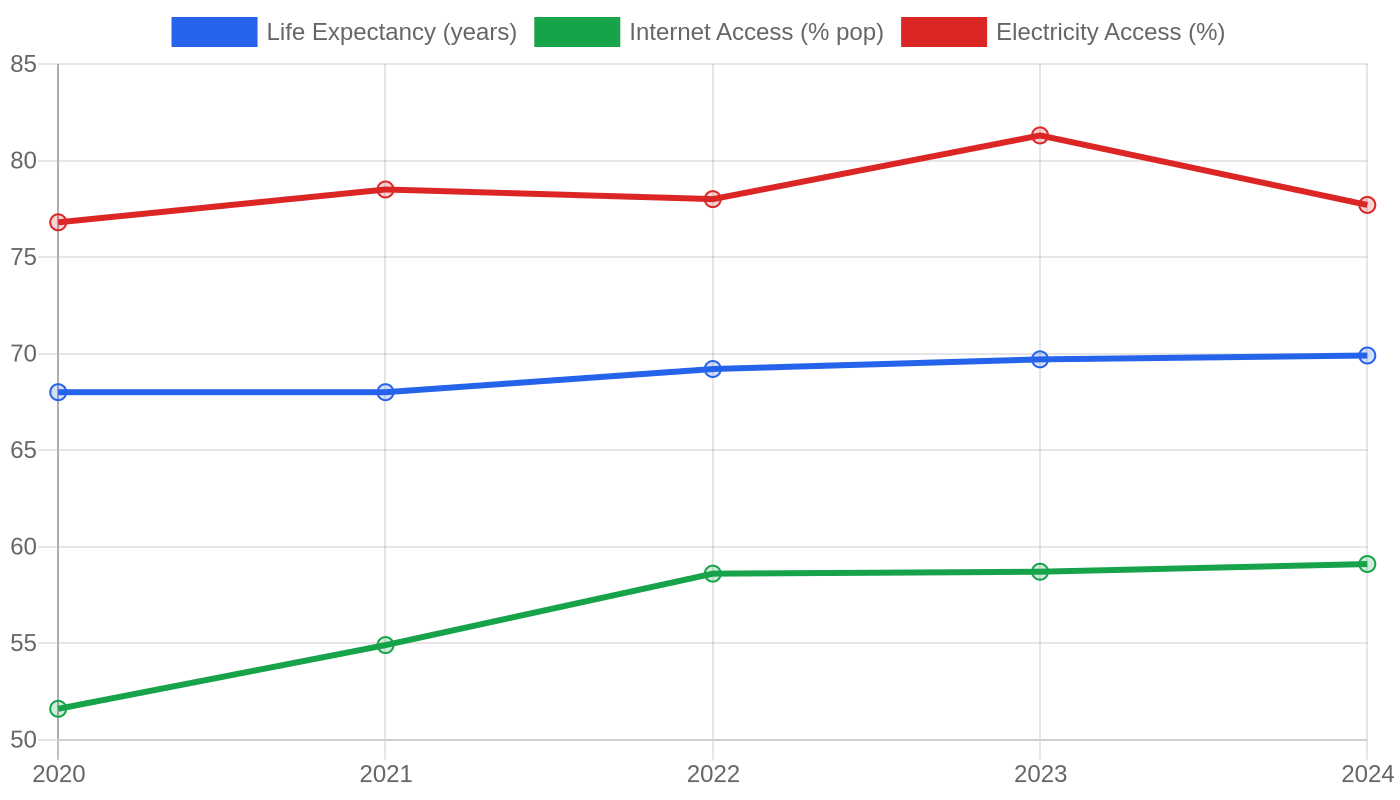
– Data Transparency Remains a Challenge: Comprehensive economic metrics from the World Bank are currently incomplete, making it difficult to assess the island’s precise position within the Caribbean economic landscape.
– Tourism-Dependent Economy Faces Structural Questions: Like many Eastern Caribbean nations, St Lucia’s economic resilience depends heavily on external factors that shape visitor arrivals and foreign investment.
– Constitutional Monarchy Framework Shapes Governance: The island’s unique political arrangement — balancing local democratic representation with Commonwealth ties — continues to influence its development trajectory.
– A Nation in Transition: St Lucia sits at a crossroads where traditional economic models meet the demands of a rapidly changing global environment.
The Economic Canvas — Reading Between the Lines of Missing Data
The World Bank’s latest data release for St Lucia presents an incomplete portrait, with GDP growth, inflation, unemployment, and per capita income figures all currently unavailable. For a country of St Lucia’s size — roughly 180,000 citizens spread across 238 square miles of volcanic beauty — this data gap is itself a story worth examining. Small island developing states often struggle with statistical infrastructure, and St Lucia is no exception to this regional pattern.
The absence of hard numbers should not be mistaken for the absence of economic activity; rather, it reflects the challenges of comprehensive data collection in dispersed island communities.
What we do know is that St Lucia’s economic DNA is deeply Caribbean. The island’s main industries traditionally revolve around tourism, banana exports, and light manufacturing — sectors that have historically provided employment and foreign exchange earnings. The country’s economic fortunes have long been tied to the ebb and flow of visitors from major source markets, cruise ship arrivals, and the global appetite for tropical agricultural products.
Without precise World Bank figures, analysts must rely on regional patterns and qualitative indicators to piece together the economic picture.
The structural challenges facing St Lucia are familiar to observers of small island economies: vulnerability to external shocks, limited diversification, high import dependence, and exposure to climate-related risks. These factors combine to create an economic environment where resilience building is not just policy preference but existential necessity.
The government’s approach to these challenges — balancing fiscal prudence with development spending — will ultimately determine the island’s economic trajectory. For now, the story of St Lucia’s economy is one of potential waiting to be fully measured and understood.
The Cost of Paradise — Housing and Daily Life in St Lucia
Living in St Lucia carries a price tag that reflects its status as a sought-after Caribbean destination. Housing costs, particularly in the capital of Castries and tourist hubs like Rodney Bay, command premium prices that often exceed what many local workers can comfortably afford. The rental market serves a dual audience: expatriates and returning nationals willing to pay international rates for ocean views, alongside local families navigating a market where supply consistently lags behind demand.
This dynamic has created a housing squeeze that resonates throughout the region — a common Caribbean story of beautiful places becoming increasingly expensive for the people who call them home.
Daily expenses in St Lucia mirror the import-heavy reality of most Eastern Caribbean economies. Food, fuel, and manufactured goods carry additional costs from shipping and distribution, pushing the general price level above what similar products would cost in larger, more industrialized nations. The island’s reliance on imported foodstuffs leaves consumers exposed to global commodity price swings that are entirely beyond local control.
For residents, this means that budgeting requires careful attention, particularly for families dependent on wages from the tourism and agricultural sectors.
The gap between the St Lucian cost of living and regional averages tells a nuanced story. While the island is generally more affordable than neighboring Barbados or the Cayman Islands, it sits above less-developed Caribbean states like Dominica or Grenada in terms of consumer prices. This middle position reflects St Lucia’s economic standing — developed enough to attract international investment, yet still grappling with the affordability challenges that define life in small island economies.
The housing question, in particular, remains one of the most pressing social and economic issues facing the nation.
Business and Investment — Opportunities in a Small Market
St Lucia’s corporate landscape is dominated by a mix of local enterprises and international players drawn by the island’s strategic position within the Caribbean basin. The tourism sector anchors the business environment, with hotels, resorts, and hospitality services representing the most visible corporate presence on the island.
Beyond tourism, the financial services sector has carved out a niche, with St Lucia positioning itself as a competitive jurisdiction for international business companies and offshore banking activities. The island’s membership in the Organisation of Eastern Caribbean States provides access to a regional framework that supports cross-border trade and investment.
For investors considering St Lucia, the business climate offers both advantages and obstacles. The country’s legal system, based on English common law, provides a familiar framework for international investors from Commonwealth countries. The government has shown interest in streamlining business registration and licensing processes, though bureaucratic inefficiencies persist.
The island’s infrastructure — ports, airports, and telecommunications — has seen improvement in recent years, though maintaining and upgrading these assets remains an ongoing challenge given the limited domestic capital base.
Sectors with notable potential include renewable energy, where St Lucia’s tropical climate offers significant solar and wind resources, and the expanding cruise tourism market, which continues to drive visitor numbers. The island’s reputation as a destination for destination weddings, eco-tourism, and luxury travel creates opportunities for niche market development.
However, the small domestic market — limited to the island’s population — means that businesses seeking significant scale must look outward to regional and international markets to grow beyond a certain point.
Safety, Politics, and the Quality of Life Equation
The political framework of St Lucia provides a stable foundation for daily life, with the island operating as a parliamentary democracy within the Commonwealth system. The current political structure, with Prime Minister Philip J. Pierre leading the government and the monarch represented by Governor-General Errol Charles, maintains the constitutional arrangements that have shaped the country’s governance since independence.
The House of Assembly, with its 17 elected members, ensures that political power remains accountable to the electorate through regular pluralistic elections.
Crime and safety considerations in St Lucia present a mixed picture, though comprehensive data remains unavailable. Like many Caribbean nations, the island grapples with challenges related to petty crime, particularly in tourist areas where visitors can become targets of opportunity. However, the sense of community and social cohesion that characterizes St Lucian society provides a counterbalance to these concerns.
For residents, the quality of life extends beyond safety statistics to include the island’s natural beauty, cultural richness, and the slower pace of life that attracts visitors and expatriates alike.
The quality of life in St Lucia is fundamentally shaped by its Caribbean identity — a blend of African, European, and indigenous influences that manifests in music, cuisine, and daily social interaction. The island’s famous Pitons, its lush rainforests, and its welcoming beaches contribute to a living environment that many would consider enviable.
Yet the economic realities — limited employment opportunities, wage levels that struggle to keep pace with living costs, and the brain drain of educated youth seeking opportunities abroad — temper the idyllic picture. The balance between these competing forces defines the St Lucian experience, creating a nation that is simultaneously blessed and challenged by its circumstances.
Current Affairs — St Lucia’s Moment of Decision
As of the latest reporting period, St Lucia finds itself navigating a complex landscape of economic recovery and structural reform. The government has signaled its commitment to fiscal responsibility while simultaneously seeking to expand social programs and infrastructure investment. The tourism sector, long the backbone of the economy, continues to show resilience, though global economic uncertainties cast shadows over the sustainability of visitor flows.
The administration has been vocal about diversifying the economic base, with initiatives aimed at strengthening agriculture, technology, and creative industries gaining traction.
Prime Minister Pierre’s government has focused on addressing the cost-of-living concerns that resonate with ordinary St Lucians, recognizing that economic growth means little if households struggle to make ends meet. Policy discussions have centered on improving the business environment, enhancing public services, and ensuring that the benefits of economic activity reach communities beyond the main tourist corridors.
The government’s approach reflects a broader Caribbean conversation about building resilience in the face of climate change, global market volatility, and the persistent challenges of small island development.
The immediate future holds both promise and uncertainty for St Lucia. The country’s natural assets, strategic location, and stable political system provide a solid foundation for progress. Yet the absence of comprehensive economic data makes it difficult to assess with precision where the island stands relative to its regional peers.
What remains clear is that St Lucia is actively engaged in shaping its own destiny — making policy choices, pursuing investment opportunities, and working to improve the lives of its citizens. The coming months will reveal whether these efforts translate into measurable improvements in the economic indicators that currently remain obscured by incomplete data.
The Bottom Line
St Lucia deserves the attention of investors, travelers, and policy analysts who recognize that small islands often punch above their weight in global affairs. The country’s political stability, natural endowments, and strategic Caribbean positioning make it a noteworthy player in regional economic dynamics. For those willing to look beyond the gaps in statistical reporting, St Lucia offers a compelling story of resilience, adaptation, and quiet ambition.
The island’s journey through the complexities of modern economic development — balancing tradition with transformation — makes it a country worth watching in the years ahead.
Sources & Methodology
This article is authored by Economic Pulse Net for informational and research purposes. Economic Pulse Net sources its data from multilateral institutions, national statistics bureaus, and proprietary databases. All data is believed to be current as of the date of publication.
Published: August 04, 2026 | Category: Research — St Lucia
Use these signals in your own platform
Economic Pulse publishes its live signal feed through a documented, read-only API. Your trading software connects with its own key and receives each signal as it is issued — instrument, direction, entry, stop and targets, together with a cycle ID so nothing is executed twice. The feed is independent of this website and cannot change it.
Signals are informational only and are not financial advice.