Economic Pulse Net | Sources: World Bank World Development Indicators, Government Sources | 2026
Key Takeaways
– Sint Maarten’s economic trajectory remains difficult to quantify with precision, as key indicators like GDP growth, inflation, and unemployment are not currently reported by the World Bank, leaving analysts to rely on qualitative signals and sectoral observations.
– The Dutch Caribbean territory operates as a tourism-dependent micro-economy, with hospitality, retail, and related services forming the backbone of its commercial activity.
– As a constituent country of the Kingdom of the Netherlands, Sint Maarten’s economic policy is shaped by its unique constitutional status, balancing local autonomy with Dutch oversight on financial and governance matters.
– The island’s recovery from Hurricane Irma’s devastation in 2017 continues to define its development agenda, with infrastructure resilience and diversification emerging as recurring themes.
– For investors and observers, Sint Maarten represents a high-risk, high-reward environment where the absence of hard data demands patience and on-the-ground diligence.
The Numbers Gap: Reading Between the Lines of a Data-Scarce Economy
The World Bank’s latest dataset for Sint Maarten (Dutch Part) presents a striking void: no GDP growth figure, no inflation rate, no unemployment statistic, no per-capita income measurement. For most economies, such gaps would be a footnote. For Sint Maarten, the absence speaks volumes about the structural realities of monitoring a micro-state whose entire economic output would barely register in a mid-sized European city.
What we do know is the framework. Sint Maarten is one of four constituent countries within the Kingdom of the Netherlands, alongside Aruba, Curaçao, and the European Netherlands itself. This arrangement grants the island significant domestic autonomy while anchoring it to Dutch financial oversight and the broader eurozone’s institutional gravity. The island’s economy is overwhelmingly service-oriented, with tourism as the dominant engine.
Cruise ship arrivals, boutique retail, duty-free shopping, and hospitality drive the majority of private-sector employment.
The absence of published macroeconomic data does not mean the economy is stagnant. Rather, it reflects the practical challenges of statistical collection in a territory with a population that the World Bank has not even specified. Analysts tracking the Caribbean region often note that small island economies like Sint Maarten are disproportionately vulnerable to external shocks — hurricanes, global recessions, and shifts in travel patterns — while also being remarkably resilient in their ability to adapt.
The post-Irma reconstruction period has seen renewed investment in port facilities, airport infrastructure, and hotel capacity, suggesting a measured confidence in the island’s long-term tourism proposition.
Inflation, too, is a silent variable. As a net importer of nearly everything — food, fuel, construction materials, consumer goods — Sint Maarten’s price levels are effectively hostage to global supply chains and shipping costs. When international freight rates spike or energy prices surge, the island feels it immediately and acutely. Without official CPI data, residents and businesses rely on anecdotal evidence and regional comparisons, a situation that complicates household budgeting and corporate planning alike.
Paradise Pricing: The True Cost of Island Living
Housing on Sint Maarten reflects the classic Caribbean micro-state paradox: land is finite, demand is driven by both locals and expatriates, and prices are correspondingly steep. The island’s Dutch side, centered around the capital Philipsburg, offers a mix of hillside villas, beachfront condominiums, and more modest residential neighborhoods inland.
Rental costs for a standard two-bedroom apartment in a desirable area typically consume a substantial share of local wages, and the gap between tourism-driven property values and local earning power remains a persistent social tension.
For residents, daily expenses carry a premium that comes with island geography. Food, particularly fresh produce and dairy, must be imported, and prices at local supermarkets reflect the logistics of shipping to a small Caribbean destination. Utilities add another layer of financial pressure — electricity generation relies heavily on imported diesel fuel, making power bills a significant monthly line item for households and businesses alike.
While the island benefits from duty-free status on many goods, this advantage applies more to luxury items and alcohol than to everyday necessities.
The broader Caribbean context suggests that Sint Maarten’s cost of living sits in the upper tier for the region, comparable to its Dutch sister islands and well above mainland Latin American benchmarks. For those considering a move, the calculation is straightforward: salaries are often higher than elsewhere in the Caribbean, but so are the costs of simply existing day to day.
The trade-off is lifestyle — a compact island with beaches, nightlife, and a genuinely multicultural population that includes Dutch, French, English-speaking Caribbean, Latin American, and Asian communities.
Business on the Border: Commerce in a Dual-Nation Microcosm
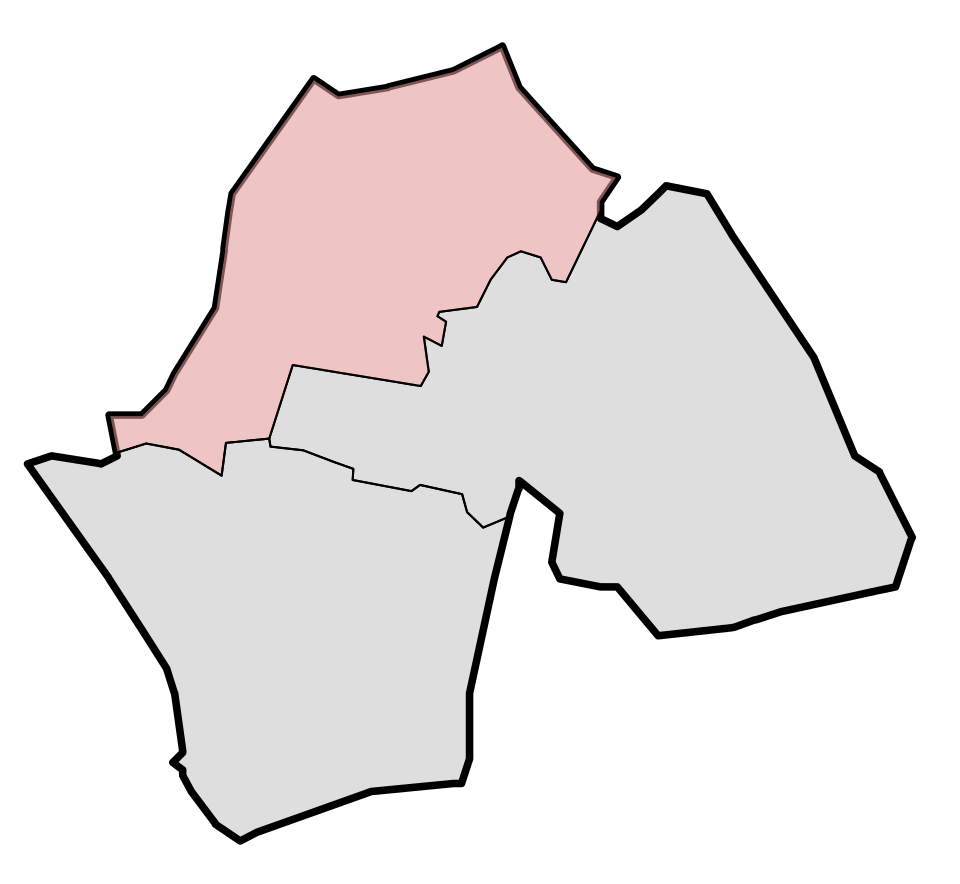
Sint Maarten’s business environment is defined by its unique geography. The island is split between the Dutch south and the French north (Saint-Martin), creating a single landmass with two national jurisdictions, two currencies, and two regulatory systems. This arrangement has historically been an asset for commerce: the Dutch side offers the infrastructure of a major cruise port and a bustling duty-free shopping district, while the French side provides a more relaxed regulatory atmosphere.
Businesses on the Dutch side must navigate Dutch corporate law, Caribbean financial regulations, and the oversight of the Kingdom’s financial supervisory bodies.
The corporate landscape is dominated by tourism-related enterprises. Hotels, timeshare properties, villa rental agencies, tour operators, and watersports companies form the core of the private sector. Retail is heavily oriented toward cruise ship passengers, with Philipsburg’s Front Street lined with jewelry stores, electronics shops, and souvenir outlets.
Beyond tourism, there is a modest but functional financial services sector, along with construction and real estate development firms that have been active in the post-hurricane rebuilding phase.
For foreign investors, Sint Maarten offers a relatively straightforward entry point into the Caribbean market. The legal system is based on Dutch law, which provides a familiar framework for European investors, while the island’s bilingual population — Dutch, English, and increasingly Spanish — eases operational challenges. However, the small domestic market means that most serious investment must be oriented toward export services, primarily tourism.
There is little manufacturing to speak of, and the island’s agricultural output is minimal. The business climate is thus a bet on the continued appeal of Caribbean tourism, with all the cyclicality that entails.
Security and Stability: Navigating Local Realities and Dutch Oversight
Crime and safety data for Sint Maarten are not published in the World Bank dataset, leaving a gap that must be filled by regional reputation and anecdotal reporting. The island has a mixed record on this front. Like many Caribbean tourism destinations, it experiences property crime, petty theft, and occasional violent incidents, often concentrated in specific neighborhoods away from the main tourist zones.
The Dutch government has, at various points, expressed concern about governance and rule-of-law issues on the island, leading to increased oversight and reform pressure.
Politically, Sint Maarten operates as a parliamentary democracy within the Kingdom of the Netherlands. The island has its own constitution, parliament, and prime minister, while foreign affairs and defense are handled by the Dutch government in The Hague. This arrangement has produced periodic tensions, particularly around financial management and anti-corruption efforts.
The relationship is not always smooth — Dutch authorities have intervened in local governance matters on several occasions, citing concerns about administrative integrity.
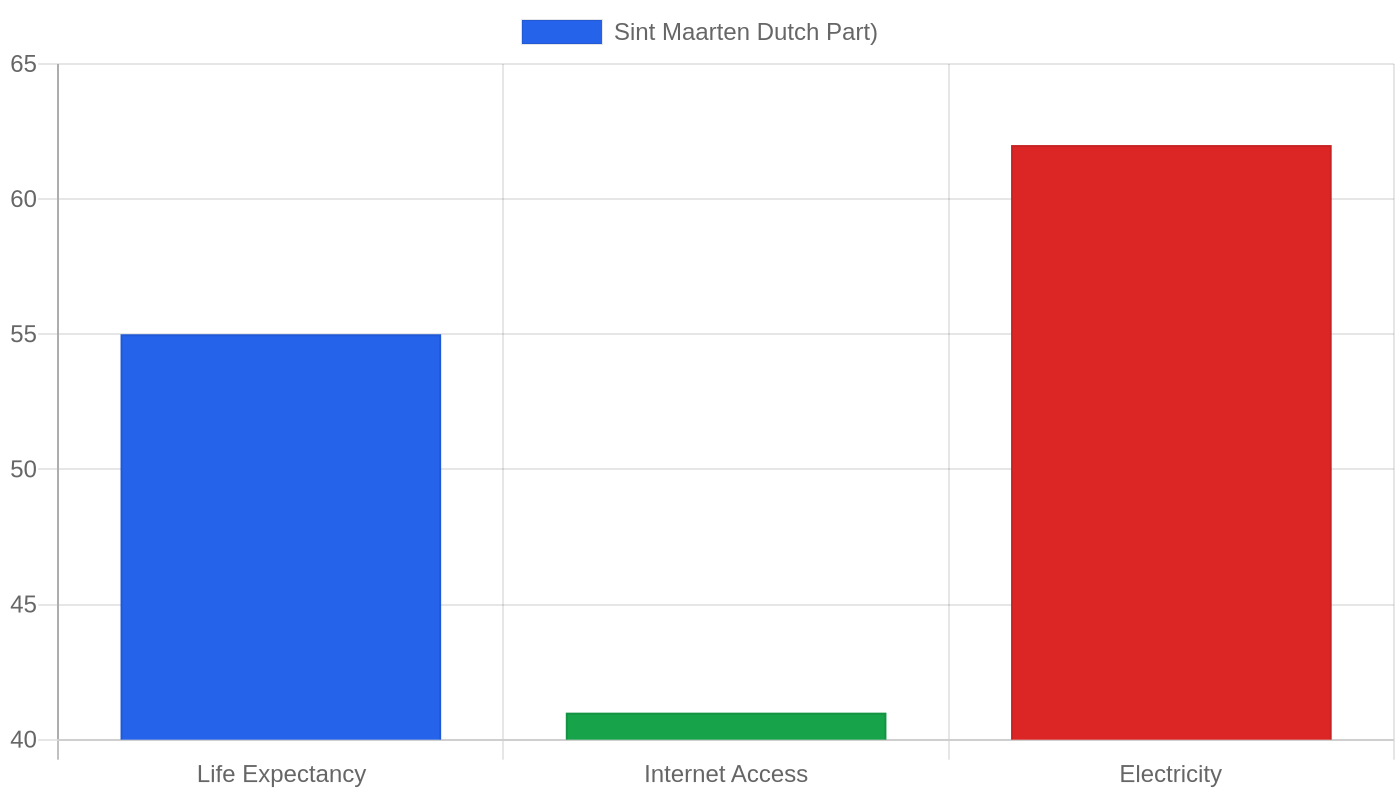
For residents, quality of life is a blend of Caribbean ease and Dutch institutional order. Healthcare is provided through a system that mirrors the Dutch model, with a hospital in Philipsburg and medical evacuation options to the French side or further afield for specialist care. Education follows the Dutch curriculum, and the island enjoys a high level of internet connectivity and modern amenities.
The cultural calendar is vibrant, with Carnival celebrations, regattas, and music festivals drawing visitors from across the region. The trade-off is a degree of isolation — the island is small, and the nearest major cities are a flight away.
The Reconstruction Generation: What’s Happening Now
The most pressing story in Sint Maarten today is the long tail of Hurricane Irma, which struck the island in September 2017 as a Category 5 storm. The hurricane destroyed or severely damaged an estimated 90 percent of buildings on the Dutch side, and the recovery has been a decade-long project.
Significant progress has been made — the airport has been rebuilt, major hotels have reopened, and the cruise port continues to attract large vessels — but the reconstruction effort has also exposed vulnerabilities in the island’s planning and financial management systems.
Dutch financial support has been conditional on governance reforms, creating a dynamic where The Hague pushes for transparency and accountability while local authorities manage the practicalities of rebuilding a functioning society. This tension has slowed some projects and accelerated others, depending on the political climate at any given moment.
The current phase of recovery is focused less on emergency repair and more on building resilience — stronger building codes, improved drainage systems, and more robust infrastructure that can withstand the next major storm.
There are also signs of economic evolution. The island is exploring ways to reduce its dependence on traditional tourism, with discussions around digital nomad visas, sustainable tourism initiatives, and niche markets like yachting services and medical tourism. These efforts are nascent, but they reflect a recognition that the old model — cruise ships and beach bars — may not be sufficient for long-term prosperity.
The French side of the island has been more aggressive in courting remote workers and upscale travelers, and the Dutch side is beginning to respond.
The Bottom Line
Sint Maarten is a country that defies easy categorization — a wealthy territory in Caribbean terms, yet one whose statistical invisibility makes it a challenge for researchers, investors, and policymakers. The island’s future hinges on its ability to complete the reconstruction era and transition to a more diversified, resilient economy while managing the complex relationship with the Dutch government.
For travelers, it remains a compelling destination; for investors, it offers opportunity with a clear-eyed acknowledgment of risk; for economists, it is a reminder that some of the world’s most interesting dynamics occur in places where the data is thin but the story is rich. Watch this island — its next chapter is still being written.
Sources & Methodology
This article is authored by Economic Pulse Net for informational and research purposes. Economic Pulse Net sources its data from multilateral institutions, national statistics bureaus, and proprietary databases. All data is believed to be current as of the date of publication.
Published: July 31, 2026 | Category: Research — Sint Maarten Dutch Part)
Use these signals in your own platform
Economic Pulse publishes its live signal feed through a documented, read-only API. Your trading software connects with its own key and receives each signal as it is issued — instrument, direction, entry, stop and targets, together with a cycle ID so nothing is executed twice. The feed is independent of this website and cannot change it.
Signals are informational only and are not financial advice.