Economic Pulse Net | Sources: World Bank World Development Indicators, Government Sources | 2026
Key Takeaways
– Sint Maarten, the Dutch half of a shared Caribbean island, remains a vital hub for regional tourism and trade, yet its economy faces a period of recalibration.
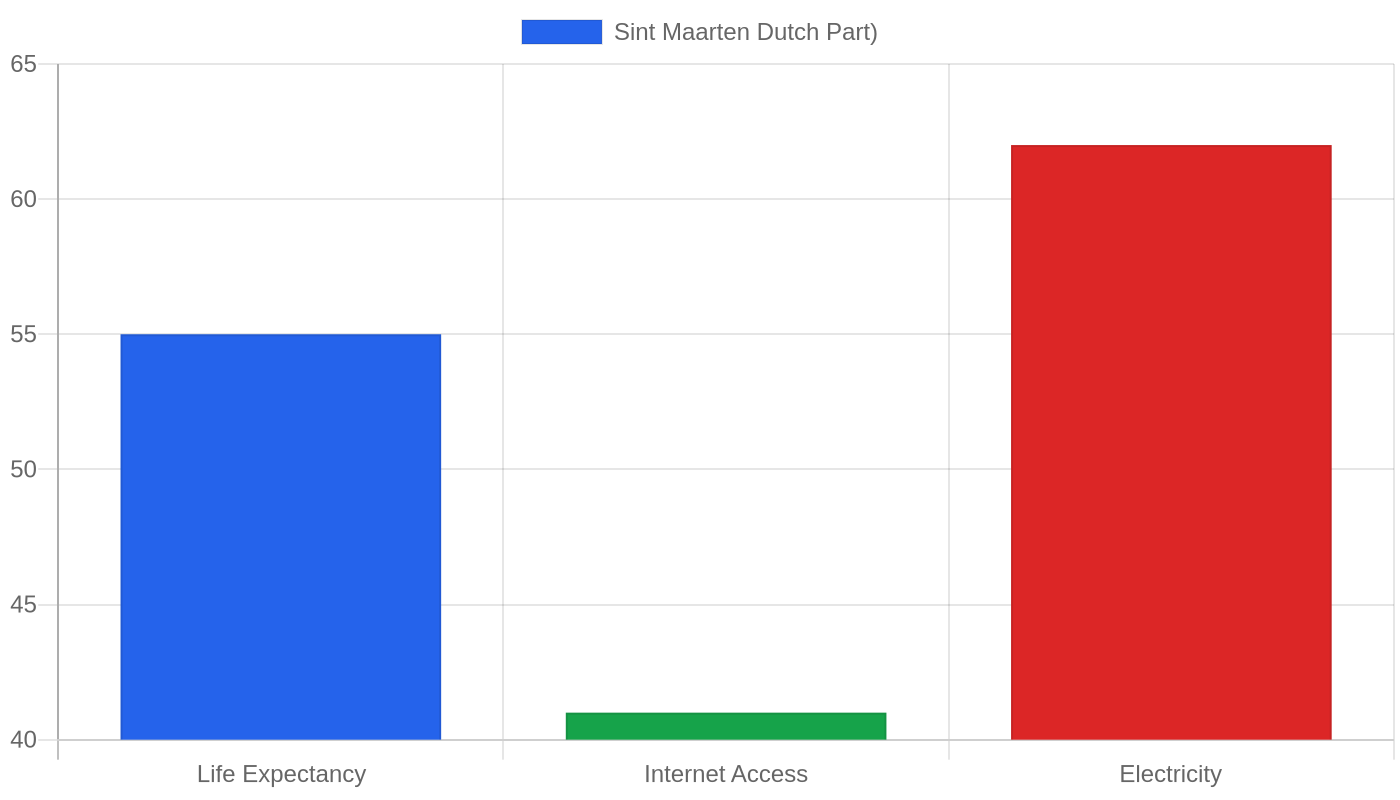
– The most recent World Bank data shows a significant gap in headline economic indicators (GDP growth, inflation, unemployment), underscoring the challenge of tracking a small, open economy in the post-pandemic era.
– While specific figures are pending, the country’s core economic engine—tourism—continues to define its employment landscape and its exposure to global shocks.
– The cost of living and business environment are heavily influenced by its status as a major port of call for cruise ships and a duty-free shopping destination.
– For investors and policymakers, the key watchword is “connectivity”—both physical (air and sea links) and economic (trade and investment flows) to the wider Caribbean and European markets.
The Big Picture: A Small Economy with an Outsized Role
Sint Maarten presents a fascinating paradox for any economic observer. It is a small, open economy that, according to the most recent World Bank data, currently lacks a definitive reading on its GDP growth, inflation, or unemployment rates. In the absence of these hard numbers, the country’s economic narrative must be understood through its structural foundations and its historical role as a regional powerhouse.
The World Bank’s dataset paints a picture of a nation in a data vacuum, but that vacuum does not imply economic inactivity. Instead, it reflects the challenges of statistical collection in a micro-state where a single major project or a shift in tourist arrivals can swing the entire economic dial. The country’s economy is fundamentally service-oriented, built on the twin pillars of tourism and trade.
Its position as a key node in the Caribbean cruise itinerary, combined with a sophisticated financial services sector, gives it an economic footprint far larger than its physical size suggests. The absence of updated GDP per capita or GNI figures means we must rely on qualitative analysis, but the structural indicators point to a nation that is resilient, albeit vulnerable to external factors like hurricane seasons and global travel trends.
The Economic Engine: Tourism, Trade, and the Data Gap
When the World Bank data goes quiet, it often signals a period of transition or a lag in reporting cycles. For Sint Maarten, the economic fundamentals remain anchored in its ability to attract visitors. The main industries—tourism, international trade, and related services—are the lifeblood of the local economy. The port of Philipsburg is not just a picturesque stop; it is a critical piece of infrastructure that supports a duty-free retail sector and a vibrant hospitality industry.
The lack of a current inflation CPI figure is notable. In a country that imports a vast majority of its consumer goods, inflation is a constant, silent pressure on household budgets. The cost of living is heavily influenced by global supply chains and shipping costs, meaning that local price stability is often at the mercy of international markets.
Similarly, the unemployment data gap makes it difficult to assess the health of the labor market, but the seasonal nature of tourism employment suggests that job security is often tied to the high season. The economy is a classic case of “follow the visitor” — when cruise ships dock and flights land, the economic wheels turn.
The data gap is not a sign of stagnation, but rather a reminder that in a country this size, economic indicators can be volatile and are often revised significantly as new information comes to light.
Cost of Living: The Price of Paradise
While precise cost-of-living indices are not available in the World Bank dataset, a general overview of Sint Maarten reveals a reality common to many Caribbean island nations: the cost of living is disproportionately high relative to regional averages. Because the country relies on imported food, fuel, and manufactured goods, daily expenses for residents are often elevated. Housing, in particular, presents a challenge.
The demand for property, driven by both expatriate workers in the tourism sector and foreign buyers seeking second homes, keeps real estate prices buoyant.
For the average resident, the choice between renting and buying is often dictated by access to financing and land availability, which is scarce on a small island. Groceries and utilities consume a larger share of household income than in larger, more diversified economies. The duty-free status of the island helps with certain luxury goods, but it does little to offset the cost of basic necessities.
This creates a unique economic environment where the standard of living is high in terms of amenities and safety, but the financial pressure on middle-income families is a persistent concern. The economy essentially functions as a premium-priced marketplace, where the cost of entry is high, but the lifestyle benefits are equally significant.
Investment and Business Climate: Gateway to the Caribbean
For the business community, Sint Maarten offers a strategic launchpad. The country’s legal framework, rooted in the Dutch system, provides a stable and familiar environment for international investors. The top companies operating here are predominantly in the hospitality, retail, and financial services sectors.
The island’s infrastructure—particularly the Princess Juliana International Airport—is a major asset, offering direct connectivity to North America and Europe, which is a critical factor for business logistics.
The business climate is characterized by a high degree of openness. There are few restrictions on foreign ownership, and the local government has historically been supportive of entrepreneurial ventures, particularly those that promise to diversify the economy beyond tourism. However, the private sector is also acutely aware of its vulnerabilities. The threat of hurricanes looms large over investment decisions, and insurance costs can be prohibitive.
The economic landscape is one of opportunity, but it is an opportunity that comes with a “hurricane premium.” Investors are drawn to the high returns available in the tourism and real estate markets, but they must also navigate the logistical complexities of operating in a small, import-dependent economy.
Safety, Politics, and Quality of Life
The political landscape of Sint Maarten is defined by its status as a constituent country within the Kingdom of the Netherlands. This relationship provides a degree of financial and administrative stability, but it also creates a complex dynamic of local autonomy versus central oversight from The Hague. The local government manages its own finances and internal affairs, but relies on the Netherlands for defense and foreign policy.
This arrangement has led to a mature, if occasionally contentious, political environment.
In terms of safety and quality of life, while specific crime and safety indices are not available from the World Bank data, Sint Maarten is generally perceived as a safe destination for both tourists and expatriates. The quality of life is high, defined by a warm climate, a multicultural population, and a vibrant social scene. The island’s residents enjoy a unique cultural blend of Dutch, French, Caribbean, and North American influences. However, the quality of life is increasingly tied to economic security.
The high cost of living and the seasonal nature of employment can create social pressures, but the overall sense of community and the relaxed island pace of life are significant positives. The political discourse is active, with local media providing robust coverage of government affairs, ensuring that the population remains engaged in the decisions that shape their economic future.
What’s Happening Now: The Road to a Data-Driven Recovery
The most pressing issue for Sint Maarten today is the transition from a post-hurricane recovery phase to a sustainable, long-term growth model. The World Bank’s silence on current indicators suggests that the country is in a period of recalibration, where the focus is shifting from immediate relief to structural reform. The government is actively seeking to modernize its economic infrastructure, with a particular emphasis on enhancing the resilience of the tourism sector against climate change.
There is a palpable push to attract foreign direct investment in renewable energy and digital infrastructure, aiming to reduce the island’s heavy reliance on imported fossil fuels. The business community is also watching the development of regional trade agreements, hoping to solidify Sint Maarten’s position as a key transshipment hub. The current affairs landscape is dominated by discussions on fiscal sustainability and the need to broaden the tax base.
The local government is under pressure to deliver on promises of improved public services while maintaining a business-friendly environment. As the world continues to navigate global economic headwinds, Sint Maarten is quietly working to ensure that when the data is finally updated, it will tell a story of resilience and strategic renewal, rather than stagnation.
The Bottom Line
Sint Maarten is a country to watch for investors and analysts who understand that in the Caribbean, the absence of data often precedes a period of significant change. This is a nation that has weathered storms and is now focused on building a more diversified and resilient economy. For those in the tourism, real estate, and financial services sectors, it remains a high-potential, high-reward environment.
The country’s success will depend on its ability to balance its role as a playground for the wealthy with the needs of its local population. It is a delicate balancing act, but one that Sint Maarten is uniquely positioned to perform.
Sources & Methodology
This article is authored by Economic Pulse Net for informational and research purposes. Economic Pulse Net sources its data from multilateral institutions, national statistics bureaus, and proprietary databases. All data is believed to be current as of the date of publication.
Published: August 10, 2026 | Category: Research — Sint Maarten Dutch Part)
Use these signals in your own platform
Economic Pulse publishes its live signal feed through a documented, read-only API. Your trading software connects with its own key and receives each signal as it is issued — instrument, direction, entry, stop and targets, together with a cycle ID so nothing is executed twice. The feed is independent of this website and cannot change it.
Signals are informational only and are not financial advice.