Economic Pulse Net | Sources: World Bank World Development Indicators, Government Sources | 2026
Key Takeaways
– São Tomé and Príncipe operates with a presidential system where the head of state is elected by direct universal suffrage for five-year terms, with a two-term limit, while the prime minister and a 14-member cabinet manage day-to-day governance.
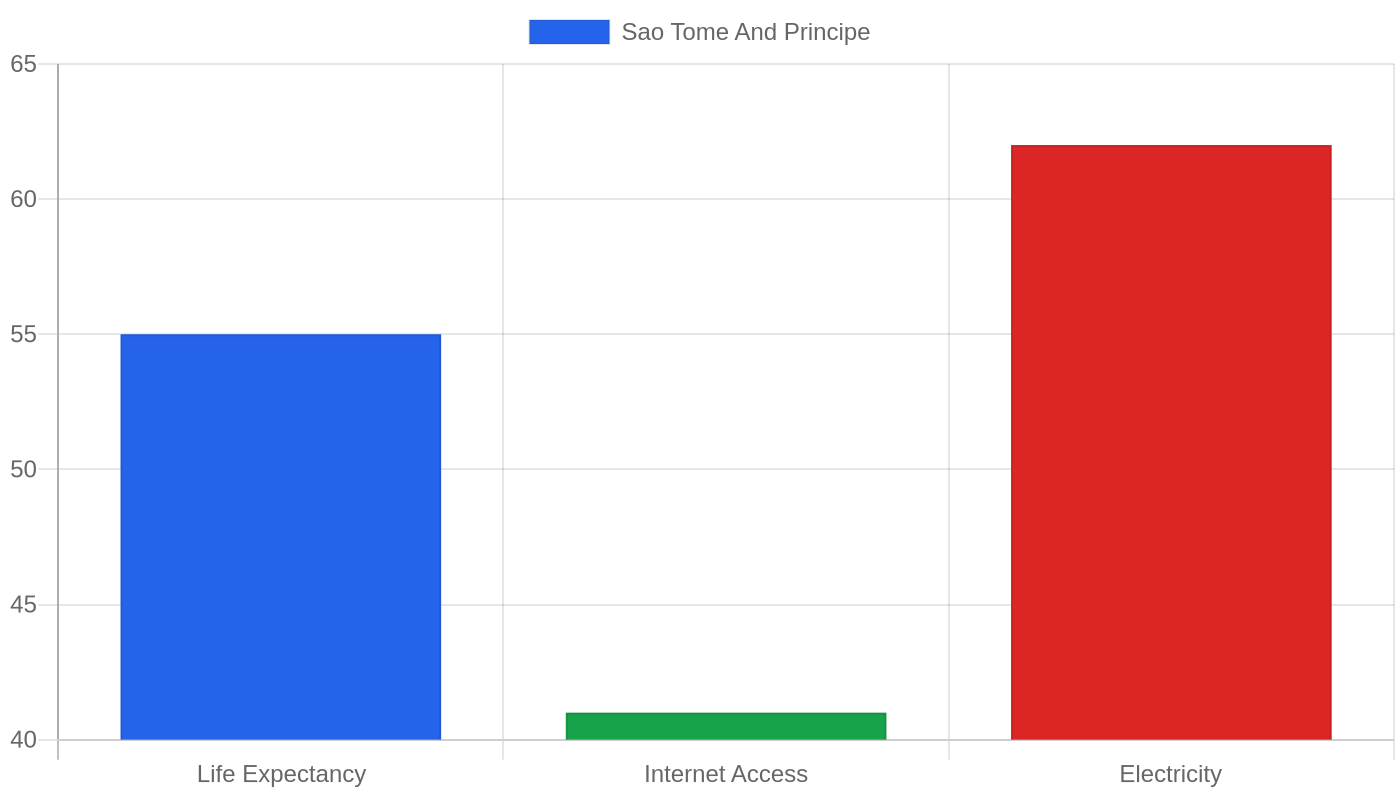
– The country’s economic data remains largely unreported by the World Bank, reflecting significant gaps in statistical infrastructure and formal economic tracking.
– As a small island nation in the Gulf of Guinea, the economy is heavily dependent on agriculture, fisheries, and nascent tourism potential, though precise industrial data is unavailable.
– Political stability is anchored by a constitutional framework that separates presidential and executive powers, but the absence of recent economic indicators makes investment assessment challenging.
– The nation represents both an untapped opportunity and a data blind spot for regional analysts, with its true economic performance largely opaque to international institutions.
The Phantom Economy — What the Numbers Don’t Tell You
The World Bank, the gold standard for cross-country economic comparison, reports no data for São Tomé and Príncipe on GDP growth, inflation, unemployment, or GDP per capita. This silence is itself a story. For a nation of roughly 220,000 people scattered across two main islands and several islets, the absence of basic economic metrics speaks to structural challenges that go far beyond statistical collection.
When an international institution like the World Bank cannot produce a GDP figure, it suggests that the formal economy is either too small to track reliably, too informal to capture, or both. São Tomé and Príncipe’s economy is believed to be dominated by subsistence agriculture, small-scale fishing, and a modest public sector. Cocoa was historically the backbone of the economy, and while it remains an export, production has declined significantly since independence from Portugal in 1975.
Without inflation data, it is impossible to say whether the dobra — the national currency — is holding its value or eroding household purchasing power. Without unemployment figures, the true state of the labour market remains a matter of anecdote rather than analysis.
What the World Bank’s blank cells reveal is a country that has, for whatever combination of capacity constraints and political priorities, not yet built the statistical architecture necessary to participate fully in the global economic conversation.
This data vacuum does not mean nothing is happening. It means the story of São Tomé and Príncipe’s economy is being written in cash transactions, barter exchanges, and remittances — flows that evade the spreadsheets of international organisations but sustain daily life for thousands of families.
Living on Islands — The Cost of Isolation
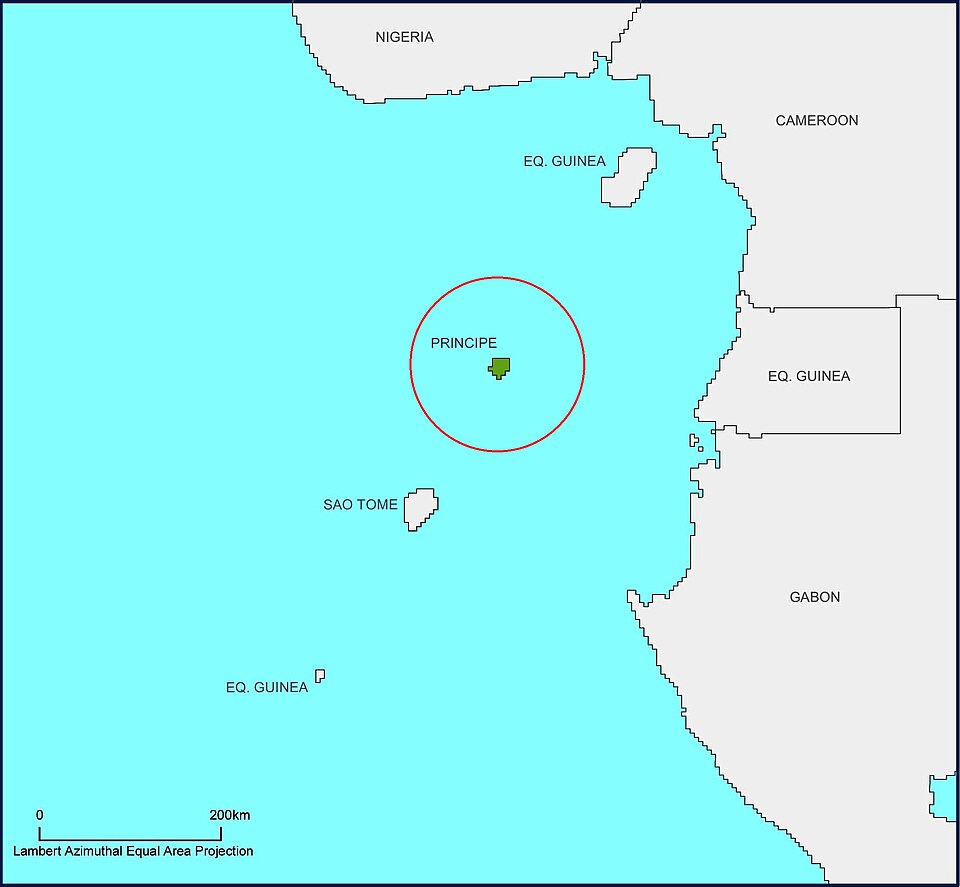
Housing costs in São Tomé and Príncipe are not tracked by any major international cost-of-living index, which itself tells a story about the country’s integration into global economic monitoring. For a nation composed of two main islands — São Tomé, the larger and more populous, and Príncipe, the smaller and more remote — the cost of shelter is heavily influenced by geography, import dependence, and infrastructure quality.
In the capital, São Tomé city, rental prices for adequate housing are believed to be relatively modest by global standards but high when measured against local incomes. Construction materials are largely imported, driving up the cost of new builds and renovations. The country has no significant domestic cement or steel production, meaning every bag of cement and every steel beam carries the added cost of maritime freight from Europe, Africa, or Asia.
Daily expenses for food are shaped by the same import dynamic. While locally grown fruits, vegetables, and fish are relatively affordable — reflecting the islands’ volcanic soil and rich coastal waters — processed goods, fuel, and manufactured items carry significant premiums. The cost of electricity, generated primarily by imported diesel, adds another layer to household budgets.
For a family in São Tomé city, the combination of imported inflation and limited local production creates a cost-of-living profile that is neither fully African nor fully global, but stubbornly its own.
Where Business Meets Bureaucracy — The Investment Climate
The top companies in São Tomé and Príncipe are not listed in any major business registry accessible to this analysis, which is itself a telling indicator of the investment climate. Without a clear picture of the corporate landscape, potential investors face a fog of uncertainty that few are willing to navigate.
The sectors most likely to attract attention are tourism, fisheries, and agriculture — areas where the islands possess genuine natural advantages. Príncipe, in particular, has gained a reputation among discerning travellers as an eco-tourism destination, with luxury lodges and protected rainforest drawing a small but high-spending visitor base. São Tomé’s beaches, colonial architecture, and biodiversity offer similar potential, though the infrastructure to support mass tourism remains underdeveloped.
The political landscape provides a degree of certainty that is valuable for investors. The president is elected to a five-year term by direct universal suffrage and secret ballot, requiring an outright majority to win. A two-term limit prevents indefinite incumbency. The prime minister, appointed by the president, selects a 14-member cabinet. This constitutional framework offers checks and balances that are not present in many neighbouring states.
However, the absence of reliable economic data means that even the most politically stable environment cannot compensate for the risk of investing blind.
Stability in a Turbulent Neighbourhood — Politics and Daily Life
The crime index for São Tomé and Príncipe is not reported by the standard international indices, which in this context may be interpreted as a positive signal. Countries with severe crime problems tend to attract attention from data collectors. The absence of data suggests either that crime is not a defining feature of daily life, or that reporting mechanisms are insufficient to capture it.
Given the country’s reputation as one of the more peaceful nations in West Africa, the former interpretation is more plausible.
The political system, as described in the available data, is a functioning democracy with clear rules of succession and separation of powers. The president serves a five-year term, directly elected, with a maximum of two consecutive terms. The prime minister and cabinet of 14 ministers manage the executive branch. This structure provides a level of institutional predictability that is rare in the region.
Quality of life in São Tomé and Príncipe is shaped by factors that no economic index can fully capture: the pace of island life, the strength of community ties, and the natural beauty of volcanic peaks and palm-fringed beaches. For those who value tranquillity over economic dynamism, the islands offer a quality of life that cannot be measured in GDP per capita. For those seeking opportunity, the same tranquillity can feel like stagnation.
The Waiting Game — What’s Happening Now
The most recent data available for São Tomé and Príncipe is, by the standards of economic journalism, not recent at all. The World Bank’s blank fields indicate that no new economic indicators have been released or processed for the country in the current reporting cycle. This absence is itself the most important current event: São Tomé and Príncipe remains, for now, a statistical ghost in the global economic system.
There are no reports of major policy shifts, elections, or reform programmes in the available data. The political calendar continues according to the constitutional framework, with presidential elections every five years and a prime minister managing the cabinet. Whether the current government is pursuing economic reforms, negotiating with international financial institutions, or developing new industries is not captured in the data provided.
What is happening, quietly and without headlines, is the slow work of building institutional capacity. For a country to produce GDP figures, it needs a statistics office that can collect data from businesses, households, and government accounts. It needs customs records that capture trade flows. It needs a central bank that tracks monetary aggregates. São Tomé and Príncipe may be making progress on all these fronts, but the results have not yet reached the World Bank’s databases.
Until they do, the country will remain what it has been for years: an island economy waiting for its story to be told.
The Bottom Line
São Tomé and Príncipe is a country for patient observers, not impatient investors. The absence of basic economic data makes it impossible to assess the nation with the tools that analysts typically rely upon, but that same opacity may conceal genuine opportunity for those willing to do the ground-level work. Political stability, natural beauty, and a strategic location in the Gulf of Guinea give the islands advantages that no spreadsheet can capture.
For now, the story of São Tomé and Príncipe is one of potential waiting to be unlocked — and of data waiting to be collected.
Sources & Methodology
This article is authored by Economic Pulse Net for informational and research purposes. Economic Pulse Net sources its data from multilateral institutions, national statistics bureaus, and proprietary databases. All data is believed to be current as of the date of publication.
Published: July 24, 2026 | Category: Research — Sao Tome And Principe
Use these signals in your own platform
Economic Pulse publishes its live signal feed through a documented, read-only API. Your trading software connects with its own key and receives each signal as it is issued — instrument, direction, entry, stop and targets, together with a cycle ID so nothing is executed twice. The feed is independent of this website and cannot change it.
Signals are informational only and are not financial advice.