Economic Pulse Net | Sources: World Bank World Development Indicators, Government Sources | 2026
Key Takeaways
– A Political System Built for Continuity: São Tomé and Príncipe operates under a hybrid presidential-parliamentary system where the president is elected for five-year terms by direct universal suffrage, requiring an outright majority, with a two-consecutive-term limit. This structure is designed to prevent the kind of executive entrenchment seen elsewhere in the region.
– Data Transparency Remains a Challenge: The World Bank’s latest figures for GDP growth, inflation, unemployment, and per capita income are all currently unavailable, reflecting broader issues with statistical infrastructure in this small island nation.
– A Service-Oriented Economy in the Making: With no major industrial sector to speak of, the country’s economic narrative is defined by what it *doesn’t* have—heavy industry, large-scale manufacturing, or extractive resources—which makes its political stability and geographic position its most significant assets.
– The Prime Minister Holds the Keys to Daily Governance: While the president holds the constitutional mandate from direct election, the prime minister and the 14-member cabinet are appointed to manage the day-to-day machinery of state, creating a dual-executive dynamic that shapes all policy decisions.
The Economic Paradox: Growth Without a Paper Trail
Here is the central puzzle of São Tomé and Príncipe: the World Bank, the world’s most authoritative economic data institution, currently lists the country’s GDP growth, inflation rate, unemployment figures, and even total GDP as “N/A.” This is not an oversight—it is a statement.
For an archipelago of roughly 200,000 people scattered across two main islands and several islets in the Gulf of Guinea, economic data collection is not merely a technical exercise; it is a logistical challenge of extraordinary proportions.
The absence of hard numbers does not mean the absence of economic activity. Rather, it means that the formal economy—the kind that gets measured, taxed, and reported—is relatively thin. The country’s main industries are not listed in the World Bank dataset, which tells its own story. São Tomé and Príncipe has historically relied on agriculture, particularly cocoa, which once made it one of the world’s leading producers under Portuguese colonial rule.
Since independence, the economy has shifted toward services, including a nascent tourism sector drawn by the islands’ reputation for untouched rainforest and biodiverse waters. But without reliable GDP per capita or GNI figures from the World Bank, analysts must approach the country with intellectual humility: this is an economy that exists, functions, and provides for its people, but it does so largely outside the metrics that dominate global economic discourse.
What matters for the reader is this: the lack of data is itself a risk factor. Foreign investors, international lenders, and development partners require numbers to make decisions. When the World Bank cannot provide baseline statistics, it signals that the country’s institutional capacity for measurement—and by extension, for governance—remains a work in progress.
The economy is likely growing, likely experiencing inflationary pressure, and likely struggling with unemployment, but the scale of these challenges remains opaque.
The Housing Question: Where Daily Life Meets Economic Reality
In the absence of official cost-of-living indices from the World Bank, the housing market in São Tomé and Príncipe must be understood through the lens of its structural constraints. This is a small island state with limited land, a growing population, and a capital city, São Tomé, that concentrates the majority of economic opportunity.
The dynamic that emerges is familiar to anyone who has studied micro-states: urban housing demand outstrips supply, pushing prices beyond the reach of average earners, while rural housing remains more affordable but offers fewer economic opportunities.
Renting is the dominant tenure arrangement for most working families, particularly in the capital, where the formal sector—government employment, international organizations, and the small private service industry—creates a steady but modest demand for accommodation. Buying property is a more complex proposition, complicated by land tenure systems that may not always provide clear title, a legacy of the plantation economy and subsequent land reforms.
For most residents, the housing question is not about investment strategy but about basic monthly survival: how much of a paycheck goes to shelter, and how much remains for food, transport, and education.
Regional comparisons are difficult to draw without reliable data, but the broader West and Central African context suggests that housing costs in island nations tend to be elevated due to import dependencies and construction material costs. São Tomé and Príncipe imports most of its building materials, which means that housing costs are tied to global supply chains and shipping rates—factors entirely outside the control of local policymakers.
Investment Climate: A Small Table, But a Seat at It
The business environment in São Tomé and Príncipe is not defined by its top companies—none are listed in the World Bank data—but by its potential. The country has no major multinational corporations headquartered within its borders, no stock exchange, and no industrial parks of regional significance.
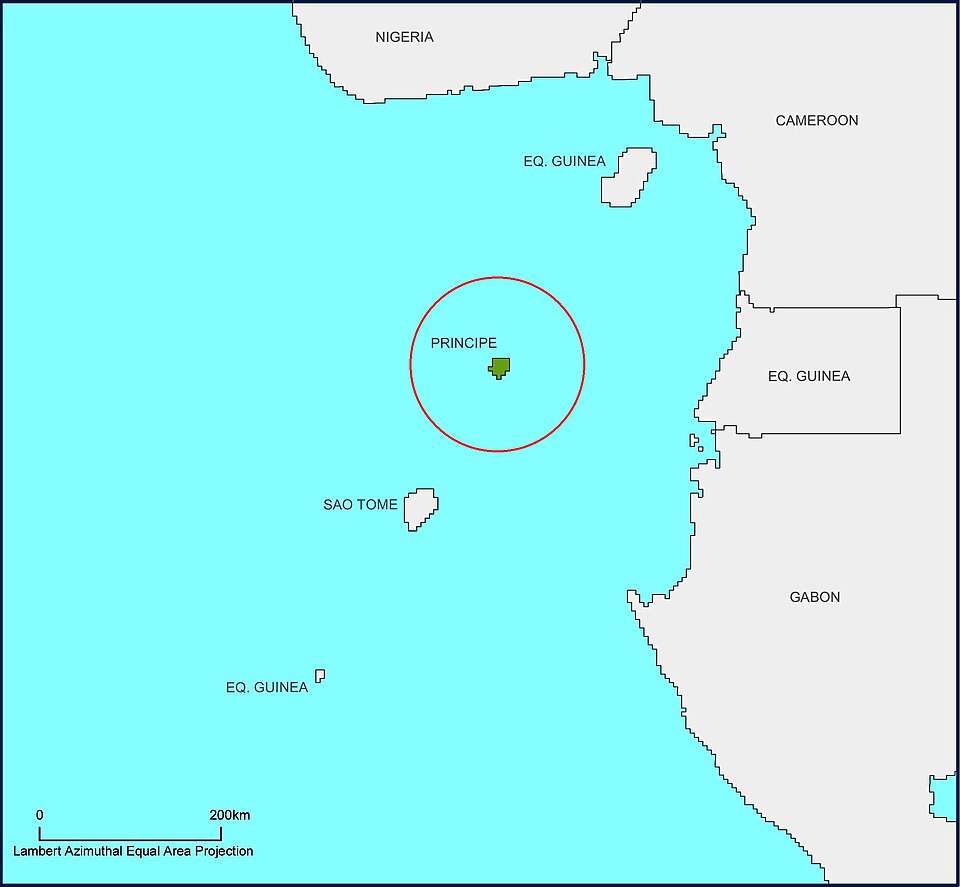
What it does have is strategic geography: the islands sit in the Gulf of Guinea, near major shipping lanes and significant offshore oil discoveries in the region, though the country itself has yet to translate that proximity into domestic energy wealth.
For investors, the appeal is niche rather than broad. Ecotourism represents the most obvious opportunity, with the country’s UNESCO-recognized biosphere reserve on Príncipe island offering a differentiated product in a crowded global market. Agriculture, particularly high-quality cocoa for the specialty chocolate market, provides another avenue.
The political system—with its elected president, appointed prime minister, and 14-member cabinet—offers a degree of democratic legitimacy that is not universal in the region, which can be a comfort to investors who value institutional predictability.
The challenges are equally clear. The absence of World Bank data means that the country does not even have a baseline economic profile to present to potential investors. Infrastructure remains limited, the domestic market is small, and the economy’s formal sector is heavily dependent on international development assistance.
Business leaders in São Tomé and Príncipe are not playing the same game as their counterparts in larger African economies; they are playing a game of patience, positioning, and niche-building in a country that must be discovered rather than assumed.
The Political Architecture of a Small State
The political landscape of São Tomé and Príncipe, as described in the World Bank’s overview, is a study in institutional design for small-state governance. The president is elected to a five-year term by direct universal suffrage and secret ballot, requiring an outright majority to win. This is a high bar—it forces consensus-building and run-off elections—and it means that the president typically enters office with a genuine mandate, not merely a plurality.
The two-consecutive-term limit prevents the entrenchment that has undermined democratic institutions in many other post-colonial states.
The prime minister, appointed by the president, and the 14-member cabinet chosen by the prime minister, form the executive arm that handles daily governance. This creates a classic dual-executive system, similar to those found in Portugal and France, where the president handles matters of national representation and continuity while the prime minister manages the administrative state.
In practice, this arrangement can lead to cohabitation tensions if the president and prime minister come from opposing political camps, but it also provides checks and balances that are valuable in a small society where personal relationships and political rivalries can easily overlap.
Crime and safety indices are not available from the World Bank data, which is itself a neutral statement—it suggests that the country does not have a widely publicized crime problem of the scale that would attract international measurement, but it also means that residents and visitors lack official benchmarks to assess personal safety.
The quality of life, in the absence of happiness or well-being metrics, must be inferred from the country’s known characteristics: a tropical climate, a relatively small population, and a pace of life that is markedly different from the urban centers of the African mainland.
What’s Happening Now: The Quiet Work of National Development
The most current picture of São Tomé and Príncipe is one of administrative continuity rather than dramatic political or economic upheaval. The constitutional framework—the five-year presidential term, the outright majority requirement, the two-term limit, and the appointed prime minister and cabinet—remains the central fact of national life. There is no indication in the available data of a constitutional crisis, an economic emergency, or a security threat that would dominate headlines.
Instead, the country is engaged in the quieter work of governance: managing public finances, maintaining international relationships, and trying to build the statistical infrastructure that would finally give the World Bank the numbers it needs to paint a fuller picture of the national economy.
The absence of recent news items in the data is itself a finding. In a region where political instability, currency crises, and security threats regularly generate headlines, São Tomé and Príncipe’s lack of dramatic news is a form of good news. The country is not in crisis; it is in the middle of a long, unglamorous process of institutional building.
The government is likely focused on the basics—tax collection, public service delivery, and the maintenance of the democratic architecture that has kept the country peaceful since its transition to multiparty politics.
What happens next will depend on whether the country can translate its political stability into economic measurement, and whether it can turn economic measurement into tangible improvements in living standards. For now, São Tomé and Príncipe remains a country that is more stable than its data suggests, and more promising than its metrics can prove.
The Bottom Line
São Tomé and Príncipe is not a country for investors seeking rapid returns or analysts looking for dramatic storylines. It is a country for those who appreciate the long game—diplomats, development specialists, ecotourism operators, and scholars of small-state governance. The political system is genuinely democratic, the geographic position is strategically valuable, and the potential for niche economic development is real.
But until the World Bank can fill in the blanks, the country will remain a place where promise must be taken on faith, and where the absence of data is the most telling data of all. Watch this country for its stability, its biodiversity, and its quiet demonstration that small states can govern themselves without making headlines.
Sources & Methodology
This article is authored by Economic Pulse Net for informational and research purposes. Economic Pulse Net sources its data from multilateral institutions, national statistics bureaus, and proprietary databases. All data is believed to be current as of the date of publication.
Published: August 05, 2026 | Category: Research — Sao Tome And Principe
Use these signals in your own platform
Economic Pulse publishes its live signal feed through a documented, read-only API. Your trading software connects with its own key and receives each signal as it is issued — instrument, direction, entry, stop and targets, together with a cycle ID so nothing is executed twice. The feed is independent of this website and cannot change it.
Signals are informational only and are not financial advice.