Economic Pulse Net | Sources: World Bank World Development Indicators, Government Sources | 2026
Key Takeaways
– Constitutional transition underway: Stanley John became Governor-General on 5 January 2026, marking a new chapter in the nation’s parliamentary democracy under King Charles III, though the economic implications remain unclear.
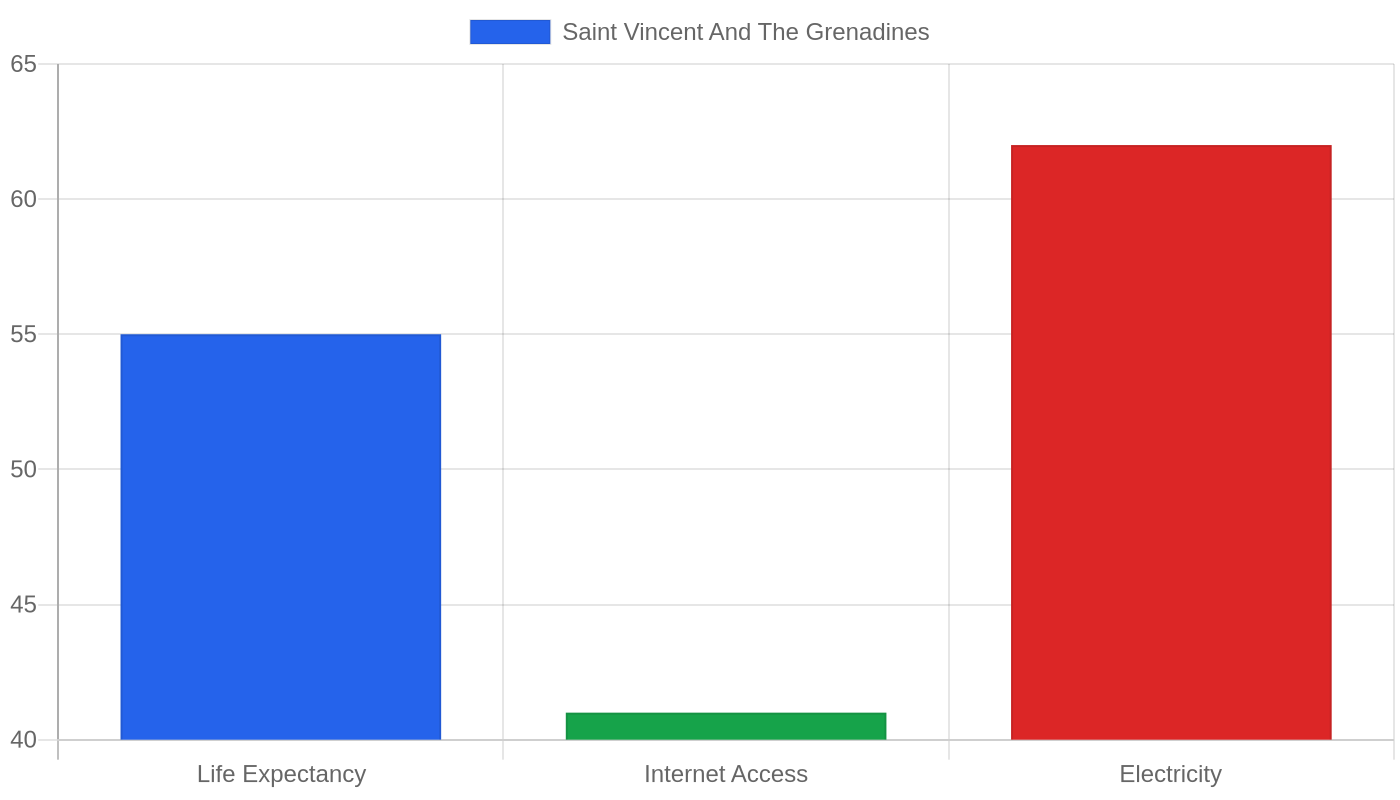
– Data transparency gaps persist: Key economic indicators including GDP growth, inflation, unemployment, and GDP per capita are currently unavailable from the World Bank, making independent assessment of the country’s economic health challenging.
– Small island vulnerability: As a microstate in the Eastern Caribbean, Saint Vincent and the Grenadines faces structural challenges common to small island developing states, including limited industrial diversification and exposure to external shocks.
– Political stability remains a cornerstone: The country operates as a stable parliamentary democracy and constitutional monarchy, providing a predictable governance framework despite the absence of recent economic data.
The Invisible Economy — Reading Between the Data Gaps
Saint Vincent and the Grenadines presents an unusual challenge for economic analysis: the World Bank currently reports no data for GDP growth, inflation, unemployment, or GDP per capita. This absence of basic macroeconomic indicators is itself a telling story about the constraints facing this Eastern Caribbean archipelago of approximately 32 inhabited islands.
The lack of publicly available World Bank data does not mean the economy has stopped moving. Rather, it reflects the difficulties small island states face in maintaining robust statistical infrastructure. Agriculture, particularly the cultivation of arrowroot and bananas, has historically formed the backbone of economic activity, alongside a growing tourism sector that capitalises on the Grenadines’ famed white-sand beaches and sailing routes.
Remittances from the Vincentian diaspora also play a significant, if unquantified, role in household incomes.
Without official inflation figures, it is impossible to say with precision how the cost of imported goods — from food to fuel — has affected household purchasing power. Similarly, the absence of unemployment data masks the reality of underemployment that often characterises small island labour markets, where seasonal tourism work and informal sector activity dominate.
The World Bank’s silence on these metrics should be read as a call for greater investment in national statistical capacity, not as evidence of economic stagnation.
Housing and Daily Life — The High Cost of Island Living
Cost of living data for Saint Vincent and the Grenadines is not currently available through the World Bank, but the structural realities of small island economies are well understood. As an archipelago heavily dependent on imports for everything from construction materials to food staples, the cost of daily life is typically elevated compared to larger Caribbean nations with more diversified economies.
Housing in Kingstown, the capital, and the more tourist-oriented Grenadine islands such as Bequia and Mustique, commands a premium. Rent for a modest apartment in the capital can consume a significant share of household income, particularly for those working in the service sector. The rental market is tight, with limited formal housing stock and a preference among locals for homeownership through family land arrangements.
Buying property is a complex affair, with foreign ownership restrictions in place to protect land access for Vincentians.
Daily expenses for staples such as rice, flour, cooking oil, and fresh produce reflect the added costs of maritime freight and the small scale of the local market. While the country produces some fresh fruits and vegetables, much of what fills supermarket shelves arrives by container ship from Trinidad, the United Kingdom, or further afield.
For residents, this means that global supply chain disruptions — whether from geopolitical tensions or weather events — translate directly into higher prices at the checkout counter.
Investment and Business Climate — Waiting for the Next Wave
The business environment in Saint Vincent and the Grenadines operates within the framework of a stable parliamentary democracy, which provides a degree of predictability for investors. However, the absence of major corporate names and limited industrial diversification means the private sector remains small-scale and service-oriented.
The tourism sector offers the most obvious opportunity for investment, particularly in boutique hotels, villa rentals, and marine services catering to the yachting community that traverses the Grenadines. The country has also sought to position itself as a hub for international financial services, though this sector faces increasing scrutiny from global regulators concerned with transparency and tax compliance.
Agricultural processing — particularly of arrowroot into starch for pharmaceutical and culinary uses — represents a niche but stable industry with export potential.
For the investor considering Saint Vincent and the Grenadines, the key considerations are scale and patience. This is not a market for rapid returns or mass-market ventures. Instead, opportunities lie in high-end tourism infrastructure, sustainable agriculture, and services that leverage the country’s strategic position along Caribbean shipping and sailing routes. The political stability is a genuine asset, but the small domestic market and logistical costs of island operations remain significant hurdles.
Politics, Safety, and Quality of Life — Stability in a Fragile Setting
Saint Vincent and the Grenadines is a parliamentary democracy and constitutional monarchy, with King Charles III serving as head of state. The King is represented locally by the Governor-General, a role currently held by Stanley John, who assumed office on 5 January 2026. This transition represents continuity rather than rupture, as the country maintains its Westminster-style political traditions and its place within the Commonwealth.
Crime and safety indices are not available from the data provided, but Saint Vincent and the Grenadines is generally considered a safe destination by Caribbean standards, with violent crime concentrated in specific areas of Kingstown and rarely affecting tourists or the expatriate community. Petty crime such as theft from rental cars or unattended beach belongings is the most common concern for visitors.
Quality of life in the islands is shaped by the tension between natural beauty and economic constraint. The pace of life is slow, community ties are strong, and access to unspoiled beaches and marine environments is unparalleled. Yet public services — healthcare, education, and infrastructure — face the funding limitations common to small island states. For Vincentians, the trade-off between a high quality of natural environment and limited economic opportunity is a daily reality.
The Stanley John Era — A New Governor-General in a Time of Waiting
The appointment of Stanley John as Governor-General on 5 January 2026 is the most significant recent political development in Saint Vincent and the Grenadines. While the role is largely ceremonial — representing the monarch and performing duties such as opening parliament and giving royal assent to legislation — the transition draws attention to the country’s constitutional arrangements and its relationship with the British Crown.
The timing of the appointment is noteworthy. Saint Vincent and the Grenadines, like several other Caribbean Commonwealth realms, has seen growing debate in recent years about the future of the monarchy. Barbados became a republic in 2021, and discussions about constitutional reform have surfaced in other Eastern Caribbean states.
Whether the Vincentian government under Prime Minister Ralph Gonsalves — the longest-serving head of government in the Caribbean — will pursue similar republican aspirations remains an open question.
For now, the country’s political agenda is dominated by more immediate concerns: recovery from the impacts of Hurricane Beryl in 2024, which caused significant damage to housing and agriculture on several islands; the ongoing challenge of rebuilding infrastructure with limited fiscal space; and the perennial issue of youth unemployment and outmigration.
The new Governor-General’s tenure begins at a moment when the country is looking inward, focused on resilience and recovery rather than constitutional grand gestures.
The Bottom Line
Saint Vincent and the Grenadines is a country best watched by those with a long-term perspective — investors in sustainable tourism and niche agriculture, students of Caribbean constitutional politics, and travellers seeking authentic island experiences away from mass tourism. The absence of basic economic data from the World Bank is a red flag for data-driven investors, but it should not obscure the underlying stability of the country’s political system and the resilience of its people.
For now, this is a nation in a holding pattern, governed by tradition, shaped by geography, and waiting for its next chapter to unfold.
Sources & Methodology
This article is authored by Economic Pulse Net for informational and research purposes. Economic Pulse Net sources its data from multilateral institutions, national statistics bureaus, and proprietary databases. All data is believed to be current as of the date of publication.
Published: July 18, 2026 | Category: Research — Saint Vincent And The Grenadines
Use these signals in your own platform
Economic Pulse publishes its live signal feed through a documented, read-only API. Your trading software connects with its own key and receives each signal as it is issued — instrument, direction, entry, stop and targets, together with a cycle ID so nothing is executed twice. The feed is independent of this website and cannot change it.
Signals are informational only and are not financial advice.