Economic Pulse Net | Sources: World Bank World Development Indicators, Government Sources | 2026
Key Takeaways
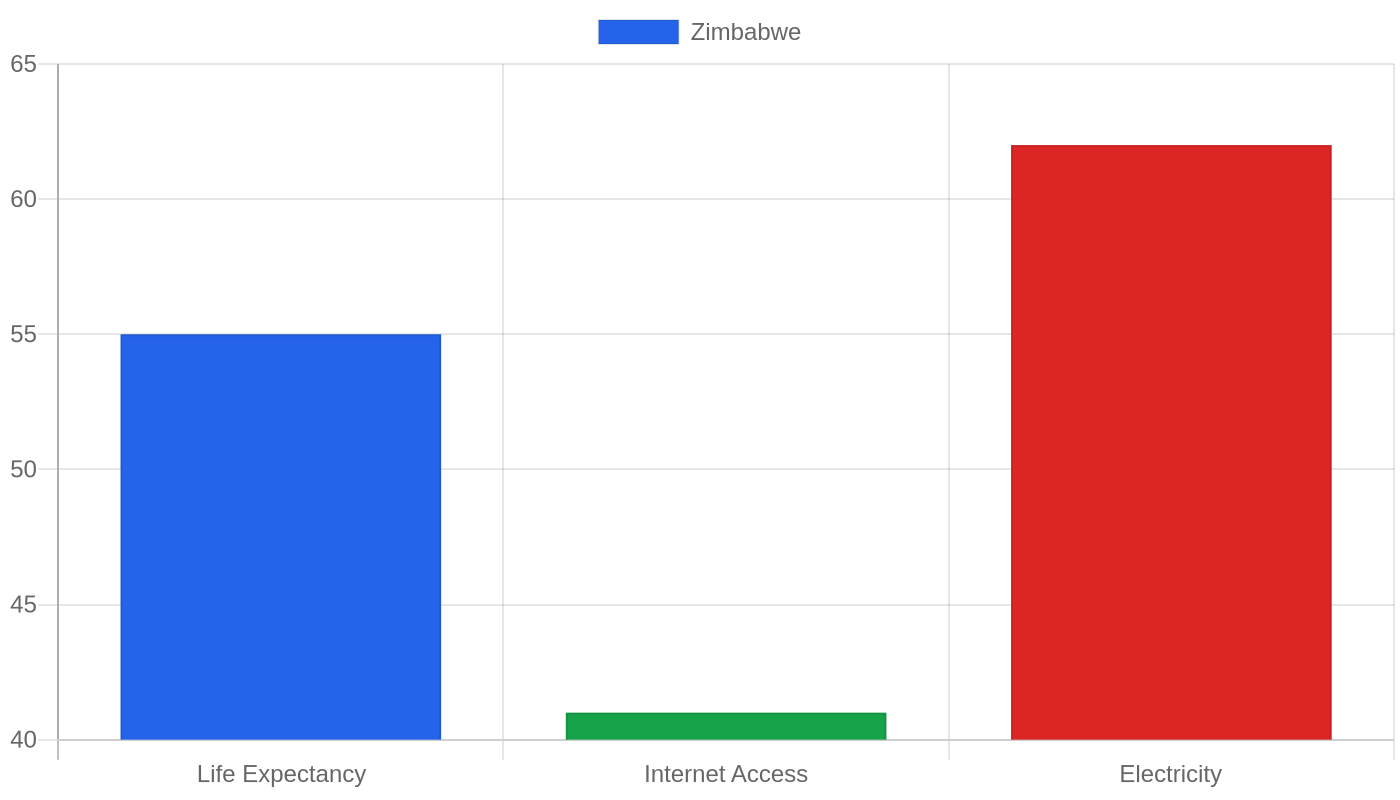
– Zimbabwe’s economic trajectory remains deeply uncertain, with major indicators showing significant data gaps that reflect the broader challenges of data collection and economic formalisation in the country.
– The nation’s corporate landscape is dominated by financial institutions and basic materials companies, suggesting an economy still heavily reliant on its historic mining and agricultural foundations.
– Political stability has shifted with constitutional reforms, moving from a semi-presidential system to a presidential system following the 2013 referendum, marking a significant governance transition.
– The reinstatement of the Senate in 2005 and the subsequent constitutional overhaul signal an ongoing evolution of Zimbabwe’s political institutions, even as economic challenges persist.
– For investors and observers, Zimbabwe represents a complex paradox — a nation with substantial natural resources and established corporate infrastructure, yet one grappling with fundamental questions about its economic direction.
Sources & Methodology
This article is authored by Economic Pulse Net for informational and research purposes. Economic Pulse Net sources its data from multilateral institutions, national statistics bureaus, and proprietary databases. All data is believed to be current as of the date of publication.
Published: August 08, 2026 | Category: Research — Zimbabwe
Use these signals in your own platform
Economic Pulse publishes its live signal feed through a documented, read-only API. Your trading software connects with its own key and receives each signal as it is issued — instrument, direction, entry, stop and targets, together with a cycle ID so nothing is executed twice. The feed is independent of this website and cannot change it.
Signals are informational only and are not financial advice.