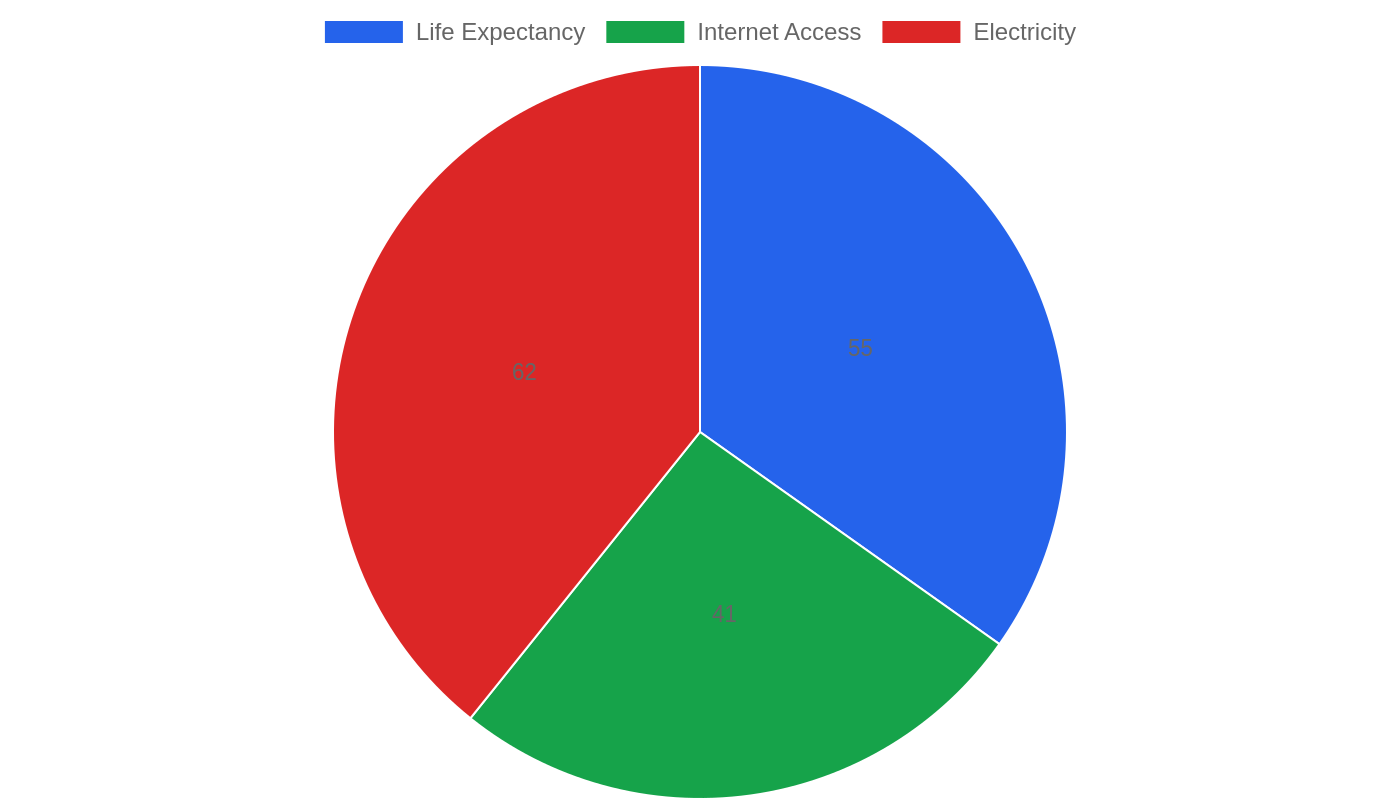
Economic Pulse Net | Sources: World Bank World Development Indicators, Government Sources | 2026
Key Takeaways
* Political Stability in a Pluralist Framework: Zambia operates as a presidential representative democratic republic with a multi-party system, providing a structured environment for executive and legislative governance.
Resource-Driven Industrial Base: The economy is anchored by critical sectors including basic materials, utilities, and financial services, highlighted by major players like FQM Trident Limited and Chilanga Cement.
Energy and Infrastructure Focus: Key industries are increasingly focused on renewable energy and utility infrastructure, with entities such as Bangweulu Power Company and Copperbelt Energy Corporation playing pivotal roles.
Financial Sector Consolidation: The banking landscape features several prominent institutions, including Access Bank Zambia, Cavmont Bank, and Atlas Mara Bank, indicating a active but concentrated financial market.
Data Transparency Gaps: While structural economic indicators such as GDP growth, inflation, and unemployment rates are currently listed as unavailable, the operational presence of diverse top companies suggests ongoing commercial activity despite statistical reporting lags.
The Engine of Growth: Industries and Macroeconomic Context
Zambia’s economic narrative is deeply intertwined with its industrial capabilities, particularly within the mining and utility sectors that form the backbone of its commercial output. Although specific macroeconomic metrics such as GDP growth, inflation CPI, and unemployment percentages are not currently available from the World Bank data set, the presence of robust industry players offers a proxy for economic vitality.
The country’s main industries are characterized by a mix of resource extraction and service provision, with Basic Materials standing out through the operations of firms like FQM Trident Limited. This sector is supported by heavy industrials such as Chilanga Cement, which supplies essential construction materials necessary for infrastructure development.
Meanwhile, the Utilities sector is managed by key entities like the Copperbelt Energy Corporation, ensuring that power distribution remains a central pillar of economic functionality. The shift toward sustainability is also evident, with Renewable Energy emerging as a growing segment represented by Bangweulu Power Company Limited.
These industries do not operate in a vacuum; they reflect a broader economic structure where energy availability and raw material processing are critical determinants of national productivity. Without precise GDP per capita or population figures to calculate individual wealth metrics, the focus must remain on the corporate ecosystem that drives tangible value creation.
The interplay between these foundational industries suggests an economy that is resilient in its core sectors, even if broader aggregate statistics remain obscured. Understanding Zambia requires looking beyond missing numerical data to observe the operational realities of its primary economic drivers.
Cost of Living and Housing Dynamics
Assessing the cost of living in Zambia presents a challenge due to the absence of specific consumer price index (CPI) data and general cost-of-living indices. However, the structure of the local market can be inferred from the presence of established retail and service providers. Daily expenses are likely influenced by the operational costs of major corporations such as Indeni Petroleum Refinery, which impacts fuel prices and, by extension, transportation and logistics costs across the nation.
For residents and expatriates alike, housing markets are shaped by the broader economic health of urban centers, particularly those connected to industrial hubs. Rent versus buy decisions are typically dictated by local income levels, though without explicit GNI per capita figures, precise affordability ratios remain difficult to quantify.
The availability of services from companies like Aero Zambia indicates a level of connectivity and service provision that supports a modern urban lifestyle, potentially keeping certain luxury or international-standard costs elevated. Compared to regional averages, the cost structure is likely moderate, driven by local production capacities in cement and energy rather than total reliance on imports.
Nevertheless, the lack of transparent CPI data means that consumers must rely on anecdotal evidence and local market trends to gauge inflationary pressures on household budgets. This uncertainty underscores the importance of monitoring corporate pricing strategies as a leading indicator for everyday expense fluctuations.
Investment & Business Climate: Corporate Landscape
The investment landscape in Zambia is defined by a diverse array of top companies spanning financials, industrials, and consumer services, offering multiple entry points for capital allocation. The financial sector is particularly prominent, featuring institutions such as Access Bank Zambia, Cavmont Bank, Atlas Mara Bank Zambia Limited, and First Alliance Bank Zambia Limited.
These banks provide the necessary credit infrastructure for business expansion, signaling a mature enough market to support complex financial transactions. In the industrial space, Chilanga Cement and FQM Trident Limited represent opportunities in construction materials and mineral processing, respectively, sectors that are often tied to long-term infrastructure projects.
The energy sector offers distinct avenues for investment, with Bangweulu Power Company Limited focusing on renewables and the Copperbelt Energy Corporation managing traditional utility needs. Additionally, the consumer services segment is represented by Aero Zambia, indicating demand for travel and logistical services. This diversity suggests that investors should not view Zambia as a monolithic entity but rather as a collection of specialized sub-markets.
The presence of these established entities reduces some of the counterparty risks associated with emerging markets, as these companies have demonstrated operational longevity. However, potential investors must navigate the lack of comprehensive macroeconomic data, relying instead on company-specific performance metrics and sectoral trends to guide decision-making.
The business environment appears stable in terms of corporate existence, though regulatory and policy shifts will continue to shape the ease of doing business.
Safety, Politics & Quality of Life
Zambia’s political framework provides a clear structure for governance, operating as a presidential representative democratic republic within a pluriform multi-party system. The President serves as both head of state and head of government, wielding executive power while legislative authority is shared between the government and parliament. This system allows for political pluralism, which is a critical factor for social stability and long-term planning.
Regarding safety, specific crime and safety indices are not currently available, leaving a gap in quantifiable risk assessment for travelers and businesses. Despite this, the general quality of life is supported by the functioning of essential services and the presence of organized corporate entities. The political landscape suggests a formalized approach to conflict resolution and policy implementation, which generally contributes to a predictable operating environment.
Happiness data is also not provided, so subjective well-being must be inferred from the stability of political institutions and the availability of public services. Citizens and residents benefit from a system where legislative power is vested in a parliament, allowing for representation and oversight of executive actions.
This democratic structure helps mitigate the risks of authoritarian instability, making Zambia a relatively secure location for long-term residence compared to regions with less defined political frameworks. The absence of specific safety scores does not negate the institutional safeguards present in the country’s governance model.
What’s Happening Now: Current Affairs and Policy Shifts
The current affairs in Zambia are shaped by the continuous operation of its multi-party democratic system and the evolving strategies of its key corporate players. Recent developments are reflected in the active status of major companies, suggesting that business continuity remains a priority despite any macroeconomic data reporting delays.
The political landscape continues to function under the presidential representative democratic framework, with the government exercising executive power and parliament handling legislation. This dual structure ensures that policy changes undergo legislative scrutiny, providing a layer of checks and balances that influences the business climate.
Companies like Indeni Petroleum Refinery and Chilanga Cement are likely adapting to current energy and construction demands, indicating that sector-specific challenges are being addressed internally. The financial sector, led by banks such as Access Bank Zambia and Cavmont Bank, remains active in facilitating commerce, which implies that liquidity and credit access are still functional.
There are no recent news items provided to detail specific new reforms or election cycles, so the “current” narrative is one of steady-state operation within established political and corporate structures. Investors and observers should watch for shifts in parliamentary priorities, as these will directly impact regulatory environments for industries like renewable energy and basic materials.
The absence of live indicators means that real-time volatility is low, but it also means that sudden policy announcements could significantly alter market dynamics. The focus now is on how existing institutions adapt to global economic pressures while maintaining domestic stability.
The Bottom Line
Zambia presents a unique case for investors and researchers: a country with a robust corporate foundation and a stable democratic political framework, yet lacking in granular macroeconomic transparency. Those interested in the African mining and utility sectors should pay close attention to the operational performance of companies like FQM Trident and the Copperbelt Energy Corporation. The multi-party political system offers a degree of predictability that is valuable for long-term strategic planning.
However, the absence of key data points such as GDP growth and inflation requires a cautious, company-level analysis rather than a broad macroeconomic approach.
Sources & Methodology
This article is authored by Economic Pulse Net for informational and research purposes. Economic Pulse Net sources its data from multilateral institutions, national statistics bureaus, and proprietary databases. All data is believed to be current as of the date of publication.
Published: September 30, 2026 | Category: Research — Zambia
Use these signals in your own platform
Economic Pulse publishes its live signal feed through a documented, read-only API. Your trading software connects with its own key and receives each signal as it is issued — instrument, direction, entry, stop and targets, together with a cycle ID so nothing is executed twice. The feed is independent of this website and cannot change it.
Signals are informational only and are not financial advice.