Economic Pulse Net | Sources: World Bank World Development Indicators, Government Sources | 2026
Key Takeaways
– Political crossroads: Tunisia remains the sole democracy to emerge from the Arab Spring, but democratic backsliding since 2021 has placed its political future under intense scrutiny.
– Financial sector dominance: The Tunisian economy is anchored by a powerful banking sector, with ten of the nation’s top companies hailing from financial services.
– Institutional transformation: The 2014 constitution represented a landmark shift, guaranteeing women’s rights and establishing a civil law court system in a region where such protections remain rare.
– Regional outlier: Tunisia’s status as North Africa’s only democracy until 2021 made it a critical case study in democratic transition and economic reform.
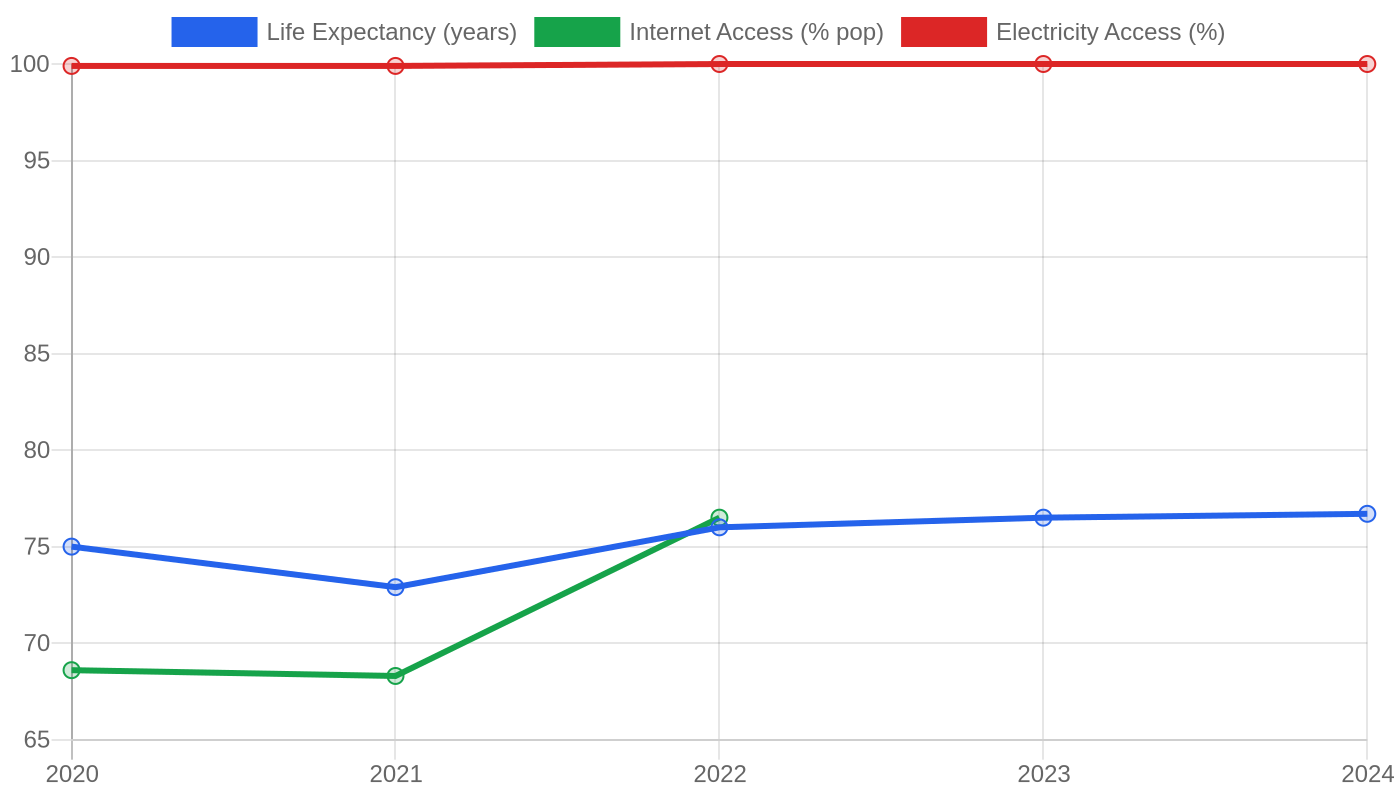
– Uncertain data horizon: With key economic indicators currently unavailable, the country’s immediate economic trajectory remains difficult to assess, underscoring the need for renewed transparency.
Sources & Methodology
This article is authored by Economic Pulse Net for informational and research purposes. Economic Pulse Net sources its data from multilateral institutions, national statistics bureaus, and proprietary databases. All data is believed to be current as of the date of publication.
Published: August 02, 2026 | Category: Research — Tunisia
Use these signals in your own platform
Economic Pulse publishes its live signal feed through a documented, read-only API. Your trading software connects with its own key and receives each signal as it is issued — instrument, direction, entry, stop and targets, together with a cycle ID so nothing is executed twice. The feed is independent of this website and cannot change it.
Signals are informational only and are not financial advice.