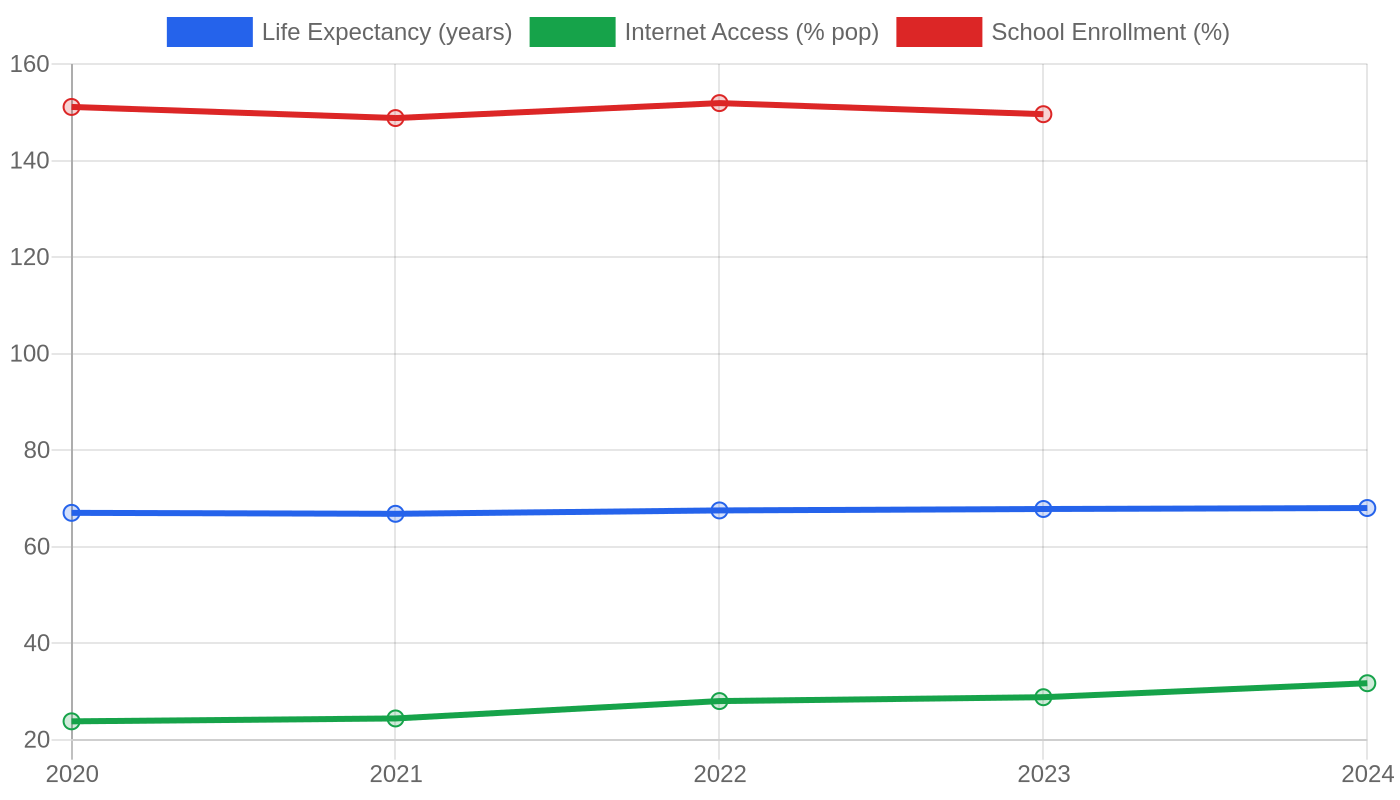
Economic Pulse Net | Sources: World Bank World Development Indicators, Government Sources | 2026
Key Takeaways
* Financial Sector Dominance: The corporate landscape is overwhelmingly dominated by the financial services sector, with major players like AB Bank, Access Bank, and Bank of Kigali forming the backbone of the economy.
Data Scarcity: Critical macroeconomic indicators, including GDP growth, inflation rates, and population figures, are currently unavailable in the provided datasets, creating a fog of uncertainty for international analysts.
Political Stability via Control: The country operates as an *de facto* one-party state under the Rwandan Patriotic Front (RPF), characterized by strict political control and the suppression of opposition.
Consumer Sector Presence: While finance leads the corporate list, consumer-facing entities such as Bralirwa Brewery and Bourbon Coffee highlight the domestic market’s reliance on local production and service industries.
Safety and Crime Metrics Missing: With no data available on crime or safety indices, assessing the day-to-day quality of life for expatriates or investors relies heavily on political context rather than statistical safety metrics.
The Unquantifiable Economy: A Data Vacuum
For a nation often cited in global development discourse, the current lack of accessible macroeconomic data presents a significant challenge for economic observers. The World Bank data provided for Rwanda lists critical indicators such as GDP growth, inflation (CPI), unemployment, and total GDP as “N/A,” meaning that specific numerical benchmarks are currently unavailable for analysis.
This absence of hard figures makes it difficult to gauge the immediate health of the economy, as investors typically rely on these metrics to assess momentum and stability. Without knowing the current inflation rate, it is impossible to determine the purchasing power of the local currency or the real cost of living adjustments required for businesses.
Similarly, the lack of unemployment data obscures the true state of the labor market, leaving a gap in understanding how effectively the economy is absorbing its workforce. This data vacuum suggests either a pause in official reporting or a limitation in the current data feed, both of which add a layer of risk for anyone attempting to model Rwanda’s economic trajectory based on recent trends.
Consequently, any assessment of Rwanda’s economic performance must currently rely on structural observations and sectoral presence rather than quantitative proof of growth or contraction.
Living in the Gap: Cost of Living and Housing
While specific figures for rent, utility costs, and daily expenses are not provided in the current dataset, the structure of the top companies offers indirect clues about the domestic consumption landscape. The presence of major consumer goods producers like Bralirwa Brewery and consumer services firms like Bourbon Coffee indicates a robust local market for everyday necessities and leisure.
However, without data on housing costs or the rent-to-buy ratio, it is challenging to provide a precise comparison to regional averages or to advise on whether renting or purchasing is more financially prudent. In many emerging markets, the cost of living is closely tied to the stability of the financial sector, which appears strong in Rwanda given the dominance of major banks.
Nevertheless, the inability to quantify daily expenses means that potential residents or investors must conduct their own on-the-ground research to understand the true cost of living. The absence of this data prevents a detailed breakdown of where a salary goes, leaving the cost of living as a variable that must be navigated with caution and local insight.
The Banking Heartbeat: Investment and Business Climate
The business environment in Rwanda is distinctly shaped by the financial services sector, which occupies the majority of the top companies list. Institutions such as AB Bank Rwanda, Access Bank Rwanda, Bank of Africa Rwanda Limited, and Bank of Kigali form a powerful financial infrastructure that likely supports the broader economy.
The repetition of entities like Banque Populaire du Rwanda in the list underscores the depth of the banking network, suggesting that credit availability and financial intermediation are central to business operations. Beyond finance, the inclusion of Compagnie Générale de Banque and Equity Bank Rwanda Limited highlights the competitive nature of the sector, with both local and international players vying for market share.
For investors, this concentration in financials suggests that opportunities may be tightly linked to banking, insurance, and related financial services rather than diverse industrial sectors. The lack of data on other industries, such as manufacturing or technology, in the provided top companies list further cements the financial sector’s dominance as the primary engine of corporate activity in the current dataset.
One Party, One Path: Safety and Political Landscape
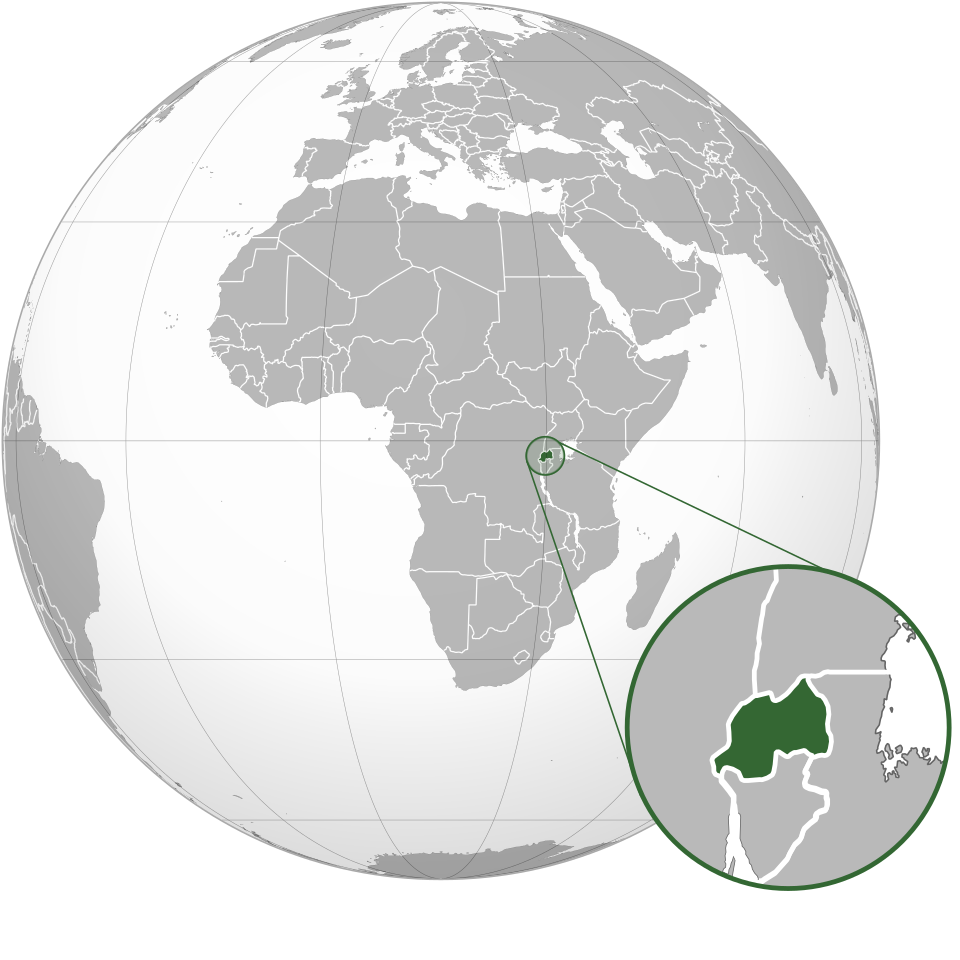
Rwanda’s political reality is defined by its status as an *de facto* one-party state, ruled continuously by the Rwandan Patriotic Front (RPF) and its leader Paul Kagame since the end of the civil war in 1994. Although the country is nominally democratic, the political landscape is characterized by manipulated elections, including the banning of opposition parties and the arrest or assassination of critics, which significantly limits political freedom.
This level of political control creates a stable but rigid environment, where dissent is suppressed to maintain the status quo under the Tutsi-dominated RPF, which nonetheless receives support from other communities. Regarding safety, the provided data lists both the Crime Index and Safety Index as “N/A,” meaning there are no statistical metrics available to compare Rwanda’s safety profile to other nations.
This lack of data makes it difficult to objectively assess the risk of crime or the general sense of security for residents and visitors. The political landscape, therefore, becomes the primary lens through which quality of life is understood, with stability guaranteed by authoritarian measures rather than democratic consensus.
The Current Narrative: A Story Without Numbers
In the absence of recent news reports or live economic indicators in the provided data, the current narrative for Rwanda is one of structural continuity amidst informational silence. There are no reports of recent reforms, election cycles, or sudden policy shifts to discuss, leaving the “what’s happening now” section defined by the static nature of the available information.
The political status quo under the RPF remains the dominant constant, with no indication of imminent change in leadership or governance style based on the provided text. Similarly, without live inflation trends or business development news, the economic story is frozen in time, relying on the established presence of major banks and consumer firms to define the current market state.
This lack of dynamic, real-time data means that the current affairs section cannot highlight fresh developments, such as new infrastructure projects or diplomatic shifts, forcing a reliance on the long-standing political and structural facts. For readers seeking the pulse of the moment, the silence in the data is the most telling aspect of Rwanda’s current standing in this specific report.
The Bottom Line
Rwanda presents a complex case study where strong financial infrastructure coexists with a tightly controlled political system and a notable lack of accessible macroeconomic data. For investors, the dominance of the banking sector offers a clear entry point, but the absence of GDP, inflation, and unemployment figures requires a higher tolerance for uncertainty.
Those considering the country for business or residence must weigh the stability of the *de facto* one-party state against the opacity of the economic metrics. Ultimately, Rwanda is a destination that demands deep local knowledge, as the broad strokes of its economy and politics are clear, but the fine print remains hidden in the data vacuum.
Sources & Methodology
This article is authored by Economic Pulse Net for informational and research purposes. Economic Pulse Net sources its data from multilateral institutions, national statistics bureaus, and proprietary databases. All data is believed to be current as of the date of publication.
Published: September 08, 2026 | Category: Research — Rwanda
Use these signals in your own platform
Economic Pulse publishes its live signal feed through a documented, read-only API. Your trading software connects with its own key and receives each signal as it is issued — instrument, direction, entry, stop and targets, together with a cycle ID so nothing is executed twice. The feed is independent of this website and cannot change it.
Signals are informational only and are not financial advice.