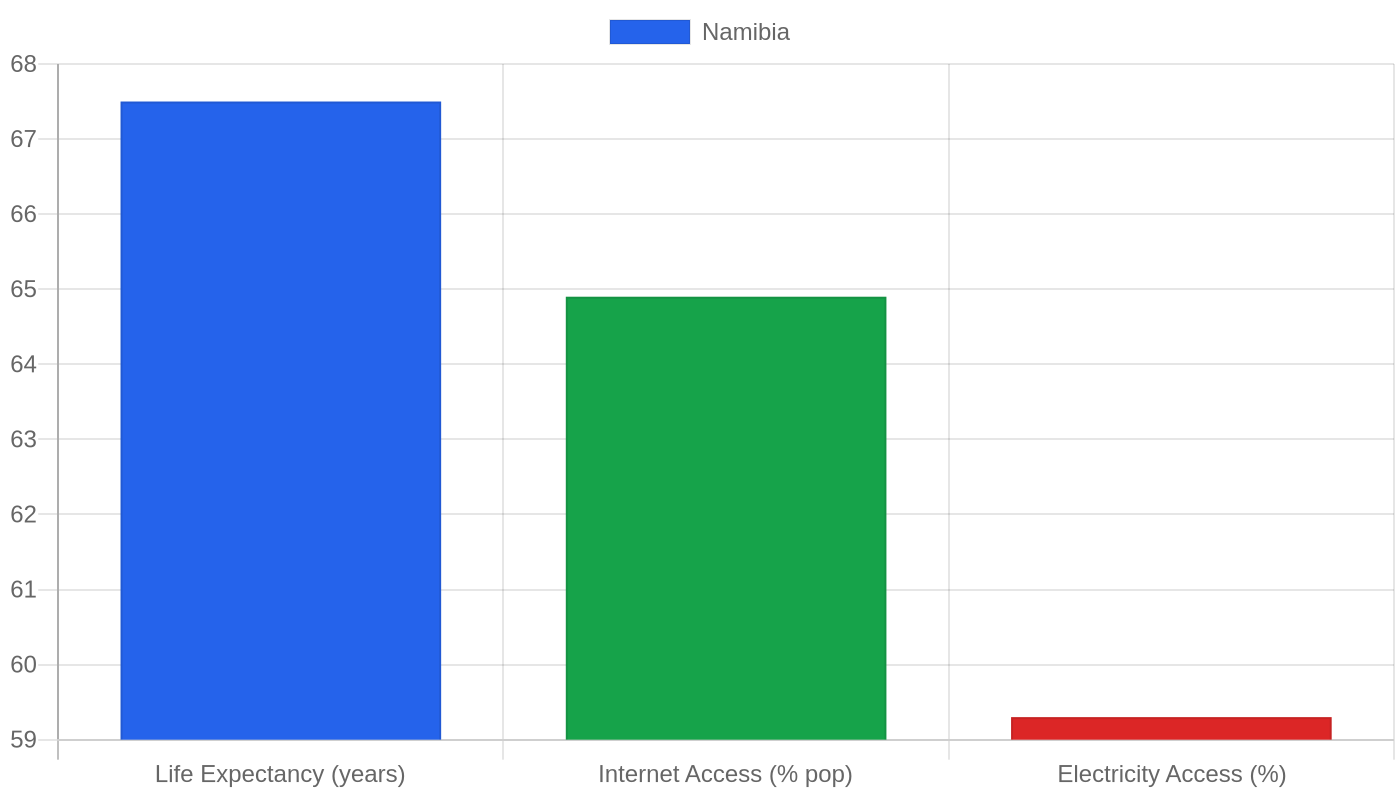
Economic Pulse Net | Sources: World Bank World Development Indicators, Government Sources | 2026
Namibia stands as one of Africa’s most stable and visually breathtaking nations—a land of towering dunes, Atlantic cold fronts, and a political system that has largely avoided the turmoil seen elsewhere on the continent. Yet for all its political maturity, the country’s economic engine is sputtering. As the world’s attention shifts toward green hydrogen and critical minerals, Namibia is attempting to write a new chapter in its development story.
But with a paucity of fresh economic data and a population waiting for tangible progress, the question on everyone’s mind is whether the nation’s vast potential can be converted into broad-based prosperity. This is a country that has mastered the art of political stability; now, it must master the science of economic transformation.
Key Takeaways
– Political stability is Namibia’s bedrock: Operating as a unitary semi-presidential representative democratic republic, the country has maintained peaceful transfers of power and institutional continuity since independence, providing a predictable environment for governance and investment.
– A financial services hub is emerging: With heavyweights like Bank of Namibia, Bank Windhoek, and the Development Bank of Namibia operating domestically, the financial sector is a clear pillar of the economy, punching above its weight in a sparsely populated nation.
– Telecommunications is a critical frontier: MTC Namibia dominates the connectivity landscape, positioning digital infrastructure as a key battleground for future economic diversification and inclusion.
– Consumer and creative industries show local vitality: From Bidvest Namibia’s consumer goods footprint to the cultural output of Gazza Music Productions and Mshasho Productions, there is evidence of a homegrown private sector that is resilient and culturally distinct.
– Data gaps obscure the full picture: The World Bank currently lists no headline figures for GDP growth, inflation, or unemployment, which in itself is a story—one of a country in dire need of robust statistical infrastructure to guide policy and attract investment.
The Economic Engine: Navigating a Fog of Uncertainty
When the World Bank publishes a country profile with N/A plastered across GDP growth, inflation, and unemployment, it is not merely a statistical inconvenience; it is a commentary on the challenges of data collection and economic transparency. For Namibia, this absence of hard numbers is deeply problematic. Investors crave certainty, and a lack of current macroeconomic indicators makes it difficult to assess the true temperature of the economy.
However, the structural composition of the country’s corporate landscape offers a revealing glimpse into where the value lies. The prominence of financial institutions—Bank of Namibia, Bank Windhoek, FIDES Bank Namibia, and the Development Bank of Namibia—suggests a mature banking sector that is far more sophisticated than what one might expect for a nation of its size.
These entities are not just deposit-takers; they are the arteries through which capital must flow to fund everything from agriculture to infrastructure. The presence of Bidvest Namibia in the consumer goods space indicates a functioning retail and distribution ecosystem, while the inclusion of MTC Namibia underscores the growing importance of digital connectivity as an economic enabler. Yet, the real challenge lies in the transition from a traditional resource-based economy to a more diversified one.
Without current inflation data, we cannot gauge the purchasing power erosion facing ordinary Namibians, and without unemployment figures, we cannot quantify the social pressure building beneath the surface. The World Bank’s silence on these metrics is a call to action for national statistics authorities to prioritize data collection as a matter of economic security.
The Cost of Living: The Silent Squeeze on Namibian Households
In the absence of specific cost-of-living indices from the World Bank, one must look to the corporate landscape to infer the pressures facing Namibian households. The dominance of consumer services firms like Air Namibia and Kalahari Express Airlines suggests a population that is mobile, likely for business and family reasons, but air travel is a costly endeavor in a country with vast distances and a relatively small population base.
For the average worker in Windhoek or Swakopmund, the daily reality is likely shaped by the price of fuel, food, and housing—commodities whose costs are heavily influenced by global markets and domestic supply chain efficiencies. The presence of Bidvest Namibia, a major player in consumer goods, implies that there is a formal retail sector catering to a middle class, but the gap between that middle class and the broader population is likely stark.
Rent versus buy dynamics are particularly acute in urban centers where land ownership remains a deeply political and historical issue. The cost of living in Namibia is not just an economic statistic; it is a daily negotiation with geography, history, and inequality. For many, the formal economy represented by the top companies is a distant reality, with livelihoods dependent on informal trade and subsistence activities.
The absence of hard data on housing costs does not mean the problem is absent; it simply means the problem is under-documented, which is a policy failure in itself.
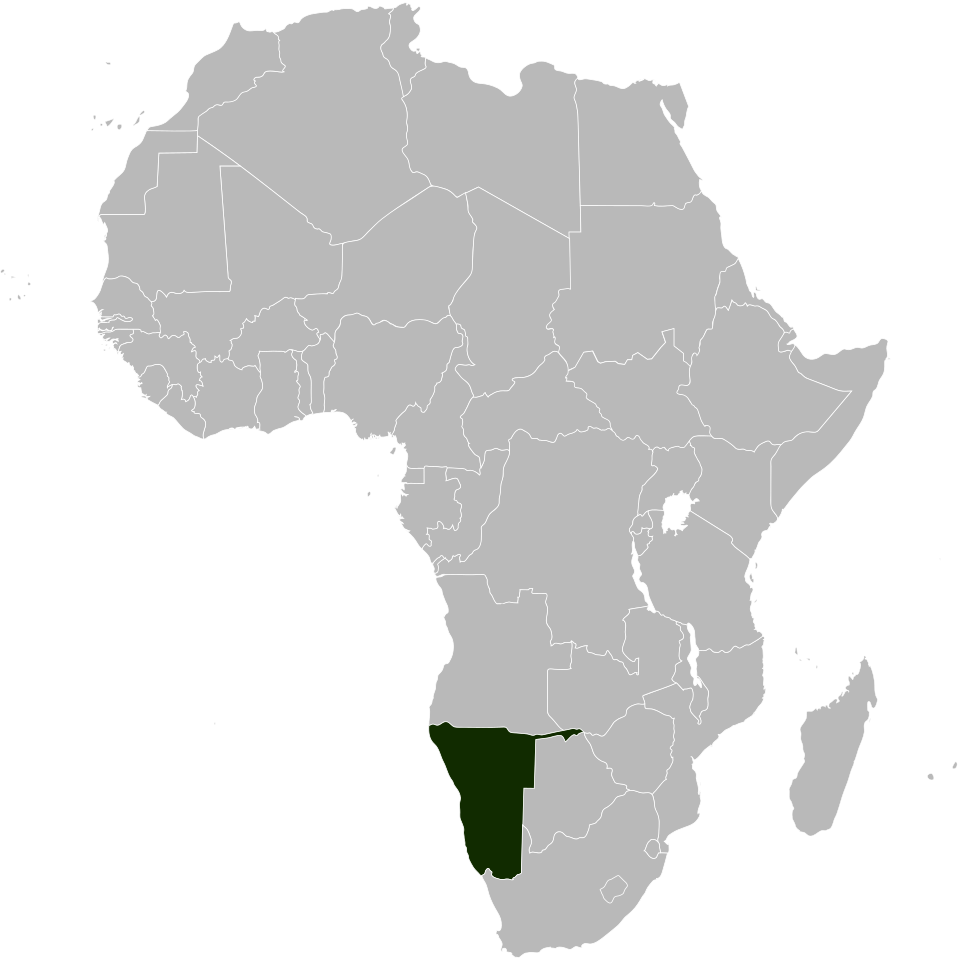
Investment & Business Climate: A Land of Giants and Entrepreneurs
Namibia’s business environment is a tale of two economies. On one hand, there are the institutional giants—Bank Windhoek, the Development Bank of Namibia, and MTC Namibia—which provide a veneer of corporate professionalism and stability that is reassuring to international partners. On the other hand, there is a vibrant, culturally rich entrepreneurial spirit represented by companies like Gazza Music Productions and Mshasho Productions, indicating a creative economy that is finding its voice.
For an investor, the financial sector is the obvious entry point, given the density of banking institutions relative to the population. The Development Bank of Namibia is particularly critical, as it signals a governmental commitment to using state-backed finance to catalyze projects that commercial banks might deem too risky.
The telecommunications sector, led by MTC, is another area of strategic interest; connectivity is the backbone of modern services, and expanding access could unlock productivity gains across agriculture, tourism, and education. However, the business climate is not without friction. The reliance on a few large firms suggests that supply chains are concentrated, which can stifle competition and keep prices high.
The absence of a dynamic manufacturing sector in the top companies list is telling—Namibia appears to be a nation of consumers and service providers rather than producers of goods. This is a vulnerability that policymakers must address if the country is to insulate itself from external shocks. The opportunity lies in leveraging the stability of the financial sector to fund diversification into value-added industries, particularly in the agro-processing and renewable energy spaces.
Safety, Politics & Quality of Life: The Price of Peace
Politically, Namibia is a model of African governance. As a unitary semi-presidential representative democratic republic, it has established a framework where the President, elected to a five-year term, serves as both head of state and head of government. Crucially, all members of the government are individually and collectively responsible to the legislature, creating a system of checks and balances that has fostered considerable political stability.
This is not a small achievement in a region where constitutional crises are common. This political predictability translates into a quality of life that, while economically constrained, is socially cohesive. The crime and safety indices from the World Bank are listed as N/A, which is a significant gap in our understanding.
However, the mere fact that Namibia’s corporate sector includes consumer services firms like Air Namibia and entertainment companies like Mshasho Productions suggests a society where leisure and mobility are possible, if not universally accessible. The safety of a nation is often reflected in its willingness to invest in cultural production; the presence of music and media companies indicates a degree of social freedom and stability that is not present in conflict zones.
The quality of life in Namibia is likely defined by the vastness of its landscape and the resilience of its people, rather than by the thickness of a wallet. The political system’s emphasis on legislative accountability provides a buffer against authoritarian drift, but the ultimate test of governance will be whether it can deliver economic dividends to a youthful population that is increasingly connected and aware of global standards of living.
What’s Happening Now: The Fight for the Future
Namibia is currently at a pivotal juncture, where the conversation has shifted from liberation-era politics to the pragmatics of economic delivery. The presence of the Development Bank of Namibia in the top companies list is a clear signal that the state is actively trying to engineer growth through targeted financing. The ongoing relevance of MTC Namibia highlights a push toward digital inclusion, which is likely a priority as the government seeks to modernize public services and enable e-commerce.
The consumer goods presence of Bidvest Namibia suggests that domestic demand remains a key driver of activity, even if the global economic headwinds are making imports more expensive. The creative sector, represented by Gazza Music Productions and Mshasho Productions, is riding a wave of cultural pride that is increasingly monetizable through streaming and live events, offering a glimmer of hope for youth employment beyond traditional sectors. However, the lack of fresh data from the World Bank is a red flag.
It implies that the government’s statistical agencies are either underfunded or underperforming, which hampers the ability to design targeted interventions. The political landscape remains stable, but there is a palpable sense that patience is wearing thin. The government’s legitimacy will increasingly be judged not on its historical credentials but on its ability to create jobs, control the cost of living, and expand the digital economy.
The next few years will be decisive in determining whether Namibia remains a story of unfulfilled potential or becomes a case study in successful diversification.
The Bottom Line
Namibia is a country that investors and policymakers should watch closely, not because it is on the brink of collapse, but because it is on the brink of transformation. Its political stability provides a solid foundation, and its financial sector offers the tools needed to finance a new economic era. The absence of current economic data is a concern, but it is a solvable problem.
For those willing to look beyond the spreadsheets, Namibia offers a unique combination of natural beauty, political maturity, and a nascent creative economy that could define the next decade of African growth. The watchword is patience—the structural reforms needed to diversify the economy will take time, but the groundwork is clearly being laid. This is a nation to monitor for the long term, not for the quarterly earnings call.
Sources & Methodology
This article is authored by Economic Pulse Net for informational and research purposes. Economic Pulse Net sources its data from multilateral institutions, national statistics bureaus, and proprietary databases. All data is believed to be current as of the date of publication.
Published: August 04, 2026 | Category: Research — Namibia
Use these signals in your own platform
Economic Pulse publishes its live signal feed through a documented, read-only API. Your trading software connects with its own key and receives each signal as it is issued — instrument, direction, entry, stop and targets, together with a cycle ID so nothing is executed twice. The feed is independent of this website and cannot change it.
Signals are informational only and are not financial advice.