Economic Pulse Net | Sources: World Bank World Development Indicators, Government Sources | 2026
Key Takeaways
– Mozambique’s economy remains heavily dependent on state-owned enterprises, with top companies dominated by utilities, transport, and financial institutions rather than private sector dynamism.
– The political system concentrates power in the presidency, with the president serving as head of state, head of government, and commander-in-chief — a structure that shapes every aspect of economic decision-making.
– Infrastructure and logistics companies — including Mozambique Ports and Railways and the Beira Railroad Corporation — form the backbone of the economy, reflecting the country’s strategic position as a regional transport hub.
– The absence of recent GDP, inflation, and unemployment data from the World Bank highlights a troubling gap in transparency that makes investment decisions riskier than they need to be.
– For investors and policymakers, Mozambique represents high potential and high uncertainty — a country where the fundamentals are unclear but the strategic importance is undeniable.
The Great Data Gap — Navigating Mozambique’s Economic Fog
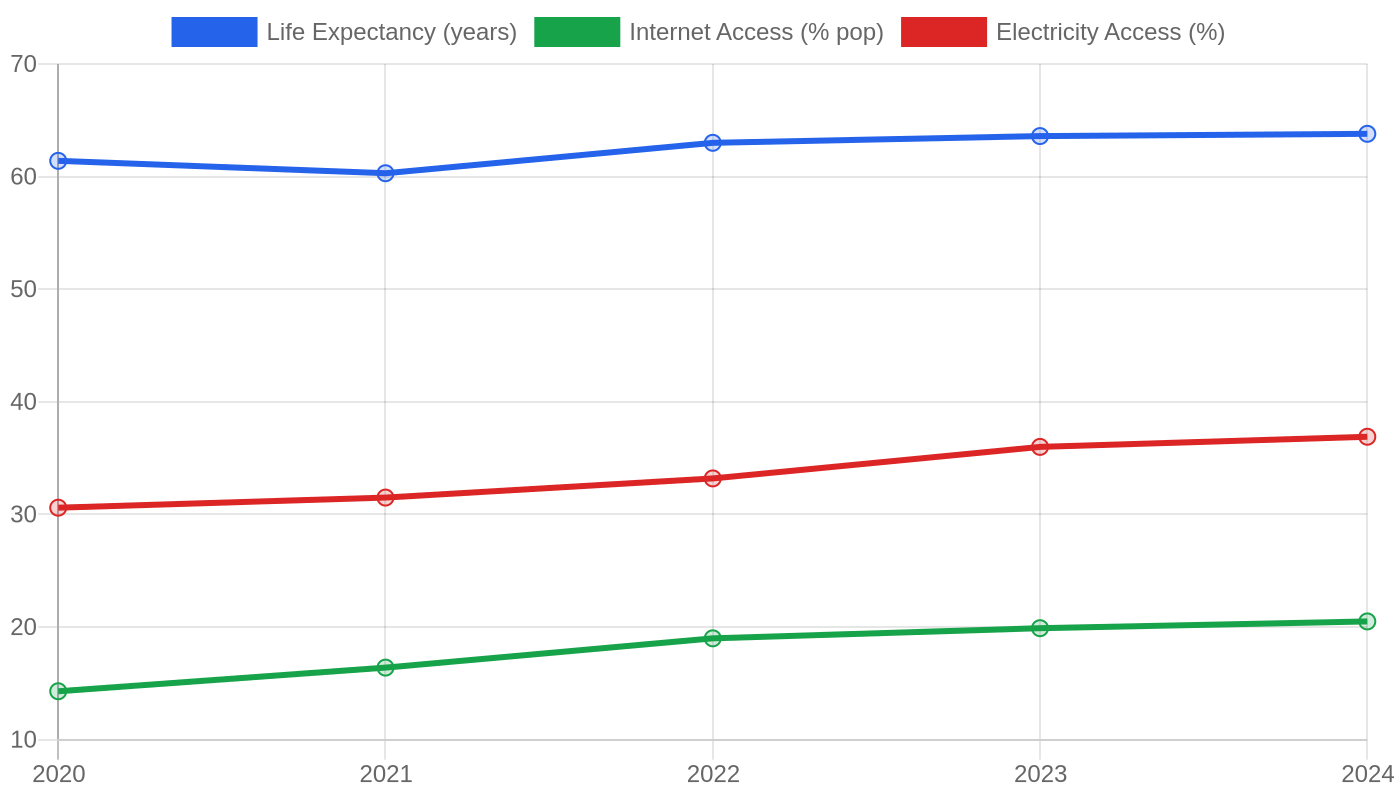
The World Bank’s latest data on Mozambique presents a curious paradox: the numbers simply are not there. GDP growth, inflation, unemployment, GDP per capita, GNI per capita, and even total population — all listed as “N/A” in the most recent reporting. This absence is not merely a statistical inconvenience; it is a statement about the state of economic governance in one of Africa’s most strategically important nations.
What the available data does reveal is a country whose economic architecture is built around state-controlled enterprises. The Bank of Mozambique, the nation’s central bank, sits atop a financial system that includes the state-owned Banco Nacional de Investimento. These institutions are not just players in the economy — they are its architects. The central bank sets monetary policy, while the investment bank channels capital toward national priorities.
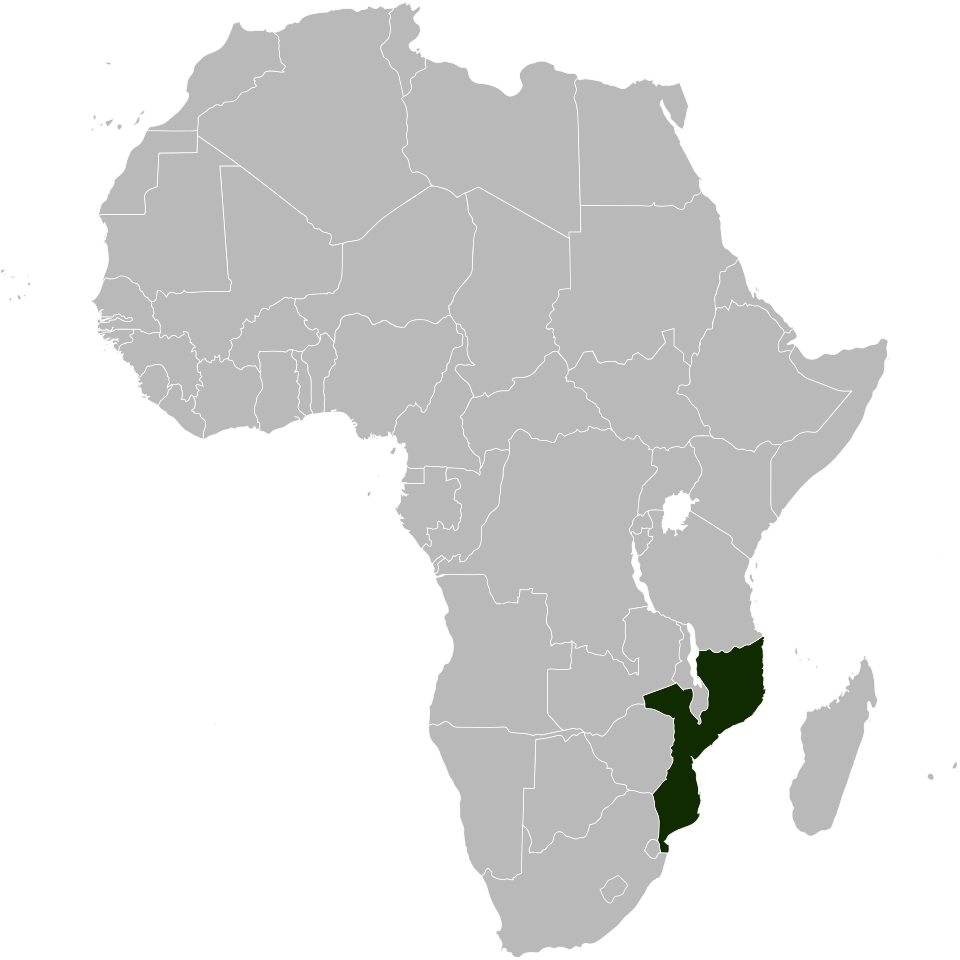
The real economic muscle, however, lies in infrastructure and logistics. Mozambique Ports and Railways, the Beira Railroad Corporation, and Correios de Moçambique form a triad of state-controlled transport and logistics companies that connect landlocked southern African nations to the Indian Ocean. This is Mozambique’s economic calling card: not manufacturing, not agriculture, but geography.
The country’s long coastline and natural harbors make it the natural gateway for mineral-rich neighbors like Zimbabwe, Zambia, and Malawi.
Yet without current GDP or inflation data, analysts are forced to make educated guesses about the direction of the economy. Is the country growing? Is inflation eroding purchasing power? Are jobs being created? The World Bank’s silence on these questions is itself a kind of answer — it suggests either data collection failures, political sensitivity around the numbers, or both. For a country that aspires to attract foreign investment, this data vacuum is a serious liability.
The Price of Everything — Living Costs in a Data-Deficient Economy
The cost of living in Mozambique is a story told in the absence of numbers. No official data on housing costs, rent versus buy dynamics, or daily expenses is available from the World Bank. But the structure of the economy offers clues about what ordinary Mozambicans face.
With a financial sector dominated by the Bank of Mozambique and Banco Nacional de Investimento, monetary policy is tightly controlled from the center. This means that inflation — whatever its current rate — is a political as well as an economic variable. When the central bank sets interest rates, it is not just managing prices; it is managing the cost of living for millions of people who have no formal access to banking services.
The dominance of state-owned enterprises in transport, energy, and logistics means that the prices of basic goods — food, fuel, building materials — are heavily influenced by government policy. Electricidade de Moçambique, the state utility, controls electricity pricing. Mozambique Ports and Railways determines the cost of moving goods. When these entities adjust their prices, it ripples through every household budget.
For the average Mozambican family, the absence of reliable cost-of-living data is not an academic problem — it is a daily reality. Without transparent statistics, families cannot plan, businesses cannot price their goods effectively, and the government cannot target social assistance programs where they are most needed. The data gap is not just a reporting failure; it is a governance failure with real human consequences.
State Power, Private Ambition — Mozambique’s Investment Paradox
The list of Mozambique’s top companies reads like a government directory. The Bank of Mozambique, Banco Nacional de Investimento, Mozambique Ports and Railways, Beira Railroad Corporation, Correios de Moçambique, Electricidade de Moçambique — these are not private enterprises competing in open markets. They are state instruments, designed to execute national policy rather than maximize shareholder returns.
This concentration of economic power in state hands creates a peculiar investment climate. On one hand, the government can direct resources toward strategic priorities — port upgrades, railway expansions, energy projects — without waiting for private capital to materialize. On the other hand, private investors face a landscape where the rules of the game are set by political actors who may change them at will.
The consumer services sector offers a glimpse of private-sector potential. Air Corridor, Kaya Airlines, LAM Mozambique Airlines, and Moçambique Expresso are all aviation companies — a surprising concentration for a country of Mozambique’s size. This suggests that domestic air travel is a growth market, driven perhaps by the difficulty of road transport or the demands of a geographically dispersed population.
For investors watching Mozambique, the question is not whether the country has potential — it clearly does, as a regional transport hub and energy producer. The question is whether the political system will allow that potential to be realized through market mechanisms, or whether state control will continue to crowd out private initiative. The answer to that question will determine whether Mozambique becomes the next frontier market success story or remains a case study in missed opportunity.
One Man, One Economy — The Political Architecture of Power
Mozambique’s constitution concentrates extraordinary power in a single office. The president of the republic serves simultaneously as head of state, head of government, and commander-in-chief of the armed forces. They are also, according to the constitutional text, “a symbol of national unity.” This is not just political theater — it is the framework within which every economic decision is made.
The president is directly elected for a five-year term through a run-off voting system, meaning that the winner must secure an absolute majority. The prime minister, by contrast, is appointed by the president — not elected — and serves at the president’s pleasure. The prime minister’s functions include convening and chairing the council of ministers, advising the president, and coordinating government functions. But the ultimate authority remains with the president.
This political structure has profound economic implications. When the president decides on a major infrastructure project, there is no independent legislature or judiciary to slow it down. When the central bank sets interest rates, it does so in a political environment where the president has the final say on economic direction. When state-owned enterprises make investment decisions, they are responding to presidential priorities, not market signals.
The concentration of power creates efficiency in decision-making — projects can move quickly when one person makes the call. But it also creates risk. If the president makes a bad economic bet, there are few institutional checks to prevent disaster. And when presidential succession occurs — whether through election, term limits, or other means — the entire economic apparatus can shift direction overnight.
The Waiting Game — What’s Happening in Mozambique Right Now
The most recent data from the World Bank offers no fresh news — the numbers simply are not there. But the absence of data is itself a kind of news, suggesting that Mozambique’s statistical agencies are either under-resourced, politically constrained, or both. In an era when investors demand transparency, silence is a signal.
What can be inferred from the available information is a country in a holding pattern. The state-owned enterprises that dominate the economy — Mozambique Ports and Railways, Electricidade de Moçambique, the Bank of Mozambique — continue to operate, but without current data on growth, inflation, or employment, it is impossible to say whether they are succeeding or struggling.
The aviation sector, with four companies listed among the top ten, suggests that domestic connectivity is a priority. But whether this reflects genuine economic demand or government subsidies is unclear. The financial sector, anchored by the central bank and the national investment bank, continues to channel capital according to state priorities rather than market forces.
For the international community watching Mozambique, the question is when — not whether — the data gap will be filled. When the World Bank next releases figures, they will reveal whether the country has been growing or stagnating, whether inflation has been contained or has spiraled, whether jobs have been created or lost. Until then, Mozambique remains an economic mystery — a country of enormous potential whose current condition is known only to those inside its borders.
The Bottom Line
Mozambique is a country for patient investors and strategic thinkers — those who understand that the absence of data is not the same as the absence of opportunity. The state-controlled economy offers stability and direction, but at the cost of transparency and market dynamism. For infrastructure investors, energy companies, and logistics firms, Mozambique’s position as a regional transport hub makes it an unavoidable destination.
For everyone else, the country remains a high-risk, high-reward proposition — one that will only become clearer when the data finally arrives.
Sources & Methodology
This article is authored by Economic Pulse Net for informational and research purposes. Economic Pulse Net sources its data from multilateral institutions, national statistics bureaus, and proprietary databases. All data is believed to be current as of the date of publication.
Published: July 30, 2026 | Category: Research — Mozambique
Use these signals in your own platform
Economic Pulse publishes its live signal feed through a documented, read-only API. Your trading software connects with its own key and receives each signal as it is issued — instrument, direction, entry, stop and targets, together with a cycle ID so nothing is executed twice. The feed is independent of this website and cannot change it.
Signals are informational only and are not financial advice.