Economic Pulse Net | Sources: World Bank World Development Indicators, Government Sources | 2026
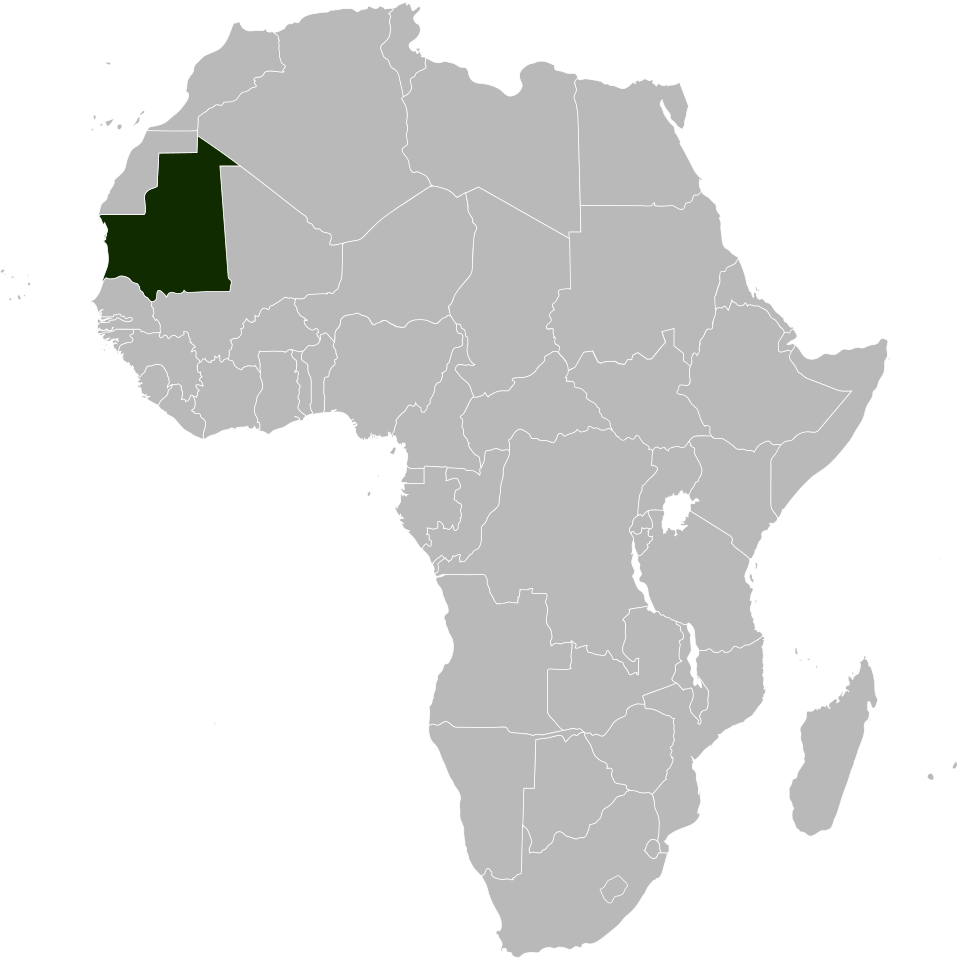
For most global investors and casual observers, Mauritania exists as a blank space on the map—a vast, sun-scorched bridge between North Africa and Sub-Saharan Africa that rarely makes headlines. But beneath the silence lies a country in transition, one whose economic story is still being written. With a parliamentary system that has stabilized in recent years and a strategic position along the Atlantic coast, this Islamic republic of approximately 4.5 million people is quietly attempting to redefine itself.
Yet the data tells a more complicated story: a nation with enormous potential, significant structural challenges, and a future that remains genuinely uncertain. This is the Mauritania that few outsiders see—a frontier economy where the old rules of trade, governance, and development are being tested against the realities of a changing world.
Key Takeaways
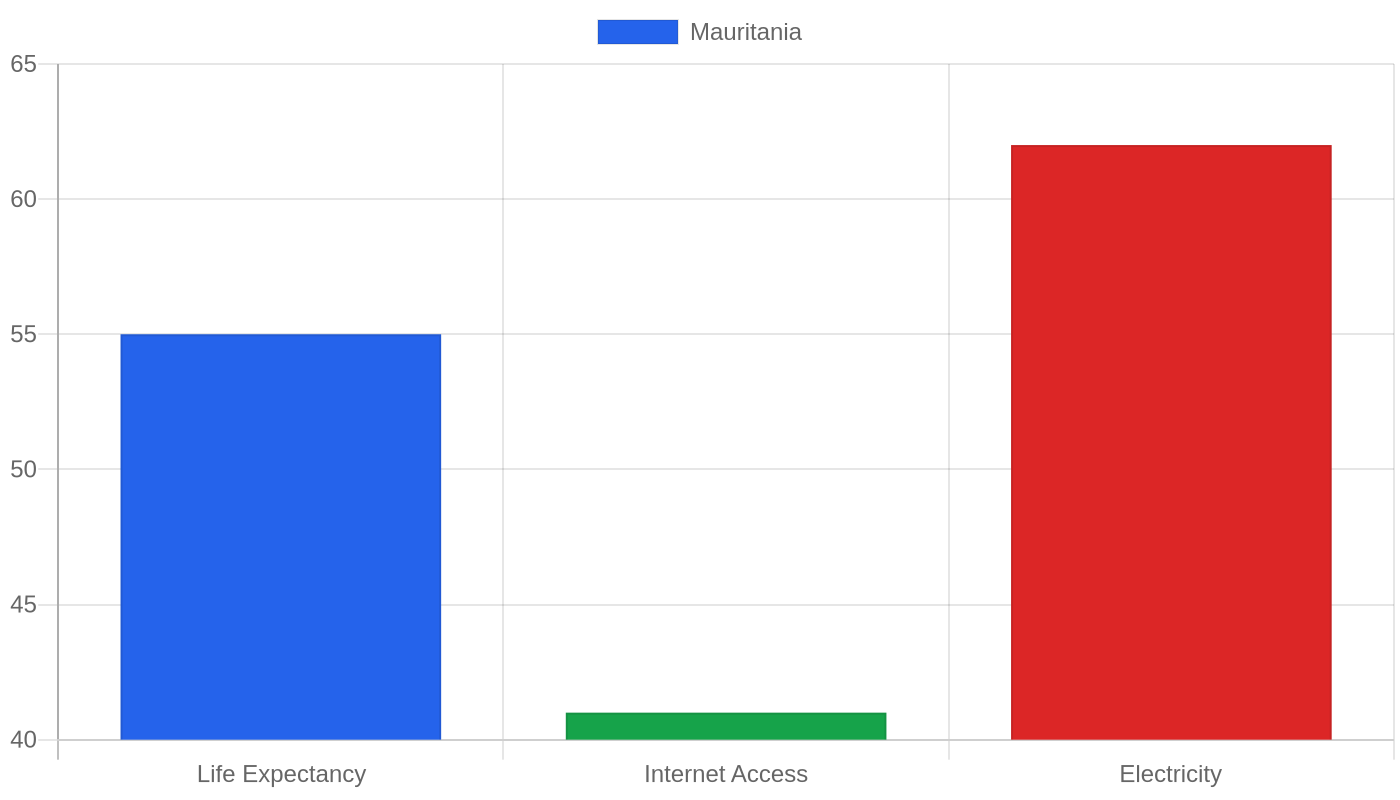
– Mauritania’s economic data infrastructure remains limited, with the World Bank currently not reporting key indicators such as GDP growth, inflation, unemployment, or GDP per capita—making it one of the most data-scarce economies in the region.
– The financial and telecommunications sectors are the backbone of the formal economy, anchored by the Central Bank of Mauritania and Mauritel, with aviation and postal services forming a secondary layer of state-connected enterprise.
– The political system operates through a single-chamber National Assembly with 176 members elected for five-year terms in single-seat constituencies, a structure that concentrates legislative power in a unicameral framework.
– The country’s economic narrative remains untold in quantitative terms, but its industrial mix suggests a state-driven model with significant room for private sector development.
– Mauritania’s strategic geography—bridging Arab North Africa and Sub-Saharan Africa—positions it as a potential logistical and commercial hub, though infrastructure and data transparency gaps remain.
The Economic Enigma: Reading Between the Lines of Missing Numbers
When the World Bank publishes economic data, it typically provides a window into a nation’s health. For Mauritania, that window is currently shuttered. The latest figures for GDP growth, inflation, unemployment, and GDP per capita are all listed as N/A, a data vacuum that speaks volumes about the challenges of economic measurement in one of Africa’s most sparsely populated countries. But the absence of numbers does not mean the absence of activity.
The companies that anchor Mauritania’s formal economy—Air Mauritanie, Mauritania Airlines, Mauritania Airways, the Central Bank of Mauritania, the Mauritanian Post Company, and Mauritel—paint a picture of a state-centric economic model where public institutions and their connected enterprises dominate key sectors.
The telecommunications sector, represented by Mauritel, is particularly significant; in many West African nations, mobile connectivity has become a proxy for economic development, and Mauritania’s investment in this infrastructure suggests a deliberate push toward modernization.
The aviation sector, with three distinct carriers listed among the top companies, indicates a country that sees itself as a regional connector, though the existence of three airlines also hints at the inefficiencies and redundancies common in state-influenced industries. The Central Bank’s presence among the top companies underscores the financial sector’s foundational role, though without inflation or growth data, the true health of the banking system remains opaque.
What we can infer is this: Mauritania is a country where the state remains the primary economic actor, where infrastructure development is prioritized, but where the private sector—particularly small and medium enterprises—likely operates largely in the informal economy, unmeasured and unrepresented in official statistics.
The Cost of Living Puzzle: Housing and Daily Life in a Sparse Economy
Cost of living data for Mauritania is similarly scarce, but the country’s economic structure offers clues about daily life. With a population concentrated primarily in Nouakchott, the capital, and a handful of secondary cities, housing pressure is likely intense in urban centers while rural areas face opposite challenges of abandonment and limited services.
The rent-versus-buy decision in Mauritania is shaped by a financial sector that remains underdeveloped by regional standards; without widespread mortgage financing, most urban residents likely rent, and property ownership is concentrated among wealthier families and commercial entities. Daily expenses in Mauritania are heavily influenced by its geography—a country where food security depends on imports for many staple goods, making household budgets vulnerable to global commodity price swings and transport costs.
The presence of the Mauritanian Post Company among top companies suggests that traditional financial services—postal money transfers, savings accounts—remain important for a population that may have limited access to formal banking. Compared to regional neighbors with more developed tourism and manufacturing sectors, Mauritania’s cost of living is likely lower in absolute terms but represents a larger share of household income for essentials like food, water, and energy.
The country’s vast desert expanses make logistics expensive, and this cost inevitably trickles down to consumers. For a typical Mauritanian household, the economic reality is likely one of careful budgeting, where the difference between comfort and hardship hinges on access to stable employment—a metric that remains officially unquantified but is felt in every market and neighborhood across the country.
Investment and Business Climate: A State-Driven Landscape Seeking Private Capital
For investors examining Mauritania, the landscape is defined by a paradox: significant opportunity constrained by limited transparency. The top companies list reads like a who’s who of state-connected enterprises, with the Central Bank of Mauritania anchoring the financial sector and Mauritel dominating telecommunications.
This concentration suggests that the most lucrative sectors—banking, telecom, aviation, and postal services—are either state-owned or heavily state-influenced, creating a business environment where political connections matter as much as commercial acumen.
The aviation sector’s three carriers—Air Mauritanie, Mauritania Airlines, and Mauritania Airways—is particularly telling; in most markets, three national carriers would be unsustainable, and their coexistence suggests either operational inefficiency or a deliberate strategy to maintain multiple state-linked entities. For foreign investors, the opportunities likely lie in sectors where the state has less presence: agriculture, fishing, renewable energy, and logistics.
Mauritania’s Atlantic coastline offers some of the richest fishing waters in the world, a resource that remains underexploited despite its potential. The country’s solar and wind potential is enormous, positioning it as a potential energy exporter if infrastructure and financing can be secured. However, the business environment remains challenging.
The absence of reliable economic data makes due diligence difficult, while a legal and regulatory framework that has yet to fully mature adds layers of complexity. The telecommunications sector, anchored by Mauritel, demonstrates that when the state permits private participation, growth is possible—but the extent to which that participation is genuine or merely nominal remains a question investors must answer for themselves.
Safety, Politics, and Quality of Life: The Unicameral Experiment
Mauritania’s political landscape is deceptively simple on paper: a single-chamber Parliament, the National Assembly, composed of 176 members elected for five-year terms in single-seat constituencies. This unicameral structure concentrates legislative power, eliminating the checks and balances that a second chamber might provide, while the single-seat constituency system creates direct links between representatives and their districts.
In practice, this means politics in Mauritania is intensely local, with tribal and regional loyalties playing significant roles in electoral outcomes. The country’s history has been marked by coups and political instability, though recent years have seen a degree of consolidation. Crime and safety indices are not reported, leaving outsiders with an incomplete picture of public security.
What is known is that Mauritania faces significant security challenges, including its position as a transit country for various illicit activities and the presence of extremist groups in the broader Sahel region. The quality of life for ordinary Mauritanians is shaped by these security concerns, the economic constraints described earlier, and the country’s harsh climate.
Yet there are countervailing forces: a strong tradition of hospitality, a rich cultural heritage that blends Arab and African influences, and a social fabric that, while tested, remains resilient. The National Assembly’s structure—elected directly by constituencies—suggests a political system that values local representation, even as national-level governance faces questions about effectiveness and transparency.
For the average citizen, the gap between political participation and economic outcome remains a central frustration, one that will likely shape Mauritania’s political trajectory in the years ahead.
The Current Moment: A Nation at the Crossroads of Data and Destiny
Right now, Mauritania stands at a peculiar crossroads. The World Bank’s data vacuum—with all major economic indicators reported as N/A—creates a strange paradox: a country that is both highly visible in its absence from global economic databases and largely invisible in the conversations that shape investment decisions. This is not merely a statistical inconvenience; it has real consequences.
Without reliable data, international financial institutions cannot properly assess risk, investors cannot build business cases, and policymakers cannot benchmark progress. The Mauritanian government’s apparent failure to provide this data to the World Bank—or the World Bank’s inability to collect it—is itself a statement about institutional capacity and transparency.
Meanwhile, the country’s top companies continue their operations: the Central Bank of Mauritania manages monetary policy in an environment of uncertainty, Mauritel expands its telecommunications network, and the aviation sector—with its three carriers—struggles to find sustainable business models.
The political system continues to function through the National Assembly, with 176 members representing their constituencies, though the absence of reported crime and safety indices leaves questions about social stability unanswered. What is happening in Mauritania right now is a test of whether a country can modernize without the traditional tools of economic measurement and accountability.
The answer to that test will determine whether Mauritania becomes a regional success story or remains a cautionary tale about the limits of development without data.
The Bottom Line
Mauritania is a country that demands attention not despite its data scarcity but because of it. For development economists, it represents a case study in the challenges of measuring progress in fragile, sparsely populated states. For investors, it offers a frontier market where early entry could yield significant returns—if the transparency and governance gaps can be navigated.
For policymakers in the region, Mauritania’s trajectory will serve as a bellwether for whether state-driven development models can adapt to 21st-century challenges. This is a country where the Sahara meets the Atlantic, where Arab and African worlds converge, and where the future remains genuinely unwritten. Watch Mauritania—not because its story is clear, but because it is one of the few places where the outcome is still genuinely uncertain.
Sources & Methodology
This article is authored by Economic Pulse Net for informational and research purposes. Economic Pulse Net sources its data from multilateral institutions, national statistics bureaus, and proprietary databases. All data is believed to be current as of the date of publication.
Published: August 01, 2026 | Category: Research — Mauritania
Use these signals in your own platform
Economic Pulse publishes its live signal feed through a documented, read-only API. Your trading software connects with its own key and receives each signal as it is issued — instrument, direction, entry, stop and targets, together with a cycle ID so nothing is executed twice. The feed is independent of this website and cannot change it.
Signals are informational only and are not financial advice.