Economic Pulse Net | Sources: World Bank World Development Indicators, Government Sources | 2026
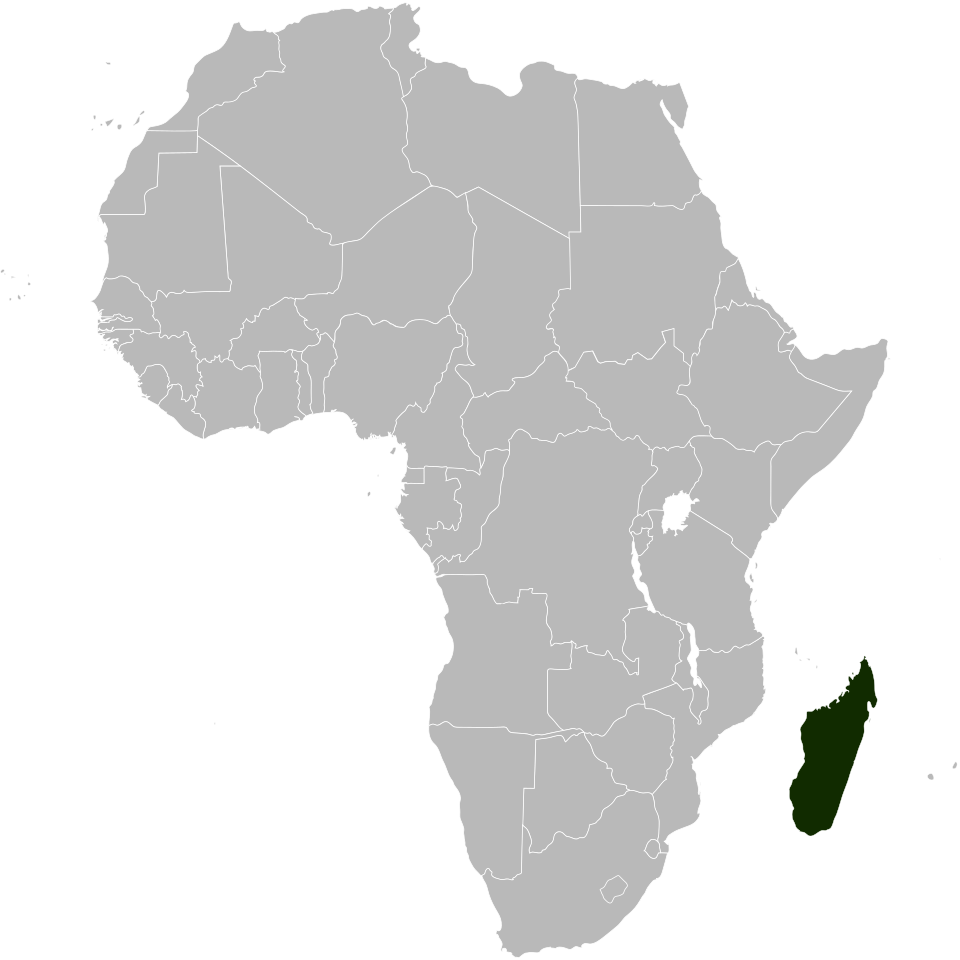
Madagascar has long been one of the world’s most enigmatic economies — a nation of extraordinary natural wealth, unique biodiversity, and entrepreneurial spirit, yet one that has struggled to translate its assets into broad-based prosperity. As the world’s fourth-largest island, positioned strategically in the Indian Ocean, this nation of diverse cultures and landscapes is now facing a moment of reckoning.
With a political system that promises democratic representation but delivers concentrated executive power, and an economy dominated by a handful of major players, the question on everyone’s mind is whether Madagascar can finally unlock its considerable potential.
Key Takeaways
– Madagascar operates as a semi-presidential republic, but real legislative power rests with the executive branch, creating a challenging environment for policy predictability.
– The economy is anchored by a narrow base of major companies spanning mining, utilities, chocolate production, and transportation — leaving it vulnerable to sector-specific shocks.
– State-owned enterprises like Jirama (utilities) and Paositra Malagasy (postal services) remain critical infrastructure providers, though their efficiency directly impacts business costs.
– The mining sector, led by the massive Ambatovy operation, represents one of the country’s most significant industrial assets and foreign investment magnets.
– For investors and analysts, Madagascar offers frontier-market opportunities but demands patience, local knowledge, and a tolerance for infrastructure constraints.
The Economic Engine — Growth, Inflation, and the Industries That Move the Needle
The World Bank’s latest data presents a picture of a country in statistical transition, with key indicators such as GDP growth, inflation, and unemployment figures currently unavailable. This data gap itself tells a story — Madagascar’s statistical infrastructure is still developing, which presents challenges for policymakers and investors alike who rely on timely, accurate economic information to make decisions.
What is clear from the available data is the structure of Madagascar’s industrial landscape. The country’s economic backbone is remarkably concentrated, with just a handful of companies dominating formal sector activity. The Ambatovy mine stands as the crown jewel of the mining sector, representing one of the largest nickel and cobalt operations globally.
This single project has the capacity to transform the country’s export profile, though it also exposes the economy to commodity price volatility and the environmental concerns that accompany large-scale extraction.
The consumer services sector, represented by Air Madagascar and Madagascar Flying Services, highlights both the opportunities and challenges of operating in an island nation. Air travel is not a luxury but a necessity for connecting this vast territory and its diaspora, yet the economics of aviation in frontier markets remain notoriously difficult.
Chocolaterie Robert, meanwhile, represents the value-added processing potential that could help Madagascar move beyond raw commodity exports — the country’s cacao is world-renowned, and the company has built an international reputation for quality chocolate products.
The Central Bank of Madagascar and MCB Madagascar anchor the financial services sector, which remains underdeveloped relative to the population’s needs. Financial inclusion is a persistent challenge in rural areas where most Malagasy people live and work. The presence of Karenjy in the consumer goods sector suggests some domestic manufacturing capacity, though the automotive industry in Madagascar remains nascent compared to regional competitors.
The Cost of Living Reality — What It Takes to Get By in Antananarivo
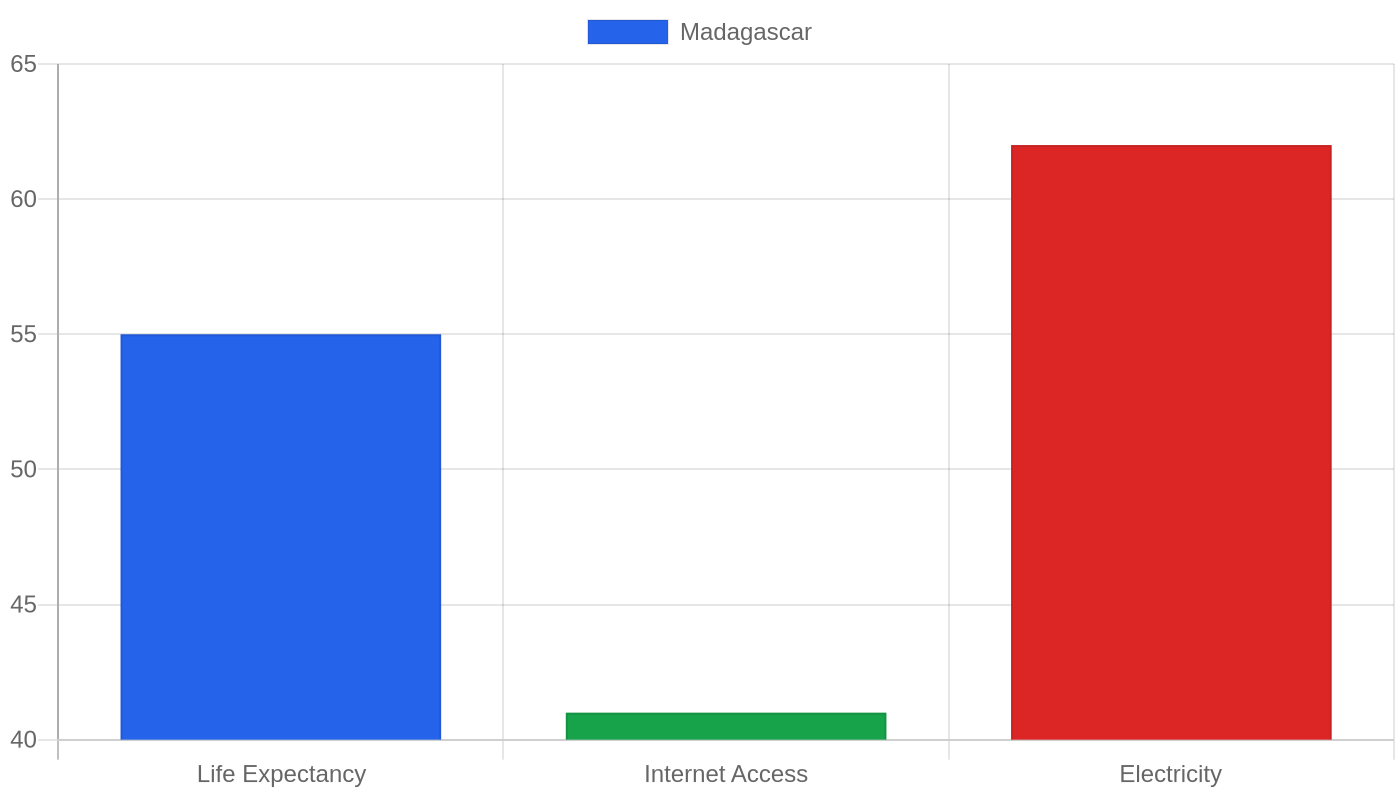
In-depth cost of living data for Madagascar remains incomplete, but the structural realities of the economy offer important insights. The presence of state-owned utilities provider Jirama in the top companies list underscores a fundamental challenge: energy access and reliability. For households and businesses alike, electricity costs and availability are not merely line items in a budget but existential questions that determine whether enterprises can operate at all.
The dual economy of Madagascar means that cost of living experiences vary dramatically between urban centers like Antananarivo and rural communities. In the capital, a nascent middle class supports a range of services, from the restaurants that supply Chocolaterie Robert’s domestic market to the transportation networks that depend on Air Madagascar’s domestic routes.
Housing in prime urban areas commands significant premiums, while rural housing remains largely informal and outside formal market mechanisms.
For the average Malagasy household, the most pressing cost pressures are food, transportation, and energy — the basics that consume the majority of disposable income. The agricultural sector’s performance directly impacts food prices, and any disruption to harvests creates immediate ripple effects through the broader economy.
Utilities costs, influenced by Jirama’s operational efficiency and fuel import prices, affect everything from the price of a loaf of bread to the cost of manufacturing a chocolate bar for export.
Investment and Business Climate — Where Capital Meets Opportunity
The business environment in Madagascar is defined by its concentration of major players and the infrastructure constraints they must navigate. For foreign investors, the Ambatovy mine demonstrates both the scale of opportunity and the complexity of operating in this market — major capital projects require extensive negotiations, infrastructure development, and long-term commitment to succeed.
MCB Madagascar’s presence signals that banking and financial services offer growth potential, particularly as the formal economy expands and the need for credit, payment systems, and investment products grows. The telecommunications and digital services sector, while not represented in the top companies list, presents perhaps the most dynamic opportunity for leapfrogging traditional development stages.
Transportation infrastructure remains a critical bottleneck. Madarail, operating the country’s rail network, and the aviation services companies are essential connective tissue for an economy where road conditions in many regions are challenging. Companies that can help modernize logistics — whether through port improvements, rail upgrades, or aviation services — will find receptive partners in both the public and private sectors.
The chocolate industry deserves special attention. Chocolaterie Robert has proven that Madagascar can produce world-class finished goods, not just raw materials. The opportunity to expand this model — processing more of the country’s agricultural output domestically before export — represents a pathway to higher-value economic activity and better-paying jobs.
Safety, Politics, and Quality of Life — Navigating the System
Crime and safety indices for Madagascar are currently unavailable, but the political landscape is well-documented. The country operates as a semi-presidential representative democratic multi-party republic, with a popularly elected president as head of state who selects a prime minister. The prime minister then recommends candidates to the president to form the cabinet of ministers.
According to the constitution, executive power is exercised by the government, while legislative power is vested in the ministerial cabinet, the Senate, and the National Assembly. However, in practice, the two legislative bodies have very little power or legislative role. This concentration of authority in the executive branch creates both opportunities and risks for businesses and citizens. On one hand, it can enable decisive action and streamlined decision-making.
On the other hand, it reduces the checks and balances that investors typically look for in a mature democracy.
The political system’s structure has implications for quality of life beyond the purely economic. When legislative bodies lack meaningful power, citizens have fewer formal channels to influence policy and hold leaders accountable. This can lead to frustration and periodic political instability, which in turn affects the business climate and economic planning. For international observers, understanding this dynamic is essential to assessing both the risks and opportunities of engagement with Madagascar.
Current Affairs — The Island’s Present Moment
Madagascar is currently navigating a period of significant transition across multiple fronts. The economy continues to grapple with the fundamental challenges of infrastructure development, energy reliability, and economic diversification beyond its traditional strengths. The World Bank’s ongoing data collection and technical assistance programs signal a commitment to improving the statistical and institutional frameworks that underpin economic development.
The companies that dominate Madagascar’s formal economy are adapting to changing conditions. Air Madagascar continues to face the challenges of operating in a market where international tourism and business travel are vital but volatile revenue sources. The mining sector, anchored by Ambatovy, is under increasing pressure to demonstrate environmental responsibility while maintaining production targets.
Jirama’s performance remains a bellwether for the broader economy — when the utility struggles, businesses across all sectors feel the impact.
There are signs of quiet transformation. The success of Chocolaterie Robert in international markets demonstrates that Malagasy products can command premium prices when quality and branding are prioritized. The financial sector, represented by MCB Madagascar, is gradually expanding its reach, though significant portions of the population remain outside the formal banking system.
For the international community, Madagascar remains a country of strategic importance in the Indian Ocean region. Its biodiversity, mineral resources, and agricultural potential make it a valuable partner for countries seeking to diversify their supply chains.
The question is whether the political system can evolve to provide the stability and predictability that sustained investment requires, and whether the economy can generate enough opportunities to give its young, growing population a stake in the country’s future.
The Bottom Line
Madagascar is not a country for investors or observers seeking quick returns or easy narratives. It is a market for those with patience, long-term vision, and a genuine commitment to building something lasting. The country’s natural resources, agricultural heritage, and strategic location offer genuine opportunities, but these are tempered by infrastructure constraints, political concentration, and the inherent challenges of operating in a frontier market.
For development economists, policy analysts, and frontier-market investors, Madagascar deserves close attention. The island nation is at a critical juncture — the decisions made by its government, the performance of its major companies, and the evolution of its political system over the next several years will determine whether it can finally translate its considerable promise into broad-based prosperity.
The data may be incomplete, but the story is clear: Madagascar is a country where the gap between potential and reality remains vast, and where the opportunities for those who can help close that gap are equally substantial.
Sources & Methodology
This article is authored by Economic Pulse Net for informational and research purposes. Economic Pulse Net sources its data from multilateral institutions, national statistics bureaus, and proprietary databases. All data is believed to be current as of the date of publication.
Published: August 02, 2026 | Category: Research — Madagascar
Use these signals in your own platform
Economic Pulse publishes its live signal feed through a documented, read-only API. Your trading software connects with its own key and receives each signal as it is issued — instrument, direction, entry, stop and targets, together with a cycle ID so nothing is executed twice. The feed is independent of this website and cannot change it.
Signals are informational only and are not financial advice.