Economic Pulse Net | Sources: World Bank World Development Indicators, Government Sources | 2026
Key Takeaways
– The Gambia’s post-independence political trajectory has been defined by three decades of one-party rule followed by a military coup in 1994, leaving its democratic institutions untested by peaceful turnover until recent years.
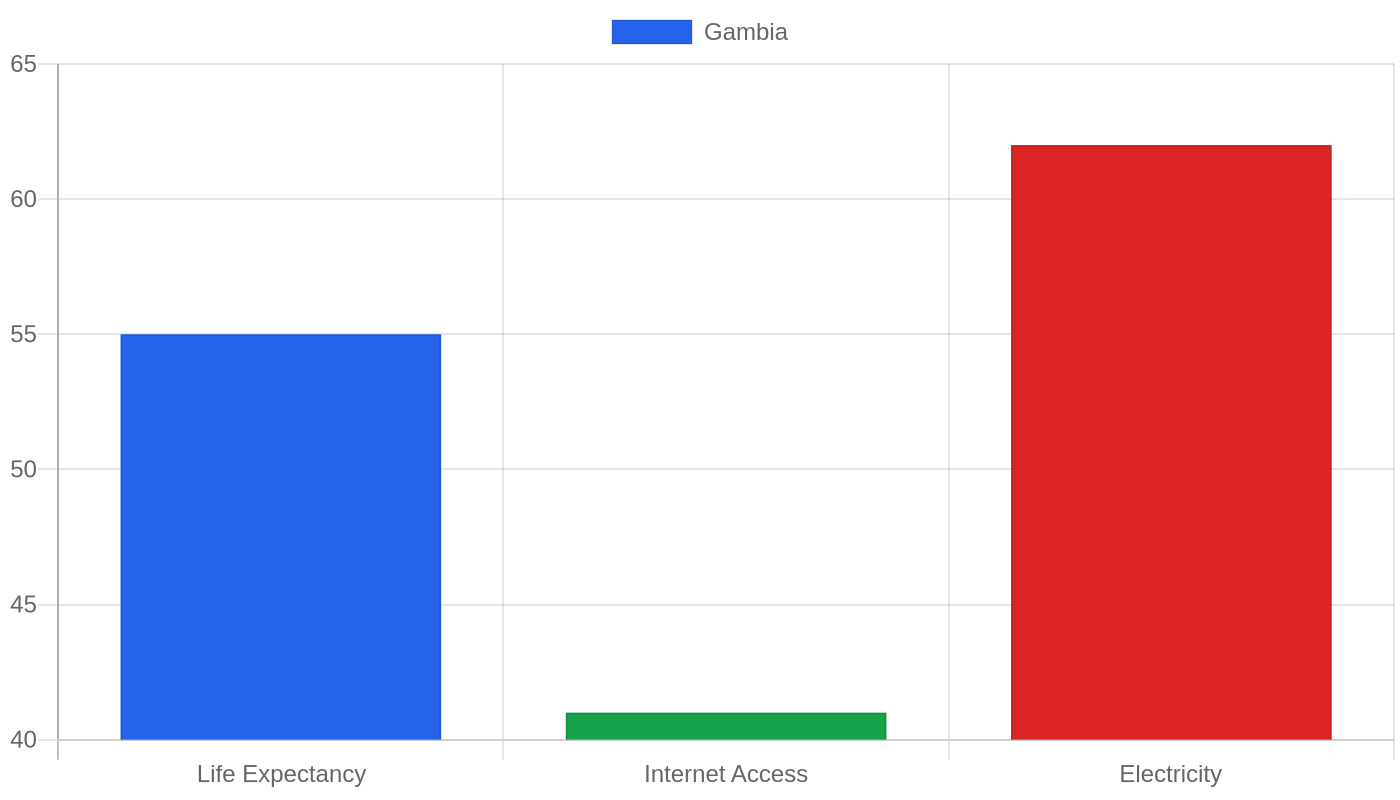
– Despite its small size and reputation as a tourist haven, the country’s economic data remains critically opaque — with the World Bank reporting no current figures for GDP growth, inflation, or unemployment.
– The nation’s transition from the Jawara era through military rule has created a political landscape where the machinery of succession by ballot box remains fragile and unproven.
– Without reliable economic indicators from the World Bank or other major institutions, investors and analysts must rely on qualitative assessments of political stability and institutional capacity.
– The Gambia’s story is less about numbers and more about the slow, uncertain work of building democratic resilience in a region where military interventions have been historically common.
The Data Vacuum — What the World Bank Isn’t Telling Us About Gambia’s Economy
The Gambia presents a peculiar challenge for economic journalists and analysts alike: a country whose economic narrative must be written largely without numbers. The World Bank, the gold standard for cross-country economic data, reports no current figures for GDP growth, inflation, unemployment, or GDP per capita. This is not merely a statistical gap — it is a statement about the state of data collection, institutional capacity, and economic transparency in one of West Africa’s smallest nations.
What we do know is contextual and historical. The Gambia gained independence from the United Kingdom on 18 February 1965, and from that date until 1994, it operated under what the World Bank data describes as “ostensibly a multi-party liberal democracy.” This qualification matters. The country was ruled by Sir Dawda Jawara and his People’s Progressive Party for nearly three decades without ever experiencing political turnover.
The commitment to succession by the ballot box was, as the World Bank notes, “never tested.” In economic terms, this political stasis created an environment where long-term planning was possible but where the accountability mechanisms that drive economic reform — elections, policy debates, public scrutiny — remained dormant.
The absence of current GDP and inflation data from the World Bank suggests either a breakdown in statistical reporting infrastructure or a period of such volatility that figures have not been reliably compiled. For a country that relies heavily on tourism, remittances, and re-export trade, this data vacuum is particularly problematic. Without knowing whether inflation is eroding purchasing power or whether growth is keeping pace with population increase, policymakers and investors are navigating blind.
The World Bank’s silence on these indicators should be read as a red flag for anyone considering serious economic engagement with the country.
The Price of Living in the Data Dark — Housing and Daily Costs in an Unmeasured Economy
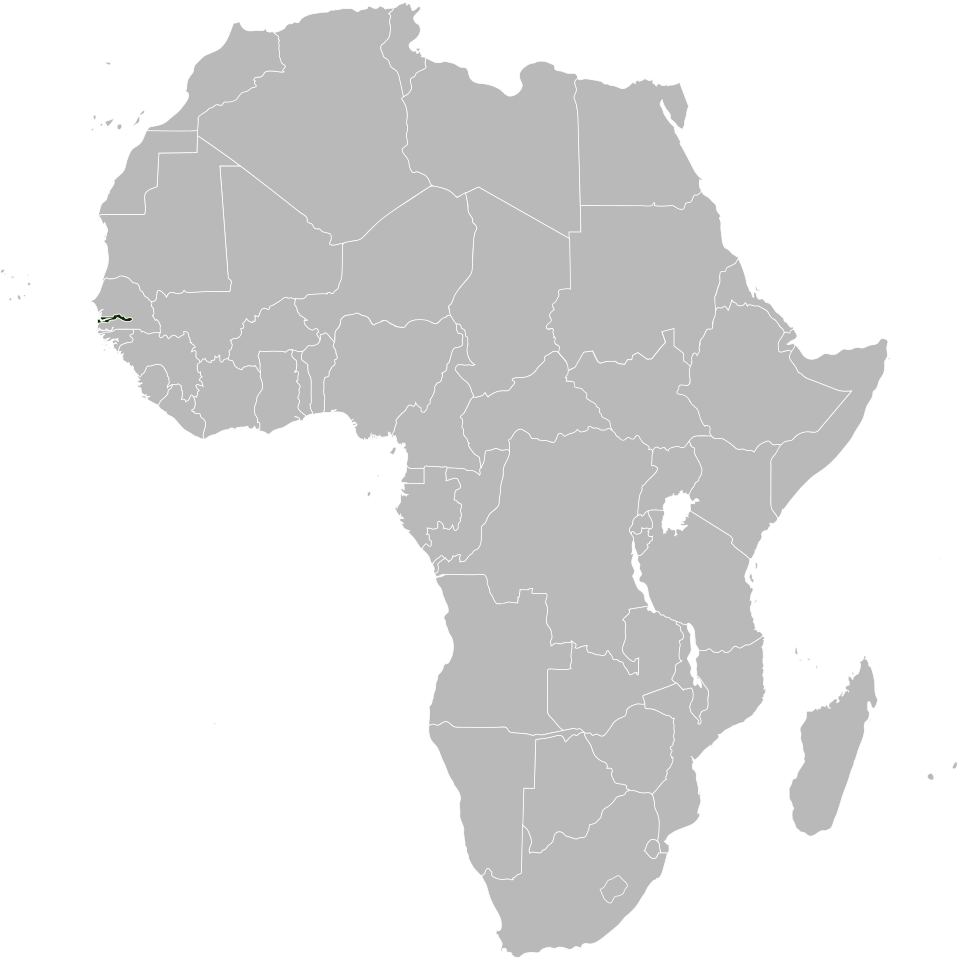
When the World Bank provides no cost of living data, analysts must turn to qualitative observation and regional comparison. The Gambia, bordered on three sides by Senegal and possessing a narrow Atlantic coastline, has traditionally been one of West Africa’s more affordable destinations for both locals and expatriates.
Housing costs in the capital, Banjul, and the tourist hub of Serrekunda have historically been modest by regional standards, though the lack of official World Bank figures makes any precise claim impossible.
Rental markets in The Gambia operate largely informally, with negotiations happening directly between landlords and tenants. The cost of basic goods — rice, cooking oil, vegetables — fluctuates with import prices and the value of the Gambian dalasi, which has faced periodic pressure.
Without inflation data from the World Bank, it is impossible to say with certainty whether the cost of living is rising faster than incomes, but anecdotal evidence from regional reports suggests that the gap between what people earn and what they spend continues to widen. The country’s heavy reliance on imported food and fuel makes it acutely vulnerable to global price shocks, a vulnerability that remains unquantified in the official data.
Business in a Political Vacuum — Investment Climate After the Coup
The World Bank data on The Gambia’s top companies and key industries is entirely absent, which itself tells a story. A country that cannot or does not report its major economic actors is a country where the private sector operates in the shadows of political uncertainty. The 1994 military coup, which the World Bank notes “propelled a commission of military officers to power” known as the Armed Forces Provisional Ruling Council, fundamentally reshaped the business environment.
Foreign investors who had operated under the stable if unaccountable Jawara regime suddenly faced a new set of risks.
The sectors most likely to attract investment — tourism, agriculture (particularly groundnuts and cashews), and re-export trade — have all been affected by political instability. Without company names or sector data from the World Bank, potential investors must rely on the broader political context. The coup created a precedent for extra-constitutional power transfers that continues to hang over the business climate.
Companies considering entry into The Gambia must weigh the country’s natural advantages — English-speaking population, strategic location, beautiful coastline — against the political risks that the World Bank data implicitly acknowledges through its silence.
Safety, Politics and the Unfinished Democratic Experiment
The World Bank provides no crime index or safety index for The Gambia, but the political landscape data offers a more revealing picture. From 1965 to 1994, the country was “ostensibly a multi-party liberal democracy” — the word “ostensibly” doing considerable work. The Jawara era was peaceful but not truly democratic in the sense of competitive elections and peaceful turnover.
When that system was overthrown by the 1994 military coup, the country entered a period of rule by the Armed Forces Provisional Ruling Council that fundamentally altered the relationship between state and citizen.
The political landscape data from the World Bank suggests that The Gambia has never fully resolved the tension between its democratic aspirations and its authoritarian habits. The country’s small size and ethnic homogeneity have spared it from the civil wars that have devastated neighbors like Sierra Leone and Liberia, but political freedom has remained constrained.
Without safety index data, one can only note that The Gambia has historically been considered safer than many West African nations for both residents and visitors, though the political uncertainty creates its own form of insecurity — the knowledge that the rules of the game can change overnight, as they did in 1994.
The Present Tense — Gambia’s Unwritten Economic Chapter
What is happening in The Gambia right now is a story of unfinished transitions. The World Bank’s lack of current data suggests that the country is still struggling to establish the basic statistical infrastructure that modern economic management requires. The post-coup political order has not yet produced the kind of stability that allows for consistent data collection and publication.
The Armed Forces Provisional Ruling Council’s legacy continues to shape governance, even as the country nominally returns to civilian rule.
The current moment in The Gambia is characterized by the slow, difficult work of rebuilding institutions that were damaged or dismantled during the military period. Without recent news data from the provided materials, the most honest assessment is that The Gambia remains a work in progress — a country whose economic story is being written in real time, with all the uncertainty that implies. The absence of data from the World Bank is not an oversight; it is the most important data point of all.
The Bottom Line
The Gambia is a country for patient observers and long-term thinkers, not for those seeking quick returns or clear data. The World Bank’s silence on nearly every major economic indicator should be taken as a warning: this is an economy where information is scarce and political risk is real.
For investors and analysts willing to look beyond the numbers and engage with the qualitative reality of West Africa’s Smiling Coast, The Gambia offers a case study in the challenges of democratic consolidation after military rule. But for now, the most prudent advice is to wait until the data catches up with the country’s potential.
Sources & Methodology
This article is authored by Economic Pulse Net for informational and research purposes. Economic Pulse Net sources its data from multilateral institutions, national statistics bureaus, and proprietary databases. All data is believed to be current as of the date of publication.
Published: July 27, 2026 | Category: Research — Gambia
Use these signals in your own platform
Economic Pulse publishes its live signal feed through a documented, read-only API. Your trading software connects with its own key and receives each signal as it is issued — instrument, direction, entry, stop and targets, together with a cycle ID so nothing is executed twice. The feed is independent of this website and cannot change it.
Signals are informational only and are not financial advice.