Economic Pulse Net | Sources: World Bank World Development Indicators, Government Sources | 2026
Key Takeaways
– The Gambia’s political trajectory is defined by a stark break: nearly three decades of multi-party rule under Sir Dawda Jawara, followed by a 1994 military coup that reshaped the nation’s governance.
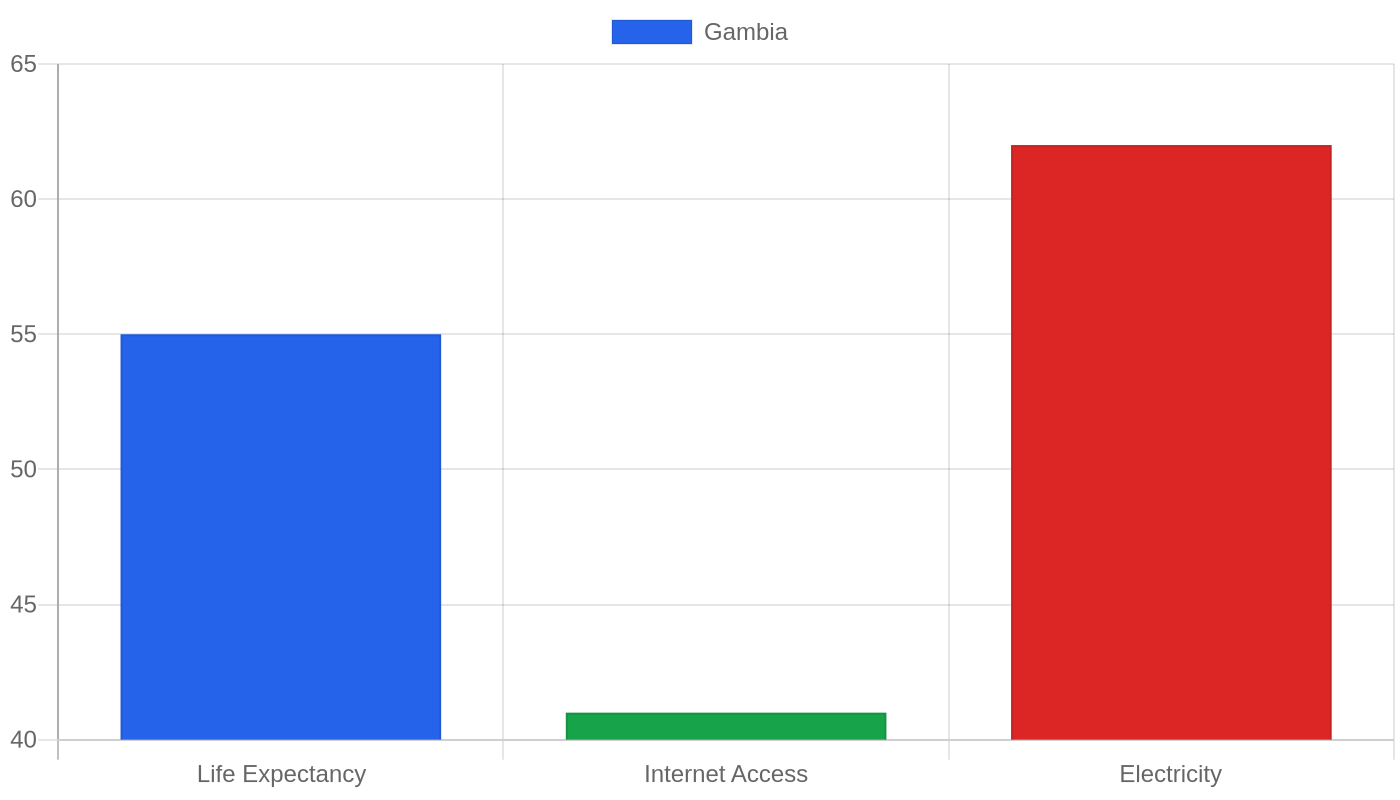
– The World Bank’s economic indicators for the country currently show gaps in key data points, highlighting the ongoing challenges in data collection and economic transparency.
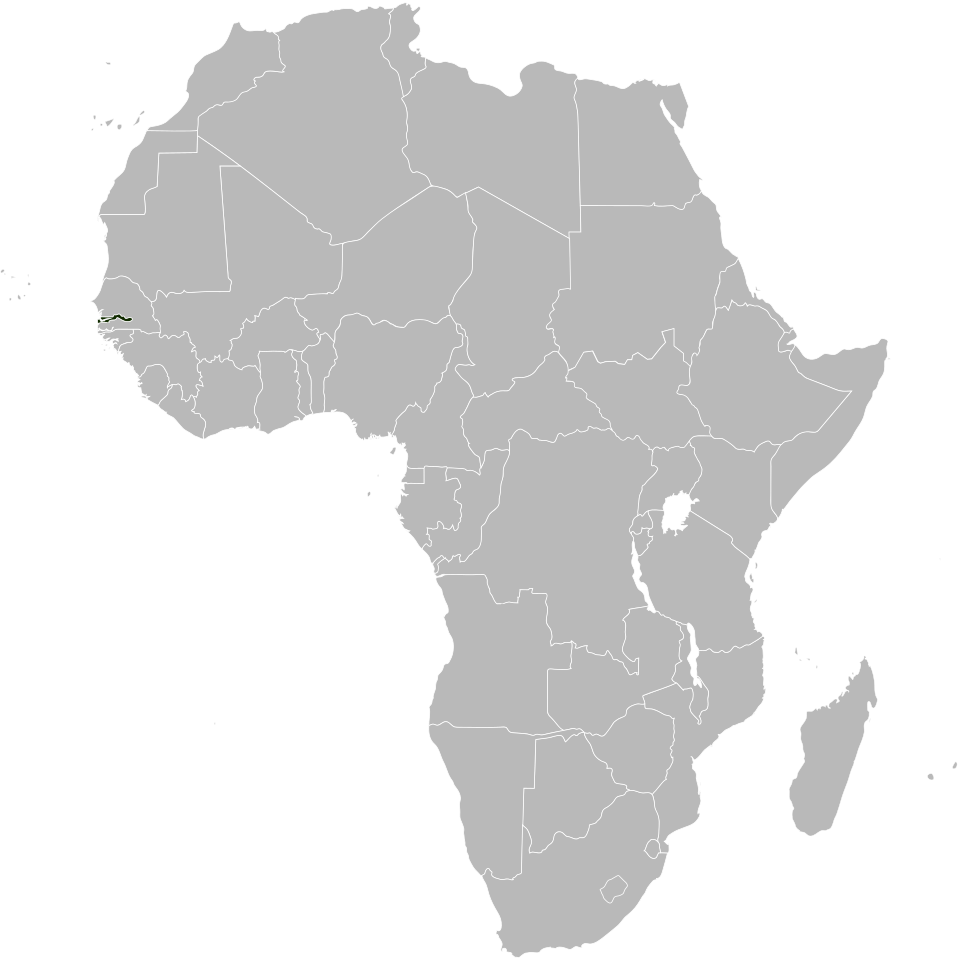
– As Africa’s mainland’s smallest country, The Gambia’s economic story is deeply intertwined with its political stability and institutional development.
– The nation’s historical commitment to democratic processes was never truly tested before the military intervention, leaving lasting questions about its democratic foundations.
– The country’s future hinges on how it navigates the legacy of its political past while building economic resilience in a challenging global environment.
The Economic Canvas: Painting by Numbers
The economic picture of The Gambia, as painted by the World Bank’s latest data, presents a canvas with significant blank spaces. GDP growth figures remain unavailable, inflation rates are unrecorded, and even the most basic indicators like GDP per capita and GNI per capita lack current data. This absence of hard numbers tells its own story—a narrative of a nation still developing the institutional capacity to track and report its economic heartbeat with precision.
For a country that has weathered political upheaval and is striving to establish itself as a stable investment destination, this data vacuum presents both challenges and opportunities. Without robust economic indicators, international investors and development partners must rely on qualitative assessments and historical trends rather than real-time metrics.
The World Bank’s inability to provide current figures suggests either ongoing methodological challenges or significant lags in national statistical infrastructure.
What we do know is that The Gambia’s economy has traditionally been anchored in agriculture, tourism, and re-export trade. The country’s geographic position—a narrow strip of land along the Gambia River—has historically made it a trading hub, though its small domestic market limits industrial diversification. The absence of data on main industries in the current reporting further underscores the need for enhanced economic monitoring and transparency.
The employment picture remains equally opaque, with unemployment figures unavailable. This is particularly significant for a nation with a young population, where job creation and economic opportunity are pressing political and social concerns. Without reliable employment data, policymakers are navigating blind, unable to craft targeted interventions or measure the effectiveness of existing programs.
The Cost of Living Puzzle
Understanding the cost of living in The Gambia presents a similar challenge, with no current data on housing costs, daily expenses, or comparative regional metrics. However, the absence of figures does not diminish the reality that Gambians face daily economic pressures that shape their quality of life and economic decisions.
In West African context, The Gambia has historically been considered a relatively affordable country for basic goods and services, though this affordability has often come with significant trade-offs in terms of infrastructure quality, healthcare access, and educational opportunities. The housing market, particularly in the Greater Banjul Area, has seen pressure from urbanization as rural populations move toward the capital in search of economic opportunities.
The rental market versus homeownership question in The Gambia reflects broader patterns seen across West Africa, where informal housing arrangements and extended family networks often provide a safety net that formal housing markets do not. The World Bank’s silence on these metrics leaves a significant gap in our understanding of daily economic life in the country, a gap that likely affects both policy formulation and international comparisons.
Business Climate and Investment Horizons
The Gambia’s business environment remains one of the continent’s less-documented frontiers, with no major companies listed in current reporting and limited data on the investment climate. This lack of corporate visibility speaks to the country’s economic scale and the concentration of business activity in informal and small-to-medium enterprise sectors.
For potential investors, The Gambia offers a small but potentially agile market, with opportunities primarily in tourism, agriculture processing, and services. The country’s stability since the end of the 1994 military coup era has been a gradual work in progress, with the political landscape evolving from direct military rule to a more complex civilian-military hybrid system.
The absence of major corporate names in the data suggests that The Gambia has not yet attracted significant foreign direct investment or developed large indigenous corporations capable of regional or global reach. This is consistent with its small population and market size, but it also indicates substantial room for growth if the business climate can be improved and political stability consolidated.
Politics, Safety, and the Quality of Life Equation
The political landscape of The Gambia, as documented in the World Bank’s historical overview, presents a trajectory from multi-party liberal democracy to military rule. Sir Dawda Jawara’s tenure from 1965 to 1994 saw the country ostensibly functioning as a democracy, yet the absence of political turnover meant that the system’s commitment to democratic succession was never truly tested.
The 1994 military coup brought the Armed Forces Provisional Ruling Council to power, fundamentally altering the country’s political trajectory. This period has left lasting imprints on governance structures, civil liberties, and the relationship between the military and civilian institutions. The true test of The Gambia’s democratic evolution will be whether it can achieve peaceful political transitions and institutionalize democratic norms that withstand the test of time.
Safety indices remain unrecorded in current data, leaving questions about crime rates, public security, and social stability unanswered. The quality of life in The Gambia is shaped by these political factors, alongside economic opportunities, healthcare access, and educational attainment—all of which face the challenges common to small developing nations in West Africa.
The Current Moment: Between History and Horizon
The Gambia stands at a critical juncture, navigating the legacy of its political history while attempting to build a more stable and prosperous future. The current period represents a delicate balance between the institutional memory of military rule and the aspirations of a population that has demonstrated resilience in the face of political and economic challenges.
The country continues to grapple with the fundamental questions that have shaped its post-independence trajectory: How does a small nation build democratic institutions that endure? How can economic development be pursued in an environment of limited data and institutional capacity? What role can international partnerships play in supporting The Gambia’s evolution?
The absence of current economic indicators from the World Bank suggests that the country may be in a period of transition, with statistical systems being updated or reorganized to better capture economic activity. This transitional moment offers both risks and opportunities—the risk of policy-making without adequate information, and the opportunity to build more robust data collection systems that can support future development.
The Bottom Line
The Gambia deserves the attention of observers watching West African political and economic evolution. For those interested in democratic consolidation in challenging environments, The Gambia offers a case study in the complexities of political transition. For investors, the country presents a high-risk, potentially high-reward frontier where the absence of data should be weighed against the possibilities of early entry into an underexplored market.
And for development practitioners, The Gambia highlights the critical importance of statistical capacity building as a foundation for all other development efforts. The country’s story is still being written, and its next chapters will depend on the choices made in the coming years.
Sources & Methodology
This article is authored by Economic Pulse Net for informational and research purposes. Economic Pulse Net sources its data from multilateral institutions, national statistics bureaus, and proprietary databases. All data is believed to be current as of the date of publication.
Published: August 11, 2026 | Category: Research — Gambia
Use these signals in your own platform
Economic Pulse publishes its live signal feed through a documented, read-only API. Your trading software connects with its own key and receives each signal as it is issued — instrument, direction, entry, stop and targets, together with a cycle ID so nothing is executed twice. The feed is independent of this website and cannot change it.
Signals are informational only and are not financial advice.