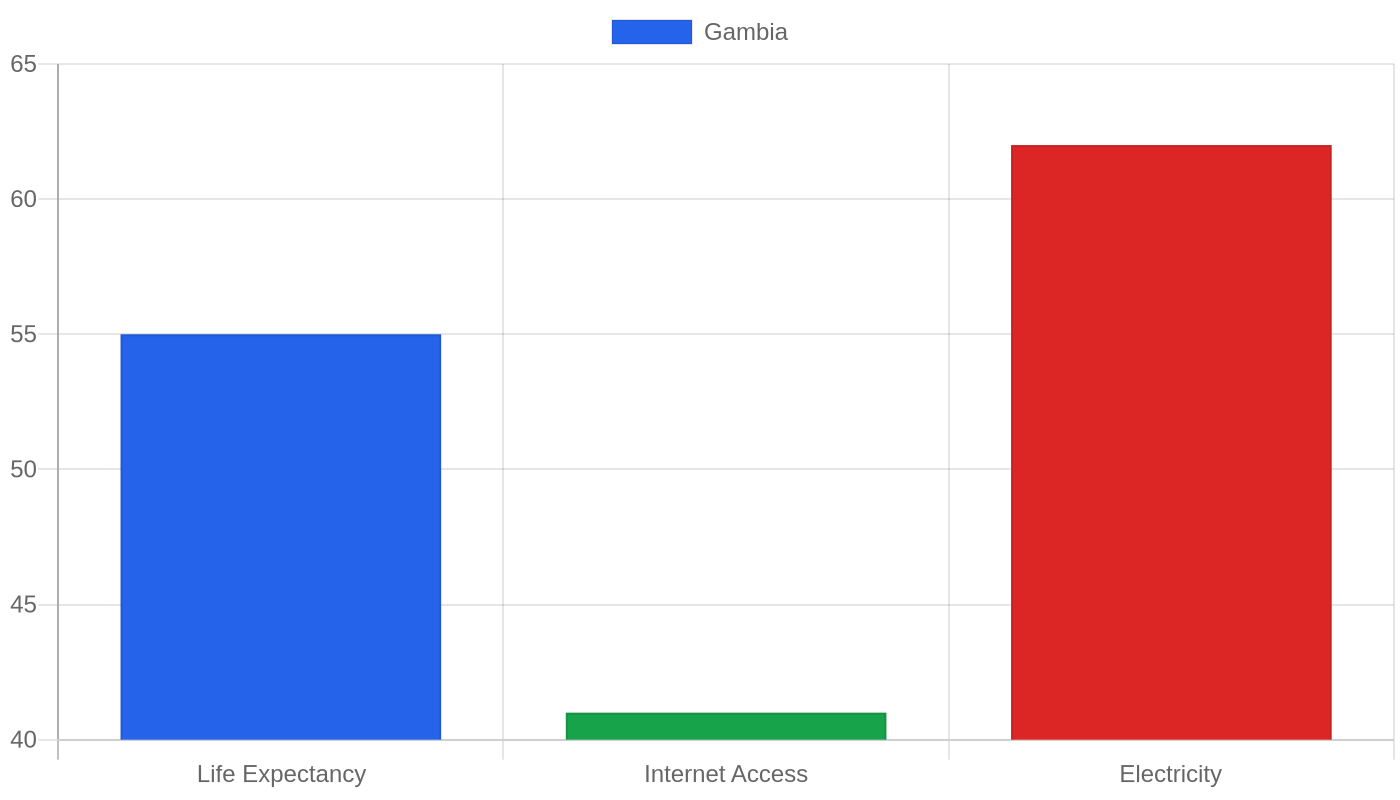
Economic Pulse Net | Sources: World Bank World Development Indicators, Government Sources | 2026
Key Takeaways
– The Gambia’s post-independence history is a tale of two eras: 29 years of unbroken, if untested, multi-party rule under Sir Dawda Jawara, followed by a military coup in 1994 that fundamentally reshaped the nation’s political trajectory.
– The country’s democratic credentials remain a work in progress—while the early post-independence period was ostensibly democratic, it never experienced the peaceful transfer of power that defines a mature democracy.
– For investors and observers, the political landscape remains the single most important variable shaping the economic environment, given the legacy of military intervention in civilian governance.
– The Gambia’s story offers a compelling case study in how political institutions—or their absence—can define a nation’s development path long after the colonial era ends.
A Legacy Forged in Independence: The Political Economy of a Small State
When The Gambia gained independence from the United Kingdom on 18 February 1965, it inherited the trappings of a Westminster-style democracy but not necessarily its substance. For nearly three decades, from 1965 to 1994, the country operated as what the historical record describes as an “ostensibly multi-party liberal democracy” under the firm hand of Sir Dawda Jawara and his People’s Progressive Party (PPP).
The word “ostensibly” carries significant weight here—while elections were held and parliament functioned, the country never experienced political turnover during this entire period, and its commitment to succession by the ballot box was never tested.
This is not merely a historical footnote; it is the foundational context for understanding every economic and political development that followed. Political scientists often note that the true test of democratic institutions is not whether they exist on paper but whether they can facilitate the peaceful transfer of power. By that measure, The Gambia’s first republic remained an unproven experiment.
The absence of electoral turnover meant that checks and balances, opposition oversight, and the accountability that comes from the credible threat of replacement were all largely theoretical concepts rather than lived realities.
The situation came to a dramatic head in 1994 when a military coup propelled a commission of military officers to power, known as the Armed Forces Provisional Ruling Council. This moment represented a decisive break from the post-independence order and introduced a new era of military-backed governance that would define the country for years to come.
For economists, such political ruptures carry profound implications: they alter property rights regimes, shift investor confidence, redirect public spending toward security apparatuses, and often disrupt the informal economic networks that sustain ordinary citizens.
What makes The Gambia’s case particularly instructive is its scale. As one of Africa’s smallest nations, it lacks the diversified economic base that might cushion political shocks. When political institutions falter, the economic consequences ripple quickly through a small, open economy. The country’s dependence on tourism, agriculture, and remittances—sectors highly sensitive to perceptions of stability—means that political events are never far from economic outcomes.
The 1994 coup did not just change the government; it changed the risk calculus for every investor, donor, and trading partner looking at The Gambia.
Yet the story is not simply one of decline or stagnation. The Gambia’s political journey reflects broader continental patterns—the struggle between constitutional governance and military intervention, between personality-driven politics and institutional resilience. Understanding this backdrop is essential for anyone trying to make sense of the country’s current economic position or its future prospects.
The institutions built—or not built—during those formative decades continue to shape incentives, investment decisions, and the daily economic lives of Gambians today.
The Economic Canvas: Reading Between the Data Gaps
A comprehensive economic profile of The Gambia requires an honest acknowledgment of what the data does and does not tell us. The World Bank’s latest figures show that key indicators—GDP growth, inflation, unemployment, GDP in US dollars, GDP per capita (PPP), GNI per capita, and even total population—are currently listed as not available. In many journalistic contexts, this might be treated as a dead end. But for the careful observer, the absence of fresh data is itself a signal worth examining.
When a national statistical apparatus fails to produce timely economic data, it often reflects deeper institutional challenges—limited technical capacity, funding constraints, or competing priorities within government. For a country like The Gambia, which has navigated political transitions and their associated disruptions, data gaps can also indicate periods of administrative reorganization or shifts in how economic information is collected and verified.
The World Bank’s role as a primary source for cross-country economic comparison means that when its Gambia dataset falls silent, international investors, development partners, and researchers all find themselves navigating with an incomplete map.
What can be reasonably inferred from the broader context? The Gambia’s economy has traditionally been anchored in agriculture (particularly groundnuts), tourism, and re-export trade. These sectors are labor-intensive and sensitive to external shocks—weather patterns, European travel trends, and regional trade dynamics all play outsized roles.
A small domestic market means the country’s economic fortunes are heavily influenced by its relationship with Senegal, its larger neighbor, and by the broader West African economic community.
The absence of inflation and employment data is particularly consequential for ordinary households. Without reliable price indices, families cannot gauge whether their wages are keeping pace with the cost of living, and policymakers lack the tools to calibrate monetary and fiscal responses.
Similarly, without unemployment figures, it becomes difficult to assess whether the economy is generating sufficient opportunities for its young and growing population—a question that carries significant political weight in a country with recent experience of military intervention.
For the purposes of this analysis, the data gaps themselves become part of the story. They reflect a nation still in the process of building the institutional capacity necessary for modern economic governance. The path forward involves not just economic growth but also the development of the statistical infrastructure that allows growth to be measured, understood, and translated into policy.
Until that infrastructure matures, The Gambia will continue to face challenges in attracting the kind of investment that requires transparent, timely, and reliable economic information.
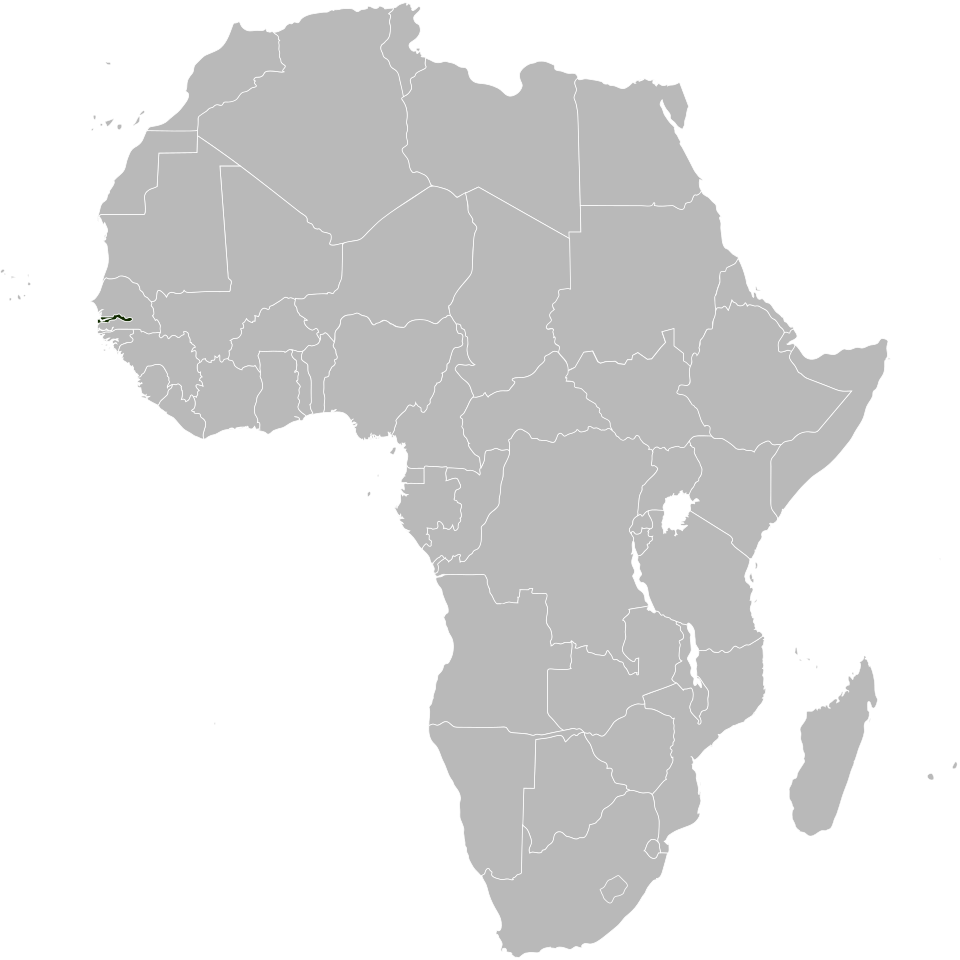
Cost of Living and Housing: The Unwritten Ledger of Daily Life
In the absence of official cost-of-living indices for The Gambia, the everyday economic experience of its citizens must be understood through the lens of its economic structure and regional context. As a small West African nation, The Gambia faces the classic challenges of a limited domestic market: many goods must be imported, which exposes local prices to global commodity swings, transportation costs, and exchange rate fluctuations.
For households, this means that the price of basic staples—rice, cooking oil, fuel—can be volatile and often trends upward when global markets tighten.
Housing dynamics in The Gambia reflect broader patterns seen across West Africa, where formal mortgage markets are limited and most housing is delivered through incremental, self-built construction. Families typically acquire land through customary tenure systems and build over time as resources permit, a process that can span years or even decades.
The rental market exists primarily in urban centers like the Greater Banjul Area, where demand from civil servants, expatriates, and migrants concentrates, but formal, institutionalized housing finance remains underdeveloped.
For the average Gambian household, the cost of living is heavily weighted toward food and transportation, as is typical in lower-income economies. The reliance on imported foodstuffs means that global price shocks translate quickly into local hardship, particularly for urban households without access to subsistence agriculture. This structural vulnerability makes the country sensitive to international commodity markets in ways that more diversified economies might absorb more easily.
The absence of formal data on these dynamics does not diminish their importance; rather, it underscores the need for better measurement infrastructure. International organizations and development partners have long emphasized the importance of household surveys and price monitoring as tools for evidence-based policy. For The Gambia, building this capacity would not only improve governance but also provide citizens and investors with the transparency needed to make informed economic decisions.
Investment and Business Climate: Promise Amid Uncertainty
The investment landscape in The Gambia is shaped by its size, its history, and its political trajectory. As a small economy, it cannot offer the scale that attracts large multinational corporations seeking regional or continental markets. Instead, its appeal lies in niche opportunities—agribusiness, tourism, fisheries, and potentially renewable energy—where its natural assets and geographic position can be leveraged.
The country’s location along the Atlantic coast and its riverine geography offer advantages that, with the right policies, could support export-oriented growth.
The political history, however, continues to cast a shadow over the business environment. The 1994 coup and the subsequent period of military-backed rule created an environment of uncertainty that discouraged long-term investment. Even after political transitions, the institutional memory of that instability persists in risk assessments conducted by international investors and credit rating agencies.
Businesses require predictable rules of the game—clear property rights, enforceable contracts, and stable regulatory frameworks—and these are precisely the areas where the legacy of military intervention creates lingering doubts.
Sectors with the most immediate potential include tourism, which capitalizes on The Gambia’s beaches, birdlife, and cultural attractions, particularly for European visitors seeking winter sun. Agriculture, especially groundnuts and horticulture, offers opportunities for value addition and export diversification. The fisheries sector, while currently underdeveloped, has potential given the country’s Atlantic coastline.
Each of these sectors, however, requires investment in infrastructure, logistics, and human capital to reach its full potential.
The business climate also depends heavily on regional integration. The Gambia’s membership in the Economic Community of West African States (ECOWAS) provides access to a much larger market, but realizing this potential requires improvements in trade facilitation, customs efficiency, and cross-border infrastructure.
For investors, the question is not simply whether The Gambia offers opportunities but whether the enabling environment allows those opportunities to be seized with reasonable confidence and predictability.
Safety, Politics, and Quality of Life: Navigating the Human Dimension
The political landscape of The Gambia, as documented in the historical record, presents a complex picture of unfulfilled democratic promise and subsequent military intervention. The period from 1965 to 1994, described as “ostensibly” democratic, raises important questions about the quality of governance during those years. The lack of political turnover meant that the mechanisms of accountability—opposition parties, free press, independent judiciary—were never truly tested.
This created a political culture in which power was concentrated and alternation was unknown, setting the stage for the military intervention that followed.
The 1994 coup represented a fundamental rupture in the nation’s political development. The Armed Forces Provisional Ruling Council, as the military commission was known, took power with promises of reform and national renewal. Yet military governments, by their nature, prioritize order over participation and often struggle to establish the legitimacy that comes from electoral mandate.
The long-term effects of this intervention continue to shape the country’s political culture and its relationship with democratic institutions.
For ordinary Gambians, the quality of life is intimately connected to these political dynamics. Political stability affects everything from the availability of public services to the predictability of daily economic activity. When political institutions are contested or illegitimate, the social contract weakens, and citizens must navigate greater uncertainty in their personal and economic lives.
The country’s small size can amplify these effects—political events in the capital resonate quickly throughout the nation.
The safety and security environment, while not captured in current indices, is influenced by the same institutional factors. Countries that have experienced military intervention often face challenges in establishing civilian oversight of security forces, maintaining the rule of law, and building public trust in institutions of justice. These factors, while difficult to quantify, are central to the lived experience of citizens and to the country’s attractiveness as a destination for investment and tourism.
What’s Happening Now: The Unfolding Present
The Gambia today stands at a critical juncture, still processing the legacy of its political history while attempting to chart a path toward more stable and inclusive governance. The historical record makes clear that the country’s democratic institutions were never truly tested in the post-independence era, and the military coup of 1994 created a rupture whose consequences continue to reverberate.
The current moment is defined by the ongoing effort to build the institutional foundations that were deferred or damaged during earlier periods.
The political landscape remains the primary lens through which economic developments must be understood. The transition from military rule back to civilian governance has been a central theme of recent years, but the process is far from complete. Building durable democratic institutions requires more than holding elections; it requires developing the norms, practices, and checks and balances that make democracy function between elections.
This includes strengthening parliament, ensuring judicial independence, protecting press freedom, and creating space for civil society to operate.
On the economic front, the challenges are interconnected with the political ones. The data gaps in key indicators—growth, inflation, employment—reflect institutional limitations that also affect the business climate. Investors seeking to engage with The Gambia must navigate an environment where information is incomplete and where the reliability of statistical infrastructure cannot be taken for granted.
This is not an insurmountable obstacle, but it requires a different approach than investing in countries with mature data ecosystems.
The international community, including institutions like the World Bank, continues to play a role in supporting The Gambia’s development trajectory. Development assistance, technical cooperation, and capacity building all contribute to the slow, patient work of institutional construction.
For the Gambian people, the hope is that this period of rebuilding will lead to a future where the mistakes of the past—the untested democratic institutions, the military intervention—give way to a more stable, prosperous, and accountable governance model.
The Bottom Line
The Gambia is a country whose future will be determined less by its natural resources or geographic position than by its ability to build and sustain credible political institutions. The historical record shows a nation that emerged from colonialism with the forms of democracy but not its substance, and then experienced the rupture of military rule. For investors, development partners, and observers, The Gambia offers a case study in how political legacies shape economic possibilities.
The country deserves attention not because of its current economic indicators—which remain incomplete—but because its trajectory will test whether a small African nation can overcome a difficult political inheritance to build a more stable and prosperous future. Those who watch The Gambia closely understand that its success or failure will carry lessons far beyond its borders.
Sources & Methodology
This article is authored by Economic Pulse Net for informational and research purposes. Economic Pulse Net sources its data from multilateral institutions, national statistics bureaus, and proprietary databases. All data is believed to be current as of the date of publication.
Published: August 04, 2026 | Category: Research — Gambia
Use these signals in your own platform
Economic Pulse publishes its live signal feed through a documented, read-only API. Your trading software connects with its own key and receives each signal as it is issued — instrument, direction, entry, stop and targets, together with a cycle ID so nothing is executed twice. The feed is independent of this website and cannot change it.
Signals are informational only and are not financial advice.