Economic Pulse Net | Sources: World Bank World Development Indicators, Government Sources | 2026
Key Takeaways
– Djibouti’s economy is built almost entirely around its strategic port and military basing rents, making it a geopolitically vital but structurally fragile state.
– The country has no meaningful agricultural or industrial base, importing over 90% of its food and nearly all manufactured goods.
– Political power remains concentrated in the presidency under an authoritarian system, with the Economist Democracy Index rating Djibouti as “authoritarian” in 2024.
– Djibouti’s top companies are dominated by financial institutions and state-linked logistics firms, reflecting an economy geared toward services rather than production.
– Despite its critical role as Ethiopia’s maritime lifeline, the domestic population faces severe economic constraints with limited data transparency on basic welfare indicators.
The Port Economy Paradox — Growth Without Development
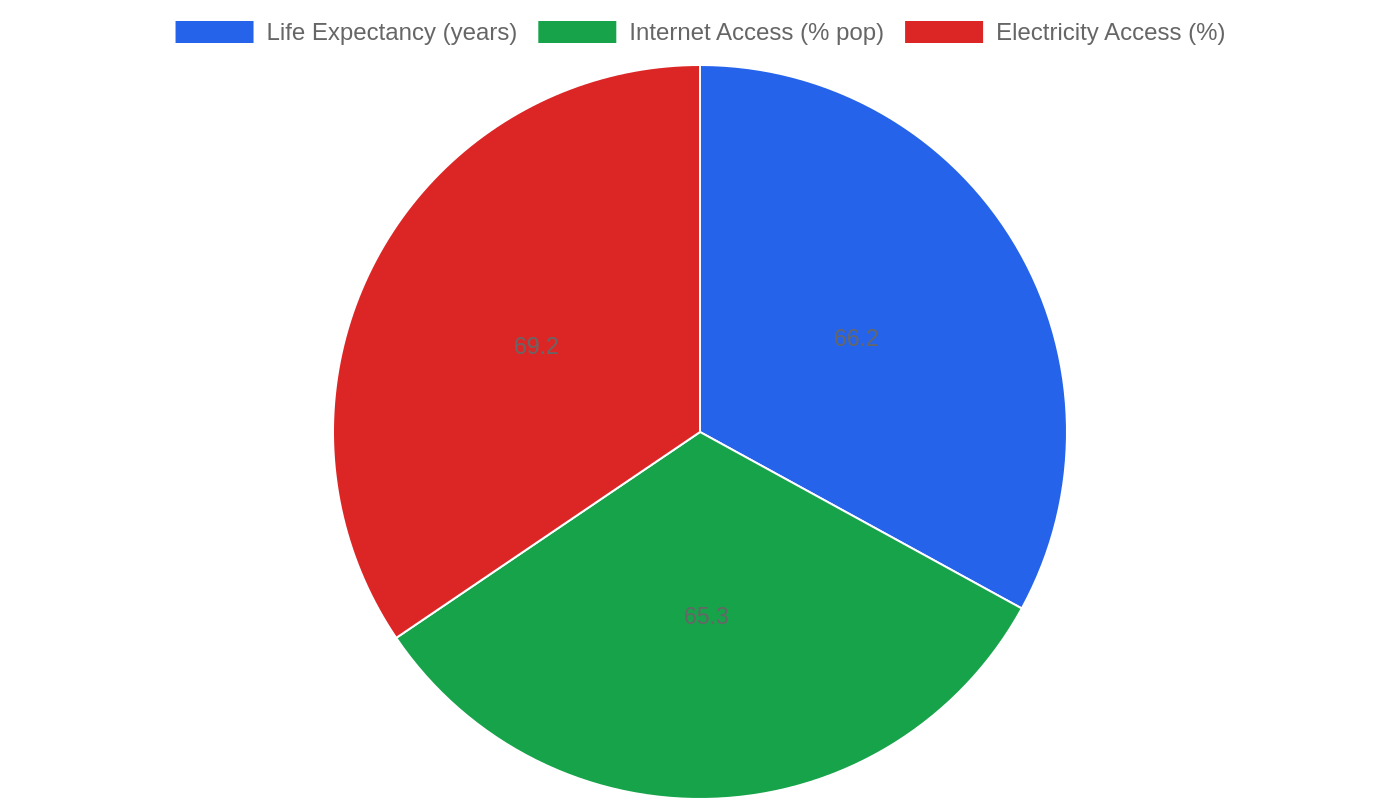
The World Bank, the primary source for Djibouti’s economic data, provides a striking portrait of statistical silence. Key indicators — GDP growth, inflation, unemployment, GDP in US dollars, GDP per capita based on purchasing power parity, GNI per capita, and total population — are all listed as “N/A.” This absence of data is itself a data point. It signals either a state with limited statistical capacity, a deliberate opacity around economic performance, or both.
For a country that positions itself as the “Dubai of the Horn of Africa,” the lack of transparent economic reporting is a red flag for investors and analysts alike.
What is clear is that Djibouti’s economy is a single-industry story. The country’s main industries are dominated by logistics, transportation, and financial services that support regional trade. The top companies listed — Ethio-Djibouti Railways, Air Djibouti, Djibouti Telecom, and multiple banks including Banque Indosuez Mer Rouge and Banque pour le Commerce et l’Industrie – Mer Rouge — all orbit around the same gravitational center: the Port of Djibouti.
This port handles the vast majority of landlocked Ethiopia’s maritime trade, and the railway connecting Djibouti City to Addis Ababa, operated by Ethio-Djibouti Railways, is the literal and figurative backbone of this relationship.
The problem is one of extreme concentration. When your economy depends on a single corridor and a single customer, you are not diversified — you are vulnerable. Any disruption to Ethiopian trade, whether from internal conflict, drought, or changing trade routes, would send shockwaves through Djibouti’s entire economic system.
The financial sector, represented by heavyweights like Dahabshil Bank International and the Central Bank of Djibouti, exists primarily to facilitate this transit trade rather than to finance domestic production or entrepreneurship.
The Cost of Living in a Service Economy
In a country that imports nearly everything, the cost of living is inherently high, yet specific data on housing costs, rent versus buy dynamics, and daily expenses is not available from the World Bank or other provided sources. What can be inferred is that Djibouti City, as a major regional logistics hub and diplomatic enclave, likely exhibits a stark dual economy.
There is a high-cost expatriate and diplomatic bubble — fueled by the presence of foreign military bases and international organizations — and a separate, much more constrained local economy.
Rent in the capital is almost certainly the single largest monthly expense for most households. The absence of a domestic construction materials industry means that building costs are inflated by import prices, and the limited land available in the coastal strip around Djibouti City drives prices higher still. For the average Djiboutian, daily expenses for basic food staples, water, and fuel are likely significantly above regional averages, precisely because everything must be shipped in.
This creates a paradox where the country is a regional gateway for goods, but its own citizens struggle to afford what passes through its ports.
Investment and Business Climate — Follow the Logistics
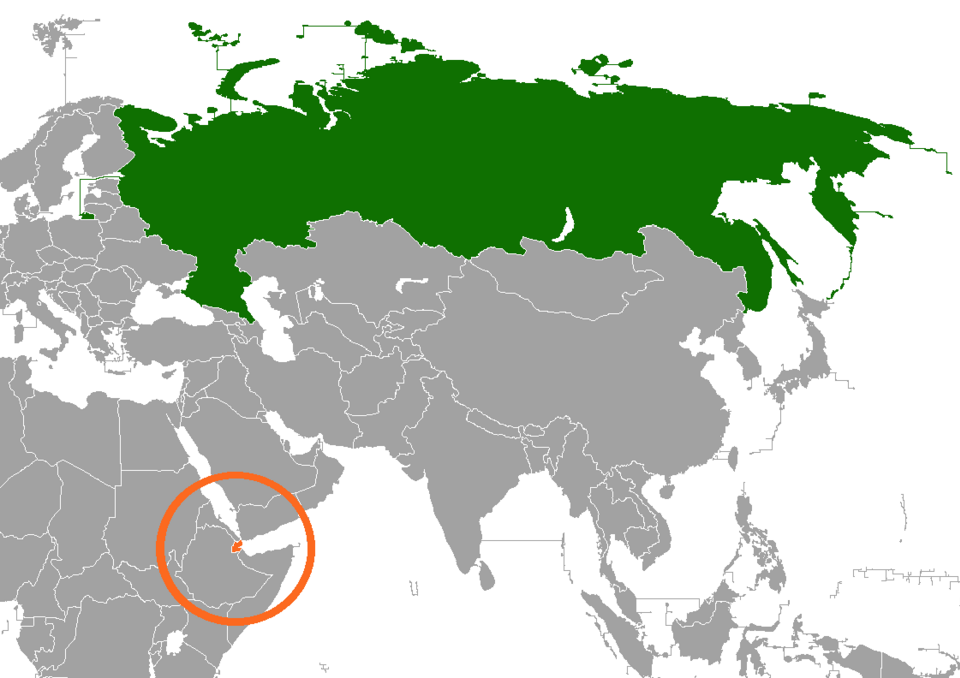
For investors, Djibouti offers one clear, compelling proposition: geography. The country sits on one of the world’s busiest shipping lanes, the Bab el-Mandeb strait, and controls the primary access point for Ethiopia’s 120 million consumers. The top companies listed reflect this reality. The financial sector is particularly notable, with the Central Bank of Djibouti, Dahabshil Bank International, and two “Mer Rouge” banks dominating the list.
This suggests a financial system oriented toward trade finance, remittances, and currency exchange rather than retail banking or small business lending.
The industrial sector is represented by Al Gamil and Ethio-Djibouti Railways, both of which are tied to logistics and transportation infrastructure. The consumer services sector, with Air Djibouti, Djibouti Air, and Djibouti Airlines, points to an attempt to build regional air connectivity, but the presence of three separate airline entities on the list suggests fragmentation or competition in a very small market.
Djibouti Telecom’s monopoly position in telecommunications means that digital infrastructure is a state-controlled asset, which can be both a barrier and an opportunity depending on regulatory reforms.
The business climate, however, is shaped by the political reality. Djibouti is a unitary presidential republic where executive power rests in the presidency, which is dominant over both the cabinet and the National Assembly. The Economist Democracy Index rated Djibouti as authoritarian in 2024. For businesses, this means that the rule of law, contract enforcement, and regulatory predictability are dependent on political connections rather than independent institutions.
Investment is possible, but it is relationship-driven, and the state is the ultimate gatekeeper.
Safety, Politics and Quality of Life — Stability at a Price
The Crime Index and Safety Index for Djibouti are both listed as “N/A,” which again reflects a lack of transparent data rather than an absence of crime. What is known is that Djibouti is a politically stable country in one of the most volatile regions in the world. It has not experienced the civil wars that have devastated Somalia, Sudan, or Yemen.
This stability is not organic — it is purchased through the presence of foreign military bases, including major installations by the United States, France, Japan, and others. These bases provide a security guarantee and a steady stream of rental income, but they also make Djibouti a target in any regional escalation.
The political landscape, as described by the Economist Democracy Index’s 2024 assessment, is authoritarian. Power is concentrated in the presidency, and the opposition has limited space to operate. This has implications for quality of life beyond economics. Civil liberties, press freedom, and political participation are constrained. For the average citizen, the trade-off is clear: stability and the absence of war in exchange for limited political voice.
The lack of data on happiness or well-being from the provided sources makes it impossible to quantify how Djiboutians feel about this bargain, but the high unemployment and import dependency suggest that economic frustration is a simmering reality beneath the surface of political calm.
The Ethiopia Factor — All Bets on One Neighbor
The most important current reality for Djibouti is its relationship with Ethiopia. Ethio-Djibouti Railways is not just a company on a list; it is the economic lifeline of both nations. In recent years, Ethiopia has been actively seeking alternative port access, including through Somaliland’s Berbera port and through Kenya’s Lamu port. For Djibouti, any successful diversification of Ethiopia’s trade routes would be an existential economic threat.
The government in Djibouti City is acutely aware of this, which is why it invests heavily in port infrastructure, logistics efficiency, and maintaining competitive pricing.
At the same time, Djibouti’s role as a military basing hub continues to expand. The presence of multiple foreign forces provides a stable revenue stream that is not dependent on Ethiopian trade, but it also locks Djibouti into great-power rivalries. Any shift in global military posture — a US drawdown, a Chinese expansion, a regional conflict involving Yemen — could rapidly alter the security and economic calculus.
The domestic political system, with its authoritarian structure, is designed to manage these external relationships with minimal internal dissent, but it leaves the country vulnerable to decisions made in Washington, Beijing, Paris, or Tokyo.
The Bottom Line
Djibouti is a country to watch for anyone interested in the intersection of geopolitics, logistics, and authoritarian development models. It is not a market for consumer goods companies or manufacturing investors, but it is a critical node for infrastructure firms, shipping lines, and defense contractors. The lack of basic economic data from the World Bank is a warning sign — this is an economy that does not fully open its books.
Investors and analysts should approach with eyes wide open, understanding that Djibouti’s stability is purchased, not earned, and that its prosperity depends entirely on the continued dependence of its much larger neighbor.
Sources & Methodology
This article is authored by Economic Pulse Net for informational and research purposes. Economic Pulse Net sources its data from multilateral institutions, national statistics bureaus, and proprietary databases. All data is believed to be current as of the date of publication.
Published: July 30, 2026 | Category: Research — Djibouti
Use these signals in your own platform
Economic Pulse publishes its live signal feed through a documented, read-only API. Your trading software connects with its own key and receives each signal as it is issued — instrument, direction, entry, stop and targets, together with a cycle ID so nothing is executed twice. The feed is independent of this website and cannot change it.
Signals are informational only and are not financial advice.