Economic Pulse Net | Sources: World Bank World Development Indicators, Government Sources | 2026
Key Takeaways
– Chad operates under a strong presidential system following the 2023 constitutional referendum, with the president wielding dominant control over the executive, judiciary, and military appointments.
– The economy remains heavily reliant on a narrow set of industries, with Cotontchad (basic materials) and Commercial Bank Chad (financials) leading the corporate landscape.
– Telecommunications and aviation are emerging sectors, with SotelTchad and Toumaï Air Tchad representing modern service-oriented growth in an otherwise resource-dependent economy.
– Crime and safety data are not currently tracked by major international indices, reflecting broader challenges in data transparency and institutional monitoring.
– Despite the absence of key World Bank economic indicators like GDP growth and inflation, Chad’s political structure and corporate profile suggest a nation in transition, balancing traditional extractive industries with nascent service sector development.
The Economy — Where the Numbers Are Silent, the Structure Speaks
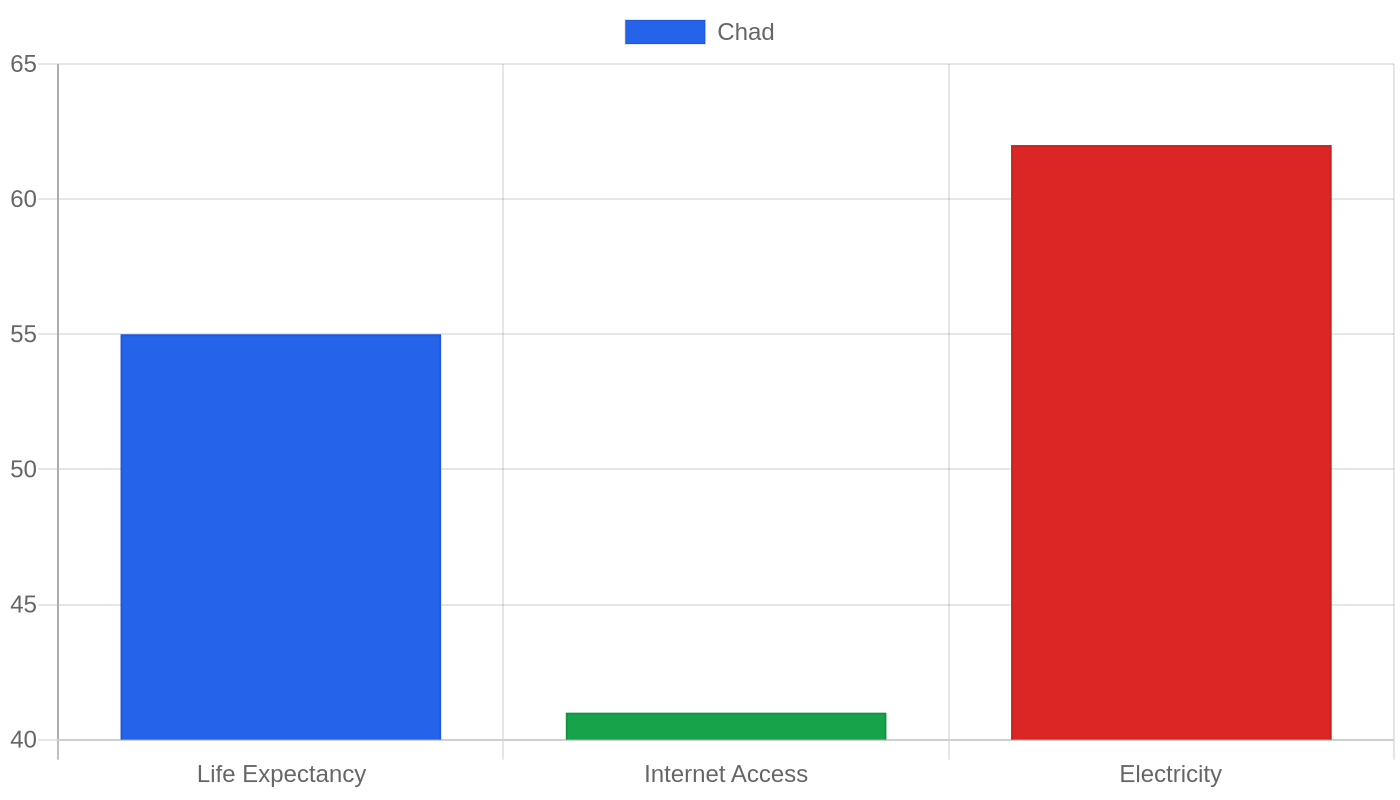
The World Bank data for Chad presents an unusual challenge: the standard economic metrics that typically anchor any country analysis — GDP growth, inflation, unemployment, GDP per capita — are all marked as unavailable. Yet this absence itself tells a story.
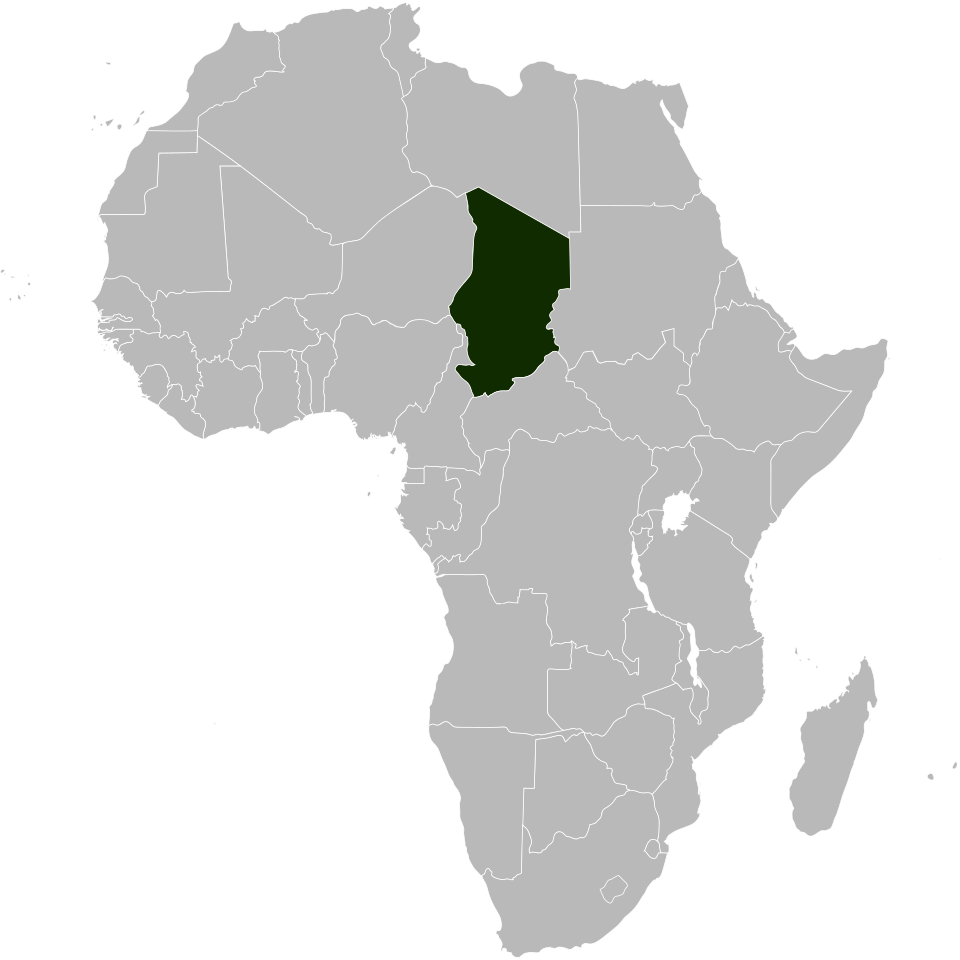
For a nation of Chad’s strategic importance in the Sahel region, the lack of up-to-date macroeconomic data reflects deeper issues of institutional capacity, informal economic activity, and the difficulties of statistical collection in a vast, landlocked country. What we do know is that Chad’s economic backbone is built on a narrow industrial base dominated by basic materials and extractive industries.
Cotontchad, a major player in the basic materials sector, underscores the country’s historical reliance on cotton as a cash crop and export commodity. This is a classic pattern for many Sahelian economies: agricultural raw materials providing a fragile lifeline in a region increasingly threatened by climate volatility and desertification. The financial sector, represented by Commercial Bank Chad, suggests a formal economy that is small but functional, serving the needs of a limited urban and commercial class.
Meanwhile, the presence of SotelTchad in telecommunications and Toumaï Air Tchad in consumer services points to a gradual diversification away from pure commodity dependence. These companies are not global giants, but they represent the infrastructure of a modernizing state — connectivity, transport, and financial intermediation. Without hard numbers on inflation or growth, the analyst must read the tea leaves of corporate structure and political context.
Chad’s economy is likely characterized by high informality, significant subsistence agriculture, and vulnerability to external shocks, particularly fluctuations in global commodity prices and the security situation in the broader Sahel region.
The Cost of Living — A Tale of Two Chads
Housing and daily expenses in Chad are shaped by the profound divide between the capital, N’Djamena, and the rural interior. In a country where the World Bank provides no specific cost-of-living indices, one must infer from the broader economic structure.
The presence of Commercial Bank Chad and the dominance of basic materials suggest a dual economy: a small, cash-intensive urban sector serving government officials, aid workers, and employees of major companies like Cotontchad and SotelTchad, alongside a vast rural population engaged in subsistence farming and informal trade. Rent in N’Djamena is likely high relative to local incomes, driven by the concentration of government ministries, foreign embassies, and international organizations.
The cost of imported goods — from food staples to building materials — is inflated by Chad’s landlocked geography, with most supplies arriving overland from Cameroon or by air. For the average Chadian, daily expenses are dominated by food, basic household goods, and transport, with little disposable income left for savings or discretionary spending.
The lack of data from the World Bank on this front is itself a commentary on the difficulty of tracking economic activity in a country where much of the population operates outside formal markets. Renting is likely the norm in urban areas, with homeownership reserved for the wealthy elite or those with access to family land in rural regions.
Investment & Business Climate — A Narrow Window of Opportunity
The corporate landscape of Chad is dominated by a handful of firms that reveal the country’s economic priorities and limitations. Commercial Bank Chad stands as the primary formal financial institution, suggesting that access to credit and banking services is concentrated and likely expensive. For an investor, this means that capital is not easily accessible, and business operations often require significant upfront cash or connections to state-linked financing.
Cotontchad in basic materials remains the flagship industrial enterprise, but its fortunes are tied to global cotton prices and the health of the agricultural sector, which faces constant threats from drought, pests, and insecurity. Mid Express Tchad and Société tchadienne des postes et de l’épargne represent the industrials sector, pointing to logistics, transport, and postal services as areas of modest activity.
These are not high-growth, high-margin businesses by global standards, but they are essential for the functioning of the state and the movement of goods. SotelTchad in telecommunications is perhaps the most promising sector for future investment. Across Africa, mobile money, internet access, and digital services have leapfrogged traditional banking and infrastructure.
In Chad, a country with low fixed-line penetration and a young population, telecoms offer a gateway to financial inclusion, e-commerce, and information access. Toumaï Air Tchad, the national carrier, operates in a challenging aviation environment but provides critical connectivity for a landlocked nation. For the business climate overall, the political structure is the defining factor.
Under the 2023 constitution, the president dominates the political system, appointing the prime minister, cabinet, judges, generals, and provincial officials. This concentration of power means that business success is often tied to political connections, and the regulatory environment can shift with the whims of the executive. Investors must navigate a system where the rule of law is secondary to personal relationships and state control.
Safety, Politics & Quality of Life — Power at the Center
The political landscape of Chad, as defined by the 2023 constitutional referendum, is one of concentrated executive authority. The president not only appoints the prime minister and cabinet but also exercises considerable influence over the judiciary, the military, provincial governors, and the heads of state-owned enterprises. This is a system designed for control, not for checks and balances.
In cases of grave and immediate threat, the president can act unilaterally in consultation with the National — a provision that grants sweeping emergency powers. For the average citizen, this means that political life is dominated by the capital and by the figure of the president. Local governance is weak, and provincial officials owe their positions to the central government rather than to local constituencies.
The Crime Index and Safety Index from the World Bank are both listed as unavailable, which is itself a significant data point. It suggests that crime reporting, police data collection, and public safety monitoring are not systematic or transparent. In many Sahelian states, insecurity from armed groups, banditry, and intercommunal conflict is a daily reality, but without reliable data, it is impossible to quantify the risk for residents or visitors.
Quality of life in Chad is likely shaped by these political realities: a small elite with access to state power and resources lives in relative comfort, while the majority of the population faces poverty, limited public services, and exposure to both environmental and security risks. The absence of happiness or well-being indices in the data reinforces the sense that Chad is a country where basic metrics of human development remain elusive.
What’s Happening Now — A Constitution in Action, An Economy in Waiting
The most significant current development in Chad is the implementation of the 2023 constitutional referendum, which has formally established the presidential republic under which the country now operates. This is not merely a legal formality; it is the framework that will shape every aspect of Chadian life for the foreseeable future. The president’s power to appoint judges, generals, and provincial officials means that the entire state apparatus is being aligned with the executive’s vision.
For businesses and investors, this creates a clear but risky environment: decisions are made at the top, and access to the top is everything. On the corporate front, the continued operation of companies like Commercial Bank Chad, Cotontchad, and SotelTchad suggests a degree of economic stability, but there are no recent indicators of major reforms, privatization drives, or new investment waves.
The telecommunications sector, represented by SotelTchad, is likely the area to watch, as mobile connectivity and digital services expand across the Sahel. Toumaï Air Tchad’s role in consumer services also points to a slow but steady demand for transport and connectivity, both domestically and regionally. The political structure, however, casts a long shadow. With the president dominating appointments in the security sector, the military remains a key political actor.
Any economic development plan must account for the security situation in the broader region, including threats from insurgent groups and cross-border instability. For now, Chad appears to be in a holding pattern: the constitutional framework is in place, the major companies are operating, but the transformative economic data that would signal a breakout — rising GDP, falling inflation, growing employment — remain absent from the record.
The Bottom Line
Chad is a country for the patient and the well-connected. The 2023 constitution has clarified the political rules of the game: power is centralized, and the president is the ultimate arbiter of economic and political life. For investors, the opportunities lie in telecommunications, basic materials, and financial services, but success requires navigating a system where state influence is pervasive.
For policymakers and analysts, Chad represents a test case of whether a strong presidential system can deliver stability and growth in one of the world’s most challenging regions. Watch this country if you are interested in the future of the Sahel, the dynamics of resource-dependent economies, or the intersection of political control and economic development in Africa.
Sources & Methodology
This article is authored by Economic Pulse Net for informational and research purposes. Economic Pulse Net sources its data from multilateral institutions, national statistics bureaus, and proprietary databases. All data is believed to be current as of the date of publication.
Published: July 24, 2026 | Category: Research — Chad
Use these signals in your own platform
Economic Pulse publishes its live signal feed through a documented, read-only API. Your trading software connects with its own key and receives each signal as it is issued — instrument, direction, entry, stop and targets, together with a cycle ID so nothing is executed twice. The feed is independent of this website and cannot change it.
Signals are informational only and are not financial advice.