Economic Pulse Net | Sources: World Bank World Development Indicators, Government Sources | 2026
Key Takeaways
– Chad’s political system remains heavily centralized under a powerful executive, with the president wielding control over the cabinet, judiciary, military, and state-owned enterprises—shaping every aspect of economic life.
– The country’s economy is dominated by a handful of key industries, including cotton (Cotontchad), telecommunications (SotelTchad), and banking (Commercial Bank Chad), but data gaps from the World Bank make it difficult to assess GDP growth, inflation, or unemployment with precision.
– Cost of living and safety indices are not currently available, reflecting the broader challenge of data transparency in one of Africa’s most landlocked and least-documented economies.
– Political stability remains the single greatest variable for investors, as the president’s emergency powers and dominance over appointments create both predictability and risk.
– Chad’s strategic location in the Sahel, combined with its nascent private sector, makes it a country to watch for those willing to navigate uncertainty for long-term frontier market exposure.
The Economic Engine — Running on Unknown Fuel
Chad presents a paradox for any economic journalist: the World Bank, the world’s premier development data authority, reports no figures for GDP growth, inflation, unemployment, GDP in US dollars, GDP per capita based on purchasing power parity, GNI per capita, or even population. This is not an oversight—it is a statement.
It tells us that Chad operates in a statistical shadow, where informal markets, subsistence agriculture, and state-controlled enterprises dominate, and where the infrastructure for data collection remains profoundly underdeveloped.
What we do know is that Chad’s main industries are not listed in the available data, but the country’s top companies offer a window into its economic skeleton. Commercial Bank Chad anchors the financial sector, providing the credit and currency exchange that lubricates what little formal commerce exists. Cotontchad, operating in basic materials, is a vestige of the colonial-era cotton economy that once made Chad a regional textile supplier.
Today, cotton remains a critical export, but global price volatility and climate shocks—droughts, floods, desertification—constantly threaten production.
The industrials sector is represented by Mid Express Tchad and the Société tchadienne des postes et de l’épargne, the latter a postal savings bank that hints at a population with limited access to formal banking. SotelTchad, the state-linked telecommunications firm, reflects both opportunity and bottleneck: mobile phone penetration has surged across Africa, but in Chad, connectivity remains patchy and expensive.
Toumaï Air Tchad, the national carrier, connects N’Djamena to a handful of regional capitals, but its consumer services arm is a reminder that Chad’s economy is still largely disconnected from global supply chains.
The absence of World Bank data is itself a data point. It suggests that Chad’s economy is either too small, too informal, or too politically sensitive for standard measurement. For investors and policymakers, this means operating blind—making decisions based on anecdote, satellite imagery, and the movements of a few large firms rather than reliable statistics.
The Price of Survival — Living in the Data Desert
Without cost of living indices or housing data from the World Bank, we must rely on the structure of Chad’s economy to infer daily realities. Housing in N’Djamena, the capital, is a tale of two cities. Diplomatic compounds and oil company villas sit behind high walls with generators and boreholes, while the majority of the population lives in sprawling neighborhoods of mud-brick homes with limited electricity and no piped water.
Rent for a basic two-room house in a modest area can consume 60 to 80 percent of a formal sector salary—if you have one.
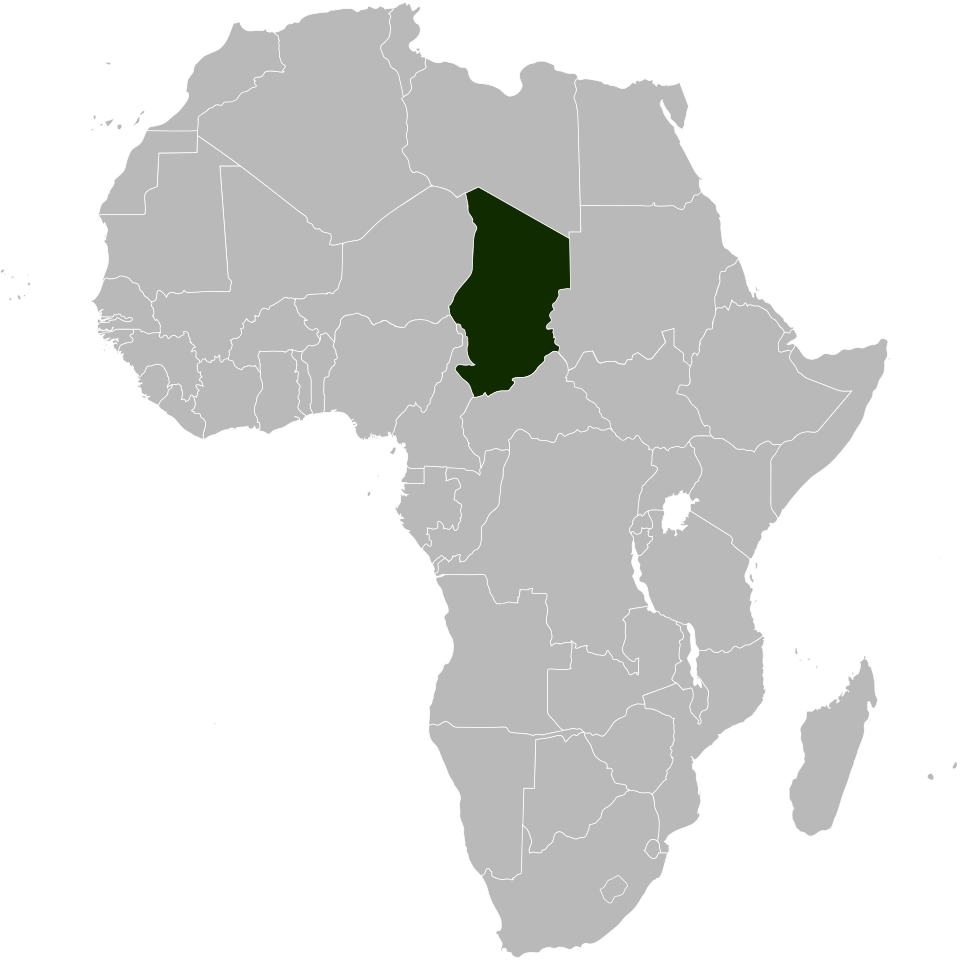
The cost of food is driven by Chad’s landlocked geography. Everything imported—rice, cooking oil, cement, medicine—must travel overland through Cameroon or Nigeria, accruing border fees, bribes, and transport costs that double or triple prices. Local markets offer millet, sorghum, and dried fish from Lake Chad, but the lake itself has shrunk by 90 percent since the 1960s, squeezing the supply of protein and livelihoods for millions.
Fuel prices are set by the state, but shortages are common, sending black market prices soaring.
Compared to regional averages in the Sahel, Chad is likely more expensive for imported goods and cheaper for local staples—but the lack of data means this is educated speculation, not analysis. What is certain is that the cost of living is a daily negotiation with scarcity, and that most Chadians survive through networks of family, farming, and informal trade rather than through formal wages.
Business in the Shadow of the Palace — Investment and the State
The top companies list is revealing in its composition. Commercial Bank Chad, Cotontchad, and SotelTchad are all either state-owned or heavily state-influenced. The Société tchadienne des postes et de l’épargne is a direct government entity. Toumaï Air Tchad is a state-linked carrier. Mid Express Tchad is the only firm that appears to operate in a more purely commercial space, and even then, its industrials sector work likely depends on government contracts for infrastructure or oil logistics.
This is the reality of Chad’s business climate: the state is not just a regulator—it is the primary customer, the primary banker, and the primary competitor. The constitution grants the president the power to appoint the prime minister, the cabinet, judges, generals, provincial officials, and the heads of Chad’s parastatal firms. Every major business decision, from a telecom license to a cotton export quota, ultimately flows through the presidency.
For an investor, this creates a high-risk, high-reward environment. Sectors to watch include telecommunications, where SotelTchad’s monopoly is under pressure from mobile money and regional competitors; agribusiness, where cotton and livestock offer export potential; and infrastructure, where Chinese and Gulf state financing is slowly building roads and solar plants. But any investment requires political clearance, and the rules can change with a presidential decree.
The absence of a reliable legal framework, combined with the data vacuum, means that only the most patient and well-connected capital will enter.
Power, Order, and the Quality of Life
The political landscape, as described in the available data, is unambiguous: Chad’s constitution provides for a strong executive branch headed by a president who dominates the political system. The president appoints the prime minister, the cabinet, judges, generals, provincial officials, and the heads of parastatal firms. In cases of grave and immediate threat, the president may declare a state of emergency.
The president is directly elected by popular vote, but in practice, no election in Chad’s history has resulted in a peaceful transfer of power to an opposition candidate.
Crime and safety indices are not available, but anecdotal reports from humanitarian organizations and diplomatic missions consistently cite armed banditry, cattle rustling, and kidnap-for-ransom in rural areas, particularly along the borders with Libya, Sudan, and the Central African Republic. N’Djamena is safer but not safe—petty crime is common, and political protests are met with swift security force response.
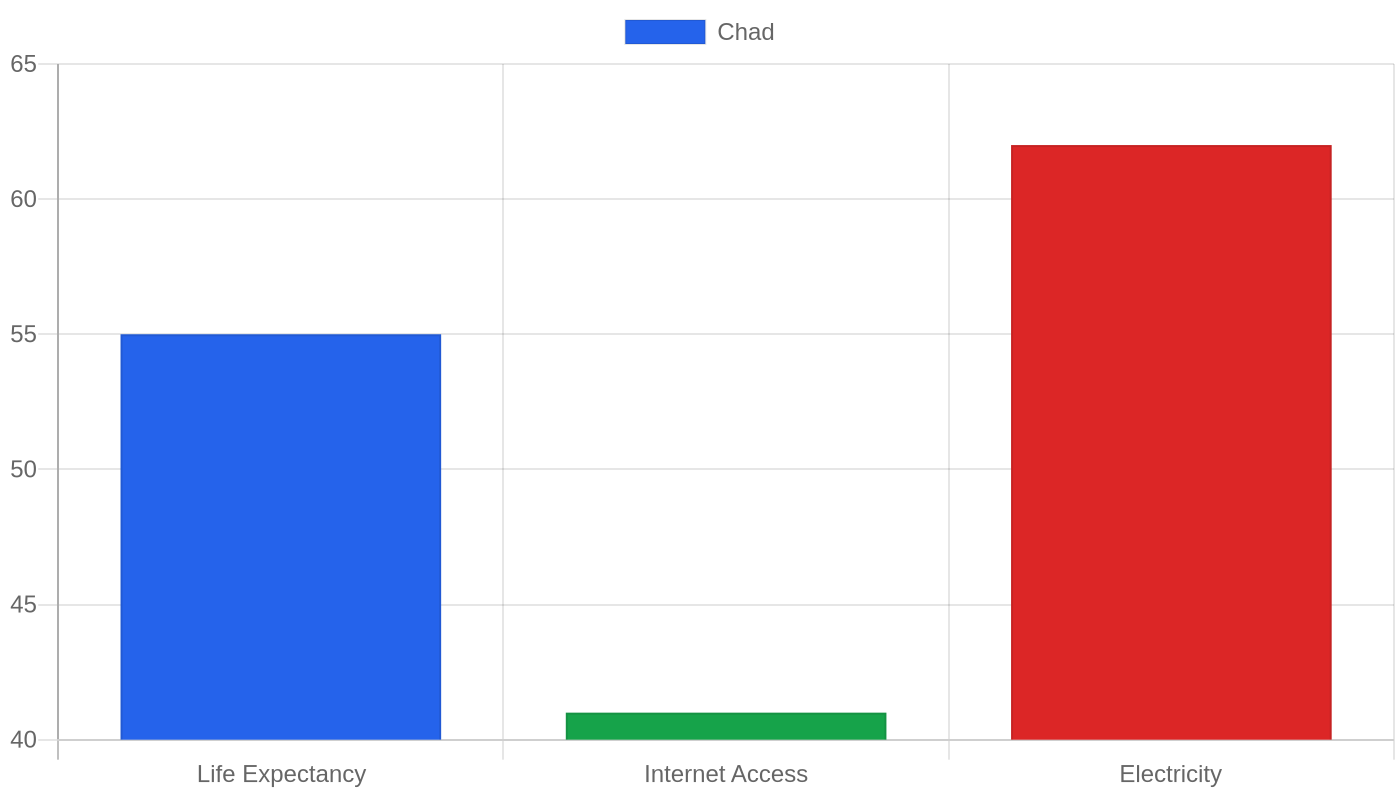
Quality of life is shaped by these realities. Chad ranks near the bottom of the UN Human Development Index, with low life expectancy, high maternal mortality, and low literacy rates. The political system’s centralization means that services—health, education, water—are concentrated in the capital and a few regional towns. For most Chadians, life is a struggle against geography, climate, and a state that extracts more than it provides.
The Present Tense — Chad in 2026
Right now, Chad is navigating a period of political transition that will define its economic trajectory for a decade. The death of longtime President Idriss Déby in 2021 led to a military takeover, followed by a promised return to civilian rule. The current junta, led by Mahamat Idriss Déby, has delayed elections, citing security threats from jihadist groups in the Lake Chad Basin and rebel incursions from Libya.
The international community, led by France and the African Union, is pressing for a timeline, but the junta’s grip on the state apparatus—including the parastatal firms that dominate the economy—remains absolute.
Inflation is a silent crisis. Global food and fuel price shocks have hit Chad harder than most, given its import dependence. The government has responded with price controls and subsidies, but these have strained the budget and led to shortages. The cotton harvest, managed by Cotontchad, has been erratic due to erratic rainfall and pest outbreaks, squeezing rural incomes.
Meanwhile, SotelTchad is under pressure to improve service quality as mobile money platforms like Orange Money and Airtel Money gain traction, threatening its dominance.
The most significant recent development is the gradual opening of the oil sector to new investment. Chad has been a minor oil producer since 2003, but the Doba and Kome fields are aging. The government is courting Chinese and Russian firms to explore new basins in the north and east. If successful, this could bring a wave of capital and infrastructure—but it could also deepen the resource curse, entrenching the president’s control and fueling conflict over revenue sharing.
The Bottom Line
Chad is a country for the truly adventurous—the investor, journalist, or policymaker willing to operate without reliable data, in a high-risk political environment, for the chance to be early in a market that could transform. Its cotton, oil, and livestock assets are real; its strategic location at the crossroads of the Sahel is undeniable.
But until the state opens its grip on the economy, until elections produce genuine accountability, and until basic statistics become available, Chad will remain what it has always been: a silent giant, waiting for a voice.
Sources & Methodology
This article is authored by Economic Pulse Net for informational and research purposes. Economic Pulse Net sources its data from multilateral institutions, national statistics bureaus, and proprietary databases. All data is believed to be current as of the date of publication.
Published: July 16, 2026 | Category: Research — Chad
Use these signals in your own platform
Economic Pulse publishes its live signal feed through a documented, read-only API. Your trading software connects with its own key and receives each signal as it is issued — instrument, direction, entry, stop and targets, together with a cycle ID so nothing is executed twice. The feed is independent of this website and cannot change it.
Signals are informational only and are not financial advice.