Economic Pulse Net | Sources: World Bank World Development Indicators, Government Sources | 2026
Key Takeaways
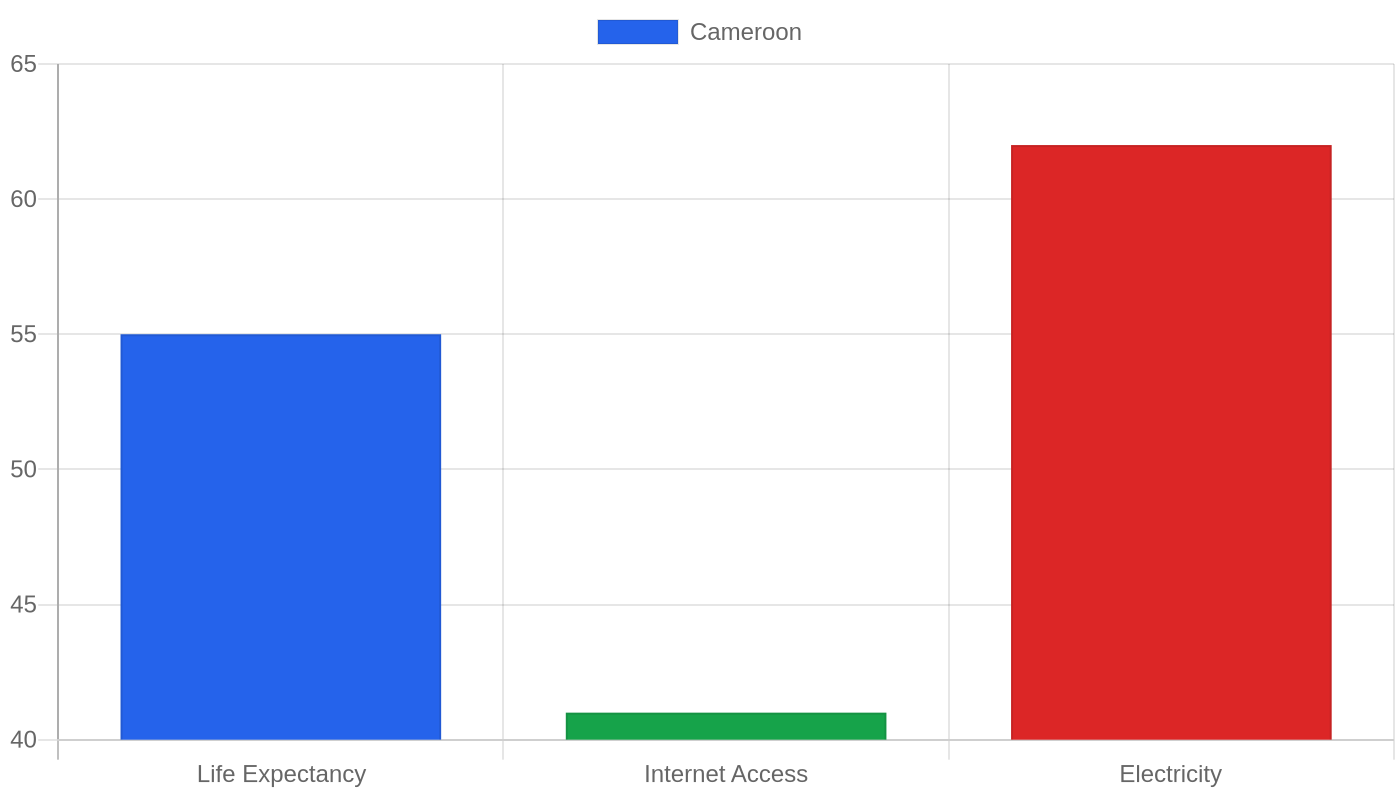
– Cameroon’s economy, long considered Central Africa’s regional anchor, faces a period of profound uncertainty as key macroeconomic indicators remain opaque, with the World Bank reporting gaps in the most recent GDP growth, inflation, and unemployment data.
– The political landscape remains heavily centralized, with the president wielding sweeping executive powers including the authority to appoint the prime minister, provincial governors, and divisional officers, raising questions about institutional checks and balances.
– Major state-linked enterprises dominate the formal economy, spanning banking, telecommunications, transportation, and consumer goods, but private sector dynamism appears constrained by the political environment.
– The country’s corporate landscape is a mix of legacy state enterprises and private financial institutions, suggesting an economy still grappling with the transition from state-led development to market-driven growth.
The Missing Numbers: Reading Between the Economic Lines
When the World Bank cannot publish a country’s GDP growth rate, inflation figure, or unemployment statistic, it tells a story in itself. Cameroon, the economic heavyweight of the Central African Economic and Monetary Community, finds itself in a curious position: a nation with clear economic heft but murky data. The absence of these headline numbers from the World Bank’s latest reporting should not be mistaken for economic stability.
Rather, it suggests either significant data collection challenges, political sensitivity around the figures, or an economy in such flux that standard metrics have become difficult to calculate with confidence.
What we do know is that Cameroon’s economic structure remains heavily reliant on a handful of dominant industries, though the data provided does not specify which sectors drive the nation’s output. The presence of companies like Brasseries du Cameroun, a major consumer goods brewer, and the Cameroon Development Corporation, another consumer goods enterprise, hints at an economy where domestic consumption and agricultural processing play significant roles.
Meanwhile, the existence of Camrail, the national railway operator, and Camtel, the telecommunications giant, points to an infrastructure-dependent economy trying to modernize its backbone.
The absence of GDP per capita and GNI per capita figures is particularly telling. These are basic metrics that most nations report routinely. Their omission suggests either a reluctance to publish potentially uncomfortable numbers or genuine statistical capacity issues. For investors and analysts, this data vacuum creates an environment of heightened uncertainty.
Without knowing whether inflation is running at 3% or 30%, or whether unemployment is 5% or 25%, making informed decisions about Cameroon becomes a exercise in reading tea leaves rather than analyzing spreadsheets.
The Price of Living: Housing, Daily Costs, and the Squeeze on Ordinary Cameroonians
The cost of living data for Cameroon is notably absent from the available information, which in itself is a significant indicator. In a country where the state controls so many levers of power, the lack of transparent pricing data suggests that ordinary citizens may be facing a reality that official statistics are not capturing.
Across Central Africa, urban centers like Douala and Yaoundé have historically seen housing costs that consume a disproportionate share of household income, particularly for families reliant on informal sector employment.
Without specific rental or purchase price data, one can infer from the broader economic picture that the cost of living in Cameroon is likely shaped by the same forces affecting the region: imported inflation from global commodity prices, domestic fuel subsidy pressures, and the high cost of logistics in a country where Camrail and Cargo Airways International represent critical but potentially expensive transportation links.
The presence of Air Leasing Cameroon and Camair-Co in the top companies list suggests air travel is a significant part of the business ecosystem, which typically correlates with higher costs for goods and services in the formal economy.
For the average Cameroonian, the gap between formal sector employment and the informal economy likely defines daily life. With major banks like Afriland First Bank and Commercial Bank Cameroon dominating the financial landscape, access to credit for home purchases may be available but likely at interest rates that reflect the country’s risk profile.
The absence of rental data makes it impossible to compare against regional averages, but the broader picture suggests a population navigating a high-cost, low-transparency economic environment.
Where the Money Lives: Companies, Sectors, and the Business Climate
Cameroon’s corporate elite is a revealing snapshot of where economic power actually resides. Afriland First Bank and Commercial Bank Cameroon anchor the financial sector, suggesting that banking remains one of the most stable and profitable industries in the country. This is consistent with economies where the formal financial system is still developing and margins on lending remain high.
The presence of CAMPOST, the national postal service categorized under industrials, indicates that even traditional state services are being leveraged for economic activity beyond mail delivery.
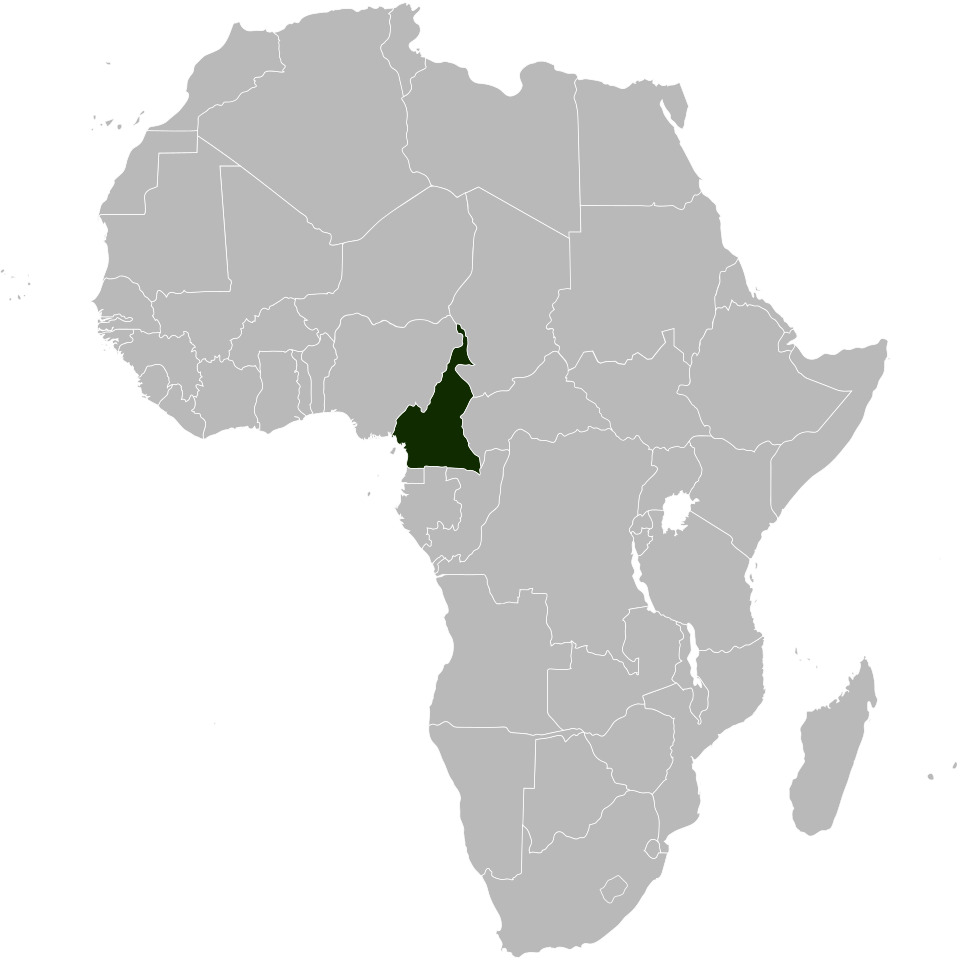
The transportation sector is particularly interesting. Camair-Co, the national airline, sits alongside Air Leasing Cameroon and Cargo Airways International, suggesting a nation that takes its role as a regional hub seriously. Cameroon’s geography—stretching from the Atlantic coast to the Lake Chad basin—makes air and rail connectivity essential. Camrail’s inclusion underscores the importance of moving goods and people across a diverse and sometimes difficult terrain.
These companies are not just businesses; they are infrastructure upon which the entire economy depends.
Brasseries du Cameroun and the Cameroon Development Corporation represent the consumer goods side of the economy. In a nation where disposable income data is unavailable, the presence of major brewers and agricultural processors suggests that domestic consumption, particularly in urban areas, provides a base level of economic activity. The telecommunications sector, represented by Camtel, is the connective tissue linking all of these industries together.
For any investor looking at Cameroon, the question is not whether these sectors exist, but whether the political and regulatory environment allows them to grow.
Power, Politics, and Personal Safety: Navigating Life in Cameroon
The political landscape in Cameroon is defined by concentration of power. According to the data provided, the president of Cameroon is elected and then holds authority to create policy, administer government agencies, command the armed forces, negotiate and ratify treaties, and declare a state of emergency. This is not merely ceremonial power.
The president appoints government officials at all levels, from the prime minister—who is considered the official head of government—down to provincial governors and divisional officers. With the president selected by popular vote every seven years, the system creates long horizons for policy continuity but also raises concerns about accountability and the concentration of decision-making authority.
The crime and safety indices are listed as unavailable in the data, which is itself a significant omission. In a country where political power is so centralized, the absence of reliable crime data makes it difficult for residents and foreign visitors to assess personal risk. Cameroon has faced security challenges in its Anglophone regions and along its northern borders, but without specific indices, one must rely on the broader political picture.
A state where the president can declare a state of emergency and commands the armed forces directly is a state where security is treated as a matter of executive prerogative rather than public transparency.
For quality of life, the lack of happiness or well-being data is another gap. However, one can reasonably infer that in a country where the political system concentrates so much power at the top, and where basic economic data is unavailable, the average citizen likely experiences a significant disconnect between the state’s formal structures and daily realities.
The seven-year presidential term creates stability at the highest level but may also entrench political and economic elites in ways that limit upward mobility for ordinary Cameroonians.
The Pulse Right Now: What’s Happening in Cameroon Today
The most current information available paints a picture of a country in stasis—not crisis, but not progress either. The World Bank’s inability to provide fresh GDP, inflation, and unemployment figures suggests that the statistical machinery of the state may be struggling to keep pace with events on the ground. This is not necessarily a sign of economic collapse, but it is a sign that the government’s ability to measure and therefore manage the economy has significant limitations.
The political timeline is a critical factor right now. With the president elected every seven years, the electoral calendar shapes everything from investment decisions to civil service morale. The appointment powers that flow from the presidency—down to the divisional officer level—mean that political loyalty is rewarded throughout the system. This creates a business environment where connections to the ruling apparatus can be as important as balance sheets or business plans.
For the companies that dominate Cameroon’s economy, the current moment is about navigating uncertainty. Afriland First Bank and Commercial Bank Cameroon are likely focused on managing credit risk in an environment where economic data is scarce. Camrail and Camair-Co are probably dealing with the operational challenges of maintaining infrastructure and services in a country where state support can be unpredictable.
Brasseries du Cameroun, as a consumer goods company, is directly exposed to whatever is happening with household incomes, whether those figures are being officially reported or not.
The Bottom Line
Cameroon is a country that matters for anyone watching Central Africa—its size, its corporate infrastructure, and its political structure make it a bellwether for the region. But the gaps in basic economic data should give investors, analysts, and policymakers serious pause. This is not a country where one can make decisions based on reliable, transparent information. For those with high risk tolerance and deep local knowledge, Cameroon may offer opportunities in banking, infrastructure, and consumer goods.
For everyone else, the absence of data is a red flag that should not be ignored until the statistical picture becomes clearer.
Sources & Methodology
This article is authored by Economic Pulse Net for informational and research purposes. Economic Pulse Net sources its data from multilateral institutions, national statistics bureaus, and proprietary databases. All data is believed to be current as of the date of publication.
Published: July 20, 2026 | Category: Research — Cameroon
Use these signals in your own platform
Economic Pulse publishes its live signal feed through a documented, read-only API. Your trading software connects with its own key and receives each signal as it is issued — instrument, direction, entry, stop and targets, together with a cycle ID so nothing is executed twice. The feed is independent of this website and cannot change it.
Signals are informational only and are not financial advice.