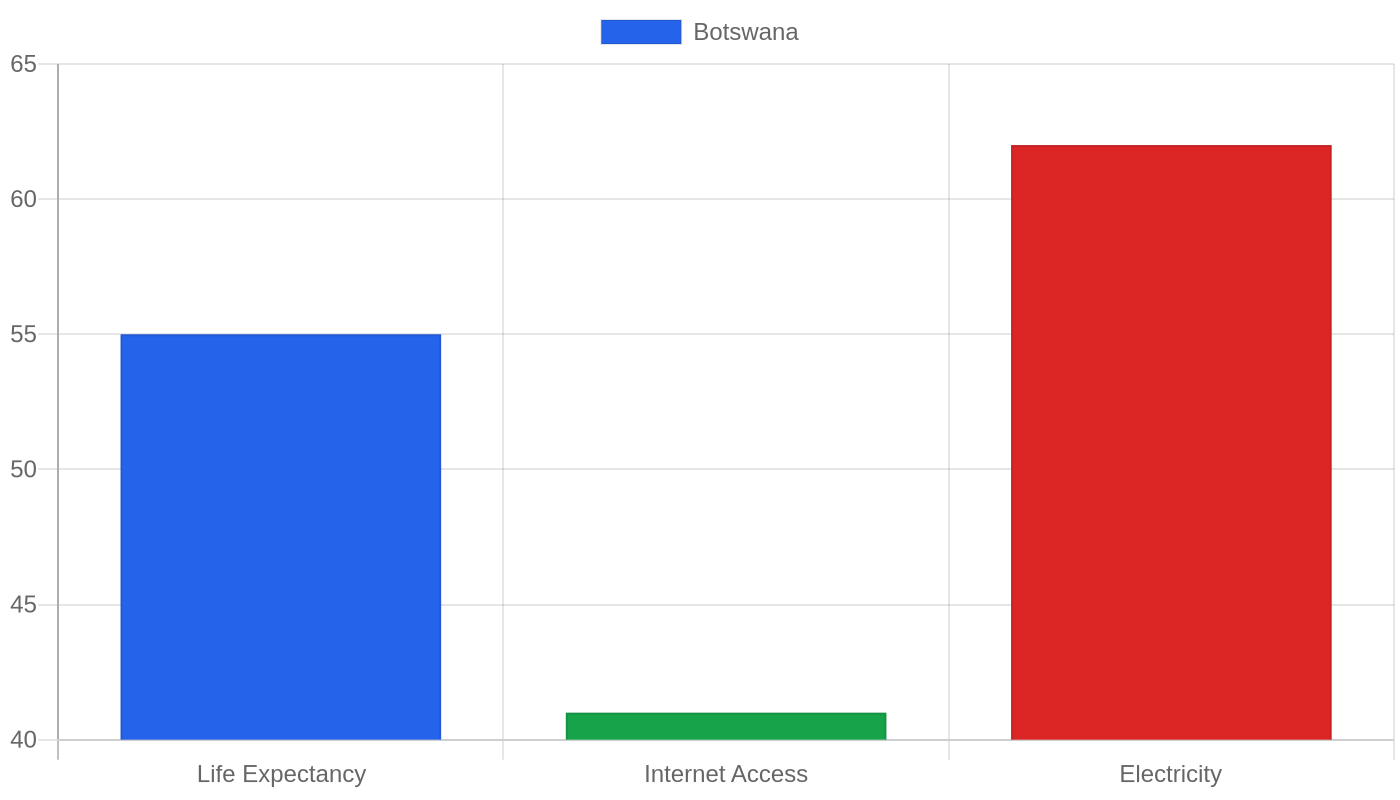
Economic Pulse Net | Sources: World Bank World Development Indicators, Government Sources | 2026
Key Takeaways
– Botswana remains Africa’s longest uninterrupted democracy, with a parliamentary republic structure that blends the UK’s Westminster system with traditional Tswana tribal governance.
– The economy is anchored by state-linked industrial and financial institutions, including Botswana Power Corporation, Botswana Railways, and the Botswana Stock Exchange.
– The country’s economic data is currently limited, but its institutional maturity — from the central Bank of Botswana to the national telecommunications provider — signals a deeply formalized economy.
– Safety and crime indices are not currently available, but the country’s political stability has historically been a cornerstone of its regional identity.
– Investors should watch Botswana for its state-backed infrastructure, financial sector depth, and the quiet resilience of a nation that has avoided the volatility seen elsewhere on the continent.
The Quiet Machinery of a Stable Economy
Botswana’s economic story is not one of flashy booms or dramatic collapses; it is a story of institutional persistence. The World Bank’s latest data fields for GDP growth, inflation, unemployment, and GDP per capita are currently unfilled, which in itself is a reminder that Botswana does not dominate global headlines the way larger African economies do. But the absence of data does not mean the absence of activity.
The country’s economic architecture is built around a network of state-anchored enterprises — Botswana Power Corporation in utilities, Botswana Railways in industrials, and Botswana Telecommunications Corporation in telecoms — that form the backbone of daily commercial life.
Inflation, while not currently tracked in the available figures, has historically been a concern for any economy reliant on imports for fuel and manufactured goods. Botswana’s dependence on regional supply chains means price pressures can emerge from external shocks, but the Bank of Botswana’s role as a monetary anchor provides a layer of institutional credibility.
Unemployment remains a structural challenge, particularly among younger cohorts, but the formal economy — dominated by financial services, consumer goods, and industrial logistics — offers a degree of absorption that many neighboring states lack.
The GDP per capita and GNI per capita figures are also currently unavailable, but the composition of the top companies list tells a compelling story. Botswana is not a nation run by extractive giants alone; it is a country where financials, telecommunications, and consumer services feature prominently. That diversity is a quiet strength.
The presence of the Botswana Stock Exchange as a top institution signals a maturing capital market, while the Botswana Meat Commission in consumer goods points to an agricultural processing sector that remains relevant to rural livelihoods. In short, Botswana’s economy is formal, centralized, and institutionally dense — a combination that provides resilience even when headline numbers are missing.
Housing and the Cost of Living: The Price of Stability
Cost of living data for Botswana is not currently available, but the structure of the economy allows for reasonable inference. With a centralized government and a formal labor market anchored by parastatals, housing demand in Gaborone — the seat of government — is driven by civil servants, financial sector employees, and telecommunications workers.
This creates a rental market that is steady but not speculative, with prices likely to reflect the purchasing power of a salaried middle class rather than the speculative inflows seen in other African capitals.
Owning property in Botswana is a long-term endeavor, supported by the country’s stable legal framework and its tradition of orderly governance. Rent versus buy decisions are likely shaped by access to mortgage finance through institutions like BancABC, one of the country’s top financial firms. Daily expenses — food, transport, utilities — are probably influenced by the operational costs of Botswana Power Corporation and the logistics networks tied to Botswana Railways.
While regional comparisons are difficult without hard data, Botswana’s cost of living is generally perceived as moderate by regional standards, with the formal economy keeping prices relatively predictable.
Investment and Business Climate: A State-Connected Economy
For investors, Botswana offers something increasingly rare in emerging markets: predictability. The top companies list reads like a directory of state capitalism done responsibly — Air Botswana in consumer services, BotswanaPost in industrials, and Botswana Guardian in media. These are not speculative ventures; they are institutions with mandates, budgets, and long-term horizons. The Botswana Stock Exchange provides a regulated venue for equity participation, while the Bank of Botswana ensures monetary oversight.
Sectors to watch include telecommunications, where Botswana Telecommunications Corporation remains a dominant player, and financial services, where BancABC and the central bank create a layered banking environment. The Botswana Meat Commission represents the agricultural processing niche, a sector with export potential in regional markets.
For foreign investors, the business climate is shaped by the rule of law, a legacy of democratic governance, and a government that has historically favored pragmatic economic management over populist experimentation. The challenge is scale — Botswana’s market is small, and growth opportunities are often tied to regional integration rather than domestic demand alone.
Safety, Politics, and Quality of Life: Democracy as a Development Tool
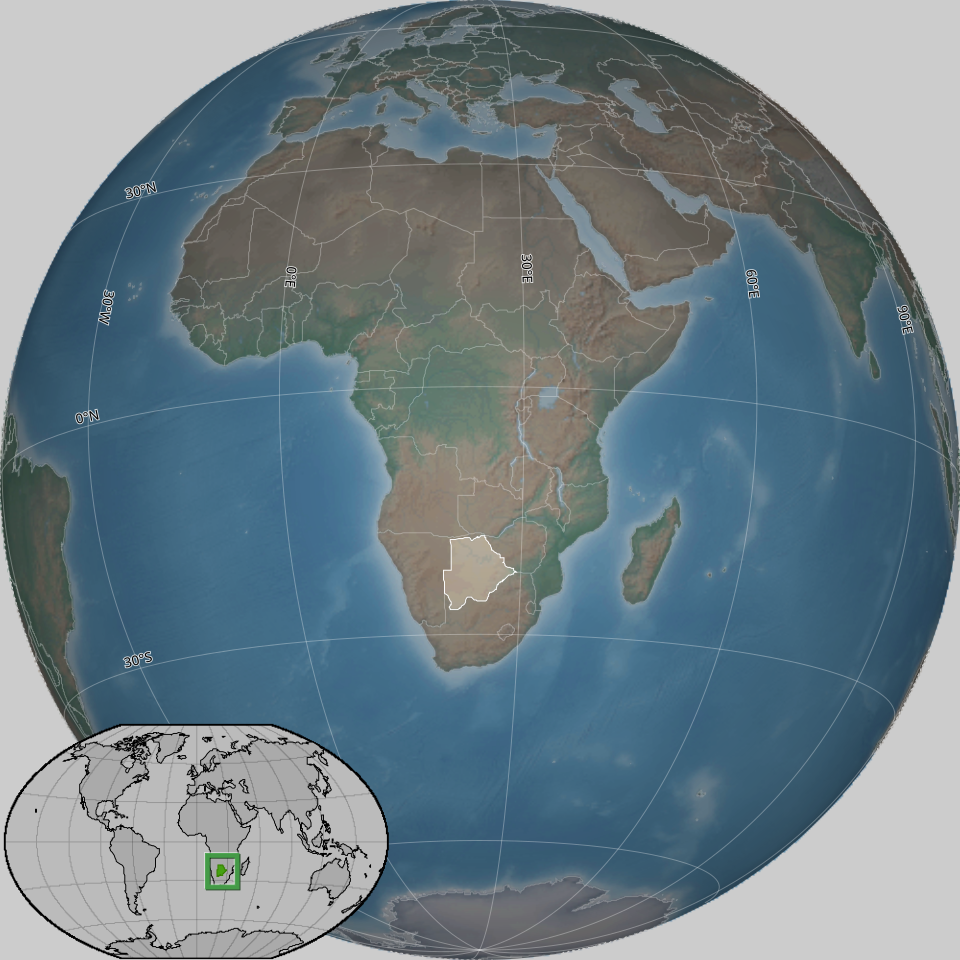
Botswana’s political landscape is its most distinctive asset. The country is a parliamentary republic governed by its constitution, and it holds the distinction of being the longest uninterrupted democracy in Africa. Its seat of government is in Gaborone, and its institutions were established after independence in 1966. The governmental structure blends the Westminster system with the tribal governance traditions of the Tswana people, creating a hybrid model that has proven remarkably durable.
It is a centralized government, with national law superseding local law, which has allowed for coherent national policy implementation.
Crime and safety indices are not currently available, but the country’s political stability has historically translated into a relatively secure environment for residents and expatriates alike. Quality of life in Botswana is closely tied to the formal economy — access to banking, telecommunications, and public utilities is widespread, and the presence of institutions like BotswanaPost and Botswana Power Corporation ensures that basic services are delivered through official channels.
The country’s democratic tradition also fosters a sense of civic participation, which contributes to social cohesion. While happiness data is not available, the combination of political freedom, economic formality, and cultural continuity suggests a society that values order and incremental progress over disruption.
What’s Happening Now: The Quiet Evolution of a Regional Anchor
Right now, Botswana is not in the headlines for crises — and that is precisely the point. The country is navigating a period of steady institutional management, with its state-backed enterprises continuing to function as the primary drivers of economic activity. The Botswana Stock Exchange remains a focal point for regional investors seeking exposure to a stable African market, while the Bank of Botswana continues to provide monetary oversight in an environment of global uncertainty.
The telecommunications sector is likely undergoing modernization pressures, with Botswana Telecommunications Corporation facing the dual challenge of expanding access and upgrading infrastructure.
The political landscape remains unchanged in its fundamentals — a parliamentary republic with a centralized government and a constitutionally grounded legal system. There are no indications of constitutional crises or electoral instability. Instead, the current moment appears to be one of consolidation: infrastructure maintenance, financial sector deepening, and the quiet work of keeping a formal economy running smoothly.
For observers, the freshest development is not a policy shift or an election, but the continued demonstration that Botswana’s model — democratic, centralized, and institutional — remains functional in a region where such stability is often the exception.
The Bottom Line
Botswana is a country for investors and policymakers who value stability over spectacle. Its economy is formal, its politics are democratic, and its institutions are deeply embedded in daily life. The absence of current economic data is a limitation for analysts, but it should not obscure the country’s fundamental strengths: a mature financial sector, a state-anchored industrial base, and a political system that has endured for decades without interruption.
Watch Botswana if you are interested in how governance, infrastructure, and capital markets can coexist in a small, centralized African state. It may not offer the highest returns, but it offers something rarer: reliability.
Sources & Methodology
This article is authored by Economic Pulse Net for informational and research purposes. Economic Pulse Net sources its data from multilateral institutions, national statistics bureaus, and proprietary databases. All data is believed to be current as of the date of publication.
Published: August 05, 2026 | Category: Research — Botswana
Use these signals in your own platform
Economic Pulse publishes its live signal feed through a documented, read-only API. Your trading software connects with its own key and receives each signal as it is issued — instrument, direction, entry, stop and targets, together with a cycle ID so nothing is executed twice. The feed is independent of this website and cannot change it.
Signals are informational only and are not financial advice.