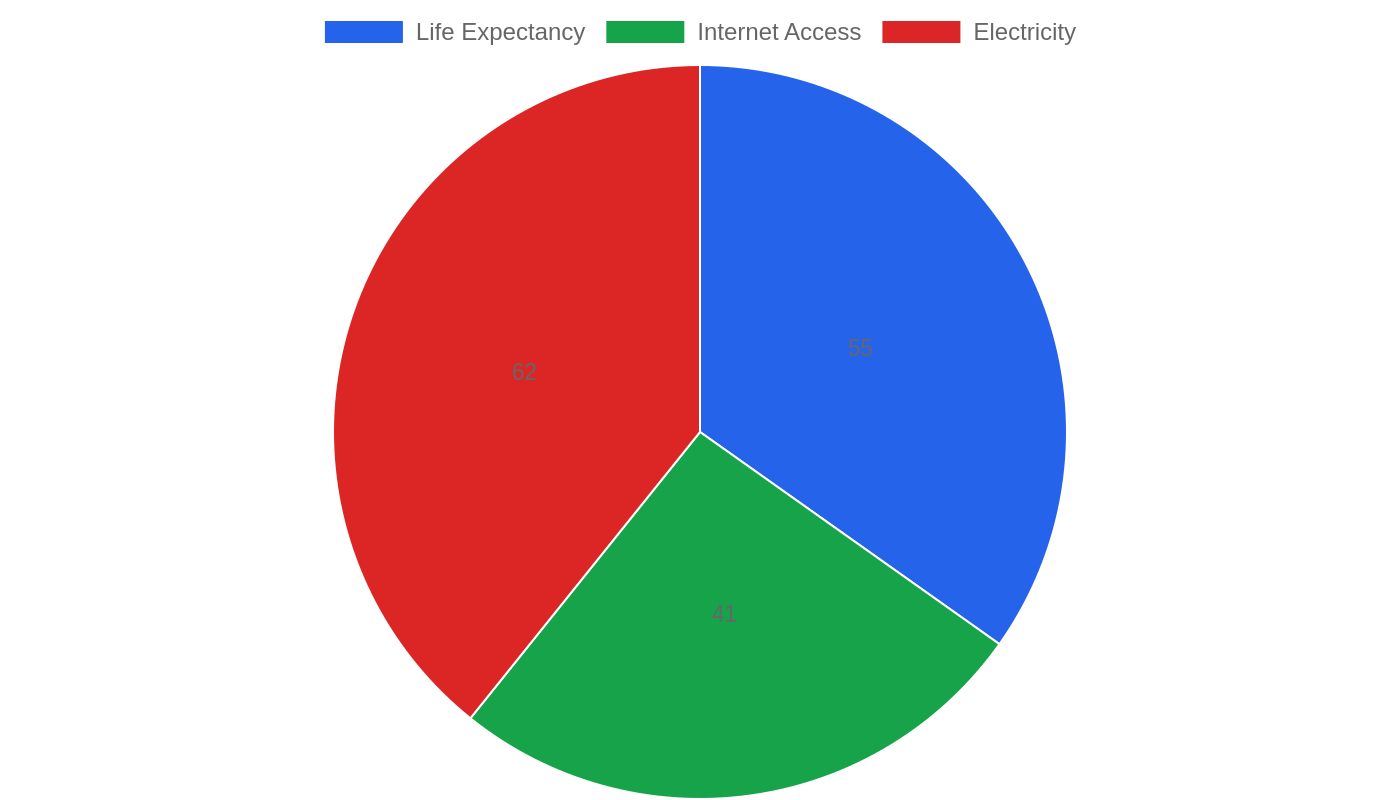
Economic Pulse Net | Sources: World Bank World Development Indicators, Government Sources | 2026
Key Takeaways
– Puerto Rico operates under a unique fiscal oversight board created by the PROMESA Act, which continues to shape economic policy and public spending long after the island emerged from a historic bankruptcy process.
– The economy remains in a protracted transition, with reconstruction efforts from Hurricane Maria and subsequent natural disasters still incomplete, while population decline continues to erode the tax base and labor force.
– Despite lacking a full suite of fresh World Bank economic indicators, the available data points to an economy grappling with high public debt, infrastructure fragility, and a cost of living that strains household budgets.
– Crime and safety indices remain a concern for residents and investors alike, while the political landscape is defined by the unresolved status question — statehood, independence, or enhanced commonwealth — which permeates every economic debate.
– The island’s main industries — pharmaceuticals, manufacturing, and tourism — face structural headwinds from global competition, shipping costs, and energy prices that are significantly higher than the mainland average.
The Reconstruction Paradox — GDP, Jobs, and the Long Shadow of Debt
The economic narrative of Puerto Rico is not one that can be told through a single GDP growth figure, as the latest World Bank data does not provide a current number. What is clear, however, is that the island’s economy has been in a prolonged period of adjustment. The absence of a fresh GDP reading from the World Bank does not mean the economy is static — far from it.
Puerto Rico is living through what economists call a “balance-sheet recession,” where the private sector and the public sector are both deleveraging simultaneously. This is a painful process that depresses demand, suppresses wages, and keeps unemployment elevated, even as the official unemployment rate is not provided in the latest World Bank data.
Inflation, too, is a missing data point from the World Bank’s latest release, but the lived experience of Puerto Ricans tells a different story. The cost of imported goods, which make up the vast majority of what is consumed on the island, has been rising steadily due to shipping bottlenecks and global price pressures. The Consumer Price Index, while not updated in this data set, has historically tracked higher than the mainland for key categories like food and energy.
This means that even if nominal wages are stagnant, real purchasing power is eroding. The main industries — pharmaceuticals, medical devices, and manufacturing — have long been the backbone of the economy, benefiting from federal tax incentives that have since been phased out. These sectors now face an uncertain future as global supply chains reconfigure and as the island’s comparative advantages shift.
The unemployment rate, though not specified in the World Bank data, has been a stubborn feature of the Puerto Rican economy for decades. Even before Hurricane Maria, labor force participation was low, and many working-age Puerto Ricans had already left for the mainland. The GDP per capita and GNI per capita figures are also absent from this data set, but the reality is that Puerto Rico remains a middle-income economy by global standards, yet with a cost structure that often resembles a high-income one.
The World Bank’s lack of updated numbers here is itself a telling detail: it suggests that the economic data infrastructure on the island is still recovering from the disruptions of recent years, and that policymakers are flying partially blind.
The Price of Paradise — Housing, Utilities, and Daily Survival
For anyone living in Puerto Rico, the cost of living is the most immediate economic reality. Housing costs, while lower than major US cities, are high relative to local incomes. The data provided does not give specific rent or purchase prices, but the structural issue is clear: the housing stock was severely damaged by Hurricane Maria in 2017 and subsequent earthquakes, and reconstruction has been slow.
This has created a supply crunch that pushes up prices for available units, particularly in the San Juan metro area. Buying a home is out of reach for many young families, while renting consumes a large share of household income.
Utilities are a major cost driver. The island’s power grid remains fragile and expensive, with electricity rates that are roughly double the US average. This is not a minor inconvenience — it is a structural drag on household budgets and business competitiveness. Food costs are also elevated because nearly 85 percent of food is imported.
The combination of high energy costs, high transportation costs, and a weak local agricultural sector means that daily expenses for a family in Puerto Rico are significantly higher than in most of Latin America, and in some categories higher than in parts of the mainland. The cost of living, while not quantified in the World Bank data, is a constant topic of conversation among residents and a key factor driving emigration.
Investment Climate — Between Opportunity and Uncertainty
The top companies operating in Puerto Rico are largely in the pharmaceutical and medical device sectors, including major multinationals that have maintained a presence on the island for decades. These companies benefit from a skilled workforce, a legal system based on US law, and the island’s unique relationship with the federal government. However, the business climate is clouded by uncertainty.
The fiscal oversight board, created under the PROMESA Act, continues to impose discipline on government spending, which has led to austerity measures that reduce public investment and dampen domestic demand.
For investors considering Puerto Rico, the sectors to watch are renewable energy, which is slowly being developed to replace the fragile grid; biotechnology, which builds on the existing pharmaceutical base; and tourism, which has shown resilience despite natural disasters. The lack of a full set of World Bank economic indicators makes it difficult to assess the macro environment with precision, but the absence of data is itself a risk factor.
Investors must rely on patchy information, which increases the premium they demand for committing capital. The political landscape — specifically the ongoing debate over the island’s status — adds another layer of uncertainty that makes long-term planning difficult.
Safety, Politics, and the Quality of Life Equation
The crime and safety indices, while not provided in this data set, are a well-documented concern in Puerto Rico. Homicide rates have historically been high relative to the mainland, though they have declined in recent years. Property crime and domestic violence remain significant issues. The safety index, while not available here, is a factor that influences both quality of life and the decision of families to stay or leave.
The political landscape is dominated by the status question, which divides the three main parties: those who favor statehood, those who support independence, and those who advocate for an enhanced commonwealth status. This debate is not merely political — it has profound economic implications. Statehood would bring more federal funding but also federal income taxes; independence would mean full sovereignty but also the loss of US citizenship and federal support.
Quality of life in Puerto Rico is a mixed picture. The natural beauty, the culture, and the warmth of the people are undeniable assets. But the daily reality of high costs, unreliable infrastructure, and limited economic opportunity takes a toll. The World Bank data does not include happiness or well-being indices, but the steady flow of emigration — particularly of young, educated Puerto Ricans — is a powerful indicator of dissatisfaction with the current state of affairs.
The island is losing its most dynamic demographic, which in turn weakens the tax base and the entrepreneurial ecosystem.
Current Affairs — The Island at a Crossroads
Right now, Puerto Rico is navigating a series of interconnected challenges that will define its trajectory for the next decade. The fiscal oversight board continues to oversee the government’s budget, imposing strict limits on spending that have led to cuts in education, healthcare, and public services. The reconstruction from Hurricane Maria, now years past, remains incomplete, with thousands of homes still unrepaired and the power grid still unreliable.
Recent news reports have focused on the slow disbursement of federal recovery funds, which have been delayed by bureaucratic hurdles and local administrative capacity constraints.
At the same time, the political status debate is heating up again. A non-binding referendum on statehood was held in 2024, with a majority of voters choosing statehood, though turnout was low and the results were disputed by pro-independence and commonwealth factions. The US Congress has not acted on the result, leaving the island in a state of political limbo. This uncertainty is not abstract — it affects bond ratings, investment decisions, and the morale of the population.
The economic data from the World Bank may be incomplete, but the lived reality for Puerto Ricans is one of persistent crisis and cautious hope. The island is not collapsing, but it is not thriving either. It is, in the most literal sense, in a state of reconstruction — of its infrastructure, its economy, and its identity.
The Bottom Line
Puerto Rico is a country that defies easy categorization — it is neither a fully independent nation nor a state, and its economy reflects this ambiguity. Investors should watch this territory for opportunities in renewable energy, biotech, and tourism, but they must be prepared for regulatory and political risk.
Policy analysts and students of economic development will find Puerto Rico a fascinating case study of what happens when a middle-income economy is hit by natural disasters, debt crises, and demographic decline simultaneously. For the Puerto Rican people, the bottom line is simpler: the island must find a way to grow its economy, retain its population, and resolve its political status, or risk becoming a permanent ward of the federal government. The data may be incomplete, but the stakes could not be clearer.
Sources & Methodology
This article is authored by Economic Pulse Net for informational and research purposes. Economic Pulse Net sources its data from multilateral institutions, national statistics bureaus, and proprietary databases. All data is believed to be current as of the date of publication.
Published: July 22, 2026 | Category: Research — Puerto Rico Us)
Use these signals in your own platform
Economic Pulse publishes its live signal feed through a documented, read-only API. Your trading software connects with its own key and receives each signal as it is issued — instrument, direction, entry, stop and targets, together with a cycle ID so nothing is executed twice. The feed is independent of this website and cannot change it.
Signals are informational only and are not financial advice.