Economic Pulse Net | Sources: World Bank World Development Indicators, Government Sources | 2026
Key Takeaways
– New Caledonia operates under a unique “sui generis” status, a territory where France has gradually transferred certain powers, creating a complex political and economic environment.
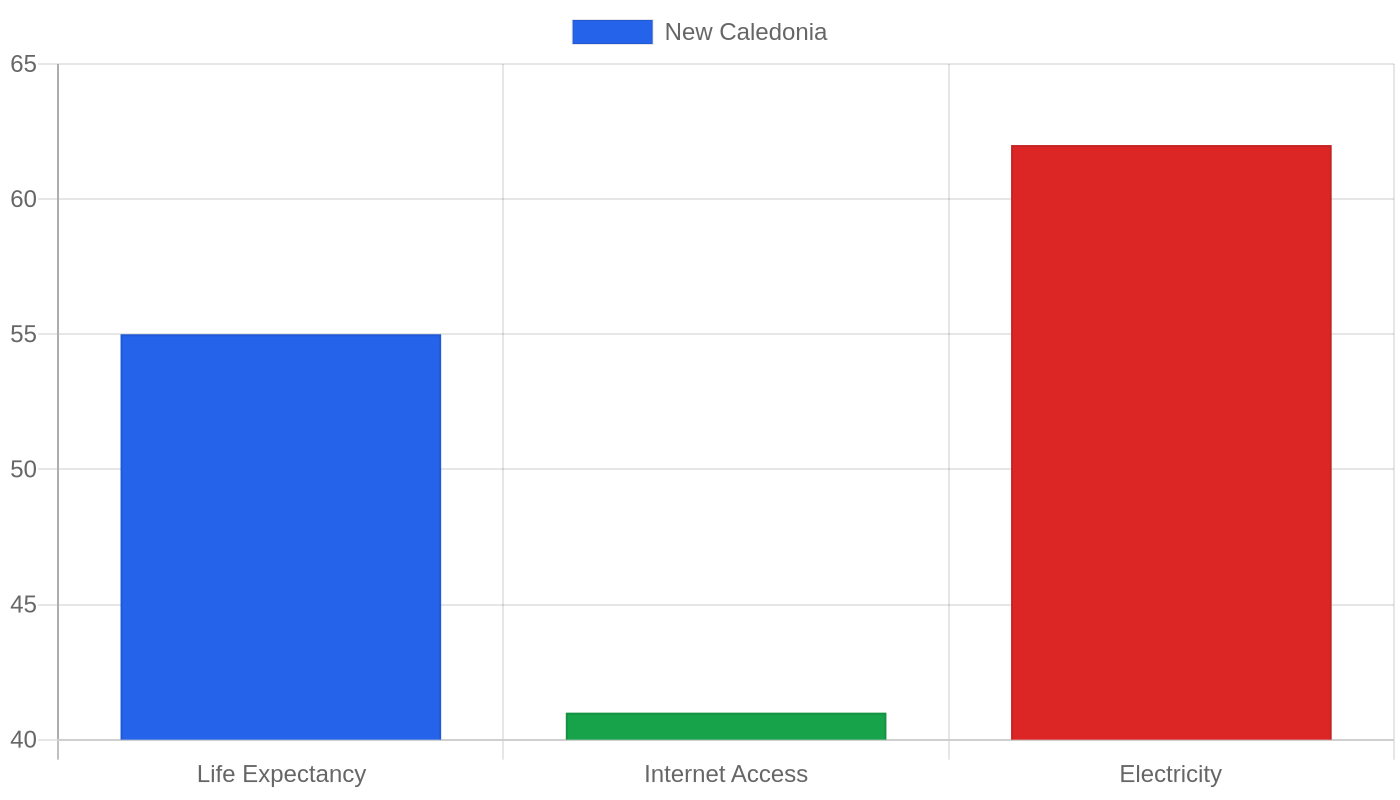
– The territory’s economic data from the World Bank remains a blank slate, underscoring a significant challenge for analysts trying to measure its performance against global benchmarks.
– Political life is defined by a delicate balance between the 54-member Territorial Congress and the French State’s High Commissioner, a structure that shapes every business decision.
– With French citizenship extended to all residents and voting rights in European Parliament elections, the territory remains deeply tethered to European political currents.
– The absence of standard economic indicators makes New Caledonia a case study in how resource wealth and political status can overshadow traditional metrics of national performance.
The Invisible Economy — Reading Between the Lines of Missing Data
The World Bank’s latest figures for New Caledonia present a striking void: no GDP growth rate, no inflation reading, no unemployment statistics, no per-capita income data. For most countries, these numbers form the backbone of national narrative. For New Caledonia, their absence is itself a story — one of a territory that exists in a statistical limbo, neither fully a nation nor merely a French overseas department.
This data gap does not mean the economy is dormant. Rather, it reflects the territory’s unique constitutional position. As a “territory sui generis,” New Caledonia has negotiated a gradual transfer of powers from Paris, but the World Bank’s framework — designed for sovereign states — struggles to capture its economic reality.
The nickel industry, which has historically been the motor of the local economy, operates within a complex web of French subsidies, Asian demand, and local political negotiation that defies simple categorization.
What can be inferred is that New Caledonia’s economic fortunes are inextricably linked to its political status. The territory’s citizens hold French passports, vote in European Parliament elections, and benefit from French social protections. This arrangement provides a safety net that many independent Pacific nations lack, but it also creates a dependency that complicates any move toward full sovereignty.
The economy, in this sense, is not merely a collection of industries — it is a political statement.
The Price of Paradise — Housing and Daily Life in a Territory in Transition
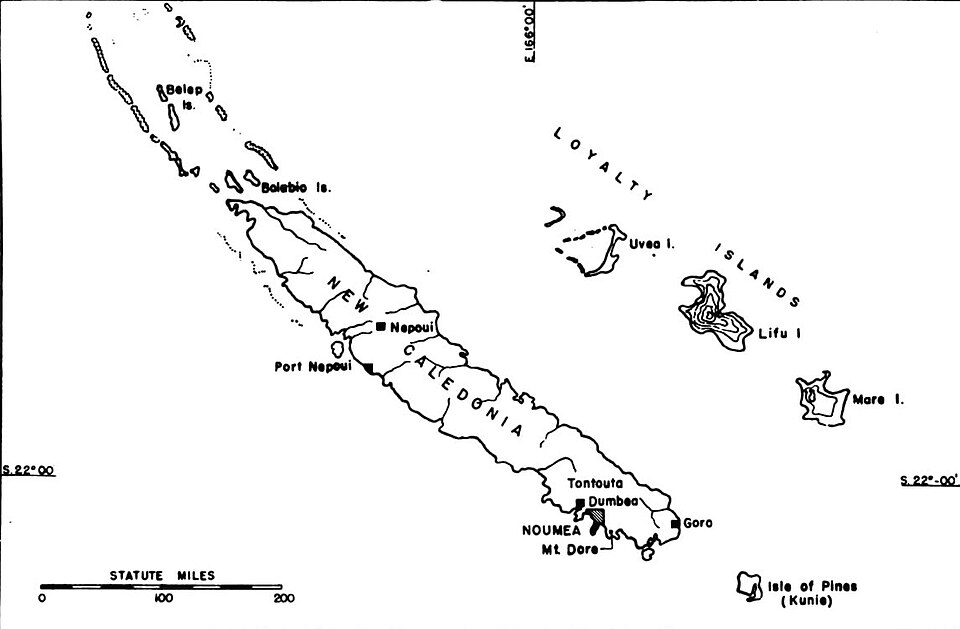
Without official cost-of-living indices, one must look to the structural factors that shape daily expenses in New Caledonia. As an island territory roughly 1,200 kilometers east of Australia, virtually everything must be imported — from fuel to foodstuffs to construction materials. This geographic reality imposes a “freight tax” on nearly every consumer good, pushing prices well above what metropolitan France might see for comparable items.
Housing in Nouméa, the capital, reflects the broader tensions of the territory. The city’s waterfront real estate is among the most desirable in the Pacific, but land tenure is complicated by the unresolved question of Kanak customary land rights versus private property. This legal ambiguity, rooted in the territory’s colonial history, creates friction in the property market and discourages some forms of investment.
For young New Caledonians, the dream of homeownership must be weighed against the reality of limited land availability and construction costs inflated by import logistics.
The cost of living is further shaped by the territory’s dual identity. Those with professional qualifications can command salaries tied to French civil service scales, providing a degree of purchasing power. But for those outside this formal economy — particularly in rural areas where customary practices prevail — the cash economy is less relevant, and subsistence activities supplement household income. This dual economic structure makes any single cost-of-living figure misleading.
Business Under the Tricolour — Investment Climate and Corporate Landscape
The business environment in New Caledonia is defined by its political architecture. The Territorial Congress, composed of 54 members drawn from three provincial assemblies, holds significant sway over local economic policy. For investors, this means navigating a system where provincial loyalties and the broader independence debate can influence everything from mining permits to tourism development.
The French State’s presence, represented by the High Commissioner, adds another layer of complexity. While Paris has gradually transferred powers to the territory, key areas — notably defence, justice, and public order — remain under French control. This arrangement provides a degree of political stability that investors value, but it also means that major decisions often require dialogue between Nouméa and Paris, a process that can be slow and politically charged.
The dominant economic players in New Caledonia are those tied to the nickel sector, which has historically accounted for a substantial share of export revenue. The industry is dominated by large consortia with significant French and international participation, making it both a source of wealth and a point of vulnerability. When global nickel prices fall, the territory feels the impact immediately.
When they rise, the question of who benefits — the indigenous Kanak population, the European-descended community, or foreign shareholders — becomes a political flashpoint.
Security, Sovereignty, and the Politics of Everyday Life
Crime statistics for New Caledonia are as elusive as its economic data, but the territory’s social fabric offers clues about safety and quality of life. The political landscape is the dominant feature of daily existence, with the independence question never far from the surface. The 54-member Congress serves as the arena where these debates play out, with provincial assemblies representing different regions and, often, different visions for the territory’s future.
The presence of French citizenship and the right to vote in European Parliament elections creates a unique civic identity. New Caledonians are simultaneously Pacific islanders and European citizens, a duality that shapes everything from education policy to international relations. For the Kanak population, the struggle for recognition and self-determination continues, while for other communities, the French connection provides security and opportunity.
Quality of life in New Caledonia is a study in contrasts. The natural environment is spectacular — coral reefs, tropical forests, and a climate that draws tourists from across the region. But this paradise exists alongside deep political divisions and economic uncertainty. The territory’s future status — whether it will eventually become independent, remain part of France, or forge some third path — remains unresolved. That uncertainty is the price of living in a place where history is still being written.
The Referendum Shadow — What’s Happening in New Caledonia Right Now
The most pressing issue in New Caledonia today is the unfinished business of self-determination. The territory has held multiple independence referendums, and the results have been narrow and contested. The current political moment is defined by the aftermath of these votes, with pro-independence leaders pressing for another consultation while loyalists argue that the matter should be settled. This stalemate has created an atmosphere of uncertainty that permeates all aspects of public life.
The French State, represented by the High Commissioner, is navigating a delicate path. Paris has signalled openness to dialogue but insists on the framework of French law and the French constitution. For the Territorial Congress, the challenge is to demonstrate that it can govern effectively while the larger question of sovereignty remains unresolved. This political paralysis has economic consequences, as potential investors wait for clarity before committing capital.
Meanwhile, the nickel industry faces its own pressures. Global markets are shifting, with new sources of supply and changing demand patterns for the metal used in batteries and stainless steel. For New Caledonia, which has some of the world’s largest nickel reserves, this represents both an opportunity and a threat. The question is whether the territory can modernise its industry, attract new investment, and navigate the transition to a greener global economy — all while the political future remains unclear.
The Bottom Line
New Caledonia is a territory that defies easy categorisation — not quite a nation, not merely a French province, but a place where the future is genuinely up for grabs. Economic analysts, investors, and policymakers should watch this territory because its trajectory will offer lessons about how resource wealth, colonial legacies, and the quest for self-determination interact in the 21st century. For the people of New Caledonia, the stakes could not be higher.
For the rest of the world, the territory’s fate will be a test case in whether peaceful, negotiated transitions of power are still possible in an age of rising nationalism and economic uncertainty.
Sources & Methodology
This article is authored by Economic Pulse Net for informational and research purposes. Economic Pulse Net sources its data from multilateral institutions, national statistics bureaus, and proprietary databases. All data is believed to be current as of the date of publication.
Published: July 31, 2026 | Category: Research — New Caledonia
Use these signals in your own platform
Economic Pulse publishes its live signal feed through a documented, read-only API. Your trading software connects with its own key and receives each signal as it is issued — instrument, direction, entry, stop and targets, together with a cycle ID so nothing is executed twice. The feed is independent of this website and cannot change it.
Signals are informational only and are not financial advice.